Kirjojen hintavertailu. Mukana 11 244 527 kirjaa ja 12 kauppaa.

Kirjahaku

Etsi kirjoja tekijän nimen, kirjan nimen tai ISBN:n perusteella.

11 kirjaa tekijältä Andreas Hepp

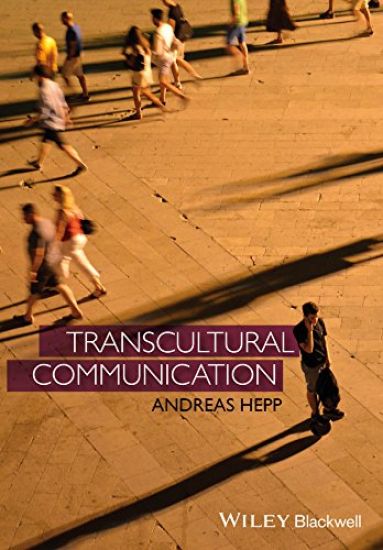
Transcultural Communication

Transcultural Communication

Andreas Hepp

John Wiley Sons Inc
2015
sidottu
In Transcultural Communication, Andreas Hepp provides an accessible and engaging introduction to the exciting possibilities and inevitable challenges presented by the proliferation of transcultural communication in our mediatized world. Includes examples of mediatization and transcultural communication from a variety of cultural contextsCovers an array of different types of media, including mass media and digital mediaIncorporates discussion of transcultural communication in media regulation, media production, media products and platforms, and media appropriation
Transcultural Communication

Transcultural Communication

Andreas Hepp

John Wiley Sons Inc
2015
nidottu
In Transcultural Communication, Andreas Hepp provides an accessible and engaging introduction to the exciting possibilities and inevitable challenges presented by the proliferation of transcultural communication in our mediatized world. Includes examples of mediatization and transcultural communication from a variety of cultural contextsCovers an array of different types of media, including mass media and digital mediaIncorporates discussion of transcultural communication in media regulation, media production, media products and platforms, and media appropriation
Cultures of Mediatization

Cultures of Mediatization

Andreas Hepp

Polity Press
2012
sidottu
What does it mean that we can be reached on our mobile phones wherever we are and at all times? What are the cultural consequences if we are informed about ‘everything and anything important’ via television? How are our political, religious and ethnic belongings impacted through being increasingly connected by digital media? And what is the significance of all this for our everyday lives? Drawing on Hepp’s fifteen-year research expertise on media change, this book deals with questions like these in a refreshingly straightforward and readable way. ‘Cultures of mediatization’ are described as cultures whose main resources are mediated by technical media. Therefore, everyday life in cultures of mediatization is ‘moulded’ by the media. To understand this challenging media change it is inappropriate to focus on any one single medium like television, the press, mobile phones, the Internet or other forms of digital media. One has to capture the ‘mediatization’ of culture in its entirety. Cultures of Mediatization outlines how this can be done critically. In so doing, it offers a new way of thinking about our present-day media-saturated world.
Cultures of Mediatization

Cultures of Mediatization

Andreas Hepp

Polity Press
2012
nidottu
What does it mean that we can be reached on our mobile phones wherever we are and at all times? What are the cultural consequences if we are informed about ‘everything and anything important’ via television? How are our political, religious and ethnic belongings impacted through being increasingly connected by digital media? And what is the significance of all this for our everyday lives? Drawing on Hepp’s fifteen-year research expertise on media change, this book deals with questions like these in a refreshingly straightforward and readable way. ‘Cultures of mediatization’ are described as cultures whose main resources are mediated by technical media. Therefore, everyday life in cultures of mediatization is ‘moulded’ by the media. To understand this challenging media change it is inappropriate to focus on any one single medium like television, the press, mobile phones, the Internet or other forms of digital media. One has to capture the ‘mediatization’ of culture in its entirety. Cultures of Mediatization outlines how this can be done critically. In so doing, it offers a new way of thinking about our present-day media-saturated world.
Deep Mediatization

Deep Mediatization

Andreas Hepp

Routledge
2019
sidottu
Andreas Hepp takes an integrative look at one of the biggest questions in media and communications research: how digital media is changing society.Often, such questions are discussed in isolation, losing sight of the overarching context in which they are situated. Hepp has developed a theory of the re-figuration of society by digital media and their infrastructures, and provides an understanding of how profound today’s media-related changes are, not only for institutions, organizations and communities, but for the individual as well. Rooted in the latest research, this book does not stop at a description of media-related change; instead, it raises the normative challenge of what deep mediatization should look like so that it might just stimulate a 'good life' for all.Providing original and critical research, the book introduces deep mediatization to students of media and cultural studies, as well as neighboring disciplines like sociology, political science and other cognate disciplines.
Deep Mediatization

Deep Mediatization

Andreas Hepp

Routledge
2019
nidottu
Andreas Hepp takes an integrative look at one of the biggest questions in media and communications research: how digital media is changing society.Often, such questions are discussed in isolation, losing sight of the overarching context in which they are situated. Hepp has developed a theory of the re-figuration of society by digital media and their infrastructures, and provides an understanding of how profound today’s media-related changes are, not only for institutions, organizations and communities, but for the individual as well. Rooted in the latest research, this book does not stop at a description of media-related change; instead, it raises the normative challenge of what deep mediatization should look like so that it might just stimulate a 'good life' for all.Providing original and critical research, the book introduces deep mediatization to students of media and cultural studies, as well as neighboring disciplines like sociology, political science and other cognate disciplines.
Fernsehaneignung und Alltagsgespräche

Fernsehaneignung und Alltagsgespräche

Andreas Hepp

Vs Verlag Fur Sozialwissenschaften
1998
nidottu
Die Einzigartigkeit des Fernsehens besteht in seiner Vielgestaltigkeit: Für eine große Zahl von Menschen hat es eine Fülle von Bedeutungen und bietet Anlaß für die verschiedensten Formen des Vergnügens. Die Kernthese dieses Buches ist, daß sich Rezipienten Fernsehen auf unterschiedliche Weise aneignen. Das Fernsehen stellt einen festen Bestandteil der Alltagskultur dar und wird durch vielfältige kommunikative Prozesse von den Zuschauern und Zuschauerinnen in ihre Alltagswelt integriert. Ba­ sierend auf den Methoden der Cultural Studies und Konversationsanalyse, möchte ich in dieser Studie zeigen, daß es das alltägliche Sprechen über Fernsehen ist, das die Grundlage für einen produktiven Umgang mit dem Medium bildet. Die vorliegende Arbeit entstand in den Jahren 1995 und 1996 während mei!). er Tätigkeit in dem von der Deutschen Forschungsgemeinschaft finanzierten Projekt "Uber Fernse­ hen sprechen" an der Universität Trier. Das Projekt wurde von Prof. Dr. Jörg Bergmann, Prof. Dr. Werner Holly und Dr. habil. Ulrich Püschel geleitet, denen ich für ihre Förderung danken möchte. Die Untersuchung stellt eine geringfügig überarbeitete Fassung meiner Dissertation dar, die Ende 1996 am Fachbereich 11 der Universität Trier im Fachteil Germanistische Linguistik eingereicht wurde. Wie jede andere Publi­ kation, so wäre auch diese nicht ohne eine Vielzahl von Unterstützungen, Diskussionen und Anregungen denkbar gewesen. Nichtsdestotrotz bleibt es der Autor, der jegliche Fehler und Verkürzungen zu verantworten hat. Besonders möchte ich meiner Frau Beate Köhler danken, die mich seit Jahren bei meiner Arbeit ermuntert, sie kritisiert und die auch das Titelbild dieses Buches gestaltet hat.
Cultural Studies und Medienanalyse

Cultural Studies und Medienanalyse

Andreas Hepp

VS Verlag fur Sozialwissenschaften
2010
nidottu
IIn „Cultural Studies und Medienanalyse“ wird der medienanalytische Ansatz der Cultural Studies umfassend vorgestellt. Bezogen auf den Gegenstand„Medien“ werden einerseits die Theorieansätze der Cultural Studies diskutiert und ihre forschungsgeschichtliche Entwicklung bis heute dargelegt. Andererseits werden die empirischen Studien der Cultural Studies aus den Bereichen der Produkt- und Diskursanalyse sowie der Rezeptions- und Aneignungsforschung ausführlich behandelt. In der dritten Auflage wurde das Buch im Hinblick auf die jüngste Forschung aktualisiert und erweitert.
Medienkultur

Medienkultur

Andreas Hepp

Vs Verlag Fur Sozialwissenschaften
2013
nidottu
Was heißt es für unsere Kultur, wenn wir durch Mobiltelefone überall erreichbar sind? Was bedeutet es kulturell, wenn alles Wichtige im Fernsehen verhandelt wird? Wie ändern sich unsere Vergemeinschaftungen, wenn wir zunehmend über das Social Web vernetzt sind? Welche Folgen hat all das für den Wandel unserer Kultur, Alltagswelt und Gesellschaft? Fragen wie diese kumulieren in dem Begriff der „Mediatisierung“, der zu einem Schlüsselkonzept der internationalen Diskussion um Medien geworden ist. Das Buch führt in diese Diskussion anhand vieler Beispiele ein. Dabei wird deutlich, dass Medienkulturen mediatisierte Kulturen sind. Um diese zu erfassen, genügt der Blick auf ein Einzelmedium wie das Fernsehen, das Mobiltelefon, die Zeitung oder das Internet nicht. Man muss die mediale Durchdringung von Kultur, ihre kommunikativen Figurationen insgesamt im Blick haben. Die zweite, überarbeitete Auflage wurde durch weitere Literaturbezüge und ein Vorwort zur Einführung in die Mediatisierungsdiskussion erweitert.
Netzwerke der Medien

Netzwerke der Medien

Andreas Hepp

VS Verlag fur Sozialwissenschaften
2004
nidottu
Auf Basis der Kritik bisheriger Forschungen wird ein Neuansatz der Beschreibung von Medienkulturen in Zeiten der Globalisierung entworfen. Gegenstand sind hier Netzwerkunternehmen der global orientierten Medienproduktion und globale Medienstadte, weltweite Medienereignisse, uber verschiedene Kulturen hinweg verfugbare Produkte unterschiedlichster Medien wie Fernsehen, Film und Internet sowie deren Aneignung in Bezug auf differente kulturelle Kontexte und Medienidentitaten. "Netzwerke der Medien" unternimmt den Versuch, gegenwartige Medienkulturen in deren Komplexitat und Widerspruchlichkeit zu fassen.