Kirjojen hintavertailu. Mukana 11 244 527 kirjaa ja 12 kauppaa.

Kirjahaku

Etsi kirjoja tekijän nimen, kirjan nimen tai ISBN:n perusteella.

3 kirjaa tekijältä Andreas Killen

Nervous Systems

Nervous Systems

Andreas Killen

HARPERCOLLINS PUBLISHERS INC
2024
nidottu
In this eye-opening chronicle of scientific research on the brain in the early Cold War era, the acclaimed historian Andreas Killen traces the complex circumstances surrounding the genesis of our present-day fascination with this organ.The 1950s were a transformative, even revolutionary decade in the history of brain science. Using new techniques for probing brain activity and function, researchers in neurosurgery, psychiatry, and psychology achieved dramatic breakthroughs in the treatment of illnesses like epilepsy and schizophrenia, as well as the understanding of such faculties as memory and perception. Memory was the site of particularly startling discoveries. As one researcher wrote to another in the middle of that decade, “Memory was the sleeping beauty of the brain—and now she is awake.” Collectively, these advances prefigured the emergence of the field of neuroscience at the end of the twentieth century.But the 1950s also marked the beginning of the Cold War and a period of transformative social change across Western society. These developments resulted in unease and paranoia. Mysterious new afflictions—none more mystifying than “brainwashing”—also appeared at this time. Faced with the discovery that, as one leading psychiatrist put it, “the human personality is not as stable as we often assume,” many researchers in the sciences of brain and behavior joined the effort to understand these conditions. They devised ingenious and sometimes transgressive experimental methods for studying and proposing countermeasures to the problem of Communist mind control. Some of these procedures took on a strange life of their own, escaping the confines of the research lab to become part of 1960s counterculture. Much later, in the early 2000s, they resurfaced in the War on Terror.These stories, often told separately, are brought together by the historian Andreas Killen in this chronicle of the brain’s mid-twentieth-century emergence as both a new research frontier and an organ whose integrity and capacities—especially that of memory—were imagined as uniquely imperiled in the 1950s. Nervous Systems explores the anxious context in which the mid-century sciences of the brain took shape and reveals the deeply ambivalent history that lies behind our contemporary understanding of this organ.
Berlin Electropolis

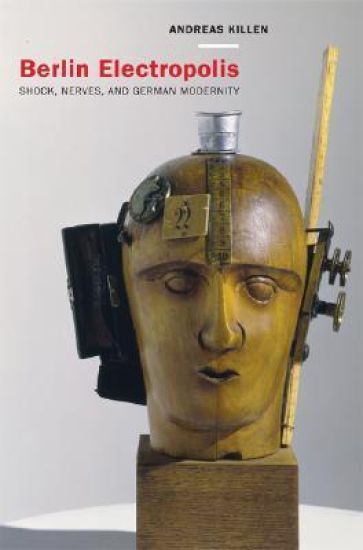
Berlin Electropolis

Andreas Killen

University of California Press
2006
sidottu
Berlin Electropolis ties the German discourse on nervousness in the late nineteenth and early twentieth centuries to Berlin's transformation into a capital of the second industrial revolution. Focusing on three key groups--railway personnel, soldiers, and telephone operators--Andreas Killen traces the emergence in the 1880s and then later decline of the belief that modernity caused nervous illness. During this period, Killen explains, Berlin became arguably the most advanced metropolis in Europe. A host of changes, many associated with breakthroughs in technologies of transportation, communication, and leisure, combined to radically alter the shape and tempo of everyday life in Berlin. The resulting consciousness of accelerated social change and the shocks and afflictions that accompanied it found their consummate expression in the discourse about nervousness. Wonderfully researched and clearly written, this book offers a wealth of new insights into the nature of the modern metropolis, the psychological aftermath of World War I, and the operations of the German welfare state. Killen also explores cultural attitudes toward electricity, the evolution of psychiatric thought and practice, and the status of women workers in Germany's rapidly industrializing economy. Ultimately, he argues that the backlash against the welfare state that occurred during the late Weimar Republic brought about the final decoupling of modernity and nervous illness.
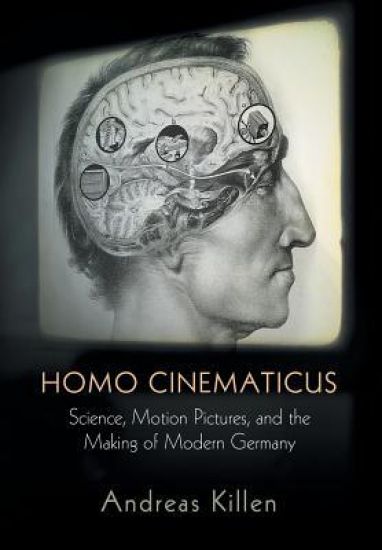
Homo Cinematicus

Homo Cinematicus

Andreas Killen

University of Pennsylvania Press
2017
sidottu
In the early decades of the twentieth century, two intertwined changes began to shape the direction of German society. The baptism of the German film industry took place amid post-World War I conditions of political and social breakdown, and the cultural vacuum left by collapsing institutions was partially filled by moving images. At the same time, the emerging human sciences-psychiatry, neurology, sexology, eugenics, industrial psychology, and psychoanalysis-began to play an increasingly significant role in setting the terms for the way Germany analyzed itself and the problems it had inherited from its authoritarian past, the modernizing process, and war. Moreover, in advancing their professional and social goals, these sciences became heavily reliant on motion pictures. Situated at the intersection of film studies, the history of science and medicine, and the history of modern Germany, Homo Cinematicus connects the rise of cinema as a social institution to an inquiry into the history of knowledge production in the human sciences. Taking its title from a term coined in 1919 by commentator Wilhelm Stapel to identify a new social type that had been created by the emergence of cinema, Killen's book explores how a new class of experts in these new disciplines converged on the figure of the "homo cinematicus" and made him central to many of that era's major narratives and social policy initiatives. Killen traces film's use by the human sciences as a tool for producing, communicating, and popularizing new kinds of knowledge, as well as the ways that this alliance was challenged by popular films that interrogated the truth claims of both modern science and scientific cinema. In doing so, Homo Cinematicus endeavors to move beyond the divide between scientific and popular film, examining their historical coexistence and coevolution.