Kirjojen hintavertailu. Mukana 12 376 639 kirjaa ja 12 kauppaa.

Kirjahaku

Etsi kirjoja tekijän nimen, kirjan nimen tai ISBN:n perusteella.

5 kirjaa tekijältä Andreas Serafim

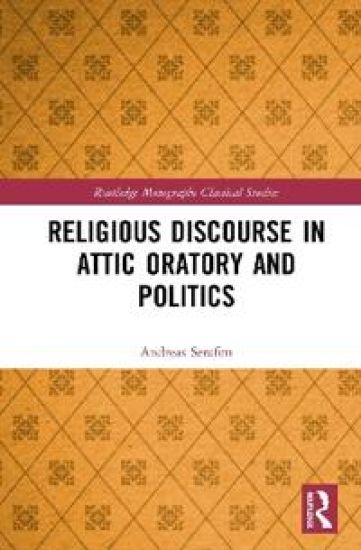
Religious Discourse in Attic Oratory and Politics

Religious Discourse in Attic Oratory and Politics

Andreas Serafim

TAYLOR FRANCIS LTD
2023
nidottu
The book offers a critical investigation of a wide range of features of religious discourse in the transmitted forensic, symbouleutic and epideictic orations of the Ten Attic Orators, a body of 151 speeches which represents the mature flourishing of the ancient art of public speaking and persuasion. Serafim focuses on how the intersections between such religious discourse and the political, legal and civic institutions of classical Athens help to shed new light on polis identity-building and the construction of an imagined community in three institutional contexts – the law court, the Assembly and the Boule: a community that unites its members and defines the ways in which they make decisions. After a full-scale survey of the persistently and recurrently used features of religious discourse in Attic oratory, he contextualizes and explains the use of specific patterns of religious discourse in specific oratorical contexts, examining the means or restrictions that these contexts generate for the speaker. In doing so, he explores the cognitive/emotional and physical/sensory reactions of the speaker and the audience when religious stimuli are provided in orations, and how this contributes to the construction of civic and political identity in classical Athens.Religious Discourse in Attic Oratory and Politics will be of interest to anyone working on classical Athens, particularly its legal institutions, on ancient rhetoric, and ancient Greek religion and politics.
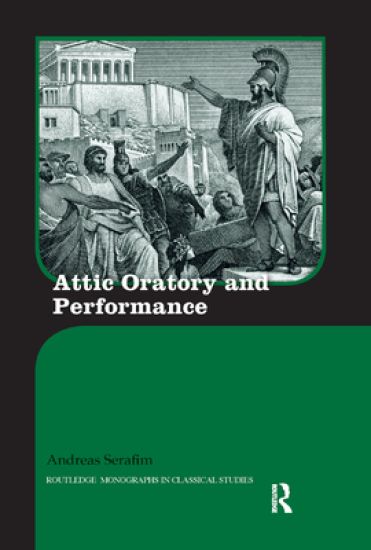
Attic Oratory and Performance

Attic Oratory and Performance

Andreas Serafim

Routledge
2019
nidottu
In a society where public speech was integral to the decision-making process, and where all affairs pertaining to the community were the subject of democratic debate, the communication between the speaker and his audience in the public forum, whether the law-court or the Assembly, cannot be separated from the notion of performance. Attic Oratory and Performance seeks to make modern Performance Studies productive for, and so make a significant contribution to, the understanding of Greek oratory. Although quite a lot of ink has been spilt over the performance dimension of oratory, the focus of nearly all of the scholarship in this area has been relatively narrow, understanding performance as only encompassing 'delivery' – the use of gestures and vocal ploys – and the convergences and divergences between oratory and theatre. Serafim seeks to move beyond this relatively narrow focus to offer a holistic perspective on performance and oratory. Using examples from selected forensic speeches, in particular four interconnected speeches by Aeschines (2, 3) and Demosthenes (18, 19), he argues that oratorical performance encompassed subtle communication between the speaker and the audience beyond mere delivery, and that the surviving texts offer numerous glimpses of the performative dimension of these speeches, and their links to contemporary theatre.
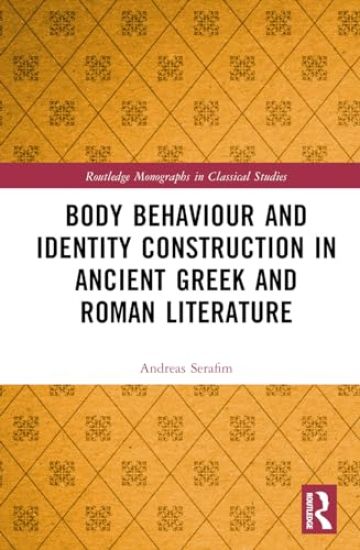
Body Behaviour and Identity Construction in Ancient Greek and Roman Literature
This book offers the first systematic, up-to-date, cross-cultural, and detailed study of “semi-volitional bodily behaviour” (sneezing, spitting, coughing, burping, vomiting, defecating, etc.) in the classical world.Examining verse and prose texts, fragments, and scholia from the age of Homer to the second century AD, the central argument put forward in this volume is that semi-volitional bodily acts have the potential to betray individual or collective (ethnic/civic and cultural) identities centred on a variety of different themes. Discussions specifically focus on the following five aspects of the interplay between semi-volitional body language and identity construction: sexuality and gender; the link between sexuality and socioeconomic identity of individuals or groups; the embodied markers of civic/ethnic and cultural collectives and the contrast between “we-ness” and “otherness”; ethos and emotions; and how dietary habits and illnesses indicate the “somo-psychosocial” identity of individuals or groups. The book offers a comprehensive understanding of representations of the human body in ancient Greece and Rome, while reopening the complex and fascinating discussion about the relationship between intention, mind, body, and identity.This book offers a fascinating study suitable for students and scholars of classics and ancient Greek and Roman history. It is also of interest to those in a variety of other disciplines, including body culture studies, gender and sexuality studies, and performance studies, as well as sociology, anthropology, cognitive medicine, and the history of medicine.
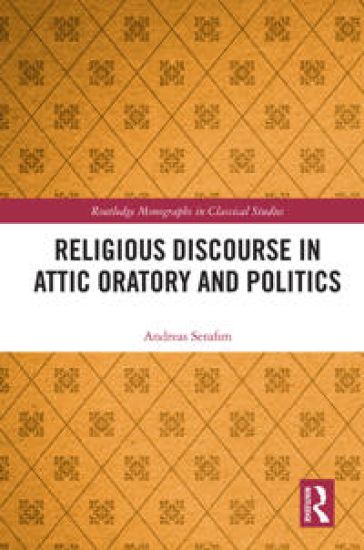
Religious Discourse in Attic Oratory and Politics
The book offers a critical investigation of a wide range of features of religious discourse in the transmitted forensic, symbouleutic and epideictic orations of the Ten Attic Orators, a body of 151 speeches which represents the mature flourishing of the ancient art of public speaking and persuasion. Serafim focuses on how the intersections between such religious discourse and the political, legal and civic institutions of classical Athens help to shed new light on polis identity-building and the construction of an imagined community in three institutional contexts – the law court, the Assembly and the Boule: a community that unites its members and defines the ways in which they make decisions. After a full-scale survey of the persistently and recurrently used features of religious discourse in Attic oratory, he contextualizes and explains the use of specific patterns of religious discourse in specific oratorical contexts, examining the means or restrictions that these contexts generate for the speaker. In doing so, he explores the cognitive/emotional and physical/sensory reactions of the speaker and the audience when religious stimuli are provided in orations, and how this contributes to the construction of civic and political identity in classical Athens.Religious Discourse in Attic Oratory and Politics will be of interest to anyone working on classical Athens, particularly its legal institutions, on ancient rhetoric, and ancient Greek religion and politics.
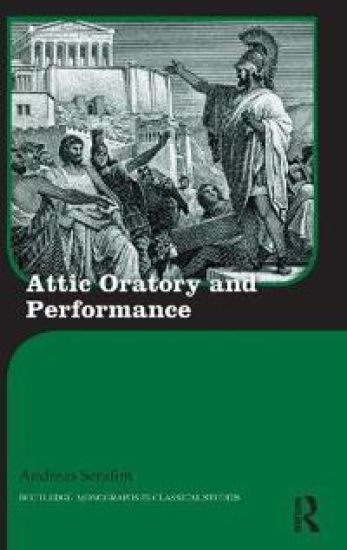
Attic Oratory and Performance

Attic Oratory and Performance

Andreas Serafim

Routledge
2017
sidottu
In a society where public speech was integral to the decision-making process, and where all affairs pertaining to the community were the subject of democratic debate, the communication between the speaker and his audience in the public forum, whether the law-court or the Assembly, cannot be separated from the notion of performance. Attic Oratory and Performance seeks to make modern Performance Studies productive for, and so make a significant contribution to, the understanding of Greek oratory. Although quite a lot of ink has been spilt over the performance dimension of oratory, the focus of nearly all of the scholarship in this area has been relatively narrow, understanding performance as only encompassing 'delivery' – the use of gestures and vocal ploys – and the convergences and divergences between oratory and theatre. Serafim seeks to move beyond this relatively narrow focus to offer a holistic perspective on performance and oratory. Using examples from selected forensic speeches, in particular four interconnected speeches by Aeschines (2, 3) and Demosthenes (18, 19), he argues that oratorical performance encompassed subtle communication between the speaker and the audience beyond mere delivery, and that the surviving texts offer numerous glimpses of the performative dimension of these speeches, and their links to contemporary theatre.