Kirjojen hintavertailu. Mukana 11 717 486 kirjaa ja 12 kauppaa.

Kirjahaku

Etsi kirjoja tekijän nimen, kirjan nimen tai ISBN:n perusteella.

38 kirjaa tekijältä Andreas Wagner

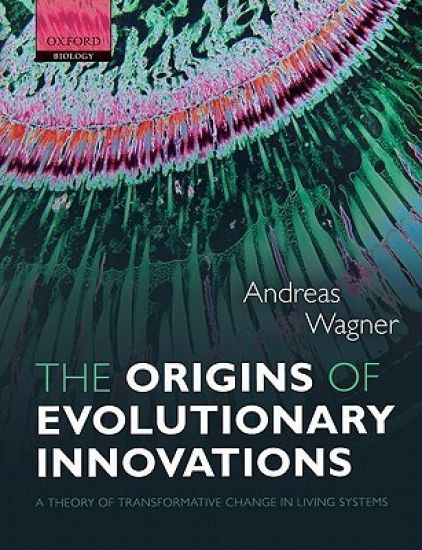
The Origins of Evolutionary Innovations

The Origins of Evolutionary Innovations

Andreas Wagner

Oxford University Press
2011
sidottu
The history of life is a nearly four billion year old story of transformative change. This change ranges from dramatic macroscopic innovations such as the evolution of wings or eyes, to a myriad of molecular changes that form the basis of macroscopic innovations. We are familiar with many examples of innovations (qualitatively new phenotypes that provide a critical benefit) but have no systematic understanding of the principles that allow organisms to innovate. This book proposes several such principles as the basis of a theory of innovation, integrating recent knowledge about complex molecular phenotypes with more traditional Darwinian thinking. Central to the book are genotype networks: vast sets of connected genotypes that exist in metabolism and regulatory circuitry, as well as in protein and RNA molecules. The theory can successfully unify innovations that occur at different levels of organization. It captures known features of biological innovation, including the fact that many innovations occur multiple times independently, and that they combine existing parts of a system to new purposes. It also argues that environmental change is important to create biological systems that are both complex and robust, and shows how such robustness can facilitate innovation. Beyond that, the theory can reconcile neutralism and selectionism, as well as explain the role of phenotypic plasticity, gene duplication, recombination, and cryptic variation in innovation. Finally, its principles can be applied to technological innovation, and thus open to human engineering endeavours the powerful principles that have allowed life's spectacular success.
The Origins of Evolutionary Innovations

The Origins of Evolutionary Innovations

Andreas Wagner

Oxford University Press
2011
nidottu
The history of life is a nearly four billion year old story of transformative change. This change ranges from dramatic macroscopic innovations such as the evolution of wings or eyes, to a myriad of molecular changes that form the basis of macroscopic innovations. We are familiar with many examples of innovations (qualitatively new phenotypes that provide a critical benefit) but have no systematic understanding of the principles that allow organisms to innovate. This book proposes several such principles as the basis of a theory of innovation, integrating recent knowledge about complex molecular phenotypes with more traditional Darwinian thinking. Central to the book are genotype networks: vast sets of connected genotypes that exist in metabolism and regulatory circuitry, as well as in protein and RNA molecules. The theory can successfully unify innovations that occur at different levels of organization. It captures known features of biological innovation, including the fact that many innovations occur multiple times independently, and that they combine existing parts of a system to new purposes. It also argues that environmental change is important to create biological systems that are both complex and robust, and shows how such robustness can facilitate innovation. Beyond that, the theory can reconcile neutralism and selectionism, as well as explain the role of phenotypic plasticity, gene duplication, recombination, and cryptic variation in innovation. Finally, its principles can be applied to technological innovation, and thus open to human engineering endeavours the powerful principles that have allowed life's spectacular success.

Paradoxical Life

Paradoxical Life

Andreas Wagner

Yale University Press
2011
pokkari
For readers of Hofstadter’s Gödel, Escher, Bach, a fascinating look at the hidden meaning in matter What can a fingernail tell us about the mysteries of creation? In one sense, a nail is merely a hunk of mute matter, yet in another, it’s an information superhighway quite literally at our fingertips. Every moment, streams of molecular signals direct our cells to move, flatten, swell, shrink, divide, or die. Andreas Wagner’s ambitious new book explores this hidden web of unimaginably complex interactions in every living being. In the process, he unveils a host of paradoxes underpinning our understanding of modern biology, contradictions he considers gatekeepers at the frontiers of knowledge.Though we tend to think of concepts in such mutually exclusive pairs as mind-matter, self-other, and nature-nurture, Wagner argues that these opposing ideas are not actually separate. Indeed, they are as inextricably connected as the two sides of a coin. Through a tour of modern biological marvels, Wagner illustrates how this paradoxical tension has a profound effect on the way we define the world around us. Paradoxical Life is thus not only a unique account of modern biology. It ultimately serves a radical—and optimistic—outlook for humans and the world we help create.
God's Body

God's Body

Andreas Wagner

T. T.Clark Ltd
2019
nidottu
Images of the body in ancient Near Eastern civilizations are radically different from body images today, which in turn creates significant consequences for our understanding of the biblical notion of God’s human shape and the frequent and widespread misconceptions therein. Andreas Wagner illuminates such frequent and widespread misconceptions, and reveals the sometimes distant pictorial world of ancient body images. He contrasts these with contemporary models and makes the matter of the Old Testament concept of God’s human form accessible and clear.Wagner begins by introducing readers to aspects of anthropomorphism, the study of body parts, and Israel’s basic understanding of the human body. He then turns specifically to the body of God, analysing why and how certain body parts are emphasized or regularly employed in the biblical text when it tries to describe God. Wagner draws out the theological aspects of the ways in which God’s body is described as well as considering the diverse range of ancient Near Eastern perspectives on God, and the ways in which ancient cultures constructed and understood deities. Wagner concludes by looking at how the depiction of God in the Old Testament fits with the concept of mankind made in God’s image. Enhanced by over fifty illustrations, God’s Body will lead the debate in biblical anthropomorphism for years to come.
God's Body

God's Body

Andreas Wagner

T. T.Clark Ltd
2019
sidottu
Images of the body in ancient Near Eastern civilizations are radically different from body images today, which in turn creates significant consequences for our understanding of the biblical notion of God’s human shape and the frequent and widespread misconceptions therein. Andreas Wagner illuminates such frequent and widespread misconceptions, and reveals the sometimes distant pictorial world of ancient body images. He contrasts these with contemporary models and makes the matter of the Old Testament concept of God’s human form accessible and clear.Wagner begins by introducing readers to aspects of anthropomorphism, the study of body parts, and Israel’s basic understanding of the human body. He then turns specifically to the body of God, analysing why and how certain body parts are emphasized or regularly employed in the biblical text when it tries to describe God. Wagner draws out the theological aspects of the ways in which God’s body is described as well as considering the diverse range of ancient Near Eastern perspectives on God, and the ways in which ancient cultures constructed and understood deities. Wagner concludes by looking at how the depiction of God in the Old Testament fits with the concept of mankind made in God’s image. Enhanced by over fifty illustrations, God’s Body will lead the debate in biblical anthropomorphism for years to come.
Robustness and Evolvability in Living Systems

Robustness and Evolvability in Living Systems

Andreas Wagner

Princeton University Press
2007
pokkari
All living things are remarkably complex, yet their DNA is unstable, undergoing countless random mutations over generations. Despite this instability, most animals do not grow two heads or die, plants continue to thrive, and bacteria continue to divide. Robustness and Evolvability in Living Systems tackles this perplexing paradox. The book explores why genetic changes do not cause organisms to fail catastrophically and how evolution shapes organisms' robustness. Andreas Wagner looks at this problem from the ground up, starting with the alphabet of DNA, the genetic code, RNA, and protein molecules, moving on to genetic networks and embryonic development, and working his way up to whole organisms. He then develops an evolutionary explanation for robustness. Wagner shows how evolution by natural selection preferentially finds and favors robust solutions to the problems organisms face in surviving and reproducing. Such robustness, he argues, also enhances the potential for future evolutionary innovation. Wagner also argues that robustness has less to do with organisms having plenty of spare parts (the redundancy theory that has been popular) and more to do with the reality that mutations can change organisms in ways that do not substantively affect their fitness. Unparalleled in its field, this book offers the most detailed analysis available of all facets of robustness within organisms. It will appeal not only to biologists but also to engineers interested in the design of robust systems and to social scientists concerned with robustness in human communities and populations.
Sleeping Beauties

Sleeping Beauties

Andreas Wagner

Oneworld Publications
2023
sidottu
Life innovates constantly, producing perfectly adapted species – but there’s a catch. A TIMES AND TELEGRAPH BEST BOOK OF 2023 'Hopeful and fascinating.' THE TIMES Many animals and plants eke out seemingly unremarkable lives. Passive, constrained, modest, threatened. Then, in a blink of evolutionary time, they flourish spectacularly. Once we start to look, these ‘sleeping beauties’ crop up everywhere. But why? Looking at the book of life, from apex predators to keystone crops, and informed by his own cutting-edge experiments, renowned scientist Andreas Wagner demonstrates that innovations can come frequently and cheaply to nature, well before they are needed. We have found prehistoric bacteria that harbour the remarkable ability to fight off 21st-century antibiotics. And human history fits the pattern too, as life-changing technologies are invented only to be forgotten, languishing in the shadows before they finally take off. In probing the mysteries of these sleeping beauties, Wagner reveals a crucial part of nature’s rich and strange tapestry.
Sleeping Beauties

Sleeping Beauties

Andreas Wagner

Oneworld Publications
2024
nidottu
Life innovates constantly, producing perfectly adapted species – but there’s a catch. A TIMES AND TELEGRAPH BEST BOOK OF 2023 'Hopeful and fascinating.' THE TIMES Many animals and plants eke out seemingly unremarkable lives. Passive, constrained, modest, threatened. Then, in a blink of evolutionary time, they flourish spectacularly. Once we start to look, these ‘sleeping beauties’ crop up everywhere. But why? Looking at the book of life, from apex predators to keystone crops, and informed by his own cutting-edge experiments, renowned scientist Andreas Wagner demonstrates that innovations can come frequently and cheaply to nature, well before they are needed. We have found prehistoric bacteria that harbour the remarkable ability to fight off 21st-century antibiotics. And human history fits the pattern too, as life-changing technologies are invented only to be forgotten, languishing in the shadows before they finally take off. In probing the mysteries of these sleeping beauties, Wagner reveals a crucial part of nature’s rich and strange tapestry.
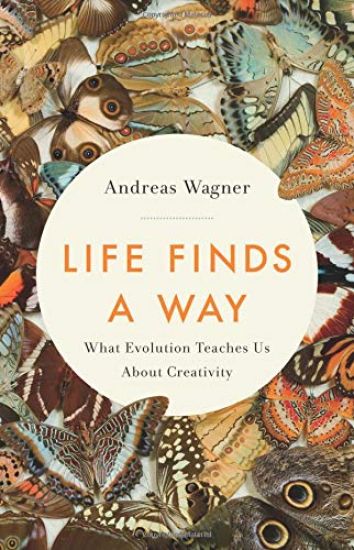
Life Finds a Way: What Evolution Teaches Us about Creativity
How the principles of biological innovation can help us overcome creative challenges in art, business, and scienceIn Life Finds a Way, biologist Andreas Wagner reveals the deep symmetry between innovation in biological evolution and human cultural creativity. Rarely is either a linear climb to perfection--instead, progress is typically marked by a sequence of peaks, plateaus, and pitfalls. For instance, in Picasso's forty-some iterations of Guernica, we see the same combination of small steps, incessant reshuffling, and large, almost reckless, leaps that characterize the way evolution transformed a dinosaur's grasping claw into a condor's soaring wing. By understanding these principles, we can also better realize our own creative potential to find new solutions to adversity.Ultimately, Life Finds a Way offers a new framework for the nature of creativity, enabling us to better adapt, grow, and change in art, business, or science--that is, in life.
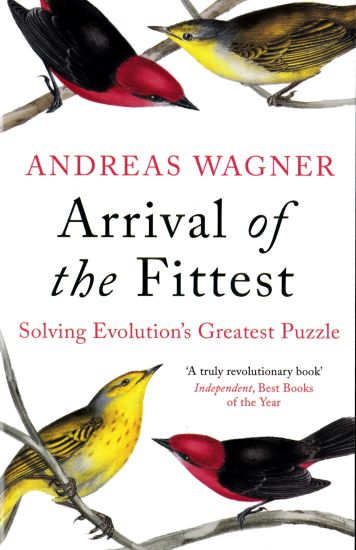
Arrival of the Fittest: How Nature Innovates
"Natural selection can preserve innovations, but it cannot create them. Nature's many innovations--some uncannily perfect--call for natural principles that accelerate life's ability to innovate." Darwin's theory of natural selection explains how useful adaptations are preserved over time. But the biggest mystery about evolution eluded him. As genetics pioneer Hugo de Vries put it, "natural selection may explain the survival of the fittest, but it cannot explain the arrival of the fittest." Can random mutations over a mere 3.8 billion years really be responsible for wings, eyeballs, knees, camouflage, lactose digestion, photosynthesis, and the rest of nature's creative marvels? And if the answer is no, what is the mechanism that explains evolution's speed and efficiency? In Arrival of the Fittest, renowned evolutionary biologist Andreas Wagner draws on over fifteen years of research to present the missing piece in Darwin's theory. Using experimental and computational technologies that were heretofore unimagined, he has found that adaptations are not just driven by chance, but by a set of laws that allow nature to discover new molecules and mechanisms in a fraction of the time that random variation would take. Consider the Arctic cod, a fish that lives and thrives within six degrees of the North Pole, in waters that regularly fall below 0 degrees. At that temperature, the internal fluids of most organisms turn into ice crystals. And yet, the arctic cod survives by producing proteins that lower the freezing temperature of its body fluids, much like antifreeze does for a car's engine coolant. The invention of those proteins is an archetypal example of nature's enormous powers of creativity. Meticulously researched, carefully argued, evocatively written, and full of fascinating examples from the animal kingdom, Arrival of the Fittest offers up the final puzzle piece in the mystery of life's rich diversity.
Arrival of the Fittest

Arrival of the Fittest

Andreas Wagner

Oneworld Publications
2015
pokkari
Darwin’s theory of natural selection was a monumental step in our understanding of evolution, explaining how useful adaptations are preserved over generations. However, Darwin’s great idea didn’t – and couldn’t – tell us how those adaptations arise in the first place. On its own, can random mutation really be responsible for all the creative marvels in nature? Renowned evolutionary biologist Andreas Wagner presents the missing piece of Darwin’s theory. Using cutting-edge experimental technologies, he has found that adaptations are driven by a set of laws which allow nature to discover new molecules and mechanisms in a fraction of the time that random variation would take. Meticulously researched, carefully argued, and full of fascinating examples from the animal kingdom, Arrival of the Fittest signals an end to the mystery of life’s rich diversity.
Life Finds a Way

Life Finds a Way

Andreas Wagner

Oneworld Publications
2021
pokkari
How can new insights into evolution help us solve problems in life, art, business and science? ‘A wonderful, mind-expanding book. Prepare to be surprised, enlightened and awed.’ Alice Roberts, author of Ancestors In Darwin’s survival of the fittest, each step must be uphill as life progresses towards an evolutionary peak. There is no turning back. So what happens when life needs to cross a valley in the wilds of an adaptive landscape to reach the highest summit? World-renowned biologist Andreas Wagner reveals that life does not only walk – it also leaps. Drawing on pioneering research, Wagner explores life’s creative process and how it bears a striking resemblance to how we humans work. A beguiling symmetry links Picasso struggling through forty versions of Guernica and the way evolution transformed a dinosaur’s claw into a condor’s wing. This new understanding is already revolutionising our approach to problem-solving across the sciences. In the near future, applied in spheres as diverse as the economy and education, it will enable us to do so much more. Life Finds a Way is a thought-provoking and deeply hopeful look at the force that shapes our world.
Wandel und Fortschritt in den Christdemokratien Europas
Die christdemokratischen Parteien Westeuropas sahen sich zuletzt besonders stark mit gesellschaftlichem und politischem Wandel konfrontiert. Die Reaktionen dieser einst hyperstabilen christdemokratischen Parteien der bundesdeutschen CDU, der österreichischen ÖVP und des niederländischen CDA fielen dagegen umso mächtiger aus. Andreas Wagner stellt dar, dass es trotz der einst gefestigten gesellschaftlichen Verhältnisse und der ganz besonderen innerparteilichen Beharrungskräfte zu erstaunlichen Veränderungsprozessen kam, die sich immer wieder gegenüber den innerparteilichen Vetospielern behaupten mussten. Gerade in Oppositionszeiten zeigte sich jedoch über die Landesgrenzen hinweg, wie die Christdemokratien die Zeit nutzten, um als politische Großorganisationen zu lernen und sich zu verändern.
Doing Grassroots

Doing Grassroots

Andreas Wagner

Springer vs
2015
nidottu
Andreas Wagner untersucht in dieser ethnografischen Studie anhand von Kooperationen eines internationalen Kinderhilfswerkes mit Gemeindegruppen in Sambia, Äthiopien, Kenia, Uganda und Mosambik, wie durch die Zusammenarbeit international agierender NGOs mit lokalen Communities Graswurzelorganisationen geschaffen werden, um der problematischen Lebenssituation vulnerabler Kinder zu begegnen. Diese Community-Based Organisations werden durch Interaktionen und komplexe Aushandlungsprozesse hergestellt und als anschlussfähige, lokale Partner für Geberorganisationen der Entwicklungszusammenarbeit organisiert, um dadurch eine nachhaltige Wirkung der Projekte zu erreichen. Zur Beschreibung dieses Prozesses der gemeinsamen Herstellung von Graswurzelprojekten wird das Konzept des doing grassroots eingeführt.
Photovoltaik Engineering

Photovoltaik Engineering

Andreas Wagner

Springer Fachmedien Wiesbaden
2019
muu
Dieses Buch beschreibt die notwendigen Methoden für Planung, Entwicklung und Anwendung photovoltaischer Anlagen im Inselbetrieb, zur Netzeinspeisung oder mit Nachführung. Die fünfte Auflage dieses anerkannten Werkes liefert Methoden und Planungshilfen für die Dimensionierung photovoltaischer Komponenten unter realitätsnahen Bedingungen. Der Autor befasst sich ausführlich mit photovoltaischen Inselsystemen, der Qualitätskontrolle vor Ort und der Energie-Ertragsprognose von photovoltaischen Systemen zur Netzeinspeisung. Einstrahlungsdaten für etwa 500 Städte in 140 Ländern aller Kontinente, darunter auch für alle Bundesstaaten der USA, machen das Buch zu einem wertvollen Begleiter für alle Anlagenplaner und -betreiber der Photovoltaik.