Kirjojen hintavertailu. Mukana 11 244 527 kirjaa ja 12 kauppaa.

Kirjahaku

Etsi kirjoja tekijän nimen, kirjan nimen tai ISBN:n perusteella.

6 kirjaa tekijältä Andreja Novakovic

Hegel on the Family Form

Hegel on the Family Form

Andreja Novakovic

Cambridge University Press
2025
pokkari
Hegel famously argues that the patriarchal, bourgeois nuclear family is a rational institution worth defending. Scholars have asked what exactly to do with this seemingly outdated part of his social and political philosophy. In particular, they have wondered whether Hegel's concept of the family can accommodate changes to our understanding of what counts as a family and what constitutes family relations. In this Element, I ask whether Hegel's defense of the family can be reconciled with family abolition, the project not of reforming the family as an institution, but of radically transforming it beyond recognition. By examining the three relationships that Hegel associates with the family – brothers and sisters, husbands and wives, and parents and children – I argue that Hegel's concept of the family can be reconciled with family abolition so described. What Hegel provides is an account of the family as a site at which important goods have been discovered and eveloped, without claiming that the family as an institution is necessary for, or even ideally suited to, their continued realization. These goods are singular individuality, ethical love, and material resources.
Hegel on the Family Form

Hegel on the Family Form

Andreja Novakovic

Cambridge University Press
2025
sidottu
Hegel famously argues that the patriarchal, bourgeois nuclear family is a rational institution worth defending. Scholars have asked what exactly to do with this seemingly outdated part of his social and political philosophy. In particular, they have wondered whether Hegel's concept of the family can accommodate changes to our understanding of what counts as a family and what constitutes family relations. In this Element, I ask whether Hegel's defense of the family can be reconciled with family abolition, the project not of reforming the family as an institution, but of radically transforming it beyond recognition. By examining the three relationships that Hegel associates with the family – brothers and sisters, husbands and wives, and parents and children – I argue that Hegel's concept of the family can be reconciled with family abolition so described. What Hegel provides is an account of the family as a site at which important goods have been discovered and eveloped, without claiming that the family as an institution is necessary for, or even ideally suited to, their continued realization. These goods are singular individuality, ethical love, and material resources.
Hegel on Second Nature in Ethical Life

Hegel on Second Nature in Ethical Life

Andreja Novakovic

Cambridge University Press
2017
sidottu
What does it take to be subjectively free in an objectively rational social order? In this book Andreja Novakovic offers a fresh interpretation of Hegel's account of ethical life by focusing on his concept of habit or 'second nature'. Novakovic addresses two central and difficult issues facing any interpretation of his Philosophy of Right: why Hegel thinks that it is is better to relate unreflectively to the laws of ethical life, and which forms of reflection, especially critical reflection, remain available within ethical life. Her interpretation draws on numerous parts of Hegel's system, particularly on his 'Anthropology' and his Phenomenology of Spirit, and also explores connections between his account and those of other philosophers. Her aim is to argue that Hegel has a compelling conception of the ordinary ethical standpoint which takes seriously both the virtues and the perils of reflection.
Hegel on Second Nature in Ethical Life

Hegel on Second Nature in Ethical Life

Andreja Novakovic

Cambridge University Press
2020
pokkari
What does it take to be subjectively free in an objectively rational social order? In this book Andreja Novakovic offers a fresh interpretation of Hegel's account of ethical life by focusing on his concept of habit or 'second nature'. Novakovic addresses two central and difficult issues facing any interpretation of his Philosophy of Right: why Hegel thinks that it is is better to relate unreflectively to the laws of ethical life, and which forms of reflection, especially critical reflection, remain available within ethical life. Her interpretation draws on numerous parts of Hegel's system, particularly on his 'Anthropology' and his Phenomenology of Spirit, and also explores connections between his account and those of other philosophers. Her aim is to argue that Hegel has a compelling conception of the ordinary ethical standpoint which takes seriously both the virtues and the perils of reflection.
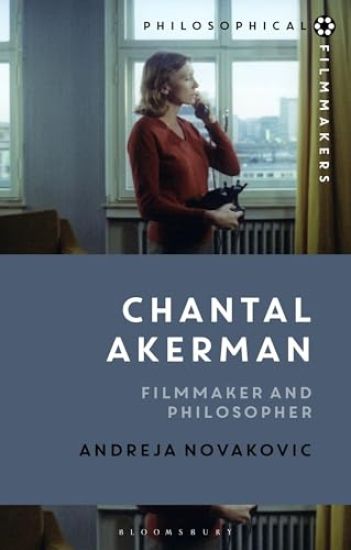
Chantal Akerman

Chantal Akerman

Andreja Novakovic

BLOOMSBURY PUBLISHING PLC
2025
nidottu
Belgian auteur Chantal Akerman's ouevre is profoundly philosophical, exploring everything from home and homelessness, work and social reproduction, self and identity, to desire in its many forms. In particular, Akerman turns her camera on contexts that had been previously neglected, such as transitional spaces like hotel lobbies and street corners as well as the domestic sphere, revealing their significance in structuring experience.Andreja Novakovic looks at the role of rituals, gestures and habits in Akerman’s (auto)fictional worlds drawing on writers from Hegel to Butler, Beauvoir and Federici. Chantal Akerman is a fascinating philosophical reinterpretation of one of the most important directors of European experimental and independent cinema.
Chantal Akerman

Chantal Akerman

Andreja Novakovic

BLOOMSBURY PUBLISHING PLC
2025
sidottu
Chantal Akerman turns her pioneering camera on neglected contexts from transitional spaces like hotel lobbies and street corners, to domestic spaces like kitchens and bedrooms. Through her wide ranging films, Akerman addresses subjects such as home and homelessness, work and social reproduction, self and identity, and desire in its many forms.This book is the first philosophical study of Akerman’s oeuvre. Andreja Novakovic looks at patterns of staying put and moving on in the Belgian auteur’s deeply personal body of work, drawing on writers from Cavell to Beauvoir and Federici. It is an absorbing reinterpretation of one of the most important directors of European cinema, whose Jeanne Dielman was recently selected as Sight and Sound’s Greatest Film of All Time.