Kirjojen hintavertailu. Mukana 11 433 028 kirjaa ja 12 kauppaa.

Kirjahaku

Etsi kirjoja tekijän nimen, kirjan nimen tai ISBN:n perusteella.

28 kirjaa tekijältä Andrew Benjamin

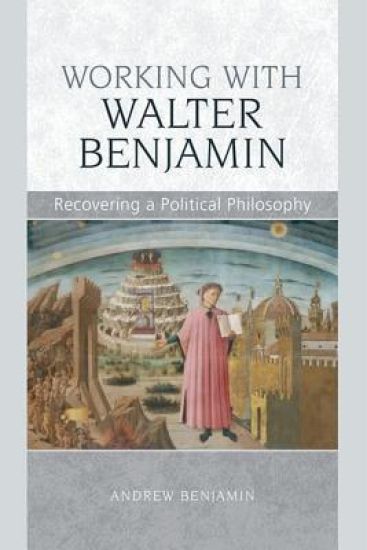
Working with Walter Benjamin

Working with Walter Benjamin

Andrew Benjamin

Edinburgh University Press
2013
sidottu
This book provides a highly original approach to the writings of the twentieth-century German philosopher Walter Benjamin by one of his most distinguished readers. It develops the idea of 'working with' Benjamin, seeking both to read his corpus and to put it to work - to show how a reading of Benjamin can open up issues that may not themselves be immediately at stake in his texts. The defining elements in Benjamin's writings that Andrew Benjamin isolates - history, experience, translation, technical reproducibility and politics - are put to work; that is, their utility is established in engaging the works of others. The question is how utility is understood. As Andrew Benjamin argues, utility involves demonstrating the different ways in which Benjamin is a central thinker within the project of understanding the nature of modernity. This is best achieved by noting connections and points of differentiation between his work and the writings of Adorno and Heidegger. However, the more demanding project is that 'working with' Benjamin necessitates deploying the implicit assumptions within his writings as well as demanding of his formulations more than is provided by their initial presentation. What is at stake is not the application of Benjamin's thought. Rather what counts is its use. Working with Benjamin engages with the themes central to Benjamin's work with deftness, daring and critical insight while at the same time situating those themes within current academic and cultural debates.
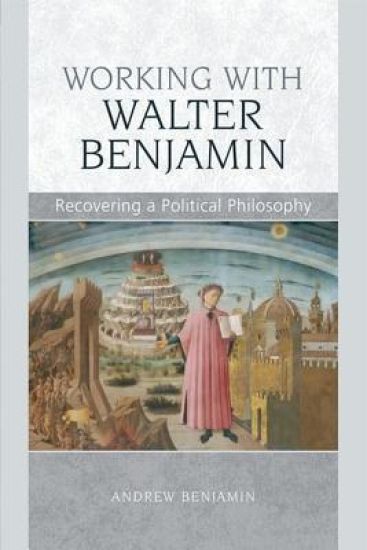
Working with Walter Benjamin

Working with Walter Benjamin

Andrew Benjamin

Edinburgh University Press
2013
nidottu
This book provides a highly original approach to the writings of the twentieth-century German philosopher Walter Benjamin by one of his most distinguished readers. It develops the idea of 'working with' Benjamin, seeking both to read his corpus and to put it to work - to show how a reading of Benjamin can open up issues that may not themselves be immediately at stake in his texts. The defining elements in Benjamin's writings that Andrew Benjamin isolates - history, experience, translation, technical reproducibility and politics - are put to work; that is, their utility is established in engaging the works of others. The question is how utility is understood. As Andrew Benjamin argues, utility involves demonstrating the different ways in which Benjamin is a central thinker within the project of understanding the nature of modernity. This is best achieved by noting connections and points of differentiation between his work and the writings of Adorno and Heidegger. However, the more demanding project is that 'working with' Benjamin necessitates deploying the implicit assumptions within his writings as well as demanding of his formulations more than is provided by their initial presentation. What is at stake is not the application of Benjamin's thought. Rather what counts is its use.Working with Benjamin engages with the themes central to Benjamin's work with deftness, daring and critical insight while at the same time situating those themes within current academic and cultural debates.
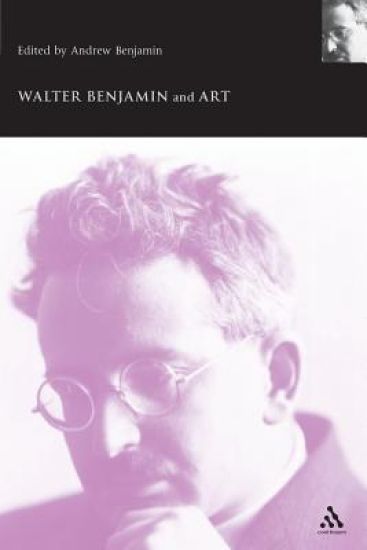
Walter Benjamin and Art

Walter Benjamin and Art

Andrew Benjamin

Continuum International Publishing Group Ltd.
2005
nidottu
Walter Benjamin's most famous and influential essay remains The Work of Art in the Age of Mechanical Reproduction. Walter Benjamin and the Work of Art is the first book to provide a broad and dedicated analysis of this canonical work and its effect upon core contemporary concerns in the visual arts, aesthetics and the history of philosophy. The book is structured around three distinct areas: the extension of Benjamin's work; the question of historical connection; the importance of the essay in the development of criticism of both the visual arts and literature. Contributors to the volume include major Benjamin commentators, whose work has very much defined the reception of the essay, and leading philosophers, historians and aesthetician, whose approaches open up new areas of interest and relevance.
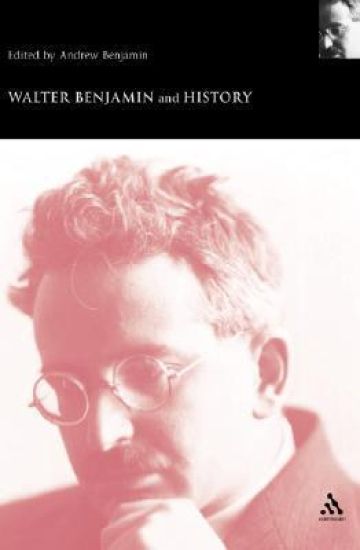
Walter Benjamin and History

Walter Benjamin and History

Andrew Benjamin

Mansell Publishing
2005
nidottu
The first book to examine in detail Benjamin's Theses on the Philosophy of History Benjamin's collection of fragments, Theses on the Philosophy of History, play a determining role in how Benjamin's thought is understood, as well as in the debate about the interplay between politics, history and time. Walter Benjamin and History is the first volume to give access to the themes and problems raised by the Theses, providing valuable exegetical and historical work on the text. The essays collected here are all the work of noted Benjamin scholars, and pursue the themes central to the Theses.
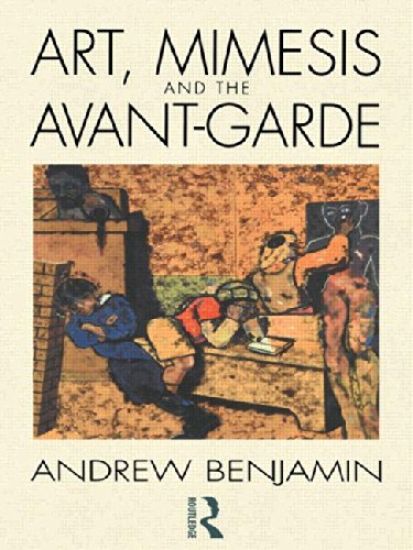
Art, Mimesis and the Avant-Garde

Art, Mimesis and the Avant-Garde

Andrew Benjamin

Routledge
1991
sidottu
This book explores the relationship between art and philosophy. Andrew Benjamin argues for a reworking of the task of philosophy in terms of the centrality of ontology. It is in relation to this centrality, understood through the differences between modes of being, that art, mimesis and the avant-garde come to be presented. A fundamental part of this book is the original interpretations of important contemporary painters and their paintings: Lucian Freud's self-portraits, Francis Bacon's use of mirrors, R.B. Kitaj and Jewish identity, Anselm Kiefer and iconoclasm. Apart from painting, Benjamin considers architecture, literature and the philosophical writings of Walter Benjamin and Descartes in elaborating the various aspects of ontological difference. The theory of the avant-garde which is developed in the book, in which the avant-garde is a philosophical category rather than a historical marker, is a major contribution to art criticism. It brings the worlds of contemporary art criticism and contemporary philosophy closer together.
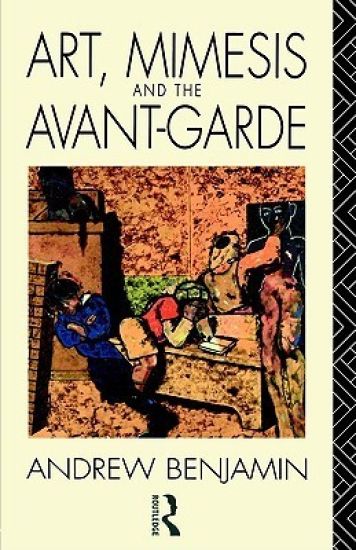
Art, Mimesis and the Avant-Garde

Art, Mimesis and the Avant-Garde

Andrew Benjamin

Routledge
1991
nidottu
This book explores the relationship between art and philosophy. Andrew Benjamin argues for a reworking of the task of philosophy in terms of the centrality of ontology. It is in relation to this centrality, understood through the differences between modes of being, that art, mimesis and the avant-garde come to be presented. A fundamental part of this book is the original interpretations of important contemporary painters and their paintings: Lucian Freud's self-portraits, Francis Bacon's use of mirrors, R.B. Kitaj and Jewish identity, Anselm Kiefer and iconoclasm. Apart from painting, Benjamin considers architecture, literature and the philosophical writings of Walter Benjamin and Descartes in elaborating the various aspects of ontological difference. The theory of the avant-garde which is developed in the book, in which the avant-garde is a philosophical category rather than a historical marker, is a major contribution to art criticism. It brings the worlds of contemporary art criticism and contemporary philosophy closer together.
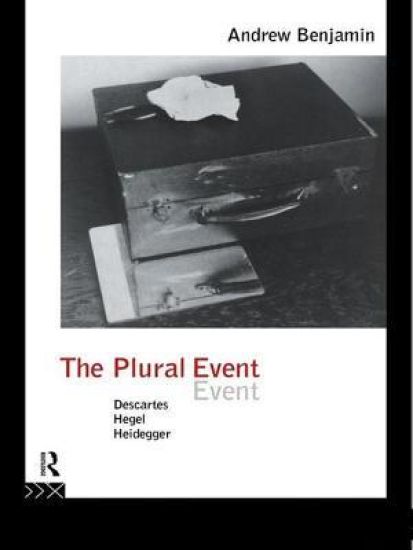
The Plural Event

The Plural Event

Andrew Benjamin

Routledge
1993
sidottu
Benjamin provides new and important readings of key canonical texts in the history of philosophy in his sustained philosophical reworking of ontology. Amongst texts included are Hegel's Difference Essay and the Shorter Logic and Heidegger's Time and Being and The Question of Being. The effective presence of ontology, defined as `an original difference', will be familiar to readers of his earlier writings. This book represents his most thorough and original contribution to contemporary philosophy to date.
The Plural Event

The Plural Event

Andrew Benjamin

Routledge
1993
nidottu
Benjamin provides new and important readings of key canonical texts in the history of philosophy in his sustained philosophical reworking of ontology. Amongst texts included are Hegel's Difference Essay and the Shorter Logic and Heidegger's Time and Being and The Question of Being. The effective presence of ontology, defined as `an original difference', will be familiar to readers of his earlier writings. This book represents his most thorough and original contribution to contemporary philosophy to date.
Present Hope

Present Hope

Andrew Benjamin

Routledge
1997
nidottu
An understanding of what we mean by the present is one of the key issues in literature, philosophy, and culture today, but also one of the most neglected and misunderstood. Present Hope develops a fascinating philosophical understanding of the present, approaching this question via discussions of the nature of historical time, the philosophy of history, memory, and the role of tragedy.Andrew Benjamin shows how we misleadingly view the present as simply a product of chronological time, ignoring the role of history and memory. Accordingly, discussion of what is meant by the present disappears from philosophical concern. To draw attention to this absence, Andrew Benjamin introduces the notion of hope and asks what this concept can tell us about the present.At the heart of the outstanding work is an emphasis on the relation between hope and the Jewish tradition. Through discussions of philosophical responses to the Holocaust, the work of Walter Benjamin, Daniel Libeskind's Jewish Museum, and the poetry of Paul Celan, Present Hope shows how we must look beyond the purely philosophical horizon to understand the present we live in.
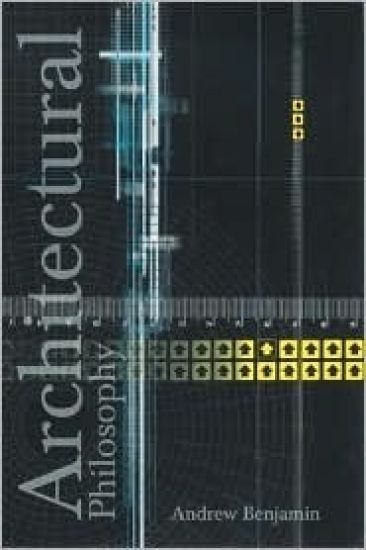
Architectural Philosophy

Architectural Philosophy

Andrew Benjamin

Continuum International Publishing Group Ltd.
2000
sidottu
This text outlines a philosophical account of architecture and attempts to establish the singularity of architectural practice and theory. The essays touch on issues as wide ranging as the problem of memory, the work of Eisenman and the dystopias of science fiction.
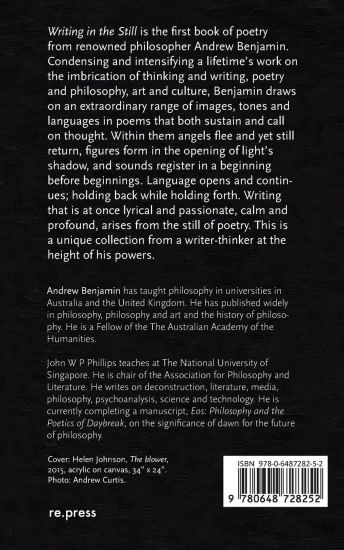
Writing in the Still

Writing in the Still

Andrew Benjamin

Re.Press
2023
pokkari
This haunting opening poem, which through eight sections situates its reader in the aftermath of a spectral memory, does not immediately suggest a place so much as the allusive echo of a choir of departed angels. The scene-historic in Walter Benjamin's sense of accumulated ruin-gives voice to such questions and recollections, "singing there in the instant," a still voice that patently inhabits discrete moments of silence. The seventh section, "That Angel should with Angel war," expands on a baffling instance where Milton's Angel Raphael recalls two armies lined up one against the other. The allusion sees the Angel Michael wielding a sword hewn in God's armoury, using Satan's body as his target, while steeling himself to land a blow that will not need repeating. With a downward stroke he slices Satan's sword in two and in the returning cycle sheers the now fallen Angel almost in half. The reader's incredulous supposition, even before the ethereal substance sutures the evaporating wound, leaving the angel humbled by the memory of pain for the first time, is that this must be poetic spectacle, a staging of epic excess.
Of Jews And Animals

Of Jews And Animals

Andrew Benjamin

Edinburgh University Press
2010
sidottu
By developing his own conception of the 'figure' Andrew Benjamin has written an innovative and provocative study of the complex relationship between philosophy, the history of painting and their presentation of both Jews and animals. As Benjamin makes clear the 'Other' is never abstract. He underscores the means by which the ethical imperative, arising from the way the history of philosophy and the history of art are constructed, shows us how to respond to an already identified, even if unacknowledged, determinant other.
Of Jews And Animals

Of Jews And Animals

Andrew Benjamin

Edinburgh University Press
2011
nidottu
By developing his own conception of the 'figure' Andrew Benjamin has written an innovative and provocative study of the complex relationship between philosophy, the history of painting and their presentation of both Jews and animals. As Benjamin makes clear the 'Other' is never abstract. He underscores the means by which the ethical imperative, arising from the way the history of philosophy and the history of art are constructed, shows us how to respond to an already identified, even if unacknowledged, determinant other.
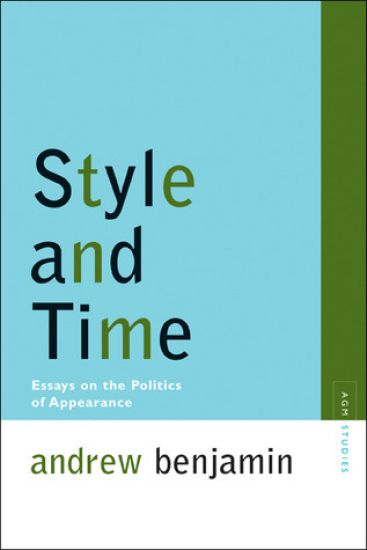
Style and Time

Style and Time

Andrew Benjamin

Northwestern University Press
2006
sidottu
Interruption is often read as the foundational gesture of modernity - the means through which modernity asserts its existence by claiming its discontinuity with the past. Exposing the limitations of such an understanding, this book offers a very different approach: here, modernity is the site that poses the question of how we are to continue when every attempt to think and understand the present is marked by the necessity of an interruption. Through a reading of Walter Benjamin's writings - particularly on interruption, fashion, and Jugendstil (or Art Nouveau) - Andrew Benjamin in this work offers a sustained meditation on the role of interruption in modernity. His book departs from and elaborates an important but overlooked dimension of Benjamin's discourse: the question of style as it bears upon temporality and spatiality. Extending this meditation in exciting and unexpected ways - toward problems of cosmopolitanism, immigration, and the graphically pornographic, for instance - the author is able to translate Benjamin's multifaceted formulations on style, the dialectical image, awakening, temporality, and spatiality into lucid and highly intelligent stylistics underscoring the philosophical notions of Schein and Erscheining, the interruptions of modernity, and the politics of sameness and otherness. Nothing less than a rethinking of the conditions of Western art as it relates to politics, architecture, and time, this study of Walter Benjamin's modernity in temporal and spatial terms is a provocative and original work of philosophy in its own right - a work that suggests that the time has come to revise existing paradigms.
Style and Time

Style and Time

Andrew Benjamin

Northwestern University Press
2006
nidottu
Interruption is often read as the foundational gesture of modernity - the means through which modernity asserts its existence by claiming its discontinuity with the past. Exposing the limitations of such an understanding, this book offers a very different approach: here, modernity is the site that poses the question of how we are to continue when every attempt to think and understand the present is marked by the necessity of an interruption. Through a reading of Walter Benjamin's writings - particularly on interruption, fashion, and Jugendstil (or Art Nouveau) - Andrew Benjamin in this work offers a sustained meditation on the role of interruption in modernity. His book departs from and elaborates an important but overlooked dimension of Benjamin's discourse: the question of style as it bears upon temporality and spatiality. Extending this meditation in exciting and unexpected ways - toward problems of cosmopolitanism, immigration, and the graphically pornographic, for instance - the author is able to translate Benjamin's multifaceted formulations on style, the dialectical image, awakening, temporality, and spatiality into lucid and highly intelligent stylistics underscoring the philosophical notions of Schein and Erscheining, the interruptions of modernity, and the politics of sameness and otherness. Nothing less than a rethinking of the conditions of Western art as it relates to politics, architecture, and time, this study of Walter Benjamin's modernity in temporal and spatial terms is a provocative and original work of philosophy in its own right - a work that suggests that the time has come to revise existing paradigms.
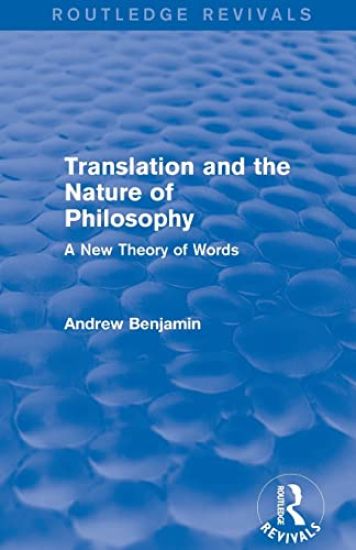
Translation and the Nature of Philosophy (Routledge Revivals)
This engrossing study, first published in 1989, explores the basic mutuality between philosophy and translation. By studying the conceptions of translation in Plato, Seneca, Davidson, Walter Benjamin and Freud, Andrew Benjamin reveals the interplay between the two disciplines not only in their relationship to language, but also at a deeper, cognitive level.Benjamin engages throughout with the central tenets of post-structuralism: the concept of a constant yet illusive ‘true’ meaning has lost authority, but remains a problem. The fact of translation seems to defy the notion that ‘meaning’ is reducible to its component words; yet, to say that the ‘truth’ is more than the sum of its parts, we are challenging the very foundations of what it is to communicate, to understand, and to know. In Translation and the Nature of Philosophy, the author sets out his own theory of language in light of these issues.
Translation and the Nature of Philosophy (Routledge Revivals)
This engrossing study, first published in 1989, explores the basic mutuality between philosophy and translation. By studying the conceptions of translation in Plato, Seneca, Davidson, Walter Benjamin and Freud, Andrew Benjamin reveals the interplay between the two disciplines not only in their relationship to language, but also at a deeper, cognitive level.Benjamin engages throughout with the central tenets of post-structuralism: the concept of a constant yet illusive ‘true’ meaning has lost authority, but remains a problem. The fact of translation seems to defy the notion that ‘meaning’ is reducible to its component words; yet, to say that the ‘truth’ is more than the sum of its parts, we are challenging the very foundations of what it is to communicate, to understand, and to know. In Translation and the Nature of Philosophy, the author sets out his own theory of language in light of these issues.
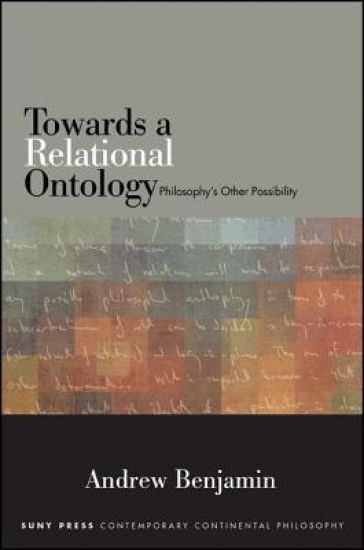
Towards a Relational Ontology

Towards a Relational Ontology

Andrew Benjamin

State University of New York Press
2016
pokkari
An original philosophical account of relational ontology drawing on the work of Descartes, Kant, Fichte, Hegel, and Heidegger.In this original work of philosophy, Andrew Benjamin calls for a new understanding of relationality, one inaugurating a philosophical mode of thought that takes relations among people and events as primary, over and above conceptions of simple particularity or abstraction. Drawing on the work of Descartes, Kant, Fichte, Hegel, and Heidegger, Benjamin shows that a relational ontology has always been at work within the history of philosophy even though philosophy has been reluctant to affirm its presence. Arguing for what he calls anoriginal relationality, he demonstrates that the already present status of a relational ontology is philosophy's other possibility. Touching on a range of topics including community, human-animal relations, and intimacy, Benjamin's thoughtful and penetrating distillation of ancient, modern, and twentieth-century philosophical ideas, and his judicious attention to art and literature make this book a model for original philosophical thinking and writing.