Kirjojen hintavertailu. Mukana 11 244 527 kirjaa ja 12 kauppaa.

Kirjahaku

Etsi kirjoja tekijän nimen, kirjan nimen tai ISBN:n perusteella.

24 kirjaa tekijältä Andrew Bennett

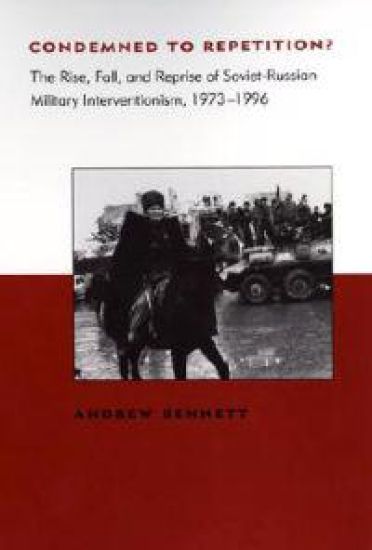
Condemned to Repetition?

Condemned to Repetition?

Andrew Bennett

MIT Press
1999
pokkari
Why did the Soviet Union use less force to preserve the Soviet empire from 1989 to 1991 than it had used in distant and impoverished Angola in 1975? This book fills a key gap in international relations theories by examining how actors' preferences and causal conceptions change as they learn from their experiences. Andrew Bennett draws on interviews and declassified Politburo documents as well as numerous public statements to establish the views of Soviet and Russian officials. He argues that Soviet leaders drew lessons from their apparent successes in Vietnam and elsewhere in the 1970s that made them more interventionist. Then, as casualties in Afghanistan mounted in the 1980s, Soviet leaders learned different lessons that led them to withdraw from regional conflicts and even to abstain from the use of force as the Soviet empire dissolved. The loss of this empire led to exaggerated fears of "domino effects" within Russia and a resurgence of interventionist views, culminating in the Russian invasion of Chechnya in 1994. Throughout this process, Soviet and Russian leaders and policy experts were divided into competing schools of thought as much by the information to which they were exposed as by their apparent material interests. This helps explain how Gorbachev and other new thinkers were able to prevail over the powerful military-party-industrial complex that had dominated Soviet politics since Stalin's time.
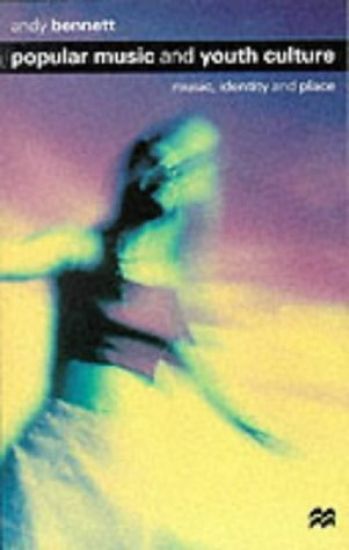
Popular Music and Youth Culture

Popular Music and Youth Culture

Andrew Bennett

Red Globe Press
2000
sidottu
Music- and style-centred youth cultures are now a familiar aspect of everyday life in countries as far apart around the globe as Nepal and Jamaica, Hong Kong and Israel, Denmark and Australia. This lucid and original text provides a lively and wide-ranging account of the relationship between popular music and youth culture within the context of debates about the spatial dimensions of identity. It begins with a clear and comprehensive survey, and critical evaluation, of the existing body of literature on youth culture and popular music developed by sociologists and cultural and media theorists. It then develops a fresh perspective on the ways in which popular music is appropriated as a cultural resource by young people, using as a springboard a series of original ethnographic studies of dance music, rap, bhangra and rock. Bennett's original research material is carefully contextualised within a wider international literature on youth styles, local spaces and popular music but it serves to illustrate graphically how styles of music and their attendant stylistic innovations are appropriated and `lived out' by young people in particular social spaces. Music, Bennett argues, is produced and consumed by young people in ways that both inform their sense of self and also serve to construct the social world in which their identities operate.With its comprehensive coverage of youth and music studies and its important new insights, Popular Music and Youth Culture is essential reading for undergraduate and postgraduate students in sociology, cultural studies, media studies and popular music studies.Dr ANDY BENNETT is lecturer in Sociology at the University of Kent at Canterbury. He has published articles on aspects of youth culture, popular music, local identity and music and ethnicity in a number of journals, including Sociological Review, Media Culture and Society and Popular Music. He is currently co-editing a book on guitar cultures.
Popular Music and Youth Culture

Popular Music and Youth Culture

Andrew Bennett

Red Globe Press
2000
nidottu
Music- and style-centred youth cultures are now a familiar aspect of everyday life in countries as far apart around the globe as Nepal and Jamaica, Hong Kong and Israel, Denmark and Australia. This lucid and original text provides a lively and wide-ranging account of the relationship between popular music and youth culture within the context of debates about the spatial dimensions of identity. It begins with a clear and comprehensive survey, and critical evaluation, of the existing body of literature on youth culture and popular music developed by sociologists and cultural and media theorists. It then develops a fresh perspective on the ways in which popular music is appropriated as a cultural resource by young people, using as a springboard a series of original ethnographic studies of dance music, rap, bhangra and rock. Bennett's original research material is carefully contextualised within a wider international literature on youth styles, local spaces and popular music but it serves to illustrate graphically how styles of music and their attendant stylistic innovations are appropriated and `lived out' by young people in particular social spaces. Music, Bennett argues, is produced and consumed by young people in ways that both inform their sense of self and also serve to construct the social world in which their identities operate.With its comprehensive coverage of youth and music studies and its important new insights, Popular Music and Youth Culture is essential reading for undergraduate and postgraduate students in sociology, cultural studies, media studies and popular music studies.Dr ANDY BENNETT is lecturer in Sociology at the University of Kent at Canterbury. He has published articles on aspects of youth culture, popular music, local identity and music and ethnicity in a number of journals, including Sociological Review, Media Culture and Society and Popular Music. He is currently co-editing a book on guitar cultures.
The Author

The Author

Andrew Bennett

Routledge
2004
sidottu
This volume investigates the changing definitions of the author, what it has meant historically to be an 'author', and the impact that this has had on literary culture. Andrew Bennett presents a clearly-structured discussion of the various theoretical debates surrounding authorship, exploring such concepts as authority, ownership, originality, and the 'death' of the author. Accessible, yet stimulating, this study offers the ideal introduction to a core notion in critical theory.
The Author

The Author

Andrew Bennett

Routledge
2004
nidottu
This volume investigates the changing definitions of the author, what it has meant historically to be an 'author', and the impact that this has had on literary culture. Andrew Bennett presents a clearly-structured discussion of the various theoretical debates surrounding authorship, exploring such concepts as authority, ownership, originality, and the 'death' of the author. Accessible, yet stimulating, this study offers the ideal introduction to a core notion in critical theory.
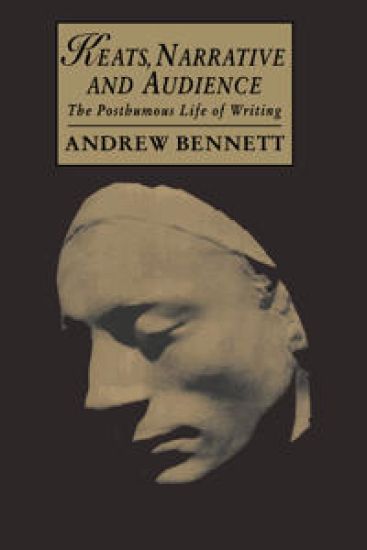
Keats, Narrative and Audience

Keats, Narrative and Audience

Andrew Bennett

Cambridge University Press
2006
pokkari
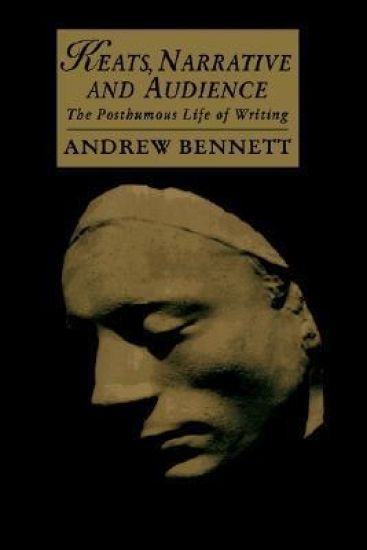
Andrew Bennett's original study of Keats focuses on questions of narrative and audience as a means to offer new readings of the major poems. It discusses ways in which reading is 'figured' in Keats's poetry, and suggests that such 'figures of reading' have themselves determined certain modes of response to Keats's texts. Together with important new readings of Keats's poetry, the study presents a significant rethinking of the relationship between Romantic poetry and its audience. Developing recent discussions in literary theory concerning narrative, readers and reading, the nature of the audience for poetry, and the Romantic 'invention' of posterity, Bennett elaborates a sophisticated and historically specific reconceptualization of Romantic writing.
Romantic Poets and the Culture of Posterity

Romantic Poets and the Culture of Posterity

Andrew Bennett

Cambridge University Press
2006
pokkari
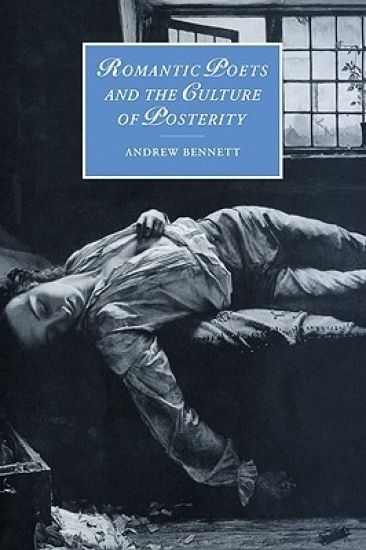
This 1999 book examines the way in which the Romantic period's culture of posterity inaugurates a tradition of writing which demands that the poet should write for an audience of the future: the true poet, a figure of neglected genius, can be properly appreciated only after death. Andrew Bennett argues that this involves a radical shift in the conceptualization of the poet and poetic reception, with wide-ranging implications for the poetry and poetics of the Romantic period. He surveys the contexts for this transformation of the relationship between poet and audience, engaging with issues such as the commercialization of poetry, the gendering of the canon, and the construction of poetic identity. Bennett goes on to discuss the strangely compelling effects which this reception theory produces in the work of Wordsworth, Coleridge, Keats, Shelley and Byron, who have come to embody, for posterity, the figure of the Romantic poet.
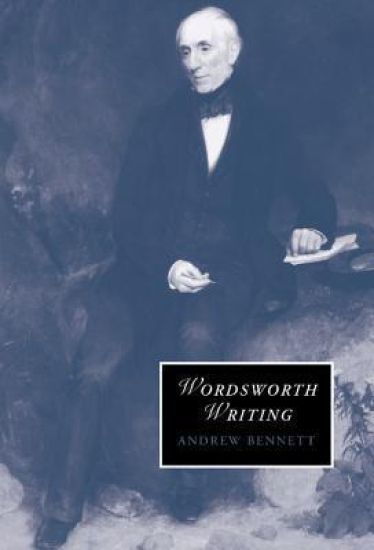
Wordsworth Writing

Wordsworth Writing

Andrew Bennett

Cambridge University Press
2011
pokkari
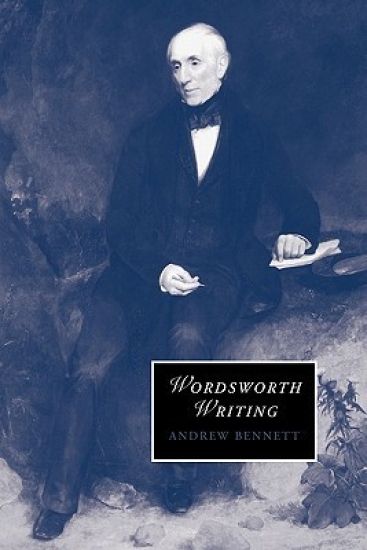
Andrew Bennett challenges the popular conception of Wordsworth as a writer who didn't so much write poetry as compose it aloud or in his head (usually while walking, and preferably while ascending mountains). The act and idea of writing is in fact central to the themes and to the rhetorical texture of Wordsworth's poetry. This wide-ranging study considers various aspects of Wordsworth's compositional practice, including questions of revision and dictation, of monumental inscription and graffiti, of talking and thinking, and of the poet's own theory of composition, and examines the implications of a critical tradition that erroneously assumes that Wordsworth employed exclusively 'oral' modes of composition. For Wordsworth, acts of writing were important dimensions of his poetry and indeed of his sense of personal and poetic identity. Bennett contends that a sustained attention to the question of writing in Wordsworth produces compelling readings of the major poems.
Keats, Narrative and Audience

Keats, Narrative and Audience

Andrew Bennett

Cambridge University Press
1994
sidottu
Andrew Bennett’s original study of Keats focuses on questions of narrative and audience as a means to offer new readings of the major poems. It discusses ways in which reading is ‘figured’ in Keats’s poetry, and suggests that such ‘figures of reading’ have themselves determined certain modes of response to Keats’s texts. Together with important new readings of Keats’s poetry, the study presents a significant rethinking of the relationship between Romantic poetry and its audience. Developing recent discussions in literary theory concerning narrative, readers and reading, the nature of the audience for poetry, and the Romantic ‘invention’ of posterity, Bennett elaborates a sophisticated and historically specific reconceptualisation of Romantic writing.
Romantic Poets and the Culture of Posterity

Romantic Poets and the Culture of Posterity

Andrew Bennett

Cambridge University Press
1999
sidottu
This 1999 book examines the way in which the Romantic period's culture of posterity inaugurates a tradition of writing which demands that the poet should write for an audience of the future: the true poet, a figure of neglected genius, can be properly appreciated only after death. Andrew Bennett argues that this involves a radical shift in the conceptualization of the poet and poetic reception, with wide-ranging implications for the poetry and poetics of the Romantic period. He surveys the contexts for this transformation of the relationship between poet and audience, engaging with issues such as the commercialization of poetry, the gendering of the canon, and the construction of poetic identity. Bennett goes on to discuss the strangely compelling effects which this reception theory produces in the work of Wordsworth, Coleridge, Keats, Shelley and Byron, who have come to embody, for posterity, the figure of the Romantic poet.
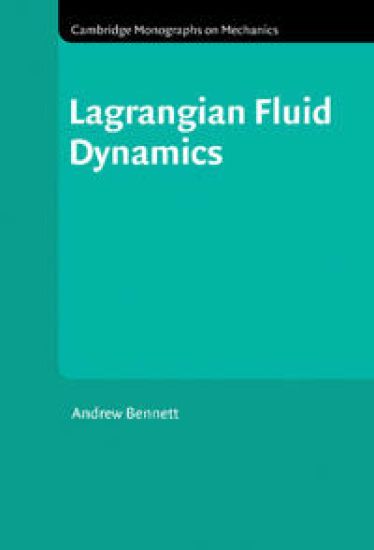
Lagrangian Fluid Dynamics

Lagrangian Fluid Dynamics

Andrew Bennett

Cambridge University Press
2006
sidottu
The emergence of observing systems such as acoustically-tracked floats in the deep ocean, and surface drifters navigating by satellite has seen renewed interest in Lagrangian fluid dynamics. Starting from the foundations of elementary kinematics and assuming some familiarity of Eulerian fluid dynamics, this 2006 book reviews the classical and new exact solutions of the Lagrangian framework, and then addresses the general solvability of the resulting general equations of motion. A unified account of turbulent diffusion and dispersion is offered, with applications among others to plankton patchiness in the ocean. Written at graduate level, the book provides the first detailed and comprehensive analytical development of the Lagrangian formulation of fluid dynamics, of interest not only to applied mathematicians but also oceanographers, meteorologists, mechanical engineers, astrophysicists and indeed all investigators of the dynamics of fluids.
Wordsworth Writing

Wordsworth Writing

Andrew Bennett

Cambridge University Press
2007
sidottu
Andrew Bennett challenges the popular conception of Wordsworth as a writer who didn't so much write poetry as compose it aloud or in his head (usually while walking, and preferably while ascending mountains). The act and idea of writing is in fact central to the themes and to the rhetorical texture of Wordsworth's poetry. This wide-ranging study considers various aspects of Wordsworth's compositional practice, including questions of revision and dictation, of monumental inscription and graffiti, of talking and thinking, and of the poet's own theory of composition, and examines the implications of a critical tradition that erroneously assumes that Wordsworth employed exclusively 'oral' modes of composition. For Wordsworth, acts of writing were important dimensions of his poetry and indeed of his sense of personal and poetic identity. Bennett contends that a sustained attention to the question of writing in Wordsworth produces compelling readings of the major poems.
Readers and Reading

Readers and Reading

Andrew Bennett

Longman
1995
nidottu
Much literary criticism focuses on literary producers and their products, but an important part of such work considers the end-user, the reader. It asks such questions as: how far can the author condition the response of the reader, and how much does the reader create the meaning of a text? Dr Bennett's collection includes important essays from such writers and critics as Wolfgang Iser, Mary Jacobus, Roger Chartier, Michel de Certeau, Shoshana Felman, Maurice Blanchot, Paul de Man and Yves Bonnefoy. It looks in turn at deconstructionist, feminist, new historicist and psychoanalytical response to the school. The book then considers the act of reading itself, discussing such issues as the uniqueness of any reading and the difficulties involved in its analysis.
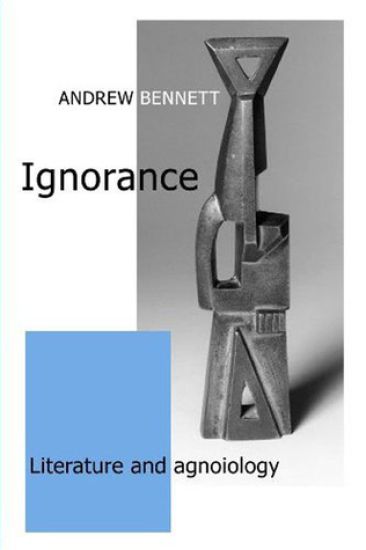
Ignorance

Ignorance

Andrew Bennett

Manchester University Press
2009
sidottu
Andrew Bennett argues in this fascinating book that ignorance is part of the narrative and poetic force of literature and is an important aspect of its thematic focus: ignorance is what literary texts are about. He sees that the dominant conception of literature since the Romantic period involves an often unacknowledged engagement with the experience of not knowing. From Wordsworth and Keats to George Eliot and Charles Dickens, from Henry James to Joseph Conrad, from Elizabeth Bowen to Philip Roth and Seamus Heaney, writers have been fascinated and compelled by the question of ignorance, including their own. Bennett argues that there is a politics and ethics as well as a poetics of ignorance: literature’s agnoiology, its acknowledgement of the limits of what we know both of ourselves and of others, engages with the possibility of democracy and the ethical, and allows us to begin to conceive of what it might mean to be human.This exciting approach to literary theory will be of interest to lecturers and students of literary theory and criticism.
Ignorance

Ignorance

Andrew Bennett

Manchester University Press
2015
nidottu
This study argues that ignorance is a part of the narrative and poetic force of literature and is an important aspect of its thematic focus: ignorance is what literary texts are about. It sees that the dominant conception of literature since the Romantic period involves an often unacknowledged engagement with the experience of not knowing. From Wordsworth and Keats to George Eliot and Charles Dickens, from Henry James to Joseph Conrad, from Elizabeth Bowen to Philip Roth and Seamus Heaney, writers have been fascinated and compelled by the question of ignorance, including their own. There is a politics and ethics as well as a poetics of ignorance: literature’s agnoiology, its acknowledgement of the limits of what we know both of ourselves and of others, engages with the possibility of democracy and the ethical, and allows us to begin to conceive of what it might mean to be human.Now available in paperback, this exciting approach to literary theory will be of interest to lecturers and students of literary theory and criticism.
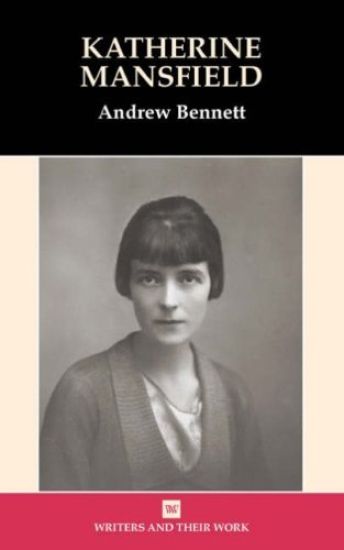
Katherine Mansfield

Katherine Mansfield

Andrew Bennett

Liverpool University Press
2002
nidottu
This book offers a new introduction to Katherine Mansfield's short stories focusing on the question of the connection between life and writing in her work. This book offers a new introduction to Katherine Mansfield's short stories informed by recent biographical, critical and editorial work on her life and on her stories, letters and notebooks. The study focuses on the question of the connection between life and writing in Mansfield's work: it explores her engagements with issues of personal identity and elaborates her theory and practice of a poetics of impersonation whereby the identity of the author is merged with those of her characters. Bennett argues that Mansfield's multiple and unstable identities and identifications are bound up with issues of colonialism, nationality, gender, and sexuality, and that they may be said to be embedded within the very texture of her prose. Mansfield's impersonations, in their engagement with a 'queer' aesthetics, with strangeness and surprise, with hatred, with an unsettling of personal identity and with the uncertainties of national and sexual identification, constitute the risk and the achievement of Katherine Mansfield's writing.
Katherine Mansfield

Katherine Mansfield

Andrew Bennett

Liverpool University Press
2004
sidottu
This book offers a new introduction to Katherine Mansfield's short stories focusing on the question of the connection between life and writing in her work. This book offers a new introduction to Katherine Mansfield's short stories informed by recent biographical, critical and editorial work on her life and on her stories, letters and notebooks. The study focuses on the question of the connection between life and writing in Mansfield's work: it explores her engagements with issues of personal identity and elaborates her theory and practice of a poetics of impersonation whereby the identity of the author is merged with those of her characters. Bennett argues that Mansfield's multiple and unstable identities and identifications are bound up with issues of colonialism, nationality, gender, and sexuality, and that they may be said to be embedded within the very texture of her prose. Mansfield's impersonations, in their engagement with a 'queer' aesthetics, with strangeness and surprise, with hatred, with an unsettling of personal identity and with the uncertainties of national and sexual identification, constitute the risk and the achievement of Katherine Mansfield's writing.
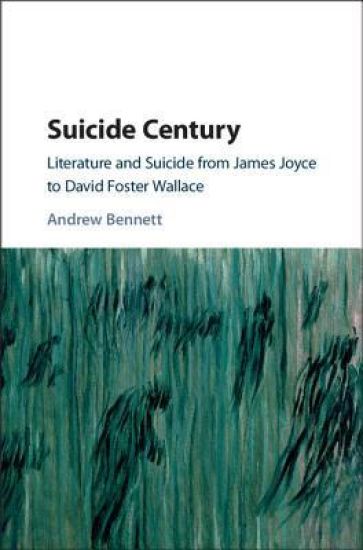
Suicide Century

Suicide Century

Andrew Bennett

Cambridge University Press
2017
sidottu
Suicide Century investigates suicide as a prominent theme in twentieth-century and contemporary literature. Andrew Bennett argues that with the waning of religious and legal prohibitions on suicide in the eighteenth and nineteenth centuries and the increasing influence of medical and sociological accounts of its causes and significance in the twentieth century, literature responds to the act and idea as an increasingly normalised but incessantly baffling phenomenon. Discussing works by a number of major authors from the long twentieth century, the book explores the way that suicide makes and unmakes subjects, assumes and disrupts meaning, induces and resists empathy, and insists on and makes inconceivable our understanding of ourselves and of others.
Readers and Reading

Readers and Reading

Andrew Bennett

Routledge
2017
sidottu
Much literary criticism focuses on literary producers and their products, but an important part of such work considers the end-user, the reader. It asks such questions as: how far can the author condition the response of the reader, and how much does the reader create the meaning of a text? Dr Bennett's collection includes important essays from such writers and critics as Wolfgang Iser, Mary Jacobus, Roger Chartier, Michel de Certeau, Shoshana Felman, Maurice Blanchot, Paul de Man and Yves Bonnefoy. It looks in turn at deconstructionist, feminist, new historicist and psychoanalytical response to the school. The book then considers the act of reading itself, discussing such issues as the uniqueness of any reading and the difficulties involved in its analysis.