Kirjojen hintavertailu. Mukana 12 390 323 kirjaa ja 12 kauppaa.

Kirjahaku

Etsi kirjoja tekijän nimen, kirjan nimen tai ISBN:n perusteella.

49 kirjaa tekijältä Andrew Brown

Bound by Muscle

Bound by Muscle

Andrew Brown

OXFORD UNIVERSITY PRESS INC
2022
sidottu
In Bound by Muscle, Andrew Brown details the lives and achievements of two physiologists, Archibald Vivian Hill (1886-1977) and Otto Fritz Meyerhof (1884-1951). Hill and Meyerhof shared the 1922 Nobel Prize in Physiology or Medicine for discoveries related to metabolic changes underlying muscle activity. Bound by Muscle describes how Hill and Meyerhof's lives and careers intersected and diverged and how their work changed the course of biological science. Bound by Muscle is organized chronologically. The first four chapters consider Hill and Meyerhof's childhoods and early careers; subsequent chapters address the Nobel Prize nomination and award and how their lives were affected by the World Wars. Bound by Muscle details Hill and Meyerhof's scientific breakthroughs and professional accomplishments. The book also examines the historical context that shaped their work and how the two men differed. Hill embodied the pragmatic style of British science. He became an outspoken critic of fascism as well as an effective humanitarian. As a senior scientist, he played major roles in preparing Great Britain for World War II. In contrast, Meyerhof was shy and philosophical. A non-observant Jew, he was reluctant to leave his superb laboratory in Heidelberg as the Nazi threat became apparent. His dramatic eventual escape is described in detail for the first time. Throughout, Bound by Muscle reflects on how individual differences and historical events have shaped the trajectory of science.
Roland Barthes: The Figures of Writing

Roland Barthes: The Figures of Writing

Andrew Brown

Clarendon Press
1992
sidottu
This book focuses on some of the ways Barthes discusses the nature of his own writing. The first two chapters examine the key but ambiguous term of `dérive' (`drift'), a word which raises questions about how exactly Barthes's writing develops across three decades, about the `scientific' legitimacy of his concepts, and about his own frequently fraught relation to the scientific discourses around him, especially psychoanalysis. Two typical discursive manoeuvres that structure his writing, `naming' and `framing', are then shown to generate particular aesthetic effects which cause complications for some of his theoretical stances. Barthes's fascination for the idea that all writing is a kind of scribble, closer to the visual arts than to speech, is investigated in depth, and his latent animus against speech as such is made manifest. The final chapter suggests that, for Barthes, `the real' can leave its mark on writing only as a disturbing, indeed traumatic trace.
In the Beginning Was the Worm

In the Beginning Was the Worm

Andrew Brown

Columbia University Press
2003
sidottu
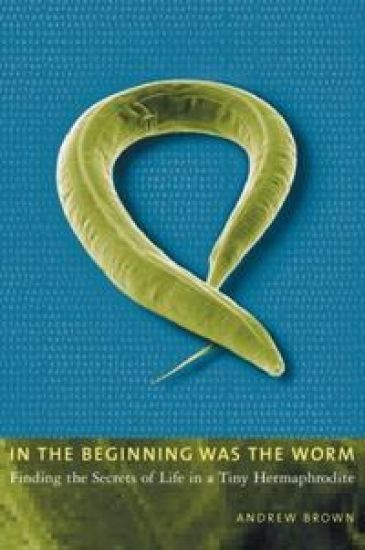
This is the story of how three men won the Nobel Prize for their research on the humble nematode worm C. elegans; how their extraordinary discovery led to the sequencing of the human genome; how a global multibillion-dollar industry was born; and how the mysteries of life were revealed in a tiny, brainless worm. In 1998 the nematode worm-perhaps the most intensively studied animal on earth-was the first multicellular organism ever to have its genome sequenced and its DNA mapped and read. "When we understand the worm, we will understand life," predicted John Sulston, one of the three Nobel laureates, and his prediction proved astonishingly accurate. Four years later, the research that led to this extraordinary event garnered three scientists a Nobel Prize. Along with Robert Horvitz and Sydney Brenner, Sulston discovered the phenomenon of programmed cell death in the worm, an essential concept that explains how biological development occurs in animal life and, as Horvitz later showed, how it occurs in human life. C. elegans is about as simple as an animal can be, but understanding its genetic organization is helping to reveal the mechanisms of life and, by extension, the mechanisms of our own lives. In the Beginning Was the Worm shows that in order to unlock the secrets of the human genome we must first understand the worm. But this story is about more than just the worm. It is about how an eccentric group of impassioned scientists toiled in near anonymity for years, driven only by a deep passion for knowledge and scientific discovery. It is the story of countless hours of research, immense ambition, and one of the greatest discoveries in human history.
In the Beginning Was the Worm

In the Beginning Was the Worm

Andrew Brown

Columbia University Press
2005
pokkari
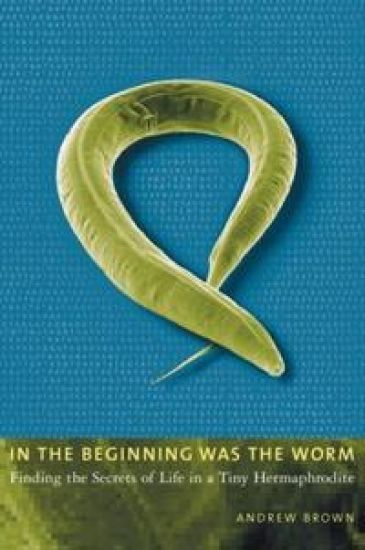
This is the story of how three men won the Nobel Prize for their research on the humble nematode worm C. elegans; how their extraordinary discovery led to the sequencing of the human genome; how a global multibillion-dollar industry was born; and how the mysteries of life were revealed in a tiny, brainless worm. In 1998 the nematode worm-perhaps the most intensively studied animal on earth-was the first multicellular organism ever to have its genome sequenced and its DNA mapped and read. "When we understand the worm, we will understand life," predicted John Sulston, one of the three Nobel laureates, and his prediction proved astonishingly accurate. Four years later, the research that led to this extraordinary event garnered three scientists a Nobel Prize. Along with Robert Horvitz and Sydney Brenner, Sulston discovered the phenomenon of programmed cell death in the worm, an essential concept that explains how biological development occurs in animal life and, as Horvitz later showed, how it occurs in human life. C. elegans is about as simple as an animal can be, but understanding its genetic organization is helping to reveal the mechanisms of life and, by extension, the mechanisms of our own lives. In the Beginning Was the Worm shows that in order to unlock the secrets of the human genome we must first understand the worm. But this story is about more than just the worm. It is about how an eccentric group of impassioned scientists toiled in near anonymity for years, driven only by a deep passion for knowledge and scientific discovery. It is the story of countless hours of research, immense ambition, and one of the greatest discoveries in human history.
Church And Society In England 1000-1500

Church And Society In England 1000-1500

Andrew Brown

Red Globe Press
2003
sidottu
What impact did the Church have on society? How did social change affect religious practice? Within the context of these wide-ranging questions, this study offers a fresh interpretation of the relationship between Church, society and religion in England across five centuries of change.Andrew Brown examines how the teachings of an increasingly 'universal' Church decisively affected the religious life of the laity in medieval England. However, by exploring a broad range of religious phenomena, both orthodox and heretical (including corporate religion and the devotional practices surrounding cults and saints) Brown shows how far lay people continued to shape the Church at a local level.In the hands of the laity, religious practices proved malleable. Their expression was affected by social context, status and gender, and even influenced by those in authority. Yet, as Brown argues, religion did not function simply as an expression of social power - hierarchy, patriarchy and authority could be both served and undermined by religion. In an age in which social mobility and upheaval, particularly in the wake of the Black Death, had profound effects on religious attitudes and practices, Brown demonstrates that our understanding of late medieval religion should be firmly placed within this context of social change.
Church And Society In England 1000-1500

Church And Society In England 1000-1500

Andrew Brown

Red Globe Press
2003
nidottu
What impact did the Church have on society? How did social change affect religious practice? Within the context of these wide-ranging questions, this study offers a fresh interpretation of the relationship between Church, society and religion in England across five centuries of change. Andrew Brown examines how the teachings of an increasingly 'universal' Church decisively affected the religious life of the laity in medieval England. However, by exploring a broad range of religious phenomena, both orthodox and heretical (including corporate religion and the devotional practices surrounding cults and saints) Brown shows how far lay people continued to shape the Church at a local level. In the hands of the laity, religious practices proved malleable. Their expression was affected by social context, status and gender, and even influenced by those in authority. Yet, as Brown argues, religion did not function simply as an expression of social power - hierarchy, patriarchy and authority could be both served and undermined by religion. In an age in which social mobility and upheaval, particularly in the wake of the Black Death, had profound effects on religious attitudes and practices, Brown demonstrates that our understanding of late medieval religion should be firmly placed within this context of social change.
Labour, Politics and the State in Industrialising Thailand
In this book Brown argues that workers in East and Southeast Asia are significant actors in political change. Critically examining the themes of labour weakness, political exclusion and insignificance of 'class factors' he aims to bring workers back from the margins, demonstrating that both in the present and past the state has been entangled in processes that determine the forms of their struggles. This book presents new empirical data, important historical material and an innovative approach to workers and politics.
Labour, Politics and the State in Industrialising Thailand
In this book Brown argues that workers in East and Southeast Asia are significant actors in political change. Critically examining the themes of labour weakness, political exclusion and insignificance of 'class factors' he aims to bring workers back from the margins, demonstrating that both in the present and past the state has been entangled in processes that determine the forms of their struggles. This book presents new empirical data, important historical material and an innovative approach to workers and politics.
Music Technology and Education

Music Technology and Education

Andrew Brown

Routledge
2014
sidottu
Music Technology in Education lays out the principles of music technology and how they can be used to enhance musical teaching and learning in primary and secondary education. Previously published as Computers in Music Education, this second edition has been streamlined to focus on the needs of today’s music education student. It has been completely updated to reflect mobile technologies, social networks, rich media environments, and other technological advances. Topics include: Basic audio concepts and recording techniques Enhanced music instruction with interactive systems, web-based media platforms, social networking, and musicianship software Administration and management of technology resources Distance education and flexible learningMusic Technology in Education provides a strong theoretical and philosophical framework for examining the use of technology in music education while outlining the tools and techniques for implementation in the classroom. Reflective Questions, Teaching Tips, and Suggested Tasks link technology with effective teaching practice. The companion website provides resources for deeper investigation into the topics covered in each chapter, and includes an annotated bibliography, website links, tutorials, and model projects.
Music Technology and Education

Music Technology and Education

Andrew Brown

Routledge
2014
nidottu
Music Technology in Education lays out the principles of music technology and how they can be used to enhance musical teaching and learning in primary and secondary education. Previously published as Computers in Music Education, this second edition has been streamlined to focus on the needs of today’s music education student. It has been completely updated to reflect mobile technologies, social networks, rich media environments, and other technological advances. Topics include: Basic audio concepts and recording techniques Enhanced music instruction with interactive systems, web-based media platforms, social networking, and musicianship software Administration and management of technology resources Distance education and flexible learningMusic Technology in Education provides a strong theoretical and philosophical framework for examining the use of technology in music education while outlining the tools and techniques for implementation in the classroom. Reflective Questions, Teaching Tips, and Suggested Tasks link technology with effective teaching practice. The companion website provides resources for deeper investigation into the topics covered in each chapter, and includes an annotated bibliography, website links, tutorials, and model projects.
A New Companion to Greek Tragedy (Routledge Revivals)
That the works of the ancient tragedians still have an immediate and profound appeal surely needs no demonstration, yet the modern reader continually stumbles across concepts which are difficult to interpret or relate to – moral pollution, the authority of oracles, classical ideas of geography – as well as the names of unfamiliar legendary and mythological figures.A New Companion to Greek Tragedy provides a useful reference tool for the ‘Greekless’ reader: arranged on a strictly encyclopaedic pattern, with headings for all proper names occurring in the twelve most frequently read tragedies, it contains brief but adequately detailed essays on moral, religious and philosophical terms, as well as mythical genealogies where important. There are in addition entries on Greek theatre, technical terms and on other writers from Aristotle to Freud, whilst the essay by P. E. Easterling traces some connections between the ideas found in the tragedians and earlier Greek thought.
A New Companion to Greek Tragedy (Routledge Revivals)
That the works of the ancient tragedians still have an immediate and profound appeal surely needs no demonstration, yet the modern reader continually stumbles across concepts which are difficult to interpret or relate to – moral pollution, the authority of oracles, classical ideas of geography – as well as the names of unfamiliar legendary and mythological figures.A New Companion to Greek Tragedy provides a useful reference tool for the ‘Greekless’ reader: arranged on a strictly encyclopaedic pattern, with headings for all proper names occurring in the twelve most frequently read tragedies, it contains brief but adequately detailed essays on moral, religious and philosophical terms, as well as mythical genealogies where important. There are in addition entries on Greek theatre, technical terms and on other writers from Aristotle to Freud, whilst the essay by P. E. Easterling traces some connections between the ideas found in the tragedians and earlier Greek thought.
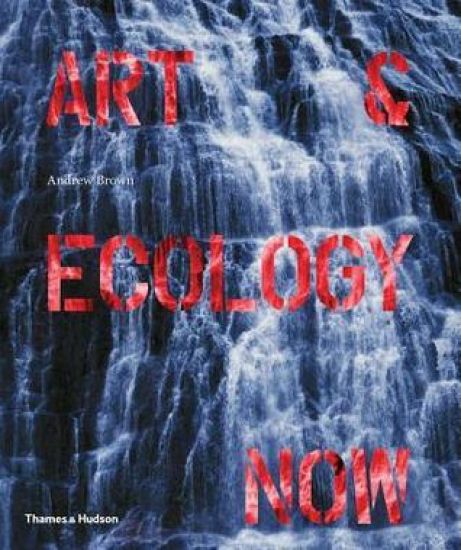
Art & Ecology Now

Art & Ecology Now

Andrew Brown

Thames Hudson Ltd
2014
nidottu
‘Eco’ awareness has had an enormous impact across all cultural and political spectrums, not least in the art world. This accessible and thought-provoking book is the first in-depth exploration of the ways in which contemporary artists are confronting nature, the environment, climate change and ecology. Organized into six chapters, the book moves through the various levels of artists’ engagement, from those who act as independent commentators, documenting and reflecting on nature, to those who use the physical environment as the raw material for their art, and those committed activists who set out to make art that transforms both our attitudes and our habits. More than 300 illustrations feature the work of 95 artists and art collectives from all over the world, including The Artist as Family, Nyaba Leon Ouedraogo, Yao Lu, Tue Greenfort, Eva Jospin, Ravi Agarwal, Nadav Kander, Naoya Hatakeyama, Tattfoo Tan, Berndnaut Smilde, Simon Starling, and Jennifer Allora and Guillermo Calzadilla.
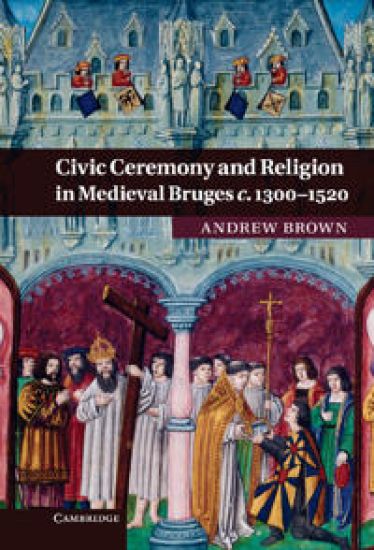
Civic Ceremony and Religion in Medieval Bruges c.1300–1520
Public religious practice lay at the heart of civic society in late medieval Europe. In this illuminating study, Andrew Brown draws on the rich and previously little-researched archives of Bruges, one of medieval Europe's wealthiest and most important towns, to explore the role of religion and ceremony in urban society. The author situates the religious practices of citizens - their investment in the liturgy, commemorative services, guilds and charity - within the contexts of Bruges' highly diversified society and of the changes and crises the town experienced. Focusing on the religious processions and festivities sponsored by the municipal government, the author challenges much current thinking on, for example, the nature of 'civic religion'. Re-evaluating the ceremonial links between Bruges and its rulers, he questions whether rulers could dominate the urban landscape by religious or ceremonial means, and offers new insight into the interplay between ritual and power of relevance throughout medieval Europe.
Civic Ceremony and Religion in Medieval Bruges c.1300–1520
Public religious practice lay at the heart of civic society in late medieval Europe. In this illuminating study, Andrew Brown draws on the rich and previously little-researched archives of Bruges, one of medieval Europe's wealthiest and most important towns, to explore the role of religion and ceremony in urban society. The author situates the religious practices of citizens - their investment in the liturgy, commemorative services, guilds and charity - within the contexts of Bruges' highly diversified society and of the changes and crises the town experienced. Focusing on the religious processions and festivities sponsored by the municipal government, the author challenges much current thinking on, for example, the nature of 'civic religion'. Re-evaluating the ceremonial links between Bruges and its rulers, he questions whether rulers could dominate the urban landscape by religious or ceremonial means, and offers new insight into the interplay between ritual and power of relevance throughout medieval Europe.