Kirjojen hintavertailu. Mukana 11 244 527 kirjaa ja 12 kauppaa.

Kirjahaku

Etsi kirjoja tekijän nimen, kirjan nimen tai ISBN:n perusteella.

8 kirjaa tekijältä Andrew Burstein

America's Jubilee: A Generation Remembers the Revolution After 50 Years of Independence
In America's Jubilee distinguished historian Andrew Burstein presents an engrossing narrative that takes us back to a pivotal year in American history, 1826, when the reins of democracy were being passed from the last Revolutionary War heroes to a new generation of leaders. Through brilliant sketches of selected individuals and events, Burstein creates an evocative portrait of the hopes and fears of Americans fifty years after the Revolution. We follow an aged Marquis de Lafayette on his triumphant tour of the country; and learn of the nearly simultaneous deaths of John Adams and Thomas Jefferson on the 4th of July. We meet the ornery President John Quincy Adams, the controversial Secretary of State Henry Clay, and the notorious hot-tempered General Andrew Jackson. We also see the year through the eyes of a minister's wife, a romantic novelist, and even an intrepid wheel of cheese. Insightful and lively, America's Jubilee captures an unforgettable time in the republic's history, when a generation embraced the legacy of its predecessors and sought to enlarge its role in America's story.
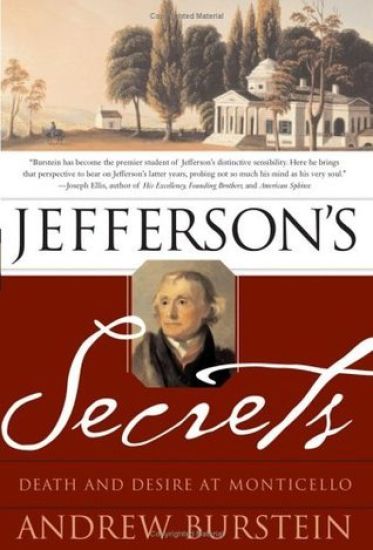
Jefferson's Secrets

Jefferson's Secrets

Andrew Burstein

Basic Books
2006
pokkari
When Thomas Jefferson died on July 4, 1826, he left behind a series of mysteries that have captured the imaginations of historical investigators for generations. In Jefferson's Secrets, Andrew Burstein draws on sources previous biographers have glossed over or missed entirely. Beginning with Jefferson's last days, Burstein shows how Jefferson confronted his own mortality. Burstein also tackles the crucial questions history has yet to answer: Did Jefferson love Sally Hemings? What were his attitudes towards women? Did he believe in God? How did he wish to be remembered? The result is a profound and nuanced portrait of the most complex of the Founding Fathers.
The Original Knickerbocker

The Original Knickerbocker

Andrew Burstein

Basic Books
2008
pokkari
Washington Irving-author, ambassador, Manhattanite, and international celebrity-has largely slipped from America's memory, and yet, his creations are still very well known. With a historian's eye for scope and significance, Andrew Burstein returns Irving to the context of his native nineteenth century where he was a major celebrity-both a colorful comic genius and the first name in our national literature. Though he gave his young nation such enduring tales as "The Legend of Sleepy Hollow" and "Rip Van Winkle," he was far more than one of our nation's most outsized literary talents. Irving was an American original and a citizen of the world.
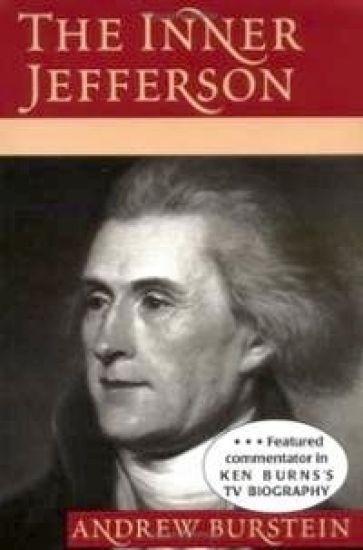
The Inner Jefferson

The Inner Jefferson

Andrew Burstein

University of Virginia Press
1997
nidottu
A study of the third president of the United States, this text examines 70 years of letters and private accounts, providing an insight into the contradictions that surround Jefferson. The author recreates the world of the 18th century to demonstrate his subject's position within it.
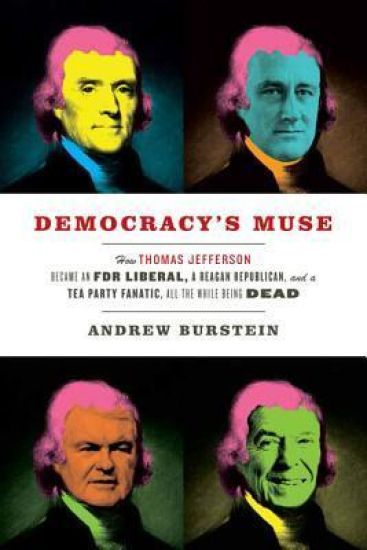
Democracy's Muse

Democracy's Muse

Andrew Burstein

University of Virginia Press
2015
sidottu
In political speech, Thomas Jefferson is the eternal flame. No other member of the founding generation has served the agendas of both Left and Right with greater vigor. When Franklin Roosevelt dedicated the iconic Jefferson Memorial on the founder’s two hundredth birthday, in 1943, he declared the triumph of liberal humanism. Harry Truman claimed Jefferson as his favorite president, too. And yet Ronald Reagan was as great a Jefferson admirer as any Democrat. He had a go-to file of Jefferson’s sayings and enshrined him as a small-government conservative.So, who owns Jefferson--the Left or the Right? The unknowable yet irresistible third president has had a tortuous afterlife, and he remains a fixture in today’s culture wars. Pained by Jefferson’s slaveholding, Democrats still regard him highly. Until recently he was widely considered by many African Americans to be an early abolitionist. Libertarians adore him for his inflexible individualism, and although he formulated the doctrine of separation of church and state, Christian activists have found intense religiosity between the lines in his pronouncements.The renowned Jefferson scholar Andrew Burstein lays out the case for both ""Democrat"" and ""Republican"" Jefferson as he interrogates history’s greatest shape-shifter, the founder who has inspired perhaps the strongest popular emotions. In this timely and powerful book, Burstein shares telling insights, as well as some inconvenient truths, about politicized Americans and their misappropriations of the past, including the concoction of a ""Jeffersonian"" stance on issues that Jefferson himself could never have imagined.Here is one book that is more about ""us"" than it is about Jefferson. It explains how the founding generation’s most controversial partisan became essential to America’s quest for moral security—how he became, in short, democracy’s muse.
Democracy's Muse

Democracy's Muse

Andrew Burstein

University of Virginia Press
2017
nidottu
In political speech, Thomas Jefferson is the eternal flame. No other member of the founding generation has served the agendas of both Left and Right with greater vigor. When Franklin Roosevelt dedicated the iconic Jefferson Memorial on the founder’s two hundredth birthday, in 1943, he declared the triumph of liberal humanism. Harry Truman claimed Jefferson as his favorite president, too. And yet Ronald Reagan was as great a Jefferson admirer as any Democrat. He had a go-to file of Jefferson’s sayings and enshrined him as a small-government conservative.So, who owns Jefferson – the Left or the Right? The unknowable yet irresistible third president has had a tortuous afterlife, and he remains a fixture in today’s culture wars. Pained by Jefferson’s slaveholding, Democrats still regard him highly. Until recently he was widely considered by many African Americans to be an early abolitionist. Libertarians adore him for his inflexible individualism, and although he formulated the doctrine of separation of church and state, Christian activists have found intense religiosity between the lines in his pronouncements.The renowned Jefferson scholar Andrew Burstein lays out the case for both ""Democrat"" and ""Republican"" Jefferson as he interrogates history’s greatest shape-shifter, the founder who has inspired perhaps the strongest popular emotions. In this timely and powerful book, Burstein shares telling insights, as well as some inconvenient truths, about politicized Americans and their misappropriations of the past, including the concoction of a ""Jeffersonian"" stance on issues that Jefferson himself could never have imagined.Here is one book that is more about ""us"" than it is about Jefferson. It explains how the founding generation’s most controversial partisan became essential to America’s quest for moral security – how he became, in short, democracy’s muse.
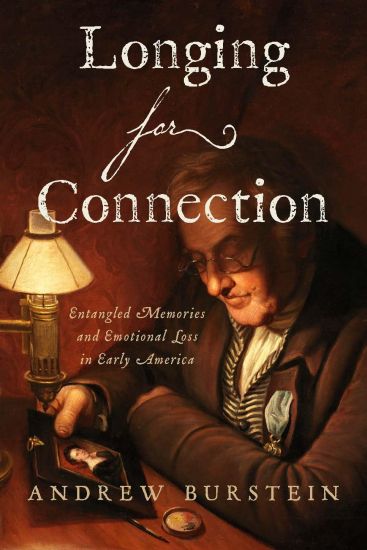
Longing for Connection

Longing for Connection

Andrew Burstein

Johns Hopkins University Press
2024
sidottu
Untangling the private feelings, ambitions, and fears of early Americans through their personal writings from the Revolution to the Civil War.Modern readers of history and biography unite around a seemingly straightforward question: What did it feel like to live in the past? In Longing for Connection, historian Andrew Burstein attempts to answer this question with a vigorous, nuanced emotional history of the United States from its founding to the Civil War. Through an examination of the letters, diaries, and other personal texts of the time, along with popular poetry and novels, Burstein shows us how early Americans expressed deep emotions through shared metaphors and borrowed verse in their longing for meaning and connection. He reveals how literate, educated Americans—both well-known and more obscure—expressed their feelings to each other and made attempts at humor, navigating an anxious world in which connection across spaces was difficult to capture. In studying the power of poetry and literature as expressions of inner life, Burstein conveys the tastes of early Americans and illustrates how emotions worked to fashion myths of epic heroes, such as the martyr Nathan Hale, George Washington, and Abraham Lincoln. He also studies the public's fears of ocean travel, their racial blind spots, and their remarkable facility for political satire.Burstein questions why we seek a connection to the past and its emotions in the first place. America, he argues, is shaped by a persistent belief that the past is reachable and that its lessons remain intact, which represents a major obstacle in any effort to understand our national history. Burstein shows, finally, that modern readers exhibit a similar capacity for rationalization and that dire longing for connection across time and space as the people he studies.
Being Thomas Jefferson: An Intimate History

Being Thomas Jefferson: An Intimate History

Andrew Burstein

BLOOMSBURY PUBLISHING
2026
sidottu
The deepest dive yet into the heart and soul, secret affairs, unexplored alliances, and bitter feuds of a generally worshipped, intermittently reviled American icon. Perhaps no founding father is as mysterious as Thomas Jefferson. The author of the Declaration of Independence was both a gifted wordsmith and a bundle of nerves. His superior knowledge of the human heart is captured in the impassioned appeal he brought to the Declaration. But as a champion of the common man who lived a life of privilege on a mountaintop plantation of his own design, he has eluded biographers who have sought to make sense of his inner life. In Being Thomas Jefferson, acclaimed Jefferson scholar Andrew Burstein peels away layers of obfuscation, taking us past the veneer of the animated letter-writer to describe a confused lover and a misguided humanist, too timid to embrace antislavery. Jefferson was a soft-spoken man who recoiled from direct conflict, yet a master puppeteer in politics. Whenever he left Monticello, where he could control his environment, he suffered debilitating headaches that plagued him for decades, until he finally retired from public life. So, what did it feel like to be Thomas Jefferson? Burstein explains the decision to take as his mistress Sally Hemings, the enslaved half-sister of his late wife, who bore him six children, none of whom he acknowledged. Presenting a society that encouraged separation between public and private, appearance and essence, Burstein paints a dramatic picture of early American culture and brings us closer to Jefferson's life and thought than ever before.