Kirjojen hintavertailu. Mukana 11 244 527 kirjaa ja 12 kauppaa.

Kirjahaku

Etsi kirjoja tekijän nimen, kirjan nimen tai ISBN:n perusteella.

19 kirjaa tekijältä Andrew Cook

Cash for Honours

Cash for Honours

Andrew Cook

The History Press Ltd
2008
sidottu
The book uncovers the involvement of the Secret Service and how Maundy Gregory exploited sensitive information that enabled him to gain access and influence to pillars of the establishment. It reveals for the first time the contents of the recently de-classified secret file held on Gregory and his activities by the Vatican and exposes the circumstances surrounding Gregory's 1933 arrest for selling honours and the deal he was offered by Cabinet Ministers to quit the country in return for a light sentence and a pension for life.
The Ian Fleming Miscellany

The Ian Fleming Miscellany

Andrew Cook

The History Press Ltd
2015
sidottu
The name Ian Fleming is synonymous with British espionage, both with his work as a naval intelligence officer in the Second World War as well as with his creation of the most famous fictional spy in literary history: James Bond. This book centres on Ian Fleming the man, his contradictions and his public and private personality. It examines the person behind the myth and how in particular he managed (unsuccessfully at first) to create a film franchise that has lasted over fifty years. It considers Fleming’s reputation as a writer, the ‘formula method’ he perfected and that formula’s reliance on the recycling of real individuals and events, as well as the occasional reliance on plagiarism. It uniquely accesses a number of recently opened government files that shed light on previously unknown wartime operations, such as the Air Ministry’s top secret ‘Operation Grand Slam’, which was used in Goldfinger.
No Case to Answer

No Case to Answer

Andrew Cook

THE HISTORY PRESS LTD
2022
sidottu
‘There I met and was introduced to 13 men, one of whom I already knew. Three of these men and another who joined the group later have never, to my knowledge, been wanted by the police in connection with the train robbery so, for their protection, I will refer to them as, Joe, Bert, Sid, and Fred.’ - Ronnie BiggsIn the early hours of Thursday, 8 August 1963, sixteen masked men ambushed the Glasgow-Euston mail train at Sears Crossing in Buckinghamshire. Making off with a record haul of £2.6 million, the robbers received approximately £150,000 each (over £2 million in today’s money). While twelve of the robbers were jailed over the next five years, four were never brought to justice – they evaded arrest and thirty-year prison sentences, and lived out the rest of their lives in freedom. In stark contrast to the likes of Ronnie Biggs, Buster Edwards and Bruce Reynolds, they became neither household names nor tabloid celebrities.Who were these men? How did they escape detection for so long? And how, almost sixty years later, are their names not common knowledge?In No Case to Answer, Andrew Cook gathers and examines decades of evidence and lays it out end-to-end. It’s time for you to draw your own conclusions.
On His Majesty's Secret Service

On His Majesty's Secret Service

Andrew Cook

NPI Media Group
2002
nidottu
Sydney Reilly Codename ST1. The definitive biography of the real life 1920s British secret service agent, Sidney Reilly, the inspiration for Ian Flemming's James Bond 007 based on the author's priviledged access to over 200 closed MI6 documents. Coincides with the release of the new James Bond movie, Die Another Day and the 40th anniversary of the first Bond film in 1962.
Ace of Spies

Ace of Spies

Andrew Cook

The History Press Ltd
2004
nidottu
Ace of Spies reveals for the first time the true story of Sidney Reilly, the real-life inspiration behind fictional hero James Bond. Andrew Cook's startling biography cuts through the myths to tell the full story of the greatest spy the world has ever know. Sidney Reilly influenced world history through acts of extraordinary courage and sheer audacity. He was a master spy, a brilliant con man, a charmer, a cad and a lovable rogue who lived on his wits and thrived on danger, using women shamelessly and killing where necessary - and unnecessary. Sidney Reilly is one of the most fascinating spies of the twentieth century, yet he remains one of the most enigmatic - until now.
To Kill Rasputin

To Kill Rasputin

Andrew Cook

The History Press Ltd
2005
sidottu
The murder of Rasputin on the night of 17 December 1916 has always seemed extraordinary: first he was poisoned, then shot and finally drowned in a frozen river by Russian aristocrats fearful of his influence on Tsar Nicholas II and Tsarina Alexandra. Or was he? Dramatic new evidence from previously unpublished documents, diaries, forensic reports and intelligence records now means the plot takes a remarkable twist.Grigori Rasputin is probably one of the best known but least understood figures in the events that ultimately led to the downfall of the Russian Tsars some nine decades ago. His political role as the power behind the throne is obscured today, as it was then, by the fascination with his morality and private life. Andrew Cook's re-investigation of Rasputin's death reveals for the first time the real masterminds behind the murder of the 'mad monk'.Why does the story of a peasant from a distant Siberian village becoming the all-powerful favourite of the last Russian Tsar excite us more than almost any other episode in Russian history? Why are there more lies and concealment than truth in the story of his murder? Was this extraordinary man an evil demon who brought down the Royal family, or somebody who could have been its saviour? To Kill Rasputin finally provides the answers to the many mysteries surrounding this pivotal moment in Russian history.
To Kill Rasputin

To Kill Rasputin

Andrew Cook

The History Press Ltd
2006
nidottu
The murder of Rasputin on the night of 17 December 1916 has always seemed extraordinary: first he was poisoned, then shot and finally drowned in a frozen river by Russian aristocrats fearful of his influence on Tsar Nicholas II and Tsarina Alexandra.
M

M

Andrew Cook

The History Press Ltd
2006
nidottu
William Melville was one of the most influential counter - espionage figures of the twentieth century. This work presents the true story of the real M, William Melville, MI5s founding father and the inspiration for Ian Flemings character in "James Bond".
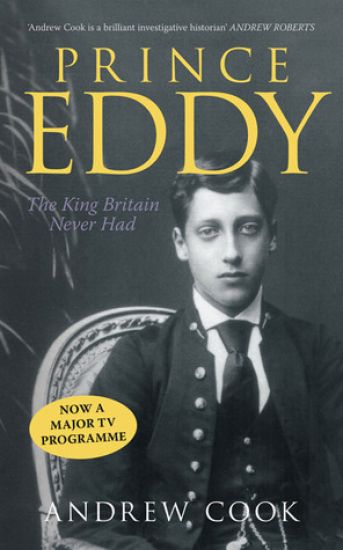
Prince Eddy

Prince Eddy

Andrew Cook

The History Press Ltd
2008
nidottu
Prince Albert Victor, King Edward Vll's (r 1901-10) first son and heir to the throne, and popularly known as Eddy, has virtually been airbrushed out of history. In this book, Andrew Cook, the presenter and historical consultant of the Channel 4 documentary on the life of Prince Eddy, reveals the truth about a key royal figure, a man who would have made a fine king and changed the face of the British monarchy.
The Great Train Robbery

The Great Train Robbery

Andrew Cook

The History Press Ltd
2013
sidottu
The Great Train Robbery of 1963 is one of the most infamous crimes in British history. The bulk of the money stolen (equivalent to over £40 million today) has never been recovered, and there has not been a single year since 1963 when one aspect of the crime or its participants has not been featured in the media. Despite the wealth and extent of this coverage, a host of questions have remained unanswered: Who was behind the robbery? Was it an inside job? And who got away with the crime of the century? Fifty years of selective falsehood and fantasy has obscured the reality of the story behind the robbery. The fact that a considerable number of the original investigation and prosecution files on those involved and alleged to have been involved were closed, in many cases until 2045, has only served to muddy the waters still further. Now, through Freedom of Information requests and the exclusive opening of many of these files, Andrew Cook reveals a new picture of the crime and its investigation that, at last, provides answers to many of these questions.
The Great Train Robbery

The Great Train Robbery

Andrew Cook

The History Press Ltd
2013
nidottu
The Great Train Robbery of 1963 is one of the most infamous crimes in British history. The bulk of the money stolen (equivalent to over £40 million today) has never been recovered, and there has not been a single year since 1963 when one aspect of the crime or its participants has not been featured in the media. Despite the wealth and extent of this coverage, a host of questions have remained unanswered: Who was behind the robbery? Was it an inside job? And who got away with the crime of the century? Fifty years of selective falsehood and fantasy has obscured the reality of the story behind the robbery. The fact that a considerable number of the original investigation and prosecution files on those involved and alleged to have been involved were closed, in many cases until 2045, has only served to muddy the waters still further. Now, through Freedom of Information requests and the exclusive opening of many of these files, Andrew Cook reveals a new picture of the crime and its investigation that, at last, provides answers to many of these questions.
Black Start

Black Start

Andrew Cook

William Cook Publishing Ltd
2023
nidottu
Britain is in the grips of an energy crisis: political failure has plunged the country into freezing darkness. Can the retired director of a near-derelict power station save the nation from chaos and disorder?Black Start is a short story by the British industrialist Sir Andrew Cook CBE and a timely warning about the dangers of short-sighted energy policy and the loss of expert engineering knowledge.
The Reformation

The Reformation

Andrew Cook

Christian Focus Publications Ltd
2017
pokkari
In honour of the 500-year anniversary of the Reformation, this small book goes through some of the key events and characters who, under God, brought about one of the most significant changes in the history of the church. Covering great names, such as Luther, and less well-known names, such as John Huss, this work seeks to present the essence and impact of this great era. This is an engaging and accessible introduction to the Reformation.
No Case to Answer

No Case to Answer

Andrew Cook

THE HISTORY PRESS LTD
2023
pokkari
‘There I met and was introduced to 13 men, one of whom I already knew. Three of these men and another who joined the group later have never, to my knowledge, been wanted by the police in connection with the train robbery so, for their protection, I will refer to them as, Joe, Bert, Sid, and Fred.’ - Ronnie BiggsIn the early hours of Thursday, 8 August 1963, sixteen masked men ambushed the Glasgow-Euston mail train at Sears Crossing in Buckinghamshire. Making off with a record haul of £2.6 million, the robbers received approximately £150,000 each (over £2 million in today’s money). While twelve of the robbers were jailed over the next five years, four were never brought to justice – they evaded arrest and thirty-year prison sentences, and lived out the rest of their lives in freedom. In stark contrast to the likes of Ronnie Biggs, Buster Edwards and Bruce Reynolds, they became neither household names nor tabloid celebrities.Who were these men? How did they escape detection for so long? And how, almost sixty years later, are their names not common knowledge?In No Case to Answer, Andrew Cook gathers and examines decades of evidence and lays it out end-to-end. It’s time for you to draw your own conclusions.
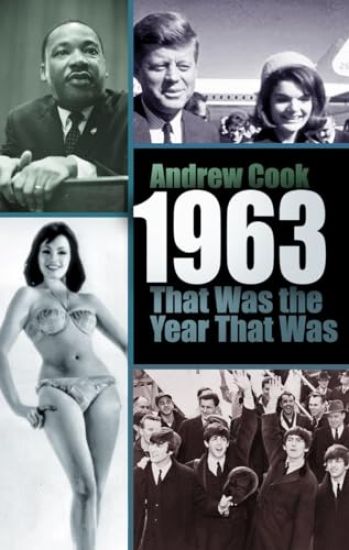
1963: That Was the Year That Was

1963: That Was the Year That Was

Andrew Cook

THE HISTORY PRESS LTD
2024
pokkari
While we conveniently package the past into decades when talking about the ‘Roaring ’20s’, ‘the Rock and Roll era’ of the ’50s or the ‘Swinging ’60s’, these tend to be labels of convenience rather than of historical accuracy. In reality, the first four years of the 1950s were more akin to the 1940s, with austerity and rationing still facts of every-day life. Likewise, the first three years of the ’60s were, in terms of fashion, social attitudes and living standards, really part of the 1950s. The year 1963 was to be the seminal year when most of the things we now associate with the ‘Swinging ’60s’ really began.Most years are fortunate to experience three or four seminal events during their allotted twelve months; a cursory look through a chronology of 1963, however, shows just how many significant events took place. This year alone saw a huge number of watershed moments in popular culture, national and international politics.Arranged in a chronological, month-by-month format, 1963: That Was the Year That Was pieces together these happenings, exploring their immediate and long-term effects and implications. This is a fascinating read for both those who lived through these momentous times, and those who want to learn more about the start of the swinging ’60s.
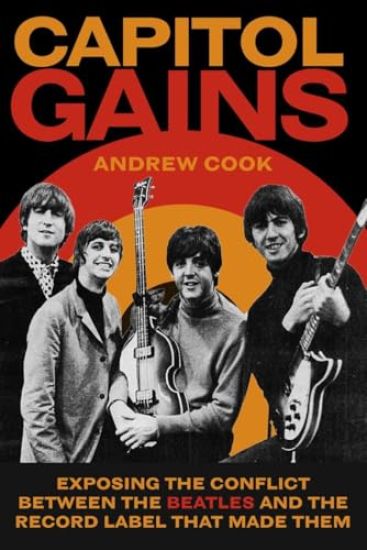
Capitol Gains

Capitol Gains

Andrew Cook

THE HISTORY PRESS LTD
2025
sidottu
February 1963 marked the Beatles’ breakthrough in Britain, but by December, they hadn’t conquered America. Capitol Records signed them in late 1963 after a year of rejection. When the Beatles hit big in the US in February 1964, their manager, Brian Epstein, and Capitol executives obscured the true story, but corporate and personal archives now reveal why Capitol viewed the British record industry as outdated and decided to remix UK master tapes and create distinct US albums and how Brian Epstein struggled to balance Capitol’s commercial decisions with the Beatles’ interests. This account explores Capitol’s PR efforts to protect the Beatles’ image and examines how Capitol’s decisions made the Beatles wealthy. It also reveals how choices by the band and their manager nearly led to bankruptcy in 1969.
The Crimes of the Gestapo

The Crimes of the Gestapo

Andrew Cook

Amberley Publishing
2021
sidottu
MI14 was set up in 1940 as a clearing house for intelligence from and about Nazi Germany. In addition to their own networks and operations, MI14 also had the benefit of intelligence from MI5, MI6 and MI9. The Gestapo was one of the main areas of MI14 interest. Established in 1933 as Department 1A of the Prussian State Police, the Gestapo (a contraction of Geheime Staatspolizei – state secret police) soon became identified as the Nazis’ leading instrument of repression and synonymous with the brutality and terror of the regime. Charged with state security, the Gestapo singled out opponents, real or imaginary, within Germany and the occupied territories, brutally suppressing them with torture and execution, and actively seeking to promote the Nazi state’s perverse policies. This book also reveals that the Gestapo was not as all-powerful as it is often assumed, and was often under-resourced and overstretched, relying to a great extent on the willingness of ‘ordinary Germans’ to provide information on their fellow citizens.