Kirjojen hintavertailu. Mukana 11 244 527 kirjaa ja 12 kauppaa.

Kirjahaku

Etsi kirjoja tekijän nimen, kirjan nimen tai ISBN:n perusteella.

22 kirjaa tekijältä Andrew Cunningham

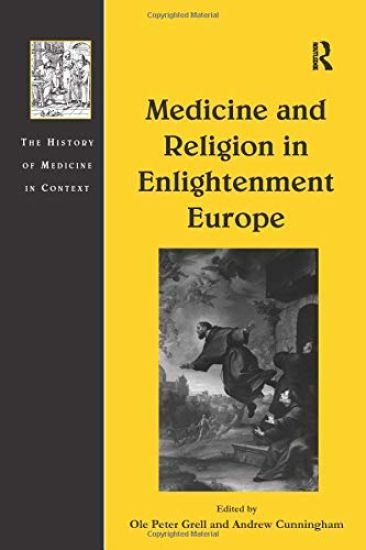
Medicine and Religion in Enlightenment Europe

Medicine and Religion in Enlightenment Europe

Andrew Cunningham

Ashgate Publishing Limited
2007
sidottu
The Enlightenment period, here understood as covering the years 1650 to 1789, is usually considered to be a period when religion was obliged to give way to rationality. With respect to medicine this means that the religious elements in the treatment and interpretation of diseases to all intents and purposes disappeared. However, there are growing indications in recent scholarship that this may well be an overstatement. Indeed it appears that religion retained many of its customary relations with medicine. This volume explores how far, and the ways in which, this was still the case. It looks at this multi-faceted relationship with respect to among others: medical care and death in hospitals, religious vocation and nursing, chemical medicine and religion, the clergy and medicine, the continued significance of popular medicine, faith healing, dissection and religion, and religious dissent and medical innovation. Within these significant areas the volume provides a European perspective which will make it possible to draw comparisons and determine differences.
The Anatomist Anatomis'd

The Anatomist Anatomis'd

Andrew Cunningham

Ashgate Publishing Limited
2010
sidottu
The eighteenth-century practitioners of anatomy saw their own period as 'the perfection of anatomy'. This book looks at the investigation of anatomy in the 'long' eighteenth century in disciplinary terms. This means looking in a novel way not only at the practical aspects of anatomizing but also at questions of how one became an anatomist, where and how the discipline was practised, what the point was of its practice, what counted as sub-disciplines of anatomy, and the nature of arguments over anatomical facts and priority of discovery. In particular pathology, generation and birth, and comparative anatomy are shown to have been linked together as sub-disciplines of anatomy. At first sight anatomy seems the most long-lived and stable of medical disciplines, from Galen and Vesalius to the present. But Cunningham argues that anatomy was, like so many other areas of knowledge, changed irrevocably around the end of the eighteenth century, with the creation of new disciplines, new forms of knowledge and new ways of investigation. The 'long' eighteenth century, therefore, was not only the highpoint of anatomy but also the endpoint of old anatomy.
Centres of Medical Excellence?

Centres of Medical Excellence?

Andrew Cunningham

Ashgate Publishing Limited
2010
sidottu
Students notoriously vote with their feet, seeking out the best and most innovative teachers of their subject. The most ambitious students have been travelling long distances for their education since universities were first founded in the 13th century, making their own educational pilgrimage or peregrinatio. This volume deals with the peregrinatio medica from the viewpoint of the travelling students: who went where; how did they travel; what did they find when they arrived; what did they take back with them from their studies. Even a single individual could transform medical studies or practice back home on the periphery by trying to reform teaching and practice the way they had seen it at the best universities. Other contributions look at the universities themselves and how they were actively developed to attract students, and at some of the most successful teachers, such as Boerhaave at Leiden or the Monros at Edinburgh. The essays show how increasing levels of wealth allowed more and more students to make their pilgrimages, travelling for weeks at a time to sit at the feet of a particular master. In medicine this meant that, over the period c.1500 to 1789, a succession of universities became the medical school of choice for ambitious students: Padua and Bologna in the 1500s, Paris, Leiden and Montpellier in the 1600s, and Leiden, Göttingen and Edinburgh in the 1700s. The arrival of foreign students brought wealth to the university towns and this significant economic benefit meant that the governors of these universities tried to ensure the defence of freedom of religion and freedom of speech, thus providing the best conditions for the promotion of new views and innovation in medicine. The collection presents a new take on the history of medical education, as well as universities, travel and education more widely in ancien régime Europe.
'I Follow Aristotle': How William Harvey Discovered the Circulation of the Blood
This book presents a new interpretation of how and why the discovery of the circulation of the blood in animals was made. It has long been known that the English physician William Harvey (1578–1657) was a follower of Aristotle, but his most strikingly ‘modern’ and original discovery – of the circulation of the blood – resulted from Harvey following Aristotle’s ancient programme of investigation into animals. This is a new reading of the most important discovery ever made in anatomy by one man and produces not only a radical re-reading of Harvey as anatomist, but also of Aristotle and his investigations of animals.
'I Follow Aristotle': How William Harvey Discovered the Circulation of the Blood
This book presents a new interpretation of how and why the discovery of the circulation of the blood in animals was made. It has long been known that the English physician William Harvey (1578–1657) was a follower of Aristotle, but his most strikingly ‘modern’ and original discovery – of the circulation of the blood – resulted from Harvey following Aristotle’s ancient programme of investigation into animals. This is a new reading of the most important discovery ever made in anatomy by one man and produces not only a radical re-reading of Harvey as anatomist, but also of Aristotle and his investigations of animals.
The Identity of the History of Science and Medicine
In these essays, Andrew Cunningham is concerned with issues of identity - what was the identity of topics, disciplines, arguments, diseases in the past, and whether they are identical with (more usually, how they are not identical with) topics, disciplines, arguments or diseases in the present. Historians usually tend to assume such continuous identities of present attitudes and activities with past ones, and rarely question them; the contention here is that this gives us a false image of the very things in the past that we went to look for.
The Anatomist Anatomis'd

The Anatomist Anatomis'd

Andrew Cunningham

Routledge
2016
nidottu
The eighteenth-century practitioners of anatomy saw their own period as 'the perfection of anatomy'. This book looks at the investigation of anatomy in the 'long' eighteenth century in disciplinary terms. This means looking in a novel way not only at the practical aspects of anatomizing but also at questions of how one became an anatomist, where and how the discipline was practised, what the point was of its practice, what counted as sub-disciplines of anatomy, and the nature of arguments over anatomical facts and priority of discovery. In particular pathology, generation and birth, and comparative anatomy are shown to have been linked together as sub-disciplines of anatomy. At first sight anatomy seems the most long-lived and stable of medical disciplines, from Galen and Vesalius to the present. But Cunningham argues that anatomy was, like so many other areas of knowledge, changed irrevocably around the end of the eighteenth century, with the creation of new disciplines, new forms of knowledge and new ways of investigation. The 'long' eighteenth century, therefore, was not only the highpoint of anatomy but also the endpoint of old anatomy.
Medicine and Religion in Enlightenment Europe
The Enlightenment period, here understood as covering the years 1650 to 1789, is usually considered to be a period when religion was obliged to give way to rationality. With respect to medicine this means that the religious elements in the treatment and interpretation of diseases to all intents and purposes disappeared. However, there are growing indications in recent scholarship that this may well be an overstatement. Indeed it appears that religion retained many of its customary relations with medicine. This volume explores how far, and the ways in which, this was still the case. It looks at this multi-faceted relationship with respect to among others: medical care and death in hospitals, religious vocation and nursing, chemical medicine and religion, the clergy and medicine, the continued significance of popular medicine, faith healing, dissection and religion, and religious dissent and medical innovation. Within these significant areas the volume provides a European perspective which will make it possible to draw comparisons and determine differences.
Centres of Medical Excellence?

Centres of Medical Excellence?

Andrew Cunningham

Routledge
2016
nidottu
Students notoriously vote with their feet, seeking out the best and most innovative teachers of their subject. The most ambitious students have been travelling long distances for their education since universities were first founded in the 13th century, making their own educational pilgrimage or peregrinatio. This volume deals with the peregrinatio medica from the viewpoint of the travelling students: who went where; how did they travel; what did they find when they arrived; what did they take back with them from their studies. Even a single individual could transform medical studies or practice back home on the periphery by trying to reform teaching and practice the way they had seen it at the best universities. Other contributions look at the universities themselves and how they were actively developed to attract students, and at some of the most successful teachers, such as Boerhaave at Leiden or the Monros at Edinburgh. The essays show how increasing levels of wealth allowed more and more students to make their pilgrimages, travelling for weeks at a time to sit at the feet of a particular master. In medicine this meant that, over the period c.1500 to 1789, a succession of universities became the medical school of choice for ambitious students: Padua and Bologna in the 1500s, Paris, Leiden and Montpellier in the 1600s, and Leiden, Göttingen and Edinburgh in the 1700s. The arrival of foreign students brought wealth to the university towns and this significant economic benefit meant that the governors of these universities tried to ensure the defence of freedom of religion and freedom of speech, thus providing the best conditions for the promotion of new views and innovation in medicine. The collection presents a new take on the history of medical education, as well as universities, travel and education more widely in ancien régime Europe.
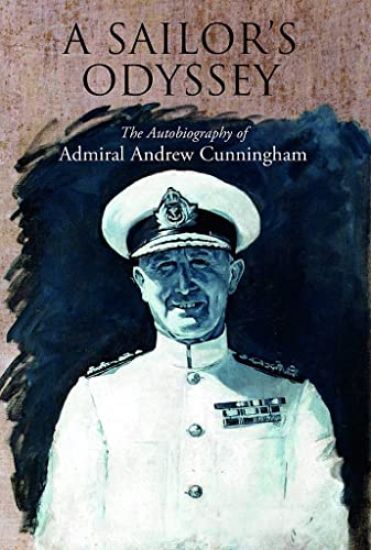
A Sailor's Odyssey

A Sailor's Odyssey

Andrew Cunningham

PEN SWORD BOOKS LTD
2022
nidottu
Admiral Andrew Cunningham, best remembered for his courageous leadership in the Mediterranean in the Second World War, is often rated as our finest naval commander after Nelson, and indeed a bust of the Admiral was unveiled in Trafalgar Square close by his predecessor in 1967 by the Duke of Edinburgh. It was during the dark days of 1940 41, after the surrender of France and Italy's entry into the War and when Britain was fighting single-handed, that Cunningham held the Eastern Mediterranean with a fleet greatly inferior to the Italian; his lack of ships and aircraft was more than made up for by his bold and vigorous command. Taranto, Matapan, Crete, North Africa -these are the critical battles and regions with which he is so closely associated. _A Sailor's Odyssey_ is the stirring autobiography of this great fighting seaman from his boyhood in Dublin and his early career in the Navy and his service in the First World War, through his commands in the inter-war years, to the great sea battles in the Mediterranean, and then his elevation to First Sea Lord in 1943 and his subsequent responsibility for the operational policy of the Royal Navy during the later stages of the War. He attended the conferences at Casablanca, Teheran, Quebec and Yalta, and gives revealing glimpses of Churchill, Roosevelt and Stalin. His was, truly, a remarkable career. This is a beautifully written and absorbing naval memoir, and it made a significant contribution to the history of the Royal Navy in the Second World War when it was first published in 1951; this new paperback edition, with an introduction by his great nephew Admiral Jock Slater, will fascinate and delight a new generation of readers and bring into focus again a great British fighting admiral.
The Identity of the History of Science and Medicine

The Identity of the History of Science and Medicine

Andrew Cunningham

Ashgate Publishing Limited
2012
sidottu
In these essays, Andrew Cunningham is concerned with issues of identity - what was the identity of topics, disciplines, arguments, diseases in the past, and whether they are identical with (more usually, how they are not identical with) topics, disciplines, arguments or diseases in the present. Historians usually tend to assume such continuous identities of present attitudes and activities with past ones, and rarely question them; the contention here is that this gives us a false image of the very things in the past that we went to look for.
Wisdom Spring

Wisdom Spring

Andrew Cunningham

Createspace Independent Publishing Platform
2013
pokkari
"The novel grabs from the first sentence." - Cape Cod Times Jessica Norton is a woman on the run, a sensational lead item on the nightly news. Jon Harper is a grieving father whose life has crumbled over the death of his young daughter. When Jon picks up Jess hitchhiking on a deserted Texas highway one rainy night, it pitches them both into the middle of a massive conspiracy. Wisdom Spring takes readers on a fast-paced, suspenseful ride along the highways of the U.S. and Canada, and into the far reaches of the Alaskan wilderness. Pursued by a group of relentless killers, the two unlikely heroes must transition from helpless prey to proficient hunters, leading to a shocking discovery--one that threatens the very future of the United States.
All Lies

All Lies

Andrew Cunningham

Createspace Independent Publishing Platform
2015
pokkari
"Don't miss this one. You'll find mystery, suspense, adventure, and even romance." -- Mystery Suspense Reviews A seemingly innocent date gone tragically wrong plunges Del Honeycutt into a web of murder, lies, greed, and a hidden fortune dating back to a crime committed 85 years earlier by his great-grandfather. Accompanied by Sabrina, the sister of Del's brutally murdered date, a violent journey of discovery and fear begins. Pursued by vicious killers intent on eliminating anyone with knowledge of the 85-year-old crime, their only hope of survival is to find the reason behind the original crime and why, decades later, someone is still willing to kill to keep it hidden. But Sabrina is concealing a monstrous lie of her own. Is she who she says she is?
Deadly Shore

Deadly Shore

Andrew Cunningham

Createspace Independent Publishing Platform
2015
pokkari
When It's Terrorist vs. Hurricane ... Everybody Loses It's July 5th, and the Cape Cod roadways are clogged with tourists heading home from the holiday weekend and trying to outrun an approaching potentially catastrophic hurricane. But in the blink of an eye, their lives are thrown into chaos when terrorists bring down all of the bridges to the Cape. Instantly, a half million terrified people have no way to escape. And when the terrorists threaten to release anthrax on the captive population if their demands aren't met, fear turns to all-out panic.With time running out, Marcus Baldwin, a private investigator and former CIA operative, and Sara Cross, a disgraced ex-homicide detective, are brought together by a sole clue to the identity of the terrorists. They quickly realize that they may be the only ones with even a chance of stopping the plot before it's too late.With Category 4 Hurricane Chad barreling up the coast on a path for a direct hit on Cape Cod, it becomes frighteningly clear to everyone trapped on what has now become an island-one way or another they are probably all going to die.
Fatal Lies

Fatal Lies

Andrew Cunningham

Createspace Independent Publishing Platform
2016
pokkari
She was murdered ... twice Daisy Leduc was forgotten and alone. That was just how she wanted it. But when she is discovered stabbed to death in a dusty little Texas town, it plunges Del Honeycutt and bestselling mystery author Sabrina Spencer into a 30-year-old mystery involving murder, hidden identities, dangerous family secrets, political intrigue, and a long-forgotten serial killer. When they discover that Daisy, under a different name, supposedly died 30 years earlier, they find themselves squarely in the crosshairs of killers whose deadly secrets lie in Daisy's mysterious past.
Blood Lies

Blood Lies

Andrew Cunningham

Independently Published
2020
pokkari
Gunned down on a busy Boston street, bestselling mystery author Sabrina Spencer is left clinging to life. Media speculation suggests a deranged fan as the shooter. But was Sabrina really the intended target? For Del Honeycutt, a chilling link emerges between Sabrina's shooting and that of his father's murder three years earlier. Discovering that his father was leading a secret life, he digs deeper, and the clues lead Del down a dangerous and deadly path.
Secrets & Lies

Secrets & Lies

Andrew Cunningham

Independently Published
2018
pokkari
On the afternoon of May 11, 1996, ValuJet 592 plunged into the Florida Everglades. There were no survivors. But something came through the crash unscathed: a small box with huge implications for humankind. And the one man unlucky enough to discover its whereabouts disappeared without a trace. Now, 20 years later, the mystery of Flight 592 hits close to home for Del Honeycutt and bestselling mystery author Sabrina Spencer. A shocking revelation launches them into the middle of a dark conspiracy, and locating the box becomes a matter of life or death. They are not alone in the hunt for the mysterious parcel and very quickly learn that others will stop at nothing to find it and will eliminate anyone who stands in their way. With killers hot on their trail, Del and Sabrina must navigate dangers lurking both above and below the swamp waters of the Everglades in order to find the box ... or die.