Kirjojen hintavertailu. Mukana 12 384 300 kirjaa ja 12 kauppaa.

Kirjahaku

Etsi kirjoja tekijän nimen, kirjan nimen tai ISBN:n perusteella.

12 kirjaa tekijältä Andrew Delbanco

Hispanic New York

Hispanic New York

Andrew Delbanco

Columbia University Press
2010
sidottu
Over the past few decades, a wave of immigration has turned New York into a microcosm of the Americas and enhanced its role as the crossroads of the English- and Spanish-speaking worlds. Yet far from being an alien group within a "mainstream" and supposedly pure "Anglo" America, people referred to as Hispanics or Latinos have been part and parcel of New York since the beginning of the city's history. They represent what Walt Whitman once celebrated as "the Spanish element of our nationality." Hispanic New York is the first anthology to offer a comprehensive view of this multifaceted heritage. Combining familiar materials with other selections that are either out of print or not easily accessible, Claudio Ivan Remeseira makes a compelling case for New York as a paradigm of the country's Latinoization. His anthology mixes primary sources with scholarly and journalistic essays on history, demography, racial and ethnic studies, music, art history, literature, linguistics, and religion, and the authors range from historical figures, such as Jose Marti, Bernardo Vega, or Whitman himself, to contemporary writers, such as Paul Berman, Ed Morales, Virginia Sanchez Korrol, Roberto Suro, and Ana Celia Zentella. This unique volume treats the reader to both the New York and the American experience, as reflected and transformed by its Hispanic and Latino components.
Hispanic New York

Hispanic New York

Andrew Delbanco

Columbia University Press
2010
pokkari
Over the past few decades, a wave of immigration has turned New York into a microcosm of the Americas and enhanced its role as the crossroads of the English- and Spanish-speaking worlds. Yet far from being an alien group within a "mainstream" and supposedly pure "Anglo" America, people referred to as Hispanics or Latinos have been part and parcel of New York since the beginning of the city's history. They represent what Walt Whitman once celebrated as "the Spanish element of our nationality." Hispanic New York is the first anthology to offer a comprehensive view of this multifaceted heritage. Combining familiar materials with other selections that are either out of print or not easily accessible, Claudio Ivan Remeseira makes a compelling case for New York as a paradigm of the country's Latinoization. His anthology mixes primary sources with scholarly and journalistic essays on history, demography, racial and ethnic studies, music, art history, literature, linguistics, and religion, and the authors range from historical figures, such as Jose Marti, Bernardo Vega, or Whitman himself, to contemporary writers, such as Paul Berman, Ed Morales, Virginia Sanchez Korrol, Roberto Suro, and Ana Celia Zentella. This unique volume treats the reader to both the New York and the American experience, as reflected and transformed by its Hispanic and Latino components.
Melville: His World and Work

Melville: His World and Work

Andrew Delbanco

VINTAGE
2006
nidottu
If Dickens was nineteenth-century London personified, Herman Melville was the quintessential American. With a historian's perspective and a critic's insight, award-winning author Andrew Delbanco marvelously demonstrates that Melville was very much a man of his era and that he recorded -- in his books, letters, and marginalia; and in conversations with friends like Nathaniel Hawthorne and with his literary cronies in Manhattan -- an incomparable chapter of American history. From the bawdy storytelling of Typee to the spiritual preoccupations building up to and beyond Moby Dick, Delbanco brilliantly illuminates Melville's life and work, and his crucial role as a man of American letters.
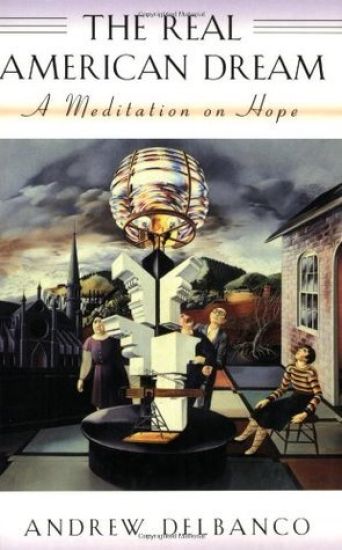
The Real American Dream

The Real American Dream

Andrew Delbanco

Harvard University Press
2000
nidottu
Since we discovered that, in Tocqueville’s words, “the incomplete joys of this world will never satisfy the heart,” how have we Americans made do? In The Real American Dream one of the nation’s premier literary scholars searches out the symbols and stories by which Americans have reached for something beyond worldly desire. A spiritual history ranging from the first English settlements to the present day, the book is also a lively, deeply learned meditation on hope.Andrew Delbanco tells of the stringent God of Protestant Christianity, who exerted immense force over the language, institutions, and customs of the culture for nearly 200 years. He describes the falling away of this God and the rise of the idea of a sacred nation-state. And, finally, he speaks of our own moment, when symbols of nationalism are in decline, leaving us with nothing to satisfy the longing for transcendence once sustained by God and nation.From the Christian story that expressed the earliest Puritan yearnings to New Age spirituality, apocalyptic environmentalism, and the multicultural search for ancestral roots that divert our own, The Real American Dream evokes the tidal rhythm of American history. It shows how Americans have organized their days and ordered their lives—and ultimately created a culture—to make sense of the pain, desire, pleasure, and fear that are the stuff of human experience. In a time of cultural crisis, when the old stories seem to be faltering, this book offers a lesson in the painstaking remaking of the American dream.
William Ellery Channing

William Ellery Channing

Andrew Delbanco

Harvard University Press
1981
sidottu
This is a vivid portrayal of the man who led the movement toward liberal religion in America. Andrew Delbanco traces the development of Channing's thinking on the relation of man to God and nature, on the reality of evil, on the autonomy of the individual. He reveals Channing's hope and doubt concerning America's contribution to human progress. And he recounts Channing's emergence as a major voice in the antislavery movement--after a complex hesitation to embrace the cause. This is a study of the religious, literary, and political concerns of a man and his time. It will well serve all students of nineteenth-century American thought.
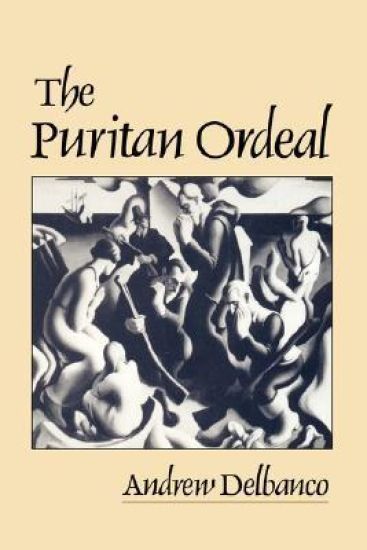
The Puritan Ordeal

The Puritan Ordeal

Andrew Delbanco

Harvard University Press
1991
nidottu
More than an ecclesiastical or political history, this book is a vivid description of the earliest American immigrant experience. It depicts the dramatic tale of the seventeenth-century newcomers to our shores as they were drawn and pushed to make their way in an unsettled and unsettling world.
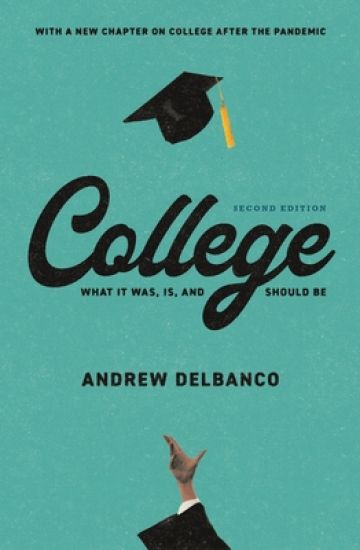
College

College

Andrew Delbanco

Princeton University Press
2014
pokkari
As the commercialization of American higher education accelerates, more and more students are coming to college with the narrow aim of obtaining a preprofessional credential. The traditional four-year college experience--an exploratory time for students to discover their passions and test ideas and values with the help of teachers and peers--is in danger of becoming a thing of the past. In College, prominent cultural critic Andrew Delbanco offers a trenchant defense of such an education, and warns that it is becoming a privilege reserved for the relatively rich. In describing what a true college education should be, he demonstrates why making it available to as many young people as possible remains central to America's democratic promise. In a brisk and vivid historical narrative, Delbanco explains how the idea of college arose in the colonial period from the Puritan idea of the gathered church, how it struggled to survive in the nineteenth century in the shadow of the new research universities, and how, in the twentieth century, it slowly opened its doors to women, minorities, and students from low-income families. He describes the unique strengths of America's colleges in our era of globalization and, while recognizing the growing centrality of science, technology, and vocational subjects in the curriculum, he mounts a vigorous defense of a broadly humanistic education for all. Acknowledging the serious financial, intellectual, and ethical challenges that all colleges face today, Delbanco considers what is at stake in the urgent effort to protect these venerable institutions for future generations. In a new afterword, Delbanco responds to recent developments--both ominous and promising--in the changing landscape of higher education.
College

College

Andrew Delbanco

PRINCETON UNIVERSITY PRESS
2023
pokkari
The strengths and failures of the American college, and why liberal education still mattersAs the commercialization of American higher education accelerates, more and more students are coming to college with the narrow aim of obtaining a preprofessional credential. The traditional four-year college experience—an exploratory time for students to discover their passions and test ideas and values with the help of teachers and peers—is in danger of becoming a thing of the past.In College, prominent cultural critic Andrew Delbanco offers a trenchant defense of such an education, and warns that it is becoming a privilege reserved for the relatively rich. In describing what a true college education should be, he demonstrates why making it available to as many young people as possible remains central to America's democratic promise.In a brisk and vivid historical narrative, Delbanco explains how the idea of college arose in the colonial period from the Puritan idea of the gathered church, how it struggled to survive in the nineteenth century in the shadow of the new research universities, and how, in the twentieth century, it slowly opened its doors to women, minorities, and students from low-income families. He describes the unique strengths of America’s colleges in our era of globalization and, while recognizing the growing centrality of science, technology, and vocational subjects in the curriculum, he mounts a vigorous defense of a broadly humanistic education for all. Acknowledging the serious financial, intellectual, and ethical challenges that all colleges face today, Delbanco considers what is at stake in the urgent effort to protect these venerable institutions for future generations.
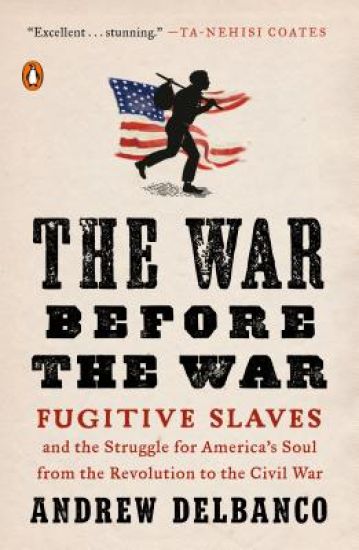
The War Before the War: Fugitive Slaves and the Struggle for America's Soul from the Revolution to the Civil War
A New York Times Notable Book Selection Winner of the Mark Lynton History Prize Winner of the Anisfield-Wolf Book AwardWinner of the Lionel Trilling Book Award A New York Times Critics' Best Book "Excellent... stunning."--Ta-Nehisi Coates This book tells the story of America's original sin--slavery--through politics, law, literature, and above all, through the eyes of enslavedblack people who risked their lives to flee from bondage, thereby forcing the nation to confront the truth about itself. The struggle over slavery divided not only the American nation but also the hearts and minds of individual citizens faced with the timeless problem of when to submit to unjust laws and when to resist. The War Before the War illuminates what brought us to war with ourselves and the terrible legacies of slavery that are with us still.
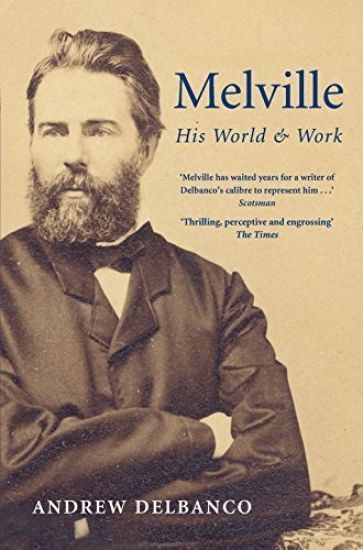
Melville

Melville

Andrew Delbanco

Picador
2013
pokkari
Herman Melville was born into a family that in the fledgling republic had lost both money and status. Toughened at sea as a young man, he returned home to chronicle the deepest crises of his time while forever shaping our literature with Moby-Dick, “Bartleby, the Scrivener,” Benito Cereno, and Billy Budd. Delbanco traces Melville’s growth from the bawdy storytelling of Typee through the spiritual preoccupations building up to Moby-Dick, and the profound disillusionment of later works. He uncovers autobiographical traces throughout Melville’s writing, shows the relentless financial pressure and declining critical and popular esteem that plagued his career, and, above all, illuminate the stunning achievements of his oeuvre. Finally we understand how Melville, more than any other American writer, has captured the popular imagination.
The Abolitionist Imagination

The Abolitionist Imagination

Andrew Delbanco; Daniel Carpenter

Harvard University Press
2012
sidottu
The abolitionists of the mid-nineteenth century have long been painted in extremes--vilified as reckless zealots who provoked the catastrophic bloodletting of the Civil War, or praised as daring and courageous reformers who hastened the end of slavery. But Andrew Delbanco sees abolitionists in a different light, as the embodiment of a driving force in American history: the recurrent impulse of an adamant minority to rid the world of outrageous evil.Delbanco imparts to the reader a sense of what it meant to be a thoughtful citizen in nineteenth-century America, appalled by slavery yet aware of the fragility of the republic and the high cost of radical action. In this light, we can better understand why the fiery vision of the "abolitionist imagination" alarmed such contemporary witnesses as Herman Melville and Nathaniel Hawthorne even as they sympathized with the cause. The story of the abolitionists thus becomes both a stirring tale of moral fervor and a cautionary tale of ideological certitude. And it raises the question of when the demand for purifying action is cogent and honorable, and when it is fanatic and irresponsible. Delbanco's work is placed in conversation with responses from literary scholars and historians. These provocative essays bring the past into urgent dialogue with the present, dissecting the power and legacies of a determined movement to bring America's reality into conformity with American ideals.
The Elements of Teaching

The Elements of Teaching

James M. Banner; Harold C. Cannon; Andrew Delbanco

Yale University Press
2017
pokkari
A newly revised edition of this classic work, exploring the diverse qualities essential for teaching in today’s educational environment."A true classic. Every teacher and parent should read this book."—Diane Ravitch According to Banner and Cannon, to be an effective teacher requires much more than technical skill. Great teaching is an art that combines a wide range of intellectual, moral, and emotional components. This classic work explores the qualities of mind and spirit that are essential for those seeking to help others acquire knowledge and understanding. It analyzes the specific qualities of successful teachers: learning, authority, ethics, order, imagination, tenacity, compassion, patience, character, and pleasure. Written in a clear and engaging style and applicable to all levels of teaching—be it in schools and universities or on athletic fields and in the home—the book encourages teachers to consider how they might enlarge their understanding of the great art of teaching.