Kirjojen hintavertailu. Mukana 11 717 486 kirjaa ja 12 kauppaa.

Kirjahaku

Etsi kirjoja tekijän nimen, kirjan nimen tai ISBN:n perusteella.

2 kirjaa tekijältä Andrew Denson

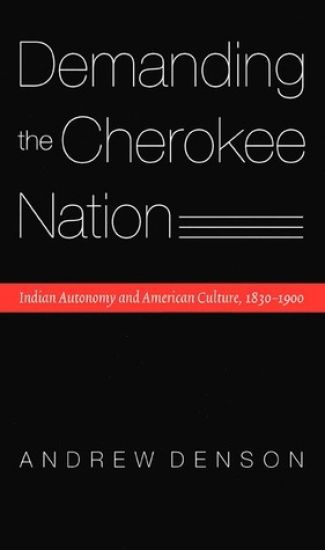
Demanding the Cherokee Nation

Demanding the Cherokee Nation

Andrew Denson

University of Nebraska Press
2004
sidottu
Demanding the Cherokee Nation examines nineteenth-century Cherokee political rhetoric to address an enigma in American Indian history: the contradiction between the sovereignty of Indian nations and the political weakness of Indian communities. Making use of a rich collection of petitions, appeals, newspaper editorials, and other public records, Andrew Denson describes the ways in which Cherokees represented their people and their nation to non-Indians after their forced removal to Indian Territory in the 1830s. He argues that Cherokee writings on nationhood document a decades-long effort by tribal leaders to find a new model for American Indian relations in which Indian nations could coexist with a modernizing United States. Most non-Natives in the nineteenth century assumed that American development and progress necessitated the end of tribal autonomy, that at best the Indian nation was a transitional state for Native people on the way to assimilation. As Denson shows, however, Cherokee leaders found a variety of ways in which the Indian nation, as they defined it, belonged in the modern world. Tribal leaders responded to developments in the United States and adapted their defense of Indian autonomy to the great changes transforming American life in the middle and late nineteenth century. In particular, Cherokees in several ways found new justification for Indian nationhood in American industrialization.
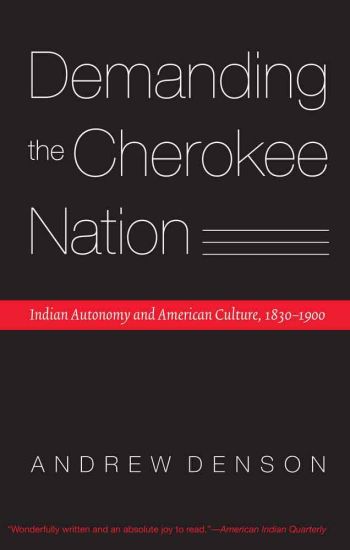
Demanding the Cherokee Nation

Demanding the Cherokee Nation

Andrew Denson

University of Nebraska Press
2015
pokkari
Demanding the Cherokee Nation examines nineteenth-century Cherokee political rhetoric to address an enigma in American Indian history: the contradiction between the sovereignty of Indian nations and the political weakness of Indian communities. Making use of a rich collection of petitions, appeals, newspaper editorials, and other public records, Andrew Denson describes the ways in which Cherokees represented their people and their nation to non-Indians after their forced removal to Indian Territory in the 1830s. He argues that Cherokee writings on nationhood document a decades-long effort by tribal leaders to find a new model for American Indian relations in which Indian nations could coexist with a modernizing United States. Most non-Natives in the nineteenth century assumed that American development and progress necessitated the end of tribal autonomy, that at best the Indian nation was a transitional state for Native people on the way to assimilation. As Denson shows, however, Cherokee leaders found a variety of ways in which the Indian nation, as they defined it, belonged in the modern world. Tribal leaders responded to developments in the United States and adapted their defense of Indian autonomy to the great changes transforming American life in the middle and late nineteenth century. In particular, Cherokees in several ways found new justification for Indian nationhood in American industrialization.