Kirjojen hintavertailu. Mukana 11 244 527 kirjaa ja 12 kauppaa.

Kirjahaku

Etsi kirjoja tekijän nimen, kirjan nimen tai ISBN:n perusteella.

18 kirjaa tekijältä Andrew Gibson

Joyce's Revenge

Joyce's Revenge

Andrew Gibson

Oxford University Press
2002
sidottu
The Ireland of Ulysses was still a part of Britain. This book is the first comprehensive, historical study of Joyce's great novel in the context of Anglo-Irish political and cultural relations in the period 1880-1920. The first forty years of Joyce's life also witnessed the emergence of what historians now call English cultural nationalism. This formation was perceptible in a wide range of different discourses. Ulysses engages with many of them. In doing so, it resists, transforms and works to transcend the effects of British rule in Ireland. The novel was written in the years leading up to Irish independence. It is powered by both a will to freedom and a will to justice. But the two do not always coincide, and Joyce does not place his art in the service of any extant political cause. His struggle for independence has its own distinctive mode. The result is a unique work of liberation - and revenge. This eminently learned but lucidly written book transforms our understanding of Joyce's Ulysses. It does so by placing the novel firmly in the historical context of Anglo-Irish political and cultural relations in the period 1880-1920. Gibson argues that Ulysses is a great work of liberation that also takes a complex form of revenge on the colonizer's culture.
J.M. Coetzee and Neoliberal Culture

J.M. Coetzee and Neoliberal Culture

Andrew Gibson

Oxford University Press
2022
sidottu
This book presents J. M. Coetzee's work as a complex, nuanced counterblast to contemporary, global, neoliberal economics and its societies. Not surprisingly, given his many years in South Africa and Australia, Coetzee writes from a `global-Southern' perspective. Drawing on a wealth of literature, philosophy, and theory, the book reads Coetzee's writings as a discreet, oblique but devastating engagement with neoliberal presumptions. It identifies and focuses on various key features of neoliberal culture: its obsession with self-enrichment, mastery, growth; its belief in plenitude, endless resources; its hubris and obsession with (self)-promotion; its desire for ease and easiness, `well-being', euphoria; its fetishization of managerial reason and the culture of security; its unrelenting positivity, its belief in illusory goods and trivial progressivisms. By contrast, Coetzee's writings explore the virtues of irony and self-reduction. He commits himself to difficulty, discomfort, patient and austere, if bleak, inquiry, rigorous questioning, and radical doubt. Destitution and failure come to look like a serious, dignified form of life and thought. The very tones of Coetzee's books run counter to those of our neoliberal democracies. They point in a different direction to an age that has gone astray.
Beckett and Badiou

Beckett and Badiou

Andrew Gibson

Oxford University Press
2007
sidottu
Beckett and Badiou offers a provocative new reading of Samuel Beckett's work on the basis of a full, critical account of the thought of Alain Badiou. Badiou is the most eminent of contemporary French philosophers. His devotion to Beckett's work has been lifelong. Yet for Badiou philosophy must be integrally affirmative, whilst Beckett apparently commits his art to a work of negation. Beckett and Badiou explores the coherences, contradictions, and extreme complexities of the intellectual relationship between the two oeuvres. It examines Badiou's philosophy of being, the event, truth, and the subject and the importance of mathematics within his system. It considers the major features of his politics, ethics, and aesthetics and provides an explanation, interpretation, critique, and radical revision of his work on Beckett. It argues that, once revised, Badiou's version of Beckett offers an extraordinarily powerful tool for understanding his work. Badiou and Beckett are instances of a vestigial or melancholic modernism; that is, in the teeth of a contemporary culture that dreams ever more ambitiously of plenitude, they commit themselves to a rigorous concept of limit and intermittency. Truth and value are occasional and rare. It is seldom that the chance event arrives to disturb the inertia of the world. For Badiou, however, it is the event and its consequences alone that matter. Beckett rather insists on the common experience of intermittency as destitution. His art is a series of limit-figures, exquisitely subtle and nuanced forms for a world whose state of seemingly rigid paralysis is also always volatile, delicately balanced.
Joyce's Revenge

Joyce's Revenge

Andrew Gibson

Oxford University Press
2005
nidottu
The Ireland of Ulysses was still a part of Britain. This book is the first comprehensive, historical study of Joyce's great novel in the context of Anglo-Irish political and cultural relations in the period 1880-1920. The first forty years of Joyce's life also witnessed the emergence of what historians now call English cultural nationalism. This formation was perceptible in a wide range of different discourses. Ulysses engages with many of them. In doing so, it resists, transforms, and works to transcend the effects of British rule in Ireland. The novel was written in the years leading up to Irish independence. It is powered by both a will to freedom and a will to justice. But the two do not always coincide, and Joyce does not place his art in the service of any existing political cause. His struggle for independence has its own distinctive mode. The result is a unique work of liberation - and revenge.
The Strong Spirit

The Strong Spirit

Andrew Gibson

Oxford University Press
2013
sidottu
Scholarly accounts of Joyce's early work have traditionally resorted to two historical keys to try to unlock it: a concept of the Dublin and Ireland in which he grew to adulthood as stagnant and backward, and an emphasis on 1904, the year of the supposedly crucial break in which Joyce quit Ireland for continental Europe and could begin his great modernist literary project. But modernist or no, Joyce's works are always about Ireland, and he remained vitally in touch with Irish historical developments throughout his life. This study aims to be the first comprehensive historicisation of Joyce's writings 1898-1915 in relation to the distinct phases and shifting currents of British-Irish history during the period. At the turn of the century, when a concept of `national resurgence' is much in the Irish air, in his earliest essays, Joyce meditates on art as an anti-colonial and emancipatory project that addresses questions of freedom and justice in its own distinctive way. His early essays produce a compelling declaration of a principle of autonomy at a specific historical moment in a colonial culture. However, successive historical events - the crises surrounding the Land Act, the United Irish League and Devolution, the election of 1906, the Third Home Rule Bill crisis - call the emancipatory project ever more sharply into question. Thus `the strong spirit' which Joyce had initially thought might transcend and even conquer the effects of history becomes indissolubly wedded to radical historical scepticism. Through Dubliners, Stephen Hero, the `Triestine Writings' and A Portrait of the Artist as a Young Man to Exiles, Joyce responds to his predicament by examining recent Irish history and the place of the intellectual and artist within it in a variety of extremely subtle and complex or, in Joycean terms, `labyrinthine' forms of writing.
Postmodernity, Ethics and the Novel
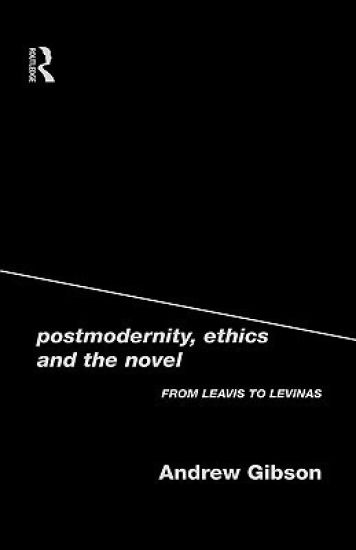
In Postmodernity, Ethics and the Novel Andrew Gibson sets out to demonstrate that postmodern theory has actually made possible an ethical discourse around fiction. Each chapter elaborates and discusses a particular aspect of Levinas' thought and raises questions for that thought and its bearing on the novel. It also contains detailed analyses of particular texts. Part of the book's originality is its concentration on a range of modernist and postmodern novels which have seldom if ever served as the basis for a larger ethical theory of fiction.Postmodernity, Ethics and the Novel discusses among others the writings of Joseph Conrad, Henry James, Jane Austen, Samuel Beckett, Marcel Proust and Salman Rushdie.
Postmodernity, Ethics and the Novel
In Postmodernity, Ethics and the Novel Andrew Gibson sets out to demonstrate that postmodern theory has actually made possible an ethical discourse around fiction. Each chapter elaborates and discusses a particular aspect of Levinas' thought and raises questions for that thought and its bearing on the novel. It also contains detailed analyses of particular texts. Part of the book's originality is its concentration on a range of modernist and postmodern novels which have seldom if ever served as the basis for a larger ethical theory of fiction.Postmodernity, Ethics and the Novel discusses among others the writings of Joseph Conrad, Henry James, Jane Austen, Samuel Beckett, Marcel Proust and Salman Rushdie.
Towards a Postmodern Theory of Narrative

Towards a Postmodern Theory of Narrative

Andrew Gibson

Edinburgh University Press
1996
nidottu
This study re-examines narrative theory and outlines the consequences for narratology of deconstructive, poststructuralist and more recent theory. Andrew Gibson assesses the extent to which narrative theory might be rethought in their light, drawing on the work of Derrida, Deleuze, Lyotard and Foucault. Consistently relating his theoretical investigations to critical practice, Gibson makes telling and perceptive analyses of a variety of twentieth-centry texts including work by Joyce, Fielding, Beckett, Lawrence, Woolf, R L Stevenson, Kundera, Tarkovsky and others. This is an important contribution to contemporary work on narrative.
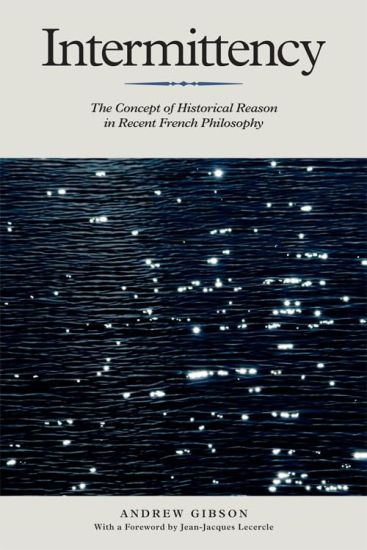
Intermittency

Intermittency

Andrew Gibson

Edinburgh University Press
2011
sidottu
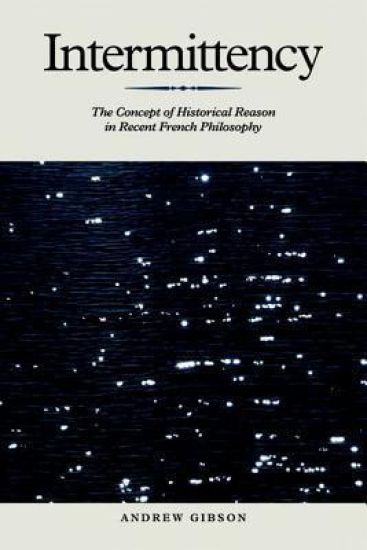
Explores the concept of historical intermittency in 5 recent French philosophers Stoking the embers of French Hegelianism, this book looks at five recent and contemporary French philosophers: Badiou, Jambet, Lardreau, Francoise Proust and Ranciere. Each produces a post-Hegelian philosophy of history founded on an assertion of the intermittency of historical value. * a sustained reflection on the character of a contemporary philosophy of history * a new and timely theory of modernity, modern literature and art Key words: Badiou; Ranciere; Francoise Proust; Jambet; Lardreau; modern literature; post-Marxism; intermittency; contemporary political thought; French philosophy.
Modernity and the Political Fix

Modernity and the Political Fix

Andrew Gibson

Bloomsbury Academic
2019
sidottu
From their decisive emergence in the late eighteenth century, modernity and modern politics were long haunted by irony and paradox. Ours, however, is the age of the implosion of modernity. Modernity has degenerated into self-parody. The polarities that an ironic grasp of it could potentially always hold in tension are finally collapsing into each other.In Modernity and the Political Fix, Andrew Gibson tells the relevant story and asks what aspects of modern politics we might want to salvage and preserve and within what structure we might continue thinking about them. His answer is that these questions call for the isolation of a particular set of concepts; that, rightly positioned in relation to one another, the concepts amount to a political theology; that the very formulation of political temporality is therefore at stake; and that the thinking in question has been and is best represented in modern philosophy and art, above all, modern literature. Ranging through early modern and modern thought from Hobbes, Pascal and Leibniz to Rousseau, Kant, Schopenhauer and Kierkegaard to Foucault, Lacan, Badiou, Jambet and Rancière, and in modern literature and art from Wordsworth and Byron to Goya and Wagner, Huysmans and Wilde, Joyce and Woolf, Joseph Roth, Vicki Baum, Gabriele Tergit and the Weimar novel, Evelyn Waugh and George Orwell to R.S. Thomas and Norman Nicholson, Gibson seeks to compile a modern political aide-memoire, a treasury for a politics to come.
Modernity and the Political Fix

Modernity and the Political Fix

Andrew Gibson

Bloomsbury Academic
2020
nidottu
From their decisive emergence in the late eighteenth century, modernity and modern politics were long haunted by irony and paradox. Ours, however, is the age of the implosion of modernity. Modernity has degenerated into self-parody. The polarities that an ironic grasp of it could potentially always hold in tension are finally collapsing into each other.In Modernity and the Political Fix, Andrew Gibson tells the relevant story and asks what aspects of modern politics we might want to salvage and preserve and within what structure we might continue thinking about them. His answer is that these questions call for the isolation of a particular set of concepts; that, rightly positioned in relation to one another, the concepts amount to a political theology; that the very formulation of political temporality is therefore at stake; and that the thinking in question has been and is best represented in modern philosophy and art, above all, modern literature. Ranging through early modern and modern thought from Hobbes, Pascal and Leibniz to Rousseau, Kant, Schopenhauer and Kierkegaard to Foucault, Lacan, Badiou, Jambet and Rancière, and in modern literature and art from Wordsworth and Byron to Goya and Wagner, Huysmans and Wilde, Joyce and Woolf, Joseph Roth, Vicki Baum, Gabriele Tergit and the Weimar novel, Evelyn Waugh and George Orwell to R.S. Thomas and Norman Nicholson, Gibson seeks to compile a modern political aide-memoire, a treasury for a politics to come.
Misanthropy

Misanthropy

Andrew Gibson

Bloomsbury Academic
2017
sidottu
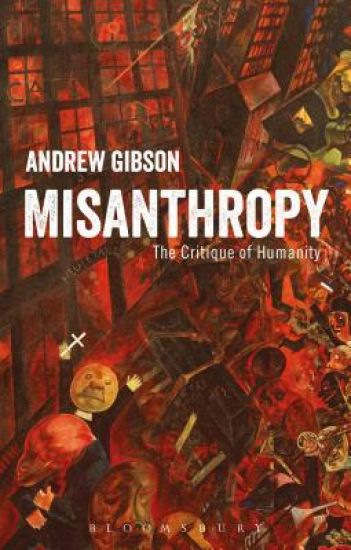
This book is the first major study of the theme of misanthropy, its history, arguments both for and against it, and its significance for us today. Misanthropy is not strictly a philosophy. It is an inconsistent thought, and so has often been mocked. But from Timon of Athens to Motörhead it has had a very long life, vast historical purchase and is seemingly indomitable and unignorable. Human beings have always nursed a profound distrust of who and what they are. This book does not seek to rationalize that distrust, but asks how far misanthropy might have a reason on its side, if a confused reason. There are obvious arguments against misanthropy. It is often born of a hatred of physical being. It can be historically explained. It particularly appears in undemocratic cultures. But what of the misanthropy of terminally defeated and disempowered peoples? Or born of progressivisms? Or the misanthropy that quarrels with specious or easy positivities (from Pelagius to Leibniz to the corporate cheer of contemporary `total capital`)? From the Greek Cynics to Roman satire, St Augustine to Jacobean drama, the misanthropy of the French Ancien Regime to Swift, Smollett and Johnson, Hobbes, Schopenhauer and Rousseau, from the Irish and American misanthropic traditions to modern women`s misanthropy, the book explores such questions. It ends with a debate about contemporary culture that ranges from the `dark radicalisms`, queer misanthropy, posthumanism and eco-misanthropy to Houellebecq, punk rock and gangsta rap.
Misanthropy

Misanthropy

Andrew Gibson

Bloomsbury Academic
2017
nidottu
This book is the first major study of the theme of misanthropy, its history, arguments both for and against it, and its significance for us today. Misanthropy is not strictly a philosophy. It is an inconsistent thought, and so has often been mocked. But from Timon of Athens to Motörhead it has had a very long life, vast historical purchase and is seemingly indomitable and unignorable. Human beings have always nursed a profound distrust of who and what they are. This book does not seek to rationalize that distrust, but asks how far misanthropy might have a reason on its side, if a confused reason. There are obvious arguments against misanthropy. It is often born of a hatred of physical being. It can be historically explained. It particularly appears in undemocratic cultures. But what of the misanthropy of terminally defeated and disempowered peoples? Or born of progressivisms? Or the misanthropy that quarrels with specious or easy positivities (from Pelagius to Leibniz to the corporate cheer of contemporary `total capital`)? From the Greek Cynics to Roman satire, St Augustine to Jacobean drama, the misanthropy of the French Ancien Regime to Swift, Smollett and Johnson, Hobbes, Schopenhauer and Rousseau, from the Irish and American misanthropic traditions to modern women`s misanthropy, the book explores such questions. It ends with a debate about contemporary culture that ranges from the `dark radicalisms`, queer misanthropy, posthumanism and eco-misanthropy to Houellebecq, punk rock and gangsta rap.
What's Your Urp?

What's Your Urp?

Andrew Gibson

Fisher King Publishing
2019
pokkari
Do you love Mondays?I do! And Tuesdays, Wednesdays... every day is a great day where I earn my living doing things I love doing, with people I love being with. This book explains how you can do this too and take back control of your own destiny. Are you struggling to make money, despite working all hours? Are you constantly going outside of your comfort zone because, 'that's just what people like me have to do'? This book gives you a new formula to follow that will help you find your own space, align your activities with your core values, and help you take steps every day that move you closer to your dream.Are you bored? Frustrated? Do you really want to wait for retirement before you start enjoying yourself? This book provides a toolkit that will help you make the most of every day - to the point where you won't want to retire!What's Your URP? Working out your Unique Referral Point will help you help more and more people who in turn will help you. Truly using the power of what goes around, comes around.This book shares the secret of finding out how you can earn more through helping others. You can make a difference. To paraphrase Maya Angelou, don't just make a living; make a life.
MAKE LIFE SIMPLE

MAKE LIFE SIMPLE

Andrew Gibson

Woven Word
2020
nidottu
Have you ever wanted a simpler life? Simpler relationships with partners, families, friends or at work? When you are stuck, would you like to find a simple and effective way to move forward? Would you like things to be different? Or to make a difference for others? Following on from the acclaimed ‘What’s Your URP?’, Andrew Gibson combines elements of storytelling, networking, social capital, and a host of useful tools to help you take control of your life. The methods he shares will reduce the time and money you spend on unnecessary complexities, help you look for the simple and effective next steps, and make more of a difference for yourself and your network. This book will change the way you look at life. You will spend more time looking outwards at how you help others, and in turn, you will build a supportive network that will help you. You will spend less time worrying about what others think, and more time noticing the positives and the differences you and others are making. After you have read this book, you will enjoy a fresh perspective, and perhaps even a new path. Every journey starts with a small step, and this book will help you every step of the way.
The Essence of Solution Focused Practice

The Essence of Solution Focused Practice

Andrew Gibson

FISHER KING PUBLISHING
2025
nidottu
This simple, elegant book brilliantly explains four key elements that should feature in every conversation. In a world of complication, this book refocuses you towards common sense In a world of isolation, this book helps you discover and grow your social capital In a world of constant activity, this book helps you know your actions will give you what you want In a world of instant gratification, this book helps establish the importance and value of time These four elements are the Essence of Solution Focused Practice. Once learned, they can be applied to all situations, methods and models, and all areas where progress is made through useful conversations. Where change is desired, or forced upon you, reach for The Essence of Solution Focused Practice to help you identify and take your next steps.
Intermittency

Intermittency

Andrew Gibson

EDINBURGH UNIVERSITY PRESS
2026
nidottu
Stoking the embers of French Hegelianism, this book looks at five recent and contemporary French philosophers: Badiou, Jambet, Lardreau, Françoise Proust and Rancière. Each produces a post-Hegelian philosophy of history founded on an assertion of the intermittency of historical value.* a sustained reflection on the character of a contemporary philosophy of history* a new and timely theory of modernity, modern literature and artKey words: Badiou; Rancière; Françoise Proust; Jambet; Lardreau; modern literature; post-Marxism; intermittency; contemporary political thought; French philosophy.