Kirjojen hintavertailu. Mukana 11 627 220 kirjaa ja 12 kauppaa.

Kirjahaku

Etsi kirjoja tekijän nimen, kirjan nimen tai ISBN:n perusteella.

4 kirjaa tekijältä Andrew Ginger

Cecil Beaton in Love

Cecil Beaton in Love

Andrew Ginger

RIZZOLI INTERNATIONAL PUBLICATIONS
2026
sidottu
An intimate and richly visual portrait of Cecil Beaton's life, loves, and creative world. Featuring beautiful, often unseen photographs taken by Beaton and his late-life partner Kinmont Hoitsma, alongside the affectionate and revealing letters they exchanged, this book uncovers new depths to one of the twentieth century's most fascinating figures. Through images of his homes, travels, and relationships, it reveals the artist in full--romantic, restless, and endlessly inspired. In 1963, the acclaimed royal and celebrity photographer, Academy Award-winning designer, and celebrated diarist, Cecil Beaton (1904-1980), was at the peak of his career, filming My Fair Lady in Hollywood. Dispirited by forty years of largely unrequited bisexual relationships, quite unexpectedly, he discovered love with an American ex-Olympian fencer, art historian, and teacher, Kinmont Hoitsma, thirty years his junior, whom he met at the Tool Box bar in San Francisco. Beaton's romantic life had been complicated by disappointment and the fear of exposure to the shame or blackmail that criminalized homosexuality entailed in Britain at the time. Hoitsma, by contrast, enjoyed a completely liberated life of uncompromising honesty in the embryonic gay scene of San Francisco. Hoitsma knew nothing of Beaton's world and he challenged Beaton to set aside his constructed persona to experience an authentic masculine connection to the full. Defying the legality and convention of the times, they lived happily together for a year at Cecil's home in Wiltshire, before accepting reluctantly that a long-term domestic union was unlikely to succeed. Beaton's finely ordered world and elegant home setting left Hoitsma no room to contribute equally. Though they lived apart from then on, they remained close until Beaton's death in 1980. In this carefully researched book, Beaton's bond with Hoitsma becomes the prism through which we gain a glimpse into the photographer's personal life and the contrasting influences that shaped his artistic vision. Rounding out this exceptional book and completing the image of a man whose creative world was shaped as much by his camera as by his cultivated environments--are images from Beaton's other passion--the arts. Beaton's life was a vivid tapestry woven from the threads of his artistic passions--interior design, fashion, the theater--each deeply informing his aesthetic vision. His homes, like Ashcombe House and Reddish House, were not just residences but living canvases, where his passion for interior design played out in opulent fabrics, curated antiques, and whimsical details. Gardening offered him a quieter, organic form of creativity, grounding his flair for visual composition in nature's palette. Together, these disciplines not only shaped Beaton's art but reflected his belief that beauty could--and should--be orchestrated in every facet of life.
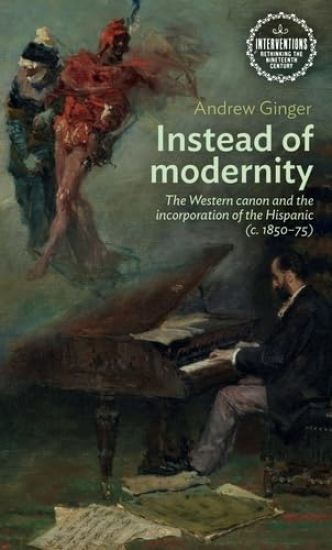
Instead of Modernity

Instead of Modernity

Andrew Ginger

Manchester University Press
2020
sidottu
When all that was solid melted into air... For decades, intellectuals from Benjamin to Bourdieu, Berman to Foucault, have been in thrall to this vision of the mid-nineteenth century. It shaped and underpinned their most influential thoughts, its legacy insinuated into institutionalized theories of culture. In this new book, that vision implodes, as if in a cultural supernova, its exceptionalism and limitations exposed. The story of modernity fades before a spectacle of linkages, stretching from and into the depths of history, the breadths of place. And, in a parallel substitution, the vast territories of the former Spanish Empire’s thread through the narrative, rather than lurking on the peripheries, no longer just the fallen founders of modernity. Instead of modernity goes to the very heart of comparative cultural study: the question of what happens when intimate, dynamic connections are made over place and time, what it is to feel at home amid the lavish diversity of culture. This ambitious interdisciplinary book reconsiders foundational figures of the modern western canon, from Darwin to Cameron, Baudelaire to Whistler. It weaves together brain images from France, preserved insects from the Americas, glass in London, poetry from Argentina, paintings from Spain. Flaubert, Whitman, and Nietzsche find themselves with Hostos from Puerto Rico and Gorriti from Argentina. The flotsam and jetsam of history – optical toys from Madrid – sit with Melville and Marx. The book ranges over theoretical fields: trauma and sexuality studies, theories of visuality, the philosophy of sacrifice and intimacy, the thought of Wittgenstein. Instead of modernity is an adventure in the practice of comparative writing: resonances join suggestively over place and time, the textures of words, phrases and images combine to form moods. This book will be of interest to anyone concerned with the question of modernity and with the fate of cultural theory and comparison.
Instead of Modernity

Instead of Modernity

Andrew Ginger

MANCHESTER UNIVERSITY PRESS
2024
nidottu
When all that was solid melted into air... For decades, intellectuals from Benjamin to Bourdieu, Berman to Foucault, have been in thrall to this vision of the mid-nineteenth century. It shaped and underpinned their most influential thoughts, its legacy insinuated into institutionalized theories of culture. In this new book, that vision implodes, as if in a cultural supernova, its exceptionalism and limitations exposed. The story of modernity fades before a spectacle of linkages, stretching from and into the depths of history, the breadths of place. And, in a parallel substitution, the vast territories of the former Spanish Empire’s thread through the narrative, rather than lurking on the peripheries, no longer just the fallen founders of modernity. Instead of modernity goes to the very heart of comparative cultural study: the question of what happens when intimate, dynamic connections are made over place and time, what it is to feel at home amid the lavish diversity of culture. This ambitious interdisciplinary book reconsiders foundational figures of the modern western canon, from Darwin to Cameron, Baudelaire to Whistler. It weaves together brain images from France, preserved insects from the Americas, glass in London, poetry from Argentina, paintings from Spain. Flaubert, Whitman, and Nietzsche find themselves with Hostos from Puerto Rico and Gorriti from Argentina. The flotsam and jetsam of history – optical toys from Madrid – sit with Melville and Marx. The book ranges over theoretical fields: trauma and sexuality studies, theories of visuality, the philosophy of sacrifice and intimacy, the thought of Wittgenstein. Instead of modernity is an adventure in the practice of comparative writing: resonances join suggestively over place and time, the textures of words, phrases and images combine to form moods. This book will be of interest to anyone concerned with the question of modernity and with the fate of cultural theory and comparison.
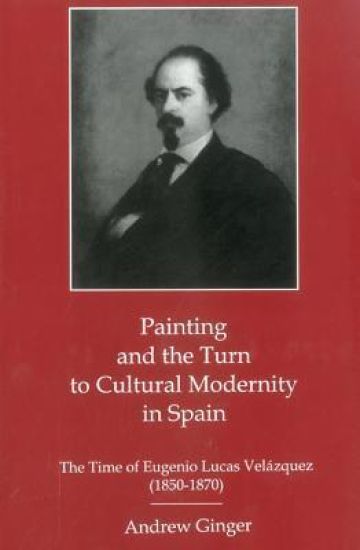
Painting And The Turn To Cultural Modernity in Spain

Painting And The Turn To Cultural Modernity in Spain

Andrew Ginger

Susquehanna University Press
2007
sidottu
Cultural modernity has habitually been defined as a focus on the means of representation themselves, as opposed to art that imitates external reality or expresses its maker's inner life. The crucial moment is usually considered the emergence of Edouard Manet in mid-nineteenth-century France, and the features of French developments have been seen as defining terms in the theory of modernity. However, recent art and cultural history have often spoken of plural modernities, distinct from the pattern set in France. For the first time, this study in cultural history explores how Spanish culture took a radical turn toward the medium of representation itself in the 1850s and early 1860s. It argues that this happened in a way that is critically at odds with many fundamental theoretical suppositions about modernity.