Kirjojen hintavertailu. Mukana 12 052 946 kirjaa ja 12 kauppaa.

Kirjahaku

Etsi kirjoja tekijän nimen, kirjan nimen tai ISBN:n perusteella.

3 kirjaa tekijältä Andrew J. Nathan

China's Crisis

China's Crisis

Andrew J. Nathan

Columbia University Press
1991
pokkari
Nathan explored the roots of the Tiananmen tragedy in Deng Xiaoping's ten-year reform. How will cultural values and attitudes shape China's political development? What will be the impact of Taiwan, Hong Kong, and the West? Drawing on ground-breaking empirical research, Nathan measures the expectations of individual Chinese and their attitudes toward government and democracy.
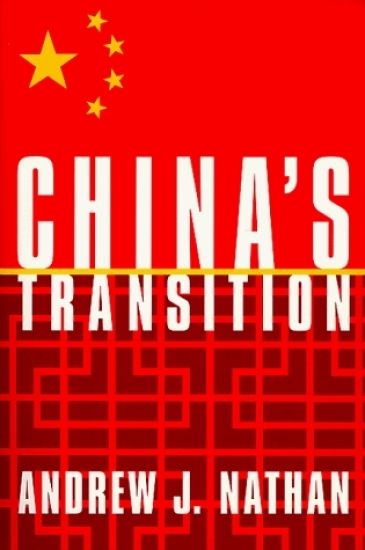
China’s Transition

China’s Transition

Andrew J. Nathan

Columbia University Press
1999
pokkari
With more than one billion people, China represents both an ocean of economic opportunity and a frustrating backwater of continuing brutal political repression. What are the prospects for democratic evolution in a nation with one of the world's poorest human rights records? How have other nations responded to China since the recent, dramatic opening of its economic system-and how should they respond in the future? These are some of the most important questions confronting both the United States and the international community. On democracy, human rights, and the move to integrate China into the international economy; on Mao Zedong's regime and the reform since his death; and on the Taiwan experiment and Hong Kong's reintegration with China, Nathan offers an accessible introduction to the intricate web of contemporary Chinese politics and China's changing place in the global system.
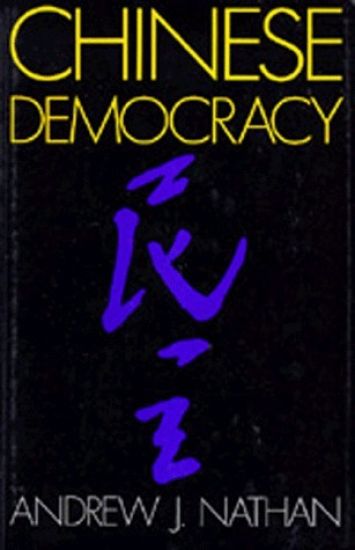
Chinese Democracy

Chinese Democracy

Andrew J. Nathan

University of California Press
1986
pokkari
What do the Chinese mean when they say that their political systems is "democratic"? With recent improvements in relations between China and the West, this question is basic to an understanding of the Chinese people in their state. In Chinese Democracy, Andrew Nathan investigates in depth the nature and meaning of "democracy" in China today, beginning with a vivid history of the short-lived Democracy Movement of 1978-1981, when groups of young people in a number of Chinese cities started issuing outspoken publications and putting up posters detailing their complaints and opinions. Nathan constructs - for the first time - a poignant picture of this burst of liberal activity, and at the same time he shows how distinctly Chinese it was and how the roots of its failure lay as much in history as in current political necessity. readers of this book will gain a new perspective on the nature of democracy as the Chinese practice it.