Kirjojen hintavertailu. Mukana 11 244 527 kirjaa ja 12 kauppaa.

Kirjahaku

Etsi kirjoja tekijän nimen, kirjan nimen tai ISBN:n perusteella.

61 kirjaa tekijältä Andrew Jackson

Narrative and Writings of Andrew Jackson, of Kentucky

Narrative and Writings of Andrew Jackson, of Kentucky

Andrew Jackson

Createspace Independent Publishing Platform
2014
nidottu
The United States of America has had many presidents that Americans agree were either great or awful, while some fall into a mediocre category of irrelevance. In many cases a national consensus has been reached on men like Abraham Lincoln and James Buchanan. But the president with the most controversial legacy might be "Old Hickory", Andrew Jackson. In his lifetime, Jackson came to represent what middle class Americans viewed as the quintessential American. Jackson had a modest upbringing, served as a teenager during the American Revolution, became a war hero during the War of 1812, and championed populism and the common American during his presidency. He also embodied courage and manliness, famously carrying a bullet from a duel in his body for decades until his death. On the other hand, critics continue to charge that Jackson's legacy is irreversibly stained by his stances on slavery and Native Americans. Jackson opposed the idea of secession but helped keep the antebellum slave system in place, but he is most notorious for his forcible removal of thousands of Native Americans, the best known being the Cherokees' "Trail of Tears". When the Supreme Court ruled that the state of Georgia could not impose laws upon the Cherokees, Jackson is popularly quoted (though apocryphally) as dismissing the decision, "John Marshall has made his decision; now let him enforce it." With Jackson as controversial today as ever before, the dueling narratives over his legacy often overshadow the man.
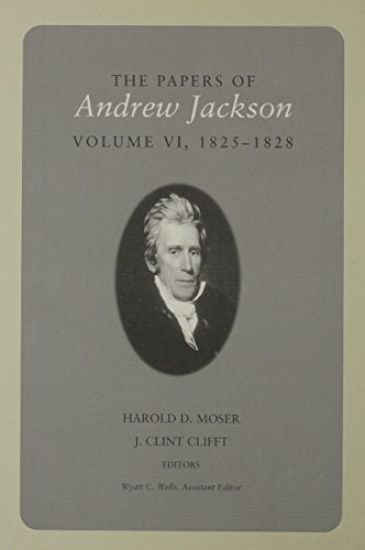
The Papers of Andrew Jackson

The Papers of Andrew Jackson

Andrew Jackson

University of Tennessee Press
2002
sidottu
This sixth volume of The Papers of Andrew Jackson documents the election on Andrew Jackson, the first westerner and the last veteran of the American Revolution, to the presidency.The four years of this volume chronicle the presidential campaign of 1828. Jackson, winner of the popular vote in 1824 but loser of the election, was once again the reluctant candidate, called into service by the voice of the voters. The campaign, one of the longest in American history, pitted Jackson against the incumbent John Quincy Adams; it was also one of the dirtiest campaigns in American history.The brunt of the mudslinging was aimed at Jackson, and it is covered in detail in this volume. Every aspect of the public and private life of the fifty-eight-year-old former major general in the United States Army came under scrutiny, and in both his opponents found him deficient. According to his detractors, he lacked the moral principles, the temperament, the education, and the family background requisite for a president of the United States. In sum, Jackson resembled the “devil incarnate,” to use his own words. The mudslinging left Jackson livid, anxious for retribution but constrained by the cause in which he was engaged. The presidential campaign of 1828, in the minds of Jackson and his supporters, was for the cause of truth and democracy against corrupt, self-seeking politicians, an aristocracy of power built upon bargains and dubious political alliances dedicated to its perpetuation in office.The four years covered in this volume were some of the most trying in Jackson’s life, but the one event that hurt Jackson the most was the death of his wife. Until his dying day, Jackson contended that her death had been hastened by the slanders of his opponents in the campaign. As great as the loss was for him personally, Jackson nonetheless rejoiced in the results of the election for, in his eyes, the voice of the people had finally been heard. Liberty, not power, had triumphed. Reform was at hand, and retribution would surely follow.
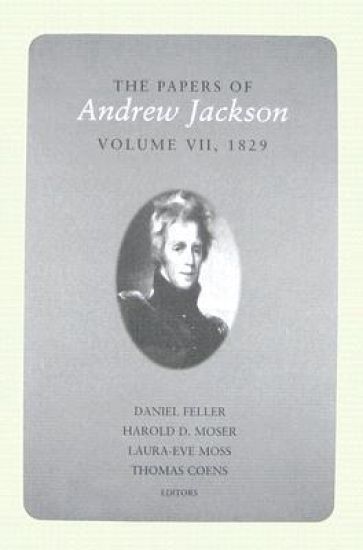
The Papers of Andrew Jackson, Volume 7, 1829

The Papers of Andrew Jackson, Volume 7, 1829

Andrew Jackson

University of Tennessee Press
2007
sidottu
With this seventh volume, The Papers of Andrew Jackson enters the heart of Jackson's career: his tumultuous two terms as president of the United States. The year 1829 began with Jackson fresh from a triumphant victory over incumbent John Quincy Adams in the 1828 campaign, yet mourning the sudden death of his beloved wife, Rachel. In January, having hired an overseer for his Hermitage plantation and arranged for Rachel's tomb, he left Tennessee for Washington. Jackson assumed the presidency with two objectives already fixed in mind: purging the federal bureaucracy of recreant officeholders and removing the southern Indian tribes westward beyond state authority. By year's end he had added two more: purchasing Texas and destroying the Bank of the United States. But meanwhile he found himself diverted, and nearly consumed, by the notorious Peggy Eaton affair--a burgeoning scandal which pitted the president, his Secretary of War John Eaton, and the latter's vivacious wife against the Washington guardians of feminine propriety. This first presidential volume reveals all these stories, and many more, in a depth never seen before. It presents full texts of more than four hundred documents, most printed for the first time. Gathered from a vast array of libraries, archives, and individual owners, they include Jackson's intimate exchanges with family and friends, private notes and musings, and formative drafts of public addresses. Administrative papers range from presidential pardons to military promotions to plans for discharging the public debt. They exhibit Jackson's daily conduct of the executive office in close and sometimes startling detail, and cast new light on such controversial mattersas Indian removal and political patronage. Included also are letters to the president from people in every corner of the country and every walk of life: Indian delegations presenting grievances, distraught mothers pleading help for wayward sons, aged veterans begging pensions, politicians offering advice and seeking jobs. Embracing a broad spectrum of actors and events, this volume offers an incomparable window not only into Jackson and his presidency, but into America itself in 1829.
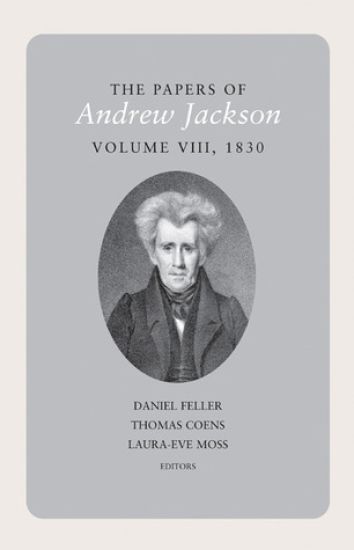
The Papers of Andrew Jackson, Volume 8, 1830

The Papers of Andrew Jackson, Volume 8, 1830

Andrew Jackson

University of Tennessee Press
2010
sidottu
This eighth volume of Andrew Jackson's papers presents more than five hundred documents, many appearing here for the first time, from a core year in Jackson's tumultuous presidency. They include Jackson's handwritten drafts of his presidential messages, private notes and memoranda, and correspondence with government officials, Army and Navy officers, friends and family, Indian leaders, foreign diplomats, and ordinary citizens throughout the country. In 1830 Jackson pursued his controversial Indian removal policy, concluding treaties to compel the Choctaws and Chickasaws west of the Mississippi and refusing protection for the Cherokees against encroachments by Georgia. Jackson nurtured his opposition to the Bank of the United States and entered into an escalating confrontation with the Senate over presidential appointments to office. In April, Jackson pronounced his ban on nullification with the famous toast to ""Our Federal Union,"" and in May he began an explosive quarrel with Vice-President John C. Calhoun over the latter's conduct as secretary of war during Jackson's Seminole campaign of 1818. Also in May, Jackson delivered his first presidential veto, stopping federal funding for the Maysville Road and declaring opposition to Henry Clay's ""American System."" In July, Jackson's refusal to use his pardoning power to save an Irish-born mail robber from the gallows provoked a near-riot in Philadelphia. By the end of the year, Jackson was preparing for his reelection campaign in 1832. Meanwhile the sex scandal surrounding Peggy Eaton, wife of the secretary of war, lurked throughout, dividing Jackson's cabinet, sundering his own family and household, and threatening to wreck the administration. Embracing all these stories and many more, this volume offers an incomparable window not only into Andrew Jackson and his presidency but into 1830s America itself.