Kirjojen hintavertailu. Mukana 11 627 220 kirjaa ja 12 kauppaa.

Kirjahaku

Etsi kirjoja tekijän nimen, kirjan nimen tai ISBN:n perusteella.

25 kirjaa tekijältä Andrew May

Welsh Missionaries and British Imperialism

Welsh Missionaries and British Imperialism

Andrew May

Manchester University Press
2012
sidottu
In 1841, the Welsh sent their first missionary, Thomas Jones, to evangelise the tribal peoples of the Khasi Hills of north-east India. This book follows Jones from rural Wales to Cherrapunji, the wettest place on earth and now one of the most Christianised parts of India. As colonised colonisers, the Welsh were to have a profound impact on the culture and beliefs of the Khasis. The book also foregrounds broader political, scientific, racial and military ideologies that mobilised the Khasi Hills into an interconnected network of imperial control. Its themes are universal: crises of authority, the loneliness of geographical isolation, sexual scandal, greed and exploitation, personal and institutional dogma, individual and group morality. Written by a direct descendant of Thomas Jones, it makes a significant contribution in orienting the scholarship of imperialism to a much-neglected corner of India, and will appeal to students of the British imperial experience more broadly.
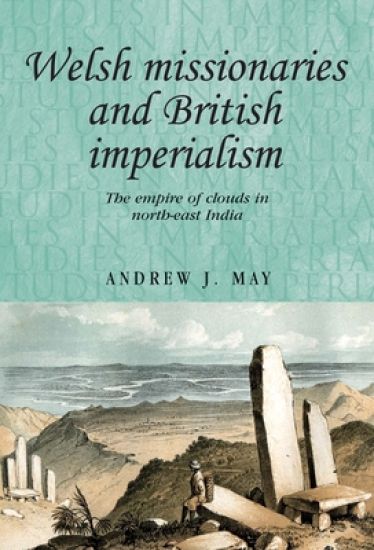
Welsh Missionaries and British Imperialism

Welsh Missionaries and British Imperialism

Andrew May

Manchester University Press
2016
nidottu
In 1841, the Welsh sent their first missionary, Thomas Jones, to evangelise the tribal peoples of the Khasi Hills of north-east India. This book, available in paperback for the first time, follows Jones from rural Wales to Cherrapunji, the wettest place on earth and now one of the most Christianised parts of India. As colonised colonisers, the Welsh were to have a profound impact on the culture and beliefs of the Khasis. The book also foregrounds broader political, scientific, racial and military ideologies that mobilised the Khasi Hills into an interconnected network of imperial control. Its themes are universal: crises of authority, the loneliness of geographical isolation, sexual scandal, greed and exploitation, personal and institutional dogma, individual and group morality. Written by a direct descendant of Thomas Jones, it makes a significant contribution in orienting the scholarship of imperialism to a much-neglected corner of India, and will appeal to students of the British imperial experience more broadly.
Isaac Newton: pocket GIANTS

Isaac Newton: pocket GIANTS

Andrew May

The History Press Ltd
2015
nidottu
Isaac Newton had an extraordinary idea. He believed the physical universe and everything in it could be described in exact detail using mathematical relationships. He formulated a law of gravity that explained why objects fall downwards, how the moon causes the tides, and why planets and comets orbit the sun.While Newton’s work has been added to over the years, his basic approach remains at the heart of the scientific worldview. Yet Newton’s own had little in common with that of a modern scientist. He believed the universe was created to a precise and rational design – a design that was fully understood by the earliest people. Over time this knowledge was lost, and Newton considered it his life’s work to rediscover it, whether through applied mathematics or a painstaking study of the Bible and other ancient texts. In chasing his impossible goal, Newton managed to contribute more to our understanding of the universe than anyone else in history.
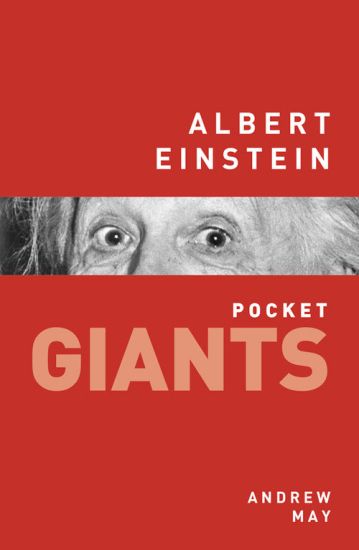
Albert Einstein: pocket GIANTS

Albert Einstein: pocket GIANTS

Andrew May

The History Press Ltd
2016
nidottu
Everyone has heard of Albert Einstein and everyone knows that he was a genius. Yet only a few people understand his work. In fact, he was just one of many brilliant scientists grappling with the deepest problems of theoretical physics during the first half of the twentieth century. He may not have been the most important or influential of them – the point is arguable – but there is no doubt he was the most revolutionary. Almost single-handed, he transformed the way the world thinks about light, matter, space and time.In the sixty years since his death Einstein has become a legend. The profound obscurity of his theories has contributed to this, as has his archetypal “mad scientist” appearance. His philosophical and political utterances – both real and imagined – are regularly used to clinch arguments online or in the pub. So how can a modern reader separate myth from reality? This short book attempts to do just that!
Bloody British History: Somerset

Bloody British History: Somerset

Andrew May

The History Press Ltd
2012
nidottu
Horrors of the caves! The ghastly true story of the Cheddar cannibals! Twilight of the Empire! Romans, Saxons and the legends of King Arthur! Swords against the Vikings! The Somerset heroes who defied the Norse hordes! Martyrs, murderers, pirates and mad scientists – Somerset’s strangest residents revealed! Death storm! The terrible toll of the Great Storm of 1703! Spies in Somerset! Containing more than two thousand years of Somerset history, thrill to stunning true stories of battles and bloodshed, executions and exorcisms, sinister Templars and Victorian sex cults! With more than 60 illustrations plus an eight-page colour section, you’ll never see the county in the same way again!
DD Sherman Tank Warriors

DD Sherman Tank Warriors

Andrew May

PEN SWORD BOOKS LTD
2024
sidottu
When the amphibious Duplex Drive (DD) Sherman tanks of the 13th/18th Royal Hussars (QMO) touched down on the sand of Sword Beach as the vanguard of the D-Day invasion, ahead of the infantry and Commandos, it was the culmination of an evolution spanning several years. Switching roles from a mounted regiment in India, into a mechanised, armoured cavalry regiment, they fought in France in 1940, then faced an uncertain future, after evacuating through Dunkirk. However, the 13th/18th would subsequently be selected to spearhead the assault on Sword Beach in new, top secret amphibious tanks. Having successfully secured the beach on D-Day, the Regiment became heavily engaged in the battle for Normandy, earning themselves an excellent reputation with the infantry brigades which they supported, before pushing north into the Fatherland. Their casualties from D-Day onwards amounted to 142 Hussars lost, 236 wounded, with many gallantry awards received. In addition to recording the Regiment's achievements during World War II, the story includes the personal testimonies of many of the Regiment's soldiers and officers throughout the war, along with many previously unpublished photographs.
Cosmic Impact: Understanding the Threat to Earth from Asteroids and Comets
As end-of-the-world scenarios go, an apocalyptic collision with an asteroid or comet is the new kid on the block, gaining respectability only in the last decade of the 20th century with the realization that the dinosaurs were wiped out by just such an impact. Now the science community is making up for lost time, with worldwide efforts to track the thousands of potentially hazardous near-Earth objects and plans for high-tech hardware that could deflect an incoming object from a collision course--a procedure depicted, with little regard for scientific accuracy, in several Hollywood movies. Astrophysicist and science writer Andrew May disentangles fact from fiction in this fast-moving and entertaining account, covering the nature and history of comets and asteroids, the reason why some orbits are more hazardous than others, the devastating local and global effects that an impact event would produce, and--more optimistically--the way future space missions could avert a catastrophe.
Destination Mars

Destination Mars

Andrew May

Icon Books Ltd
2017
pokkari
Mars is back. Suddenly everyone - from Elon Musk to Ridley Scott to Donald Trump - is talking about going to the Red Planet.When the Apollo astronauts walked on the Moon in 1969, many people imagined Mars would be next. However NASA's Viking 1, which landed in 1976, was just a robot. The much-anticipated crewed mission failed to materialise, defeated by a combination of technological and political challenges.Four decades after Viking and almost half a century after Apollo technology has improved beyond recognition - as has politics. As private ventures like SpaceX seize centre stage from NASA, Mars has undergone a seismic shift - it's become the prime destination for future human expansion and colonisation.But what's it really like on Mars, and why should anyone want to go there? How do you get there and what are the risks? Astrophysicist and science writer Andrew May answers these questions and more, as he traces the history of our fascination with the Red Planet.
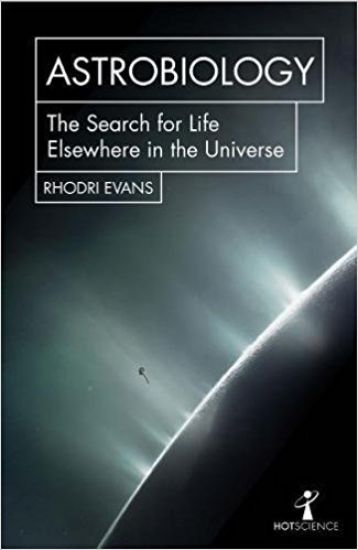
Astrobiology

Astrobiology

Andrew May

Icon Books Ltd
2019
pokkari
Extraterrestrial life is a common theme inscience fiction, but is it a serious prospect in the real world? Astrobiologyis the emerging field of science that seeks to answer this question.The possibility of life elsewhere in the cosmosis one of the most profound subjects that human beings can ponder. AstrophysicistAndrew May gives an expert overview of our current state of knowledge, lookingat how life started on Earth, the tell-tale 'signatures' it produces, and howsuch signatures might be detected elsewhere in the Solar System or on the many 'exoplanets'now being discovered by the Kepler and TESS missions.Along the way the book addresses key questions such as the riddle of Fermi'sparadox ('Where is everybody?') and the crucial role of DNA and water - they'reessential to 'life as we know it', but is the same true of alien life? And the reallybig question: when we eventually find extraterrestrials, will they be friendlyor hostile?
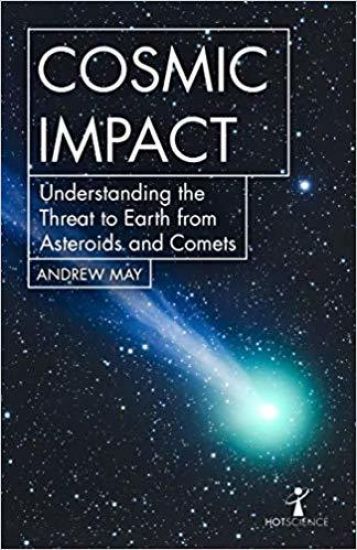
Cosmic Impact

Cosmic Impact

Andrew May

Icon Books Ltd
2019
pokkari
As end-of-the-world scenarios go, an apocalyptic collision with anasteroid or comet is the new kid on the block, gaining respectability only inthe last decade of the 20th century with the realisation that the dinosaurs hadbeen wiped out by just such an impact. Now the science community is making up for lost time, withworldwide efforts to track the thousands of potentially hazardous near-Earthobjects, and plans for high-tech hardware that could deflect an incoming objectfrom a collision course - a procedure depicted, with little regard forscientific accuracy, in several Hollywood movies.Astrophysicist and science writer Andrew May disentanglesfact from fiction in this fast-moving and entertaining account, covering thenature and history of comets and asteroids, the reason why some orbits are morehazardous than others, the devastating local and global effects that an impactevent would produce, and - more optimistically - the way future space missionscould avert a catastrophe.
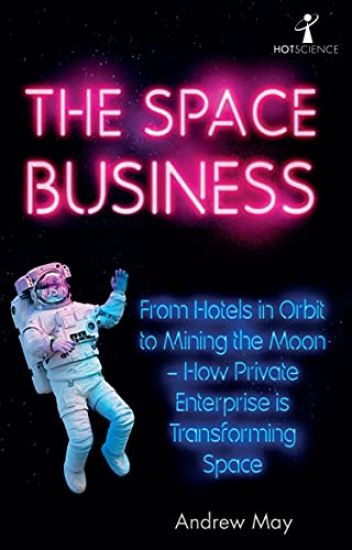
The Space Business

The Space Business

Andrew May

Icon Books Ltd
2021
pokkari
Dreams, schemes and opportunity as space opens for tourism and commerce.Twentieth century space exploration may have belonged to state-funded giants such as NASA, but there is a parallel history which has set the template for the future.Even before Apollo 11 landed on the Moon, private companies were exploiting space via communication satellites - a sector that is seeing exponential growth in the internet age. In human spaceflight, too, commercialisation is making itself felt. Billionaire entrepreneurs Elon Musk, Jeff Bezos and Richard Branson have long trumpeted plans to make space travel a possibility for ordinary people and those ideas are inching ever closer to reality. At the same time, other companies plan to mine the Moon for helium-3, or asteroids for precious metals.Science writer Andrew May takes an entertaining, in-depth look at the triumphs and heroic failures of our quixotic quest to commercialise the final frontier.
Astrobiology

Astrobiology

Andrew May

ICON BOOKS
2023
sidottu
The possibility that alien life exists in the universe is among the most profound of human conjectures, which today is being investigated not just by science-fiction writers but by scientists.
The Science of Music

The Science of Music

Andrew May

ICON BOOKS
2023
pokkari
Music is shaped by the science of sound. How can music - an artform - have anything to do with science? Yet there are myriad ways in which the two are intertwined, from the basics of music theory and the design of instruments to hi-fi systems and how the brain processes music.Science writer Andrew May traces the surprising connections between science and music, from the theory of sound waves to the way musicians use mathematical algorithms to create music.The most obvious impact of science on music can be seen in the way electronic technology has revolutionised how we create, record and listen to music. Technology has also provided new insights into the effects that different music has on the brain, to the extent that some algorithms can now predict our reactions with uncanny accuracy, which raises a worrying question: how long will it be before AI can create music on a par with humans?
Eyes in the Sky

Eyes in the Sky

Andrew May

ICON BOOKS
2024
pokkari
Over 50 years ago, astronomers launched the world's first orbiting telescope. This allowed them to gaze further into outer space and examine anything that appears in the sky above our heads, from comets and planets to galaxy clusters and stars. Since then, almost 100 space telescopes have been launched from Earth and are orbiting our planet, with 26 still active and relaying information back to us.As a result of these space-based instruments, such as NASA's iconic Hubble Space Telescope, we know much more about the universe than we did half a century ago. But why is Hubble, orbiting just 540 kilometres above the Earth, so much more effective than a ground-based telescope? How can a glorified camera tell us not only what distant objects look like, but their detailed chemical composition and three-dimensional structure as well? In Eyes in the Sky, science writer Andrew May takes us on a journey into space to answer these questions and more. Looking at the development of revolutionary instruments, such as Hubble and the James Webb Space Telescope, May explores how such technology has helped us understand the evolution of the Universe.
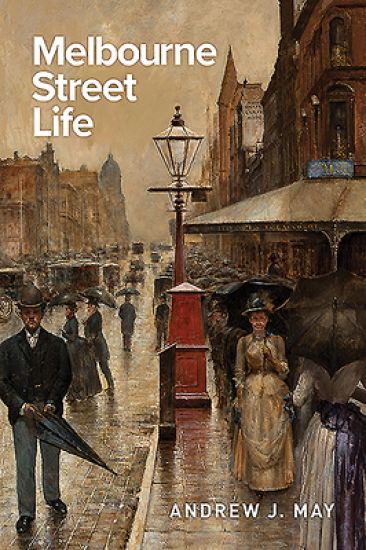
Melbourne Street Life

Melbourne Street Life

Andrew May

Australian Scholarly Publishing
2020
nidottu
Ugo Catani’s A Summer Shower in Collins Street, 1889, sets the scene for Andrew May’s invitation to walk the streets of Melbourne, imagine the everyday past, and see the urban landscape with new eyes.For the author, as for artists like Catani and Tom Roberts, the street frames the ever-changing throng of the wealthy and down-and-out, the passers-by, shoppers, idlers, hawkers, cabbies, entertainers, beggars, larrikins, prostitutes, custodians and law-breakers. It is the stage of ritual, procession and protest and the site of proud architecture, fine trees and public utilities. And it also has its hazards, of traffic, animals, assault, falling buildings, fire.Original and vital in subject and tone, this award-winning book is a rich commentary on the growth and transformation of a great Australian city and the balance between the need for public order and the democratic right to public space.
Fake Physics: Spoofs, Hoaxes and Fictitious Science

Fake Physics: Spoofs, Hoaxes and Fictitious Science

Andrew May

Springer Nature Switzerland AG
2019
nidottu
People are used to seeing “fake physics” in science fiction – concepts like faster-than-light travel, antigravity and time travel to name a few. The fiction label ought to be a giveaway, but some SF writers – especially those with a background in professional science – are so adept at “technobabble” that it can be difficult to work out what is fake and what is real. To confuse matters further, Isaac Asimov’s 1948 piece about the fictitious time-travelling substance thiotimoline was written, not as a short story, but in the form of a spoof research paper. The boundaries between fact and fiction can also be blurred by physicists themselves - sometimes unintentionally, sometimes with tongue-in-cheek, sometimes to satirize perceived weaknesses in research practices. Examples range from hoaxes aimed at exposing poor editorial standards in academic publications, through “thought experiments” that sound like the plot of a sci-fi movie to April Fools’ jokes. Even the latter may carry a serious message, whether about the sociology of science or poking fun at legitimate but far-out scientific hypotheses. This entertaining book is a joyous romp exploring the whole spectrum of fake physics – from science to fiction and back again.
The Science of Sci-Fi Music

The Science of Sci-Fi Music

Andrew May

Springer Nature Switzerland AG
2020
nidottu
The 20th century saw radical changes in the way serious music is composed and produced, including the advent of electronic instruments and novel compositional methods such as serialism and stochastic music. Unlike previous artistic revolutions, this one took its cues from the world of science. Creating electronic sounds, in the early days, required a well-equipped laboratory and an understanding of acoustic theory. Composition became increasingly “algorithmic”, with many composers embracing the mathematics of set theory. The result was some of the most intellectually challenging music ever written – yet also some of the best known, thanks to its rapid assimilation into sci-fi movies and TV shows, from the electronic scores of Forbidden Planet and Dr Who to the other-worldly sounds of 2001: A Space Odyssey.This book takes a close look at the science behind "science fiction" music, as well as exploring the way sci-fi imagery found its way into the work of musicians like Sun Ra and David Bowie, and how music influenced the science fiction writings of Philip K. Dick and others.
How Space Physics Really Works

How Space Physics Really Works

Andrew May

Springer International Publishing AG
2023
nidottu
There is a huge gulf between the real physics of space travel and the way it is commonly portrayed in movies and TV shows. That’s not because space physics is difficult or obscure – most of the details were understood by the end of the 18th century – but because it can often be bafflingly counter-intuitive for a general audience. The purpose of this book isn’t to criticize or debunk popular sci-fi depictions, which can be very entertaining, but to focus on how space physics really works. This is done with the aid of numerous practical illustrations taken from the works of serious science fiction authors – from Jules Verne and Arthur C. Clarke to Larry Niven and Andy Weir – who have taken positive pleasure in getting their scientific facts right.