Kirjojen hintavertailu. Mukana 11 461 316 kirjaa ja 12 kauppaa.

Kirjahaku

Etsi kirjoja tekijän nimen, kirjan nimen tai ISBN:n perusteella.

5 kirjaa tekijältä Andrew McCann

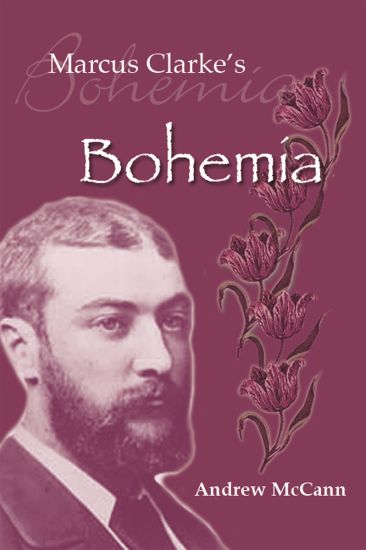
Marcus Clarke's Bohemia

Marcus Clarke's Bohemia

Andrew McCann

Melbourne University Press
2004
nidottu
Marcus Clarke's ""Bohemia"" is the first major critical study of Marcus Clarke - arguably Australia's best known and most important nineteenth-century writer. It situates Clarke both within the bohemian culture of Melbourne and a burgeoning cosmopolitan print-culture extending beyond national borders. Marcus Clarke's ""Bohemia"" offers detailed readings of Clarke's major works, many of which have not previously been discussed, and traces the influence of other European writers on Clarke's writing. Importantly, it focuses on his engagement with the modernity of the place and time in which he worked and lived. McCann's in-depth study unearths the richness of Clarke's writing and brings nineteenth-century Melbourne to life. Impeccably researched and gracefully written, Marcus Clarke's ""Bohemia"" is challenging and compelling reading.
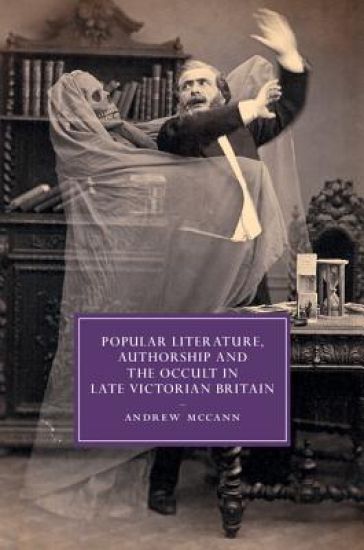
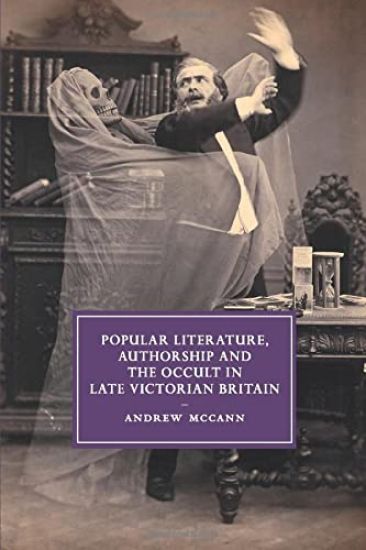
Popular Literature, Authorship and the Occult in Late Victorian Britain
With the increasing commercialization of publishing at the end of the nineteenth century, the polarization of serious literature and popular fiction became a commonplace of literary criticism. Andrew McCann cautions against this opposition by arguing that popular fiction's engagement with heterodox conceptions of authorship and creativity complicates its status as mere distraction or entertainment. Popular writers such as George Du Maurier, Marie Corelli, Rosa Praed and Arthur Machen drew upon a contemporary fascination with occult practices to construct texts that had an intensely ambiguous relationship to the proprietary notions of authorship that were so central to commercial publishing. Through trance-induced or automatic writing, dream states, dual personality and the retrieval of past lives channeled through mediums, they imagined forms of authorship that reinvested popular texts with claims to aesthetic and political value that cut against the homogenizing pressures of an emerging culture industry.
Popular Literature, Authorship and the Occult in Late Victorian Britain
With the increasing commercialization of publishing at the end of the nineteenth century, the polarization of serious literature and popular fiction became a commonplace of literary criticism. Andrew McCann cautions against this opposition by arguing that popular fiction's engagement with heterodox conceptions of authorship and creativity complicates its status as mere distraction or entertainment. Popular writers such as George Du Maurier, Marie Corelli, Rosa Praed and Arthur Machen drew upon a contemporary fascination with occult practices to construct texts that had an intensely ambiguous relationship to the proprietary notions of authorship that were so central to commercial publishing. Through trance-induced or automatic writing, dream states, dual personality and the retrieval of past lives channeled through mediums, they imagined forms of authorship that reinvested popular texts with claims to aesthetic and political value that cut against the homogenizing pressures of an emerging culture industry.
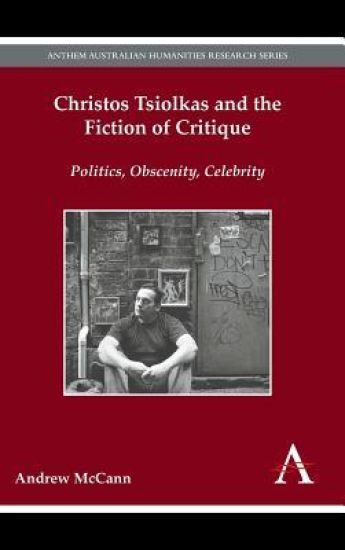
Christos Tsiolkas and the Fiction of Critique
Christos Tsiolkas is one of the most recognizable and internationally successful literary novelists working in Australia today. He is also one of the country’s most politically engaged writers. These terms – recognition, commercial success, political engagement – suggest a relationship to forms of public discourse that belies the extremely confronting nature of much of Tsiolkas’s fiction and his deliberate attempt to cultivate a literary persona oriented to notions of blasphemy, obscenity and what could broadly be called a pornographic sensibility. ‘Christos Tsiolkas and the Fiction of Critique’ traces these contradictions against Tsiolkas’s acute sense of the waning of working-class identity, and reads his work as a sustained examination of the ways in which literature might express an opposition to capitalist modernity.
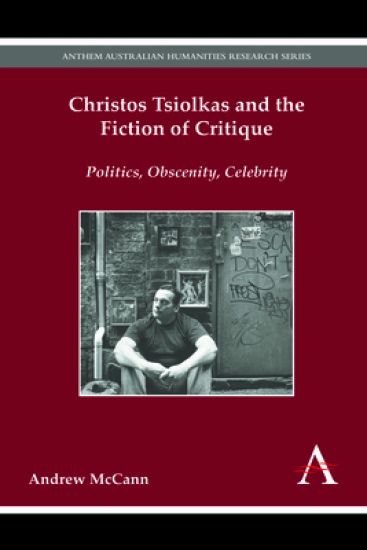
Christos Tsiolkas and the Fiction of Critique
Christos Tsiolkas is one of the most recognizable and internationally successful literary novelists working in Australia today. He is also one of the country’s most politically engaged writers. These terms – recognition, commercial success, political engagement – suggest a relationship to forms of public discourse that belies the extremely confronting nature of much of Tsiolkas’s fiction and his deliberate attempt to cultivate a literary persona oriented to notions of blasphemy, obscenity and what could broadly be called a pornographic sensibility. ‘Christos Tsiolkas and the Fiction of Critique’ traces these contradictions against Tsiolkas’s acute sense of the waning of working-class identity, and reads his work as a sustained examination of the ways in which literature might express an opposition to capitalist modernity.