Kirjojen hintavertailu. Mukana 11 699 587 kirjaa ja 12 kauppaa.

Kirjahaku

Etsi kirjoja tekijän nimen, kirjan nimen tai ISBN:n perusteella.

3 kirjaa tekijältä Andrew Michael Roberts

Joseph Conrad

Joseph Conrad

Andrew Michael Roberts

Routledge
2015
sidottu
Joseph Conrad is a key figure in modernist fiction, whose innovative work engages with many of the crucial philosophical, moral and political concerns of the twentieth century. This collection of major critical readings of his work is arranged according to the issues which each critic addresses, issues which are of crucial importance, and in many cases remain controversial, within contemporary literary theory and criticism. Following an opening section on the critical tradition, indicating how the study of Conrad's work has been politicised since the 1970s, there are sections on 'Narrative, Textuality and Interpretation', 'Imperialism', 'Gender and Sexuality', 'Class and Ideology', and 'Modernity'. Within each section two or three critical excerpts offer contrasting and complementary accounts of the fiction, while the headnotes to each piece and the introduction place these excerpts within the wider critical debate, clarifying for the reader both the theoretical issues and the interpretation of Conrad's fiction. A glossary of terms and a bibliography categorised by critical approach complete a volume which will provide an invaluable resource for students of Conrad and twentieth-century literature as well as other readers of Conrad's work.
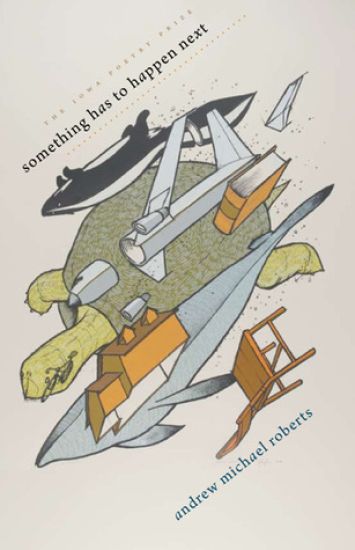
Something Has to Happen Next

Something Has to Happen Next

Andrew Michael Roberts

University of Iowa Press
2009
nidottu
The poems in ""Something has to Happen Next"", if given the chance, might peer down inquisitively from a great height; they speak of quietness, namelessness, the reachlessness of love, the fortune of animals and their silence, apocalypse, abandonment, beginnings, and endings. Working with brevity and compression, Andrew Michael Roberts first imagines how small he can go with a poem and still maintain some sort of emotional or imagistic center. Then, released from this limitation, the rest of his playful, unexpected poems expand to fill a world with imagery, emotion, and sound. What Roberts calls 'simply a book of small poems' grew out of his obsessions with time and catastrophe and love and abandonment - what is always possible, almost attained, but lost at the last minute. When something ends or when everything ends, something else must always happen next - what will it be, and who will be there to name and love and destroy it?