

Kirjahaku
Etsi kirjoja tekijän nimen, kirjan nimen tai ISBN:n perusteella.
13 kirjaa tekijältä Andrew Milner


As cultural studies has grown from its origins on the margins of literary studies, it has tended to discard both literature and sociology in favour of the semiotics of popular culture. Literature, Culture and Society makes a determined attempt to re-establish the connections between literary studies, cultural studies and sociology. Arguing against both literary humanism and sociological relativism, it provides a critical overview of theoretical approaches to textual analysis, from hermeneutics to postmodernism, and presents a substantive account of the capitalist literary mode of production.This second edition has been fully revised and rewritten, with new sections including the impact of psychoanalysis and post-structuralism, and the recent work of academics such as Franco Moretti.New case studies have been added in order to examine the intertextual connections between Genesis, Milton's Paradise Lost, Frankenstein (in Mary Shelley's original and also in several film versions), Karel Capek's R.U.R., Fritz Lang's Metropolis, Ridley Scott's Blade Runner, The X-Files and Buffy the Vampire Slayer.

As cultural studies has grown from its origins on the margins of literary studies, it has tended to discard both literature and sociology in favour of the semiotics of popular culture. Literature, Culture and Society makes a determined attempt to re-establish the connections between literary studies, cultural studies and sociology. Arguing against both literary humanism and sociological relativism, it provides a critical overview of theoretical approaches to textual analysis, from hermeneutics to postmodernism, and presents a substantive account of the capitalist literary mode of production.This second edition has been fully revised and rewritten, with new sections including the impact of psychoanalysis and post-structuralism, and the recent work of academics such as Franco Moretti.New case studies have been added in order to examine the intertextual connections between Genesis, Milton's Paradise Lost, Frankenstein (in Mary Shelley's original and also in several film versions), Karel Capek's R.U.R., Fritz Lang's Metropolis, Ridley Scott's Blade Runner, The X-Files and Buffy the Vampire Slayer.
For much of the 20th century, idealist accounts sought to represent culture as ""pure"" consciousness, while materialist accounts represented it as a secondary ""effect"" of some other material reality. From the 1970s, however, new theoretical paradigms have sought rather to establish the materiality of culture itself. The term ""cultural materialism"", coined by Raymond Williams, describes this emergent body of cultural theory. ""Cultural Materialism"" is both an introduction and a contribution to cultural theory. It situates cultural materialism in relation to earlier paradigms such as literary humanism and Marxism. It explains how the new paradigm has been applied to important areas such as cultural studies, media studies and literary studies. It explains the more significant differences between British and French variants in the paradigm: Raymond Williams, E.P.Thompson and the Birmingham School in Britain, Pierre Bourdieu and Michel Foucault in France.
Amidst continuing debates about the literary canon, Literature, Culture and Society poses a revealing question--if academics find it valuable and stimulating to discuss texts ranging from Genesis to Bladerunner in their leisure time, why do they act as if this is sacrosanct in their formal work? In this well- argued and refreshing discussion of the history and importance of literary criticism, Milner embraces a reality that many in the academy still fear, that cultural studies is alive, and it's here to stay. Andrew Milner begins with an introduction to the field of cultural studies and its parent disciplines of English literature and sociology. He reviews the defining terms and the theoretical traditions in a manner that is sophisticated but accessible. He discusses just how and why cultural studies evolved, and what it has to offer our appraisal of all texts, be they old or new, print or film. Milner eschews both cultural populism and literary elitism in favor of a criticism that is more concerned with value than with exclusion.The author concludes this significant and insightful book with a demonstration of his theories, tying together a group of narratives ranging from Paradise Lost to the latest Frankenstein films. Literature, Culture and Society cogently examines the question of scholarship and forcefully demonstrates that rigorous academic inquiry need not be reserved for dust-covered texts alone.

Amidst continuing debates about the literary canon, Literature, Culture and Society poses a revealing question--if academics find it valuable and stimulating to discuss texts ranging from Genesis to Bladerunner in their leisure time, why do they act as if this is sacrosanct in their formal work? In this well- argued and refreshing discussion of the history and importance of literary criticism, Milner embraces a reality that many in the academy still fear, that cultural studies is alive, and it's here to stay. Andrew Milner begins with an introduction to the field of cultural studies and its parent disciplines of English literature and sociology. He reviews the defining terms and the theoretical traditions in a manner that is sophisticated but accessible. He discusses just how and why cultural studies evolved, and what it has to offer our appraisal of all texts, be they old or new, print or film. Milner eschews both cultural populism and literary elitism in favor of a criticism that is more concerned with value than with exclusion.The author concludes this significant and insightful book with a demonstration of his theories, tying together a group of narratives ranging from Paradise Lost to the latest Frankenstein films. Literature, Culture and Society cogently examines the question of scholarship and forcefully demonstrates that rigorous academic inquiry need not be reserved for dust-covered texts alone.
Again, Dangerous Visions: Essays in Cultural Materialism brings together twenty-six essays charting the development of Andrew Milner's distinctively Orwellian version of cultural materialism between 1981 and 2015. The essays address three substantive areas: the sociology of literature, cultural materialism and the cultural politics of the New Left, and utopian and science fiction studies. They are bookended by two conversations between Milner and his editor J.R. Burgmann, the first looking back retrospectively on the development of Milner's thought, the second looking forward prospectively towards the future of academia, the political left and science fiction.
Locating Science Fiction is a ground breaking and potentially paradigm-shifting book, a major intervention into contemporary theoretical debates about SF. Academic literary criticism has tended to locate SF primarily in relation to the older genre of utopia; fan criticism primarily in relation to fantasy and SF in other media, especially film and television; popular fiction studies primarily in relation to other contemporary genres such as the romance and the thriller. This bold new synthesis relocates SF in relation to each of these other genres and media and also to the historical and geographic contexts of its emergence and development. Locating Science Fiction effects a series of vital shifts in the way SF theory and criticism has conceptualised its subject, away from prescriptively abstract dialectics of cognition and estrangement and towards the empirically grounded understanding of what is actually a messy amalgam of texts, practices and artefacts. Inspired by Raymond Williams's cultural materialism, Pierre Bourdieu's sociology of culture and Franco Moretti's application of world systems theory to literary studies, Locating Science Fiction draws on the disciplinary competences of Comparative Literature, Cultural Studies, Critical Theory and Sociology to produce a powerfully persuasive mode of analysis, engagement and argument.
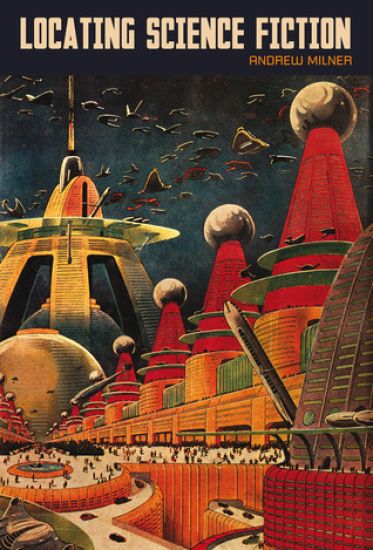
Locating Science Fiction is a ground breaking and potentially paradigm-shifting book, a major intervention into contemporary theoretical debates about SF. Academic literary criticism has tended to locate SF primarily in relation to the older genre of utopia; fan criticism primarily in relation to fantasy and SF in other media, especially film and television; popular fiction studies primarily in relation to other contemporary genres such as the romance and the thriller. This bold new synthesis relocates SF in relation to each of these other genres and media and also to the historical and geographic contexts of its emergence and development. Locating Science Fiction effects a series of vital shifts in the way SF theory and criticism has conceptualised its subject, away from prescriptively abstract dialectics of cognition and estrangement and towards the empirically grounded understanding of what is actually a messy amalgam of texts, practices and artefacts. Inspired by Raymond Williams's cultural materialism, Pierre Bourdieu's sociology of culture and Franco Moretti's application of world systems theory to literary studies, Locating Science Fiction draws on the disciplinary competences of Comparative Literature, Cultural Studies, Critical Theory and Sociology to produce a powerfully persuasive mode of analysis, engagement and argument.


Emily is rapidly approaching fifty and thinks her life is just plain sailing. When her husband leaves her for a twenty five year old and her dad dies, it leaves her facing an uncertain and lonely future.She has two friends, Sally who is a gold digger yet hopeless in love and the pretty but dippy Dawn a police officer, who each have their own issues for Emily to deal with. On top of that her mum who is easily confused, and refers to cappuccino as Al Pacino, needs her full attention. Just when things start to hit rock bottom she meets an Italian stallion who turns her head so far she cricks her neck. In actual fact he's called Kevin and has probably never been to Italy, but with lessons learnt she decides that maybe the devil that she already knows isn't so bad after all.