Kirjojen hintavertailu. Mukana 11 717 486 kirjaa ja 12 kauppaa.

Kirjahaku

Etsi kirjoja tekijän nimen, kirjan nimen tai ISBN:n perusteella.

14 kirjaa tekijältä Andrew Moore

Andrew Moore: Blue Alabama

Andrew Moore: Blue Alabama

Andrew Moore

Damiani
2019
sidottu
Andrew Moore’s new book, Blue Alabama, focuses on the American South, depicts the economic, social and cultural divisions that characterize the South and the love of history, tradition and land that binds its citizens. Following upon in-depth explorations of the economically ravaged city of Detroit (2007 – 2009) and the mythic high plains region along the 100th Meridian (2011 – 2014), Blue Alabama continues the artist’s investigation of “the inner empire” of the United States.
The Beasts of the East: The Fall and Rise of America's Eastern Wilderness
A celebration of the extraordinary lost natural wonder of the eastern U.S.--once the center of American wildness before its despoliation--and a lively tour through recent efforts to return elk, bison, wolves, and other creatures to their verdant native landscapes.Before skyscrapers and smokestacks rose across the eastern U.S., elk, bison, wolves, and cougars roamed. Typically imagined as icons of the West, these large mammals are in fact native to what was once a kind of Eden--towering forests in the Northeast, rolling prairies in the Midwest, and cypress swamps in the Deep South. But, in mere decades, industrialization and unregulated hunting brought these emblems of the East to the precipice of extinction; by the 1950s, squirrels were one of the few wild mammals an easterner was likely to encounter.Now, even as the climate and biodiversity crises loom, eastern wildlife are staging an unlikely comeback. Herds of bison graze on Illinois prairies, red wolves lurk in North Carolina's coastal marshes, and abandoned coal mines in Kentucky are now home to thousands of elk. Such rewilding promises to restore balance to eastern ecosystems and return one of the most biodiverse regions in the world to its former luster--but not without controversy.In Beasts in the East, we follow environmental writer and James Beard Award finalist Andrew Moore as he meets conservationists, hunters, biologists, and nature lovers as they confront herculean challenges: How can we enable wildlife migration in the midst of suburban sprawl? Are these success stories viable in the long-term? When humans and wildlife come in close contact, how do we define wilderness?
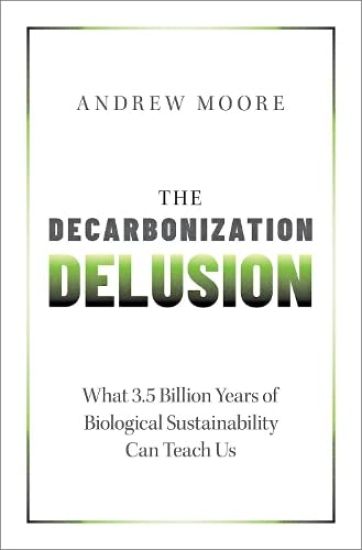
The Decarbonization Delusion

The Decarbonization Delusion

Andrew Moore

OXFORD UNIVERSITY PRESS INC
2024
sidottu
Could the race to de-carbonize our energy systems be leading us closer to environmental disaster? Why did biology choose carbon, in a variety of compounds, as its energy carrier and storage substance? From the smallest life forms, through multicellular organisms, and up to whole ecosystems, this economy of carbon compounds is fundamentally sustainable. Yet today, many are working to expunge carbon-based energy carriers from human economies, replacing them with solutions based on other elements and minerals. In The Decarbonization Delusion, independent scientist and writer Andrew Moore shows that the race to decarbonize is leading us further down the road to environmental degradation. Instead of banishing carbon, Moore argues that we should look to life on Earth, which has used carbon in highly sustainable ways for 3.5 billion years, as a model for how humans can use carbon sustainably. The Decarbonization Delusion begins by discussing carbon's role in the inception of the universe and its critical importance in biology. Moore identifies many intriguing features of biology's use of carbon that are crucial to creating sustainable human economies on Earth. Throughout, Moore draws on extensive research and original calculations to disprove common fallacies about carbon-based energy carriers and their alternatives. For example, he shows that the widely perceived superiority of battery technology over carbon-based fuels is, in most regards, a serious misconception that, if not corrected, could have grave environmental consequences. Politicians, industrial leaders, and even some scientists have contributed to the widespread belief that carbon should have no place in our energy economies. In The Decarbonization Delusion, Moore argues against this idea, asking us to re-think our assumptions and approach sustainable energy development in a more scientific and dispassionate fashion.
Realism and Christian Faith

Realism and Christian Faith

Andrew Moore

Cambridge University Press
2003
pokkari
The question of realism - that is, whether God exists independently of human beings - is central to much contemporary theology and church life. It is also an important topic in the philosophy of religion. This book discusses the relationship between realism and Christian faith in a thorough and systematic way and uses the resources of both philosophy and theology to argue for a Christocentric narrative realism. Many previous defences of realism have attempted to model Christian belief on scientific theory but Moore argues that this comparison is misleading and inadequate on both theological and philosophical grounds. In dialogue with speech act theory and critiques of realism by both non-realists and Wittgensteinians, a new account of the meaningfulness of Christian language is proposed. Moore uses this to develop a regulative conception of realism according to which God's independent reality is shown principally in Christ and then through Christian practices and the lives of Christians.
Realism and Christian Faith

Realism and Christian Faith

Andrew Moore

Cambridge University Press
2003
sidottu
The question of realism - that is, whether God exists independently of human beings - is central to much contemporary theology and church life. It is also an important topic in the philosophy of religion. This book discusses the relationship between realism and Christian faith in a thorough and systematic way and uses the resources of both philosophy and theology to argue for a Christocentric narrative realism. Many previous defences of realism have attempted to model Christian belief on scientific theory but Moore argues that this comparison is misleading and inadequate on both theological and philosophical grounds. In dialogue with speech act theory and critiques of realism by both non-realists and Wittgensteinians, a new account of the meaningfulness of Christian language is proposed. Moore uses this to develop a regulative conception of realism according to which God's independent reality is shown principally in Christ and then through Christian practices and the lives of Christians.
God, Mind and Knowledge

God, Mind and Knowledge

Andrew Moore

Ashgate Publishing Limited
2014
sidottu
The themes of God, Mind and Knowledge are central to the philosophy of religion but they are now being taken up by professional philosophers who have not previously contributed to the field. This book is a collection of original essays by eminent and rising philosophers and it explores the boundaries between philosophy of religion, philosophy of mind, metaphysics, and epistemology. Its introduction will make it accessible to newcomers to the field, especially those approaching it from theology. Many of the book’s topics lie at the focal point of debates - instigated in part by the so-called New Atheists - in contemporary culture about whether it is rational to have religious beliefs, and the role these beliefs can or should play in the life of individuals and of society.
God, Mind and Knowledge

God, Mind and Knowledge

Andrew Moore

Ashgate Publishing Limited
2014
nidottu
The themes of God, Mind and Knowledge are central to the philosophy of religion but they are now being taken up by professional philosophers who have not previously contributed to the field. This book is a collection of original essays by eminent and rising philosophers and it explores the boundaries between philosophy of religion, philosophy of mind, metaphysics, and epistemology. Its introduction will make it accessible to newcomers to the field, especially those approaching it from theology. Many of the book’s topics lie at the focal point of debates - instigated in part by the so-called New Atheists - in contemporary culture about whether it is rational to have religious beliefs, and the role these beliefs can or should play in the life of individuals and of society.
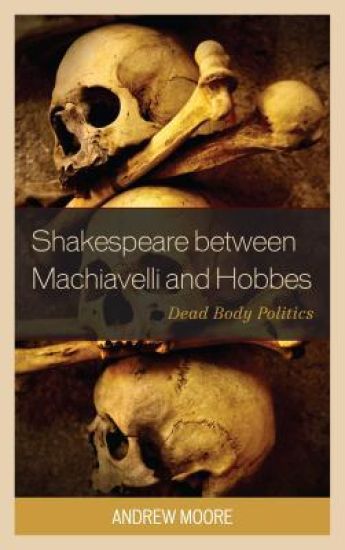
Shakespeare between Machiavelli and Hobbes
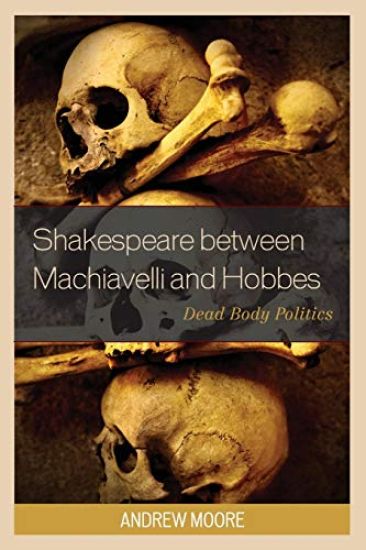
Shakespeare between Machiavelli and Hobbes explores Shakespeare’s political outlook by comparing some of the playwright’s best-known works to the works of Italian political theorist Niccolò Machiavelli and English social contract theorist Thomas Hobbes. By situating Shakespeare ‘between’ these two thinkers, the distinctly modern trajectory of the playwright’s work becomes visible. Throughout his career, Shakespeare interrogates the divine right of kings, absolute monarchy, and the metaphor of the body politic. Simultaneously he helps to lay the groundwork for modern politics through his dramatic explorations of consent, liberty, and political violence. We can thus understand Shakespeare’s corpus as a kind of eulogy: a funeral speech dedicated to outmoded and deficient theories of politics. We can also understand him as a revolutionary political thinker who, along with Machiavelli and Hobbes, reimagined the origins and ends of government. All three thinkers understood politics primarily as a response to our mortality. They depict politics as the art of managing and organizing human bodies—caring for their needs, making space for the satisfaction of desires, and protecting them from the threat of violent death. This book features new readings of Shakespeare’s plays that illuminate the playwright’s major political preoccupations and his investment in materialist politics.
Shakespeare between Machiavelli and Hobbes
Shakespeare between Machiavelli and Hobbes explores Shakespeare’s political outlook by comparing some of the playwright’s best-known works to the works of Italian political theorist Niccolò Machiavelli and English social contract theorist Thomas Hobbes. By situating Shakespeare ‘between’ these two thinkers, the distinctly modern trajectory of the playwright’s work becomes visible. Throughout his career, Shakespeare interrogates the divine right of kings, absolute monarchy, and the metaphor of the body politic. Simultaneously he helps to lay the groundwork for modern politics through his dramatic explorations of consent, liberty, and political violence. We can thus understand Shakespeare’s corpus as a kind of eulogy: a funeral speech dedicated to outmoded and deficient theories of politics. We can also understand him as a revolutionary political thinker who, along with Machiavelli and Hobbes, reimagined the origins and ends of government. All three thinkers understood politics primarily as a response to our mortality. They depict politics as the art of managing and organizing human bodies—caring for their needs, making space for the satisfaction of desires, and protecting them from the threat of violent death. This book features new readings of Shakespeare’s plays that illuminate the playwright’s major political preoccupations and his investment in materialist politics.
Magic in Early Modern England

Magic in Early Modern England

Andrew Moore

BLOOMSBURY PUBLISHING PLC
2023
sidottu
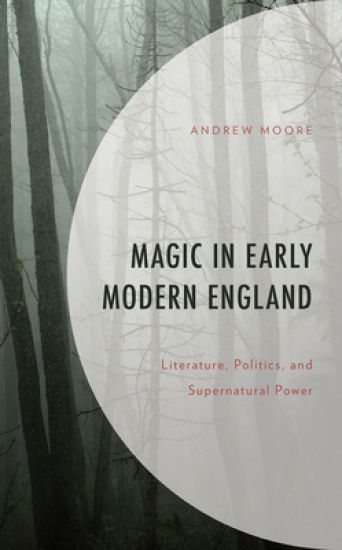
This book reconsiders the place of magic at the foundations of modernity. Through careful close reading of plays, spell books, philosophical treatises, and witch trial narratives, Andrew Moore shows us that magic was ubiquitous in early modern England. Rather than a “decline of magic,” this study traces a broad cultural fascination with supernatural power. In the sixteenth and seventeenth centuries, poets, philosophers, jurists, and monarchs debated the reality and the morality of magic, and, by extension, the limits of human power. In this way, early modern English writing about magic was closely related to the scientific and political philosophical writing from the period, which was likewise reimagining humanity’s relationship to nature. Moore reads Thomas Hobbes’s Leviathan alongside contemporary writing by the notorious witch hunters Matthew Hopkins and John Stearne. He reminds us that Francis Bacon’s scientific works were addressed to King James I, whose own Dæmonologie insists on the reality of witchcraft. The fantastical science fiction of Margaret Cavendish, he argues, must be understood within a tradition that includes works like Christopher Marlowe’s Doctor Faustus and the peculiar autobiography of criminal astrologer Simon Forman. By considering these disparate works together Moore reveals the centrality of magic to the early modern project.
On Your First Holy Communion

On Your First Holy Communion

Andrew Moore

AUGSBURG BOOKS
2020
nidottu
In Holy Communion, children are introduced to a richer relationship with Jesus who offers himself as spiritual nourishment. On Your First Holy Communion provides passages and prayers that will highlight the importance of communion. This is the perfect gift book marking an important sacremental moment in a unique and personal journey of faith.
Pawpaw

Pawpaw

Andrew Moore

Chelsea Green Publishing Co
2017
nidottu
The largest edible fruit native to the United States tastes like a cross between a banana and a mango. It grows wild in twenty-six states, gracing Eastern forests each fall with sweet-smelling, tropical-flavored abundance. Historically, it fed and sustained Native Americans and European explorers, presidents, and enslaved African Americans, inspiring folk songs, poetry, and scores of place names from Georgia to Illinois. Its trees are an organic grower's dream, requiring no pesticides or herbicides to thrive, and containing compounds that are among the most potent anticancer agents yet discovered. So why have so few people heard of the pawpaw, much less tasted one? In Pawpaw-a 2016 James Beard Foundation Award nominee in the Writing & Literature category-author Andrew Moore explores the past, present, and future of this unique fruit, traveling from the Ozarks to Monticello; canoeing the lower Mississippi in search of wild fruit; drinking pawpaw beer in Durham, North Carolina; tracking down lost cultivars in Appalachian hollers; and helping out during harvest season in a Maryland orchard. Along the way, he gathers pawpaw lore and knowledge not only from the plant breeders and horticulturists working to bring pawpaws into the mainstream (including Neal Peterson, known in pawpaw circles as the fruit's own "Johnny Pawpawseed"), but also regular folks who remember eating them in the woods as kids, but haven't had one in over fifty years. As much as Pawpaw is a compendium of pawpaw knowledge, it also plumbs deeper questions about American foodways-how economic, biologic, and cultural forces combine, leading us to eat what we eat, and sometimes to ignore the incredible, delicious food growing all around us. If you haven't yet eaten a pawpaw, this book won't let you rest until you do.