Kirjojen hintavertailu. Mukana 11 244 527 kirjaa ja 12 kauppaa.

Kirjahaku

Etsi kirjoja tekijän nimen, kirjan nimen tai ISBN:n perusteella.

28 kirjaa tekijältä Andrew Motion

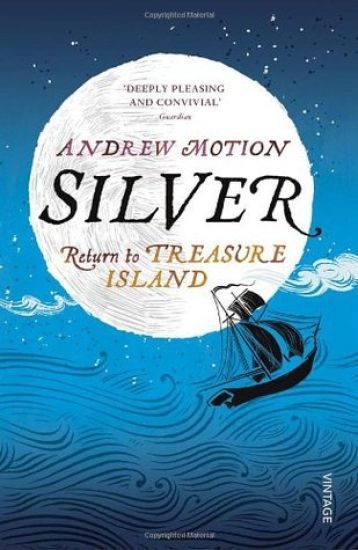
Silver

Silver

Andrew Motion

Vintage
2013
pokkari
Young Jim Hawkins and Long John Silver�s daughter, Natty, set off in the footsteps of their fathers. The lure of hidden treasure and the thrill of the ocean odyssey soon gives way to terror as the Nightingale reaches its destination. Treasure Island is not uninhabited as it once was�
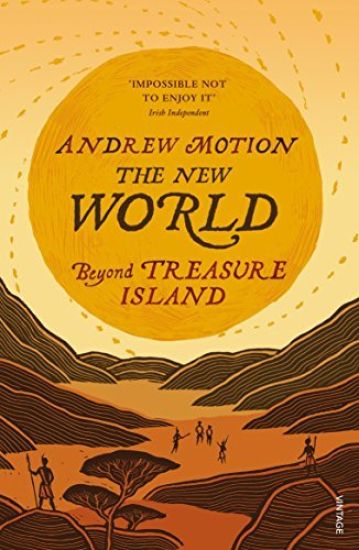
New World

New World

Andrew Motion

Vintage Publishing
2015
pokkari
On to the shores of Texas a raging sea coughs up two castaways: Jim and Natty, shipwrecked on their way home from Treasure Island. The Nightingale sunk, their silver gone, captured, weak and afraid, the pair steal a treasure they should have left well alone. The adventure of the New World lies in wait...
The Oxford Book of Twentieth Century English Verse

The Oxford Book of Twentieth Century English Verse

Andrew Motion

Oxford University Press
1972
sidottu
Philip Larkin's Oxford Book of Twentieth-Century English Verse provoked controversy and dispute on first publication in 1973. Warmly welcomed by fellow poets John Betjeman and W.H. Auden, it was also considered a quirky and idiosyncratic collection by some critics. Today it is recognized as a fine and wide-ranging selection of modern verse, valuable not least because it reflects the tastes of one of the best, and best-loved, English poets of the twentieth century. As the successor to W.B. Yeats's Oxford Book of Modern Verse 1892-1935, this anthology made a radical re-assessment of the century's achievement in poetry; it represented verse that was `lighter in tone, more understated, more casual, more conversational, more colloquial, in a way more democratic and more domestic than it was for Yeats'. It also introduced many little-known poets whose names have not entered the canon, and whose contributions add colour and depth to the anthology. As Philip Larkin writes in his Preface, in choosing poems rather than individuals he has brought together `poems that will give pleasure to their readers both separately and as a collection'. For this latest reissue, the poet's biographer Andrew Motion has written a new Foreword in which he considers the nature of Larkin as editor.
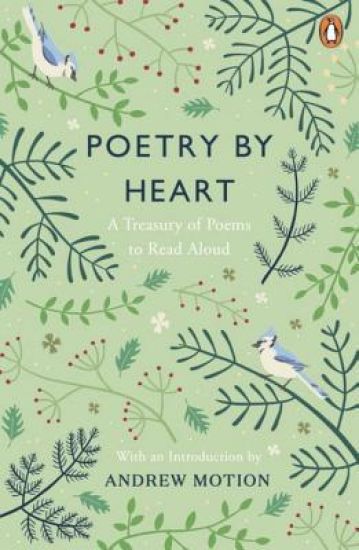
Poetry by Heart

Poetry by Heart

Andrew Motion

Penguin Books Ltd
2016
pokkari
Familiar poems and almost unknown poems. Love poems and war poems. Funny poems and heartbroken poems. Poems that re-create the world we know and poems written on the dark side of the moon. Poetry by Heart is an essential collection of over 200 poems, from Geoffrey Chaucer to Emily Dickinson, from Christina Rossetti to Benjamin Zephaniah, all carefully chosen for their suitability for learning and reciting. This is an anthology which celebrates the age-old pleasure of reciting poems - an anthology for all ages to treasure.
Philip Larkin (Routledge Revivals)

Philip Larkin (Routledge Revivals)

Andrew Motion

Routledge
2010
sidottu
Philip Larkin is recognised as one of the most important writers to have emerged in Britain since the Second World War. First published in 1982, Andrew Motion’s study begins with an account of Larkin’s life and literary background and discusses his literary relationship with Hardy and Yeats and his association with the Movement. He analyses Larkin’s two novels and assesses his three mature collections. Throughout the book much reference is made to uncollected reviews and articles and occasionally to unpublished manuscripts. Rather than developing the familiar line on Larkin as an empirical and melancholy writer, Andrew Motion explores the Symbolist and transcendent element in his work, and emphasises its range and variety.
Philip Larkin (Routledge Revivals)

Philip Larkin (Routledge Revivals)

Andrew Motion

Routledge
2011
nidottu
Philip Larkin is recognised as one of the most important writers to have emerged in Britain since the Second World War. First published in 1982, Andrew Motion’s study begins with an account of Larkin’s life and literary background and discusses his literary relationship with Hardy and Yeats and his association with the Movement. He analyses Larkin’s two novels and assesses his three mature collections. Throughout the book much reference is made to uncollected reviews and articles and occasionally to unpublished manuscripts. Rather than developing the familiar line on Larkin as an empirical and melancholy writer, Andrew Motion explores the Symbolist and transcendent element in his work, and emphasises its range and variety.
In the Blood

In the Blood

Andrew Motion

Faber Faber
2007
nidottu
'A wonderful read.' Irish Times'Sad, gripping and powerful.' Margaret Drabble'Superbly clear, intimate and evocative.' New York TimesFrom the former poet laureate, Andrew Motion, In the Blood is an unforgettable evocation of family, school and country life. By turns funny, heartbreaking and elegiac, it is also a deeply affectionate portrait of the bond between mother and son.'Brilliantly achieved and novel-like . . . Vivid and poignant.' Guardian'The most moving and exquisitely written account of childhood loss I have ever read.' Independent on Sunday'Deeply engaging. The innocence and the hardness of childhood are beautifully put together . . . A strikingly good book, framed by tragedy but full of intense life.' Helen Dunmore'Every word, sentence and chapter, one drinks down with a joy because it is so artfully and beautifully composed.' Irish Times
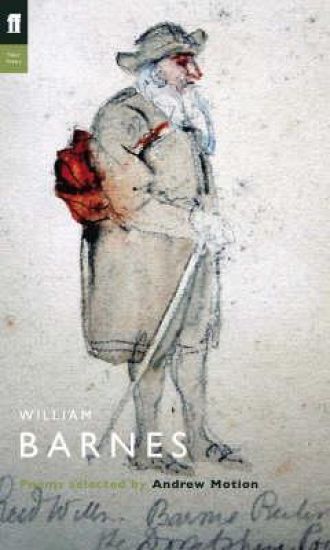
William Barnes

William Barnes

Andrew Motion

Faber Faber
2007
nidottu
In this series, a contemporary poet selects and introduces a poet of the past. By their choice of poems and by the personal and critical reactions they express in their prefaces, the editors offer insights into their own work as well as providing an accessible and passionate introduction to the most important poets in our literature.William Barnes was born in 1801 near Sturminster Newton in Dorset, of a farming family. He learned Greek, Latin and music, taught himself wood engraving, and in 1823 became a schoolmaster in Mere. He was deply interested in grammar and language, and waged a lifelong campaign to rid English of classical and foreign influences. Among his best-known books of poetry are Poems of Rural Life in the Dorset Dialect (1844) and Homely Rhymes (1859. His work has often been praised for its evocations of Dorset life, landscape and customs; he also wrote political poems of great power and was a master elegist. Barnes died in 1886.
The Cinder Path

The Cinder Path

Andrew Motion

Faber Faber
2010
nidottu
Andrew Motion's new collection (his first since Public Property in 2002) offers a ground-breaking variety of lyrics, love poems and elegies, in which private domains of feeling infer other lives and a shared humanity - exploring how people cope with threats to and in the world around them, as soldiers, lovers, artists, writers and citizens. The conversational tone and formal variety of these poems both shapes and diversifies their response to loss and its inevitabilities. Here are poems about the last surviving veteran of the trenches; poems which work with found materials drawn from the contiguous worlds of prose; poems which elicit the parallel lives glimpsed in paintings, or the other lives of birds, trees and weather (as of an ordinariness just out of reach). An unemphatic evenness of handling, in the detailing of ordinary destinies, alternates with capacious panoramas of longing and summation, and the collection ends with a remarkable group of directly autobiographical poems about the life and times of the poet's father.
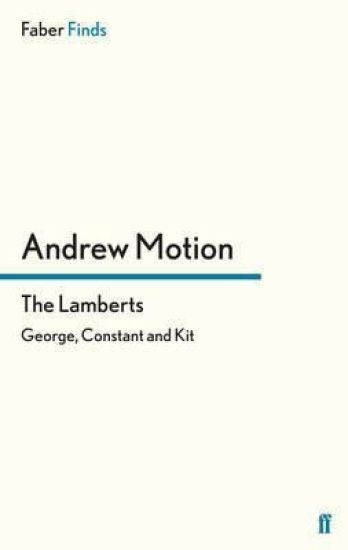
The Lamberts

The Lamberts

Andrew Motion

Faber Faber
2012
pokkari
Andrew Motion's first work of biography won a Somerset Maugham Award in 1987.'A biographical triumph.' Observer'The story of the three Lamberts is as cruel and horrifying as any Greek tragedy... Its portrayal of the way in which the Lamberts instinctively yet unintentionally assisted in the destruction of their own offspring makes for truly compulsive reading.' Harpers and Queen'Motion's project is not just to tell the story of passing generations, which he does very readably and well, but necessarily also to describe and evaluate aspects of English culture - revivalist painting, classical music in the Twenties and Thirties, the foundation of a native ballet, pop music in the Sixties - which he does with considerable confidence and resource.' London Review of Books
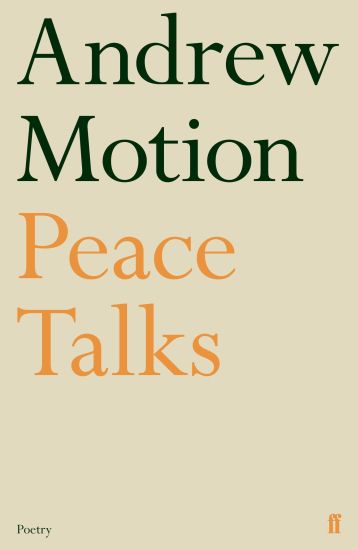
Peace Talks

Peace Talks

Andrew Motion

Faber Faber
2016
nidottu
The second half of Andrew Motion's new collection returns to the sequence begun in Laurels and Donkeys, completing a body of work recognised by the Wilfred Owen Poetry Award in 2014. These meditations on combat and the people caught up in it look back to conflicts of the past: to the 'war to end all wars'; to Rupert Brooke on his final journey; to Wilfred Owen at Craiglockhart War Hospital; to Archduke Franz Ferdinand on the day of his fatal shooting. But Motion also depicts the ravages of modern warfare through reported speech, redacted documents, and vivid evocations of place, his plain understatement bringing the magnitude of war home to our own shores. These poems are moving and measured, delicate and clear-eyed, and bear witness to the futility of war and the suffering of those left behind. Elsewhere we find biographies in miniature, dreams and visions, family histories, which in their range of forms and voices consider questions of identity, and character. These are poems of remembrance in which Motion's war poems, all in their own way elegies, find a natural partner. Peace Talks is a wise and compassionate work.
New and Selected Poems 1977–2022

New and Selected Poems 1977–2022

Andrew Motion

FABER FABER
2023
sidottu
This comprehensive edition draws on Andrew Motion's distinguished body of work from Secret Narratives (1983) to his most recent volume, Randomly Moving Particles (2020), and includes a substantial selection of new and previously uncollected poems.Certain preoccupations unite the book, which from first to last is particularly concerned with the ways in which our lives are shaped by loss - by wars, by accidents, by the erosion of time and by grief. Motion is an energetic and protean spirit, a listener and a watcher, and while his poems mostly develop his themes by using intimate and lyric forms, they also sometimes adapt from direct speech and documentary sources. In every case, and especially movingly in the long poem 'Essex Clay', Motion uses acts of personal witness to reflect the vulnerabilities of the world at large.These are extraordinary poems of and for our times, enlarging our sense of the cost of human experience even as they refine those sensibilities that keep us most alive and engaged with the present. 'Andrew Motion is one of the essential English poets of our time.' John Burnside'Motion's greatest and most distinctive gift . . . is to look squarely at the world and describe it with a plain and unsentimental eloquence that makes worldly value seem all the more questionable.' Bernard O'Donoghue, Independent on Sunday
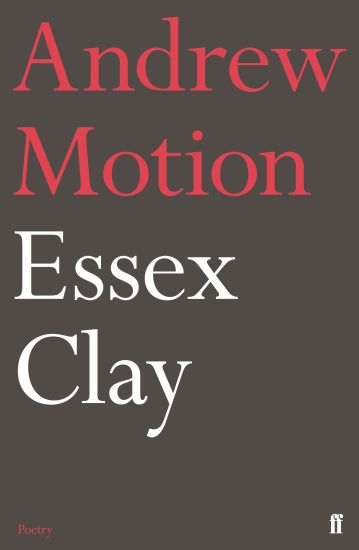
Essex Clay

Essex Clay

Andrew Motion

Faber Faber
2019
nidottu
Andrew Motion's prose memoir In the Blood (2006) was widely acclaimed, praised as an act of magical retrieval and a hymn to familial love. Now, over a decade later and after moving to live and work in the United States, Motion looks back once more to recreate a stunning biographical sequel - but this time in verse. Essex Clay rekindles, expands and gives a tragic resonance to subjects that have haunted the poet throughout his writing life. In the first part, he tells the story of his mother's riding accident, long unconsciousness and slow death; in the second, he remembers the end of his father's life; and in the third, he describes an encounter that deepens the poem's tangled themes of loss and memory and retrieval. Although the prevailing mood of the poem has a sweeping Tennysonian melancholy, its wealth of physical details and its narrative momentum make it as compelling as a fast-paced novel: a settling of accounts which admits that final resolutions are impossible.
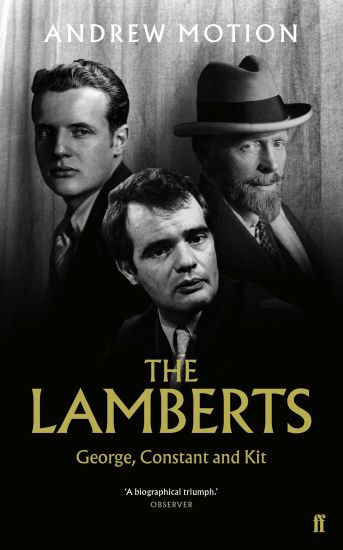
The Lamberts

The Lamberts

Andrew Motion

Faber Faber
2018
pokkari
'Families are societies in miniature.'The Lamberts: George, Constant and Kit won a Somerset Maugham Award in 1987. A lesson in the fragility of fame, it tells the tragic story of three generations: George, one of Australia's leading painters; his talented composer-conductor son Constant; and grandson Kit, who managed the pop group The Who. 'Motion's project is not just to tell the story of passing generations, which he does very readably and well, but necessarily also to describe and evaluate aspects of English culture - revivalist painting, classical music in the Twenties and Thirties, the foundation of a native ballet, pop music in the Sixties - which he does with considerable confidence and resource.' London Review of Books'The story of the three Lamberts is as cruel and horrifying as any Greek tragedy... Its portrayal of the way in which the Lamberts instinctively yet unintentionally assisted in the destruction of their own offspring makes for truly compulsive reading.' Harpers and Queen'An exemplary piece of research' (Sunday Times).'A biographical triumph.' Observer
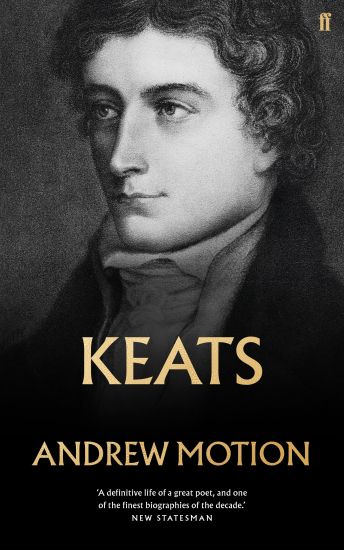
Keats

Keats

Andrew Motion

Faber Faber
2018
pokkari
First published in 1997, Keats was the first major biography of this tragic hero of Romanticism for some thirty years, and it differs from its predecessors in important respects. The outline of the story is well known - has become, in fact, the stuff of legend: the archetypal life of the tortured genius, critically spurned and dying young. What Andrew Motion brings to bear on the subject is a deep understanding of how Keats fitted into the intellectual and political life of his time. Important friendships with such anti-establishment figures as William Hazlitt and Leigh Hunt are given their full due, and the closeness of his own spirit, as expressed in his poems, to the ferment all around is made clear. Many significant facts about Keats's schooldays and medical training, in particular, enrich the picture. Keats emerges as a more political figure than he is usually portrayed, but his personal sufferings, too, come into closer focus. Most importantly, Andrew Motion - himself a distinguished poet and former poet laureate - demonstrates how the poems continue to exert their power. 'A definitive life of a great poet, and one of the finest biographies of the decade.' New Statesman
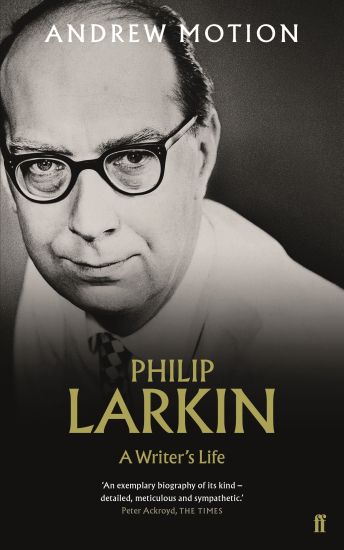
Philip Larkin: A Writer's Life

Philip Larkin: A Writer's Life

Andrew Motion

Faber Faber
2018
pokkari
Philip Larkin: A Writer's Life won the Whitbread Award for Biography in 1993 and was championed as 'an exemplary biography of its kind' (The Times). With a new introduction written by the author, this edition offers an engrossing portrait of one of the twentieth century's most popular, and most private, poets. 'There will be other lives of Larkin, but Motion's, like Forster's of Dickens, will always have a special place.' John Carey, Sunday Times'Larkin lived a quietly noble and exemplary version of the writer's life; Motion - affectionate but undeceived about the man's frailties, a diligent researcher and a deft reader of poetry - has written an equally exemplary 'Life' of him.' Peter Conrad, Observer'Honest but not prurient, critical but also compassionate, Motion's book could not be bettered.' Alan Bennett, London Review of Books
Randomly Moving Particles

Randomly Moving Particles

Andrew Motion

Faber Faber
2020
sidottu
Randomly Moving Particles is built from two long poems that form its opening and close, connected by three shorter pieces. The title poem, in a kaleidoscope of compelling scenes, engages with subjects that include migration, placement, loss, space exploration and current British and American politics. It is a clarifying action and reaction between terra and solar system, mundanity and possibility, taking us from the grit of road surfaces to the distant glimpses of satellites. The final poem, 'How Do the Dead Walk', combines mythic reach with acute observation of the familiar, in order to address issues of contemporary violence. It is altogether more dreamlike, even in its tangibly military moments, grasping as it does at phantoms and intermediate plains. Andrew Motion's expansive new poetry collection is direct in its emotional appeal, ambitious in its scope, all the while retaining the cinematic vision and startling expression that so freshly lit the lines of his last, Essex Clay.
Randomly Moving Particles

Randomly Moving Particles

Andrew Motion

Faber Faber
2022
nidottu
Randomly Moving Particles is built from two long poems that form its opening and close, connected by three shorter pieces. The title poem, in a kaleidoscope of compelling scenes, engages with subjects that include migration, placement, loss, space exploration and current British and American politics. It is a clarifying action and reaction between terra and solar system, mundanity and possibility, taking us from the grit of road surfaces to the distant glimpses of satellites. The final poem, 'How Do the Dead Walk', combines mythic reach with acute observation of the familiar, in order to address issues of contemporary violence. It is altogether more dreamlike, even in its tangibly military moments, grasping as it does at phantoms and intermediate plains. Andrew Motion's expansive new poetry collection is direct in its emotional appeal, ambitious in its scope, all the while retaining the cinematic vision and startling expression that so freshly lit the lines of his last, Essex Clay.
Public Property

Public Property

Andrew Motion

Faber Faber
2019
nidottu
Public Property was Andrew Motion's first collection of poetry after being appointed Poet Laureate. In it, he negotiates the very space of poetry, moving between private and public realms, pondering each from the other's borders. In the opening series of idylls he conjures the expeditionary narratives of a rural childhood, in scenes as precisely remembered as they are irretrievable. Elsewhere he reconsiders moments from the Victorian past from reticent and surprising angles, and elsewhere again he tackles distinctly contemporary themes and situations. The final section of the book contains a number of elegies and love poems, written in a variety of lyric forms, which provoke concerns that are among the most critical in poetry: What is public art? To whom do our most private sentiments belong?
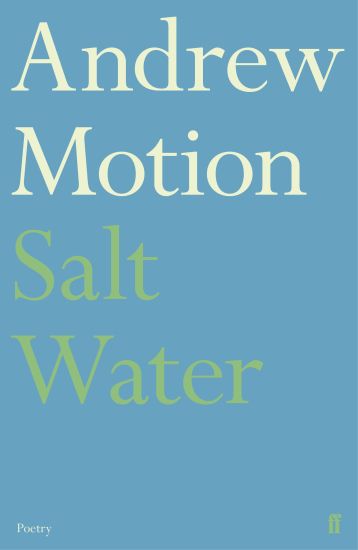
Salt Water

Salt Water

Andrew Motion

Faber Faber
2019
nidottu
Salt Water is Andrew Motion's most ambitious collection, yet also his most accessible. The first part refines the narrative and lyric skills for which he is well-known, combining intense personal concerns with themes which are more expansive and social. Family and loved ones appear in the company of historical and legendary figures; private dramas raise large general issues. But there is concentration as well as diversity. From the Orford Merman of the title poem, to an elegy written for a friend who died on the Marchioness, to the vivid prose meditation of the second part, written when Andrew Motion retraced the voyage that John Keats made by sea from London to Naples in the autumn of 1820, the book insistently and brilliantly elaborates images of water. It is the element which facilitates a rich interweaving of past and present, of re-enacted experience and the poignant suspension of the lived-in moment.