Kirjojen hintavertailu. Mukana 12 083 983 kirjaa ja 12 kauppaa.

Kirjahaku

Etsi kirjoja tekijän nimen, kirjan nimen tai ISBN:n perusteella.

5 kirjaa tekijältä Andrew Nette

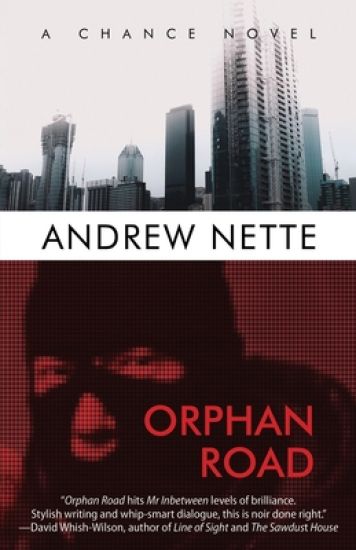
Orphan Road

Orphan Road

Andrew Nette

Down Out Books
2023
pokkari
Gary Chance is an ex-Australian army driver and nightclub bouncer turned professional thief and in need of a job. An offer comes from a former employer, once notorious Melbourne social identity, now aging owner of a failing S&M club, Vera Leigh. A shadowy real estate developer is trying to squeeze Leigh out of a rapidly gentrifying city. But she has a rescue plan that involves one of Australia's biggest heists, Melbourne's Great Bookie Robbery. On April 21, 1976, a well organised gang stole as much as three million dollars, a fortune at the time, from a Melbourne bookmakers club. The money was never recovered. No one was ever charged. And everyone associated with the crime has since died, either by natural causes or violently. Leigh maintains that money was not the only thing stolen that day. So was a stash of uncut South African diamonds. And she wants Chance's help to retrieve them. Problem is, they are not the only ones looking. The heist always goes wrong and the consequences, even half a century later, can be deadly. Critical Acclaim for Orphan Road "Orphan Road is a breakneck tale of robbery and vengeance, as lyrical and gritty as a Bad Seeds tune. Superb." -Sam Wiebe, award-winning author of Sunset and Jericho and Invisible Dead "Orphan Road hits Mr Inbetween levels of brilliance. Stylish writing and whip-smart dialogue, this is noir done right." -David Whish-Wilson, author of Line of Sight and The Sawdust House "I have been waiting for another Gary Chance book. Orphan Road is grimy, twisty and fast. Absolutely worth the wait." -Iain Ryan, author of Four Days and The Student "A multi-continental heist romp, Nette's Orphan Road is in direct lineage with Westlake/Stark's Parker series and Thompson's The Getaway. Filled with pulpy goodness, this crime caper scratches your thieving itch. For fans of Barry Gifford's Black Lizard catalog, this one's a guaranteed delight." -Nolan Knight, author of The Neon Lights Are Veins and Gallows Dome "Some people will do anything for money...or in this case diamonds. Gary Chance is one of those people and in Orphan Road, Andrew Nette gifts us with a good, old-fashioned hard-boiled thriller that moves at a machine-gun-like pace leaving the reader gasping for air." -Charles Salzberg, multiple Shamus Award-nominated author

Horwitz Publications, Pulp Fiction and the Rise of the Australian Paperback
This is the first book-length study of Sydney-based Horwitz Publications, the largest and most dynamic Australian pulp publisher to emerge after World War II. Although best known for its cheaply produced, sometimes luridly packaged, softcover books, Horwitz Publications played a far larger role in mainstream Australian publishing than has been so far recognised, particularly in the expansion of the paperback from the late 1950s onwards. Horwitz Publications, Pulp Fiction and the Rise of the Australian Paperback examines the authorship, production, marketing and distribution of Horwitz pulp paperbacks. It includes ground-breaking material on the conditions of creative labour: the writers, artists and editors involved in the production of Horwitz pulp. The book also explores how Horwitz pulp paperbacks acted as a local conduit for the global modern: the ideas, sensations, fascinations, technologies, and people that came crashing into the Australian consciousness in the 1950s and 1960s.
Horwitz Publications, Pulp Fiction and the Rise of the Australian Paperback
This is the first book-length study of Sydney-based Horwitz Publications, the largest and most dynamic Australian pulp publisher to emerge after World War II. Although best known for its cheaply produced, sometimes luridly packaged, softcover books, Horwitz Publications played a far larger role in mainstream Australian publishing than has been so far recognised, particularly in the expansion of the paperback from the late 1950s onwards. Horwitz Publications, Pulp Fiction and the Rise of the Australian Paperback examines the authorship, production, marketing and distribution of Horwitz pulp paperbacks. It includes ground-breaking material on the conditions of creative labour: the writers, artists and editors involved in the production of Horwitz pulp. The book also explores how Horwitz pulp paperbacks acted as a local conduit for the global modern: the ideas, sensations, fascinations, technologies, and people that came crashing into the Australian consciousness in the 1950s and 1960s.
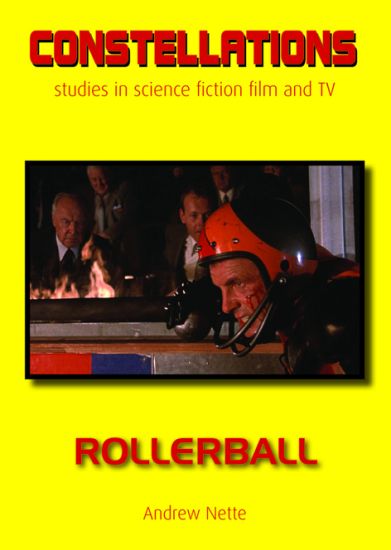
Rollerball

Rollerball

Andrew Nette

Auteur Publishing
2018
nidottu
Rollerball, the Canadian-born director and producer Norman Jewison’s 1975 vision of a future dominated by anonymous corporations and their executive elite, in which all individual effort and aggressive emotions are subsumed into a horrifically violent global sport, remains critically overlooked. What little has been written deals mainly with its place within the renaissance of Anglo-American science fiction cinema in the 1970s, or focuses on the elaborately shot, still visceral to watch, game sequences, so realistic they briefly gave rise to speculation Rollerball may become an actual sport.Drawing on numerous sources, including little examined documents in the archive of the film’s screenwriter William Harrison, Andrew Nette examines the many dimensions of Rollerball’s making and reception: the way it simultaneously exhibits the aesthetics and narrative tropes of mainstream action and art-house cinema; the elaborate and painstaking process of world creation undertaken by Jewison and Harrison; and the cultural forces and debates that influenced them, including the increasing corporate power and growing violence in Western society in late 1960s and early 1970s. Nette shows how a film that was derided by many critics for its violence works as a sophisticated and disturbing portrayal of a dystopian future that anticipates numerous contemporary concerns, including "fake news" and declining literary and historical memory. The book includes an interview with Jewison on Rollerball’s influences, making, and reception.