Kirjojen hintavertailu. Mukana 12 418 974 kirjaa ja 12 kauppaa.

Kirjahaku

Etsi kirjoja tekijän nimen, kirjan nimen tai ISBN:n perusteella.

46 kirjaa tekijältä Andrew Norman

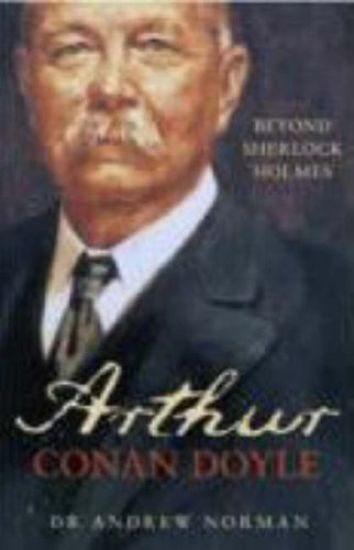
Arthur Conan Doyle

Arthur Conan Doyle

Andrew Norman

The History Press Ltd
2007
sidottu
In the year 1900, Sir Arthur Conan Doyle was at the height of his success. A qualified doctor, he was the creator of master detective "Sherlock Holmes". In 1916, Sir Arthur Conan Doyle declared that he believed in spiritualism, and he also professed to believe in fairies. This work traces the story of Sir Arthur Conan Doyles strange beliefs.
Agatha Christie: The Finished Portrait

Agatha Christie: The Finished Portrait

Andrew Norman

The History Press Ltd
2007
nidottu
In Agatha Christie: The Finished Portrait, Dr Andrew Norman delves deep into the crime writer’s past to discover the desperate insecurity that sparked her disappearance in 1926. Agatha Christie suffered from recurrent nightmares where she was petrified that one or other of her family would be replaced by a terrifying figure called the ‘Gunman’ and lost to her forever. She was reminded of this figure both when her father died, and when her husband Archie demanded a divorce. This event precipitated such a crisis in Agatha’s mind that she became temporarily unhinged. She lost her memory and assumed a new identity: that of her husband’s mistress. Only now, thirty years after Agatha’s death, is it possible to explain fully, in the light of scientific knowledge, her behaviour during her troubled disappearance, when she lived incognito in a Harrogate hotel.One of Agatha’s novels, Unfinished Portrait, which is largely autobiographical, gives a unique insight into how the heroine, Celia (who is really Agatha in disguise), may have managed finally to rid herself of the Gunman and go on to lead a happier and more fulfilled life. By deciphering clues from this and her other works, Agatha Christie: The Finished Portrait sheds light on what is perhaps the greatest mystery of all to be associated with Agatha Christie, namely that of the person herself.
Arthur Conan Doyle

Arthur Conan Doyle

Andrew Norman

Tempus Publishing Ltd
2008
nidottu
In the year 1900, Sir Arthur Conan Doyle was at the height of his success. A qualified doctor who had travelled widely, a keen and able sportsman, chronicler of the South African war, writer of historical novels, champion of the oppressed and, most notably, the creator of that honourable, brave, scientific and eminently sensible master detective Sherlock Holmes. Every new Holmes story was greeted with great anticipation and confidence, in the knowledge that however complex the crime, the supremely intelligent and logical detective would solve it. It therefore came as a great surprise to his readers when in 1916 Sir Arthur Conan Doyle declared that he believed in spiritualism.And when, in 1922, Doyle published a book in which he professed to believe in fairies, his devotees were nonplussed. How could the creator of the inexorably logical Sherlock Holmes claim to believe in something as vague and unproven as the paranormal? In this fascinating study of the life of the creator of one of the greatest detectives of all time, Dr Andrew Norman traces the story of Sir Arthur Conan Doyle's strange beliefs. Can it be that Doyle's alcoholic father holds the key to the unanswered questions about his son? What was Doyle's involvement in the infamous Cottingley fairy affair? By delving into medical records and the writings of Doyle himself, Dr Norman unravels a mystery as exciting as any of the cases embarked upon by Sherlock Holmes, but in this case about the author himself.
Jane Austen: An Unrequited Love

Jane Austen: An Unrequited Love

Andrew Norman

The History Press Ltd
2009
sidottu
Jane Austen is regarded as one of the greatest novelists in the English literary canon, and recent film and television adaptations of her works have brought them to a new audience almost two hundred years after her untimely death. Yet much remains unknown about her life, and there is considerable interest in the romantic history of the creator of Elizabeth Bennett and Mr Darcy. Andrew Norman here presents a new account of her life, breaking new ground by proposing that she and her sister, Cassandra, fell out over a young clergyman, who he identifies for the first time. He also suggests that, along with the Addison's Disease that killed her, Jane Austen suffered from TB. Written by a consummate biographer, Jane Austen: an Unrequited Love is a must-read for all lovers of the author and her works.
Bournemouth's Founders and Famous Visitors

Bournemouth's Founders and Famous Visitors

Andrew Norman

The History Press Ltd
2010
nidottu
Bournemouth was known as a health resort long before it became a holiday destination. W.H. Smith was one of the first patrons of the town’s National Sanatorium for the treatment of chest diseases, including tuberculosis. Here ‘invalids’, including Robert Louis Stevenson and D.H. Lawrence, came to rest and recuperate, assisted by the beneficial breezes from the sea and soothing emanations from the pine trees, for which the area was famous. Others came for different reasons: Guglielmo Marconi transmitted wireless signals across the bay to the Isle of Wight, and Lillie Langtry, whose love letters have only recently been discovered in the attic of a farmhouse in Jersey, spent many years in the area. Bournemouth also attracted many notable twentieth-century visitors and residents, including Winston Churchill and Flora Thompson. From Tregonwell to Tolkien, this book celebrates the town’s founders, and also its notable visitors during the last 200 years. Written by established local author Andrew Norman, this new title is ideal for anyone who wants to explore the tale of Bournemouth and its key figures.
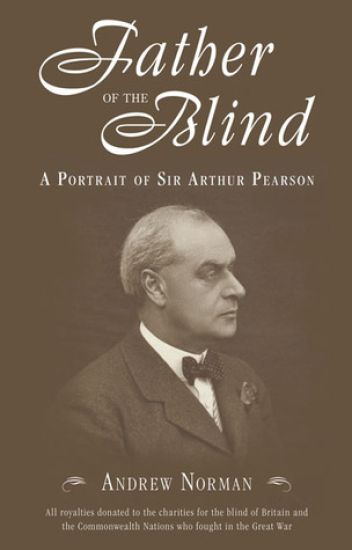
Father of the Blind

Father of the Blind

Andrew Norman

The History Press Ltd
2009
sidottu
In August 1914, Arthur Pearson, a former newspaper magnate, learned of a Belgian soldier who was languishing in a London hospital. The man had been blinded by a rifle bullet during the siege of Liege, and Pearson felt sympathy for the man, having himself been blinded by glaucoma. He resolved to work to prevent blinded Allied servicemen from returning home, only to slip into 'hopeless and useless lives'. He therefore opened St Dunstan's in 1915, a hostel where returning soldiers could 'learn to be blind', where they were taught Braille and a trade, equipping them to re-enter the world as useful and self-respecting citizens. When Pearson died in 1921, no less than 1,800 St Dunstaners attended his funeral. Father of the Blind is the biography of an extraordinary man who refused to consider blindness an affliction, but rather a handicap which could be overcome. His charitable work has continued long after his passing.
Arthur Conan Doyle

Arthur Conan Doyle

Andrew Norman

The History Press Ltd
2009
nidottu
In the year 1900, Sir Arthur Conan Doyle was at the height of his success. A qualified doctor, he was the creator of master detective Sherlock Holmes. In 1916, Sir Arthur Conan Doyle declared that he believed in spiritualism, and he also professed to believe in fairies. This work traces the story of Sir Arthur Conan Doyle's strange beliefs.
Jane Austen: An Unrequited Love

Jane Austen: An Unrequited Love

Andrew Norman

The History Press Ltd
2010
nidottu
Jane Austen is regarded as one of the greatest novelists in the English literary canon, and recent film and television adaptations of her works have brought them to a new audience almost 200 years after her untimely death. Yet much remains unknown about her life, and there is considerable interest in the romantic history of the creator of Elizabeth Bennett and Mr Darcy. Andrew Norman here presents a fresh account of her life, breaking new ground by proposing that she and her sister, Cassandra, fell out over a young clergyman, who he identifies for the first time. He also suggests that, along with the Addison’s Disease that killed her, Jane Austen suffered from TB. Written by a consummate biographer, Jane Austen: an Unrequited Love is a must-read for all lovers of the author and her works.
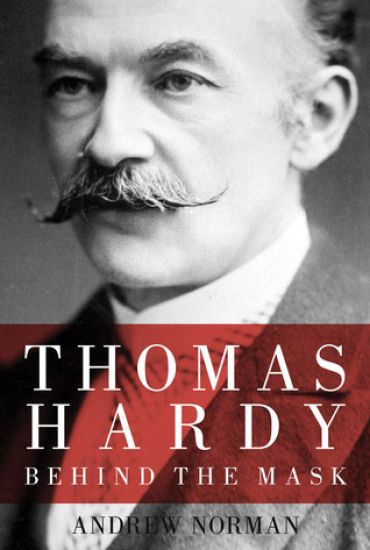
Thomas Hardy

Thomas Hardy

Andrew Norman

The History Press Ltd
2011
sidottu
Thomas Hardy was shy to a fault. He surrounded his house, Max Gate, with a dense curtain of trees, shunned publicity and investigative reporters, and when visitors arrived unexpectedly he slipped quietly out of the back door in order to avoid them. Furthermore, following the death of his first wife Emma, he burnt, page by page, a book-length manuscript of hers entitled What I think of my husband, together with letters, notebooks, and diaries – both his and hers. This behaviour of Hardy’s therefore begs the question: did he have something to hide, and if so, did this ‘something’ relate to his relationship with Emma? Thomas Hardy: Behind the Mask pierces the veil of secrecy which Hardy deliberately drew over his life, to find out why his life was so filled with anguish, and to discover how this led to the creation of some of the finest novels and poems in the English language.
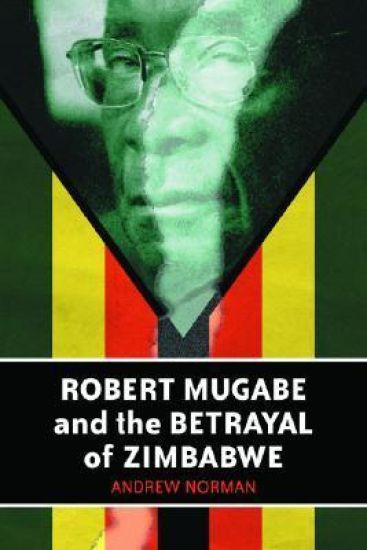
Robert Mugabe and the Betrayal of Zimbabwe

Robert Mugabe and the Betrayal of Zimbabwe

Andrew Norman

McFarland Co Inc
2004
pokkari
Instead of leading his people to the "promised land," Mugabe, the first prime minister of the newly-named Zimbabwe, has amassed a fortune for himself, his family and followers and has presided over the murder, torture and starvation of those who oppose him. This biography offers some explanations for Mugabe's behavior. With the death of his wife in 1992, a moderating influence was lost, and as the years go by, he continues to show himself intolerant of any opposition as he proceeds toward the creation of a one-party state, even though evidence suggests that his country is in terminal decline.
Titanic: Freak Accident or Farce?

Titanic: Freak Accident or Farce?

Andrew Norman

PEN SWORD BOOKS LTD
2025
sidottu
There has been speculation over the loss of the Royal Mail Ship (RMS) Titanic ever since the tragic event of her sinking, which occurred during the night of Sunday 14 to Monday 15 April 1912. Could it have been the fault of her captain, Edward J. Smith? Hitherto, no one has managed to explain the mindset of Titanic’s captain, Edward Smith, and thereby comprehend why, on a pitch-black night in April 1912, he drove his ship full tilt into an ice field, when he knew that there were icebergs present? Was the captain mentally ill? No, not in the sense of having one of the traditional major psychiatric conditions such as schizophrenia, psychosis, bipolar disorder, etcetera, because this would have manifested itself earlier on in his lifetime. Captain Smith was aged 62 at the time of the disaster. Was he suffering from dementia? There is no evidence that this was the case. In fact, Captain Smith’s state of mind provides a classic example of what was described by the ancient Greeks more than 2,000 years ago, As the reader will shortly discover! This book contains hitherto unpublished photographs, for example of Laura May Cribb, from the author's hometown of Poole in Dorset, who survived the sinking, and of her father John Hatfield Cribb, who perished.
The Real T E Lawrence

The Real T E Lawrence

Andrew Norman

PEN SWORD BOOKS LTD
2025
sidottu
T. E. Lawrence, soldier and writer, the co-leader with King Faisal of Saudi Arabia of the Arab Campaign during the First World War, became a legend in his own lifetime. And yet to this day there is much about him which remains a mystery: two aspects of his character being of particular interest. This first is why, having become a famous figure with the world at his feet, did he choose, subsequently, to live a life of obscurity in the lower ranks of the armed services? The second concerns Lawrence’s sexuality. Some of his biographers have been accused of bringing ‘sex’ into their volumes, for reasons of sensationalism and publicity. To be fair, however, it was Lawrence himself who first raised the subject, by including in his book Seven Pillars of Wisdom (an account of the Desert Campaign), details of how he was captured and raped by the Turks. Lawrence, who never married, is known to have engaged in masochistic rituals. So, what was the true nature of, and explanation for his sexuality? This is the challenge of The Real T. E. Lawrence.
Titanic: A Tragic Tale of Hubris and Nemesis

Titanic: A Tragic Tale of Hubris and Nemesis

Andrew Norman

PEN SWORD BOOKS LTD
2025
sidottu
When RMS Titanic was launched on 31 May 1911 at the Belfast shipyard of Harland and Wolff, she was the largest ship afloat and the most luxurious ocean liner in the world. Yet on the night of 14-15 April 1912, on her maiden voyage, she sank as a result of a collision with an iceberg. At the time, this was regarded as a tragic but unfortunate accident, with no blame attaching to her captain, Edward J. Smith. In fact, a statue was erected in the city of Lichfield, Staffordshire to his memory. The truth was, however, that Smith, even though he was warned on several occasions that there were icebergs in the vicinity - in fact in the very path of his ship - made no attempt to take evasive action. Instead, he sat down to dinner with his first class passengers, some of whom were the wealthiest people in the world. How can this be explained? Drawing on his medical knowledge and experience the author, for the first time, provides a possible answer to a question that had exercised the minds of Titanic scholars and the public at large ever since.
The Amazing Story of Lise Meitner

The Amazing Story of Lise Meitner

Andrew Norman

Pen Sword History
2021
sidottu
The book describes how Lisa Meitner, of Jewish heritage, found herself working as a physicist at the Kaiser Wilhelm Institute in Berlin when the Nazis came to power in 1933; how she was hounded out of the country and forced to relocate to Sweden; how German chemists Otto Hahn and Fritz Strassman continued with the project - on the effect of bombarding uranium (the heaviest known element at the time) with neutrons, a project which Lise herself had initiated, being the intellectual leader of the group. It describes how Hahn and Strassmann, with whom she kept in touch, came up with some extraordinary results which they were at a loss to explain; how Lise, and her nephew Otto Frisch, who was also a physicist, confirmed what they had achieved - the 'splitting of the atom', no less, and provided them with a theoretical explanation for it. This laid the foundation for nuclear power, medical-scanning technology, radiotherapy, electronics, and of course, the atomic bomb - the creation of which filled Lise with horror. It describes the crucial part that Lise played in our understanding of the world of atoms, and how deliberate and strenuous attempts were made to deny her contribution; to belittle her achievements, and to write her out of the history books, even though Albert Einstein said she was even 'more talented than Marie Curie herself'. The author is fortunate and honoured to have been granted several interviews with Lise's nephew Philip Meitner - himself a refugee from the Nazis - who with his wife Anne, provided much valuable information and many photographs.
The Dinosaurs and their Mysterious Demise

The Dinosaurs and their Mysterious Demise

Andrew Norman

PEN SWORD BOOKS LTD
2024
sidottu
The dinosaurs are a source of endless fascination, and each new generation is inspired and enchanted by images of these wondrous and awe-inspiring creatures that dominated the Earth eons of time ago. The smallest was the size of a chicken; the largest on record, the titanosaur _Argentinosaurus huinculensis_, weighed about 95 tons—fifteen times as much as an African bull elephant (today’s largest terrestrial creature). Dinosaurs ruled the Earth for no less than 181 million years: about 600 times longer than _Homo sapiens_ have existed on the planet (_Homo sapiens_ is defined as the primate species to which modern humans belong: the first modern humans having evolved in Africa about 300,000 years ago). Today, the consensus is that the dinosaurs became extinct when a meteorite impacted with the Earth 66 million years ago, covering it with a thick layer of soot and throwing up enormous quantities of dust which caused the sky to darken, and photosynthesis on which all terrestrial animals ultimately depend for their survival to cease. The unanswered question, however, is how did mammals, reptiles, and birds (which are the only species of dinosaur to survive) escape this holocaust? An entirely new theory is put forward for the first time to explain this mysterious and intriguing phenomenon.