Kirjojen hintavertailu. Mukana 11 244 527 kirjaa ja 12 kauppaa.

Kirjahaku

Etsi kirjoja tekijän nimen, kirjan nimen tai ISBN:n perusteella.

7 kirjaa tekijältä Andrew R. Murphy

William Penn

William Penn

Andrew R. Murphy

Oxford University Press Inc
2018
sidottu
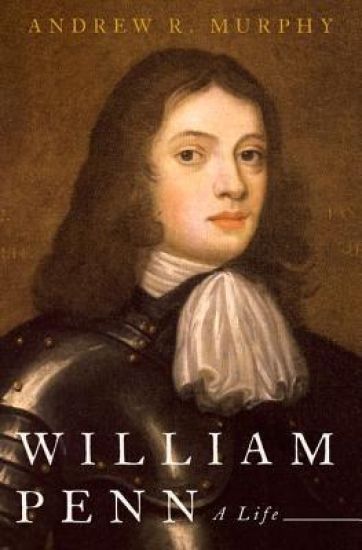
On March 4, 1681, King Charles II granted William Penn a charter for a new American colony. Pennsylvania was to be, in its founder's words, a bold "Holy Experiment" in religious freedom and toleration, a haven for those fleeing persecution in an increasingly intolerant England and across Europe. An activist, political theorist, and the proprietor of his own colony, Penn would become a household name in the New World, despite spending just four years on American soil. Though Penn is an iconic figure in both American and British history, controversy swirled around him during his lifetime. In his early twenties, Penn became a Quaker-an act of religious as well as political rebellion that put an end to his father's dream that young William would one day join the English elite. Yet Penn went on to a prominent public career as a Quaker spokesman, political agitator, and royal courtier. At the height of his influence, Penn was one of the best-known Dissenters in England and walked the halls of power as a close ally of King James II. At his lowest point, he found himself jailed on suspicion of treason, and later served time in debtor's prison. Despite his importance, William Penn has remained an elusive character-many people know his name, but few know much more than that. Andrew R. Murphy offers the first major biography of Penn in more than forty years, and the first to make full use of Penn's private papers. The result is a complex portrait of a man whose legacy we are still grappling with today. At a time when religious freedom is hotly debated in the United States and around the world, William Penn's Holy Experiment serves as both a beacon and a challenge.
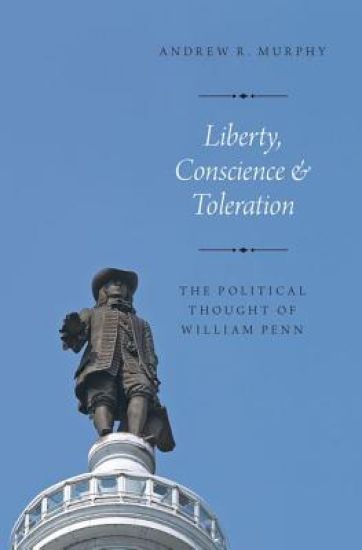
Liberty, Conscience, and Toleration

Liberty, Conscience, and Toleration

Andrew R. Murphy

Oxford University Press Inc
2016
sidottu
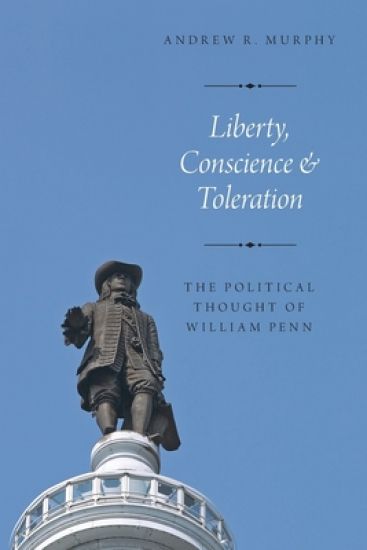
In a seventeenth-century English landscape populated with towering political and philosophical figures like Hobbes, Harrington, Cromwell, Milton, and Locke, William Penn remains in many ways a man apart. Yet despite being widely neglected by scholars, he was a sophisticated political thinker who contributed mightily to the theory and practice of religious liberty in the early modern Atlantic world. In this long-awaited intellectual biography of William Penn, Andrew R. Murphy presents a nuanced portrait of this remarkable entrepreneur, philosopher, Quaker, and politician. Liberty, Conscience, and Toleration focuses on the major political episodes that attracted William Penn's sustained attention as a political thinker and actor: the controversy over the Second Conventicle Act, the Popish Plot and Exclusion Crisis, the founding and settlement of Pennsylvania, and the contentious reign of James II. Through a careful examination of writings published in the midst of the religious and political conflicts of Restoration and Revolutionary England, Murphy contextualizes the development of Penn's thought in England and America, illuminating the mutual interconnections between Penn's political thought and his colonizing venture in America. An early advocate of representative institutions and religious freedom, William Penn remains a singular figure in the history of liberty of conscience. His political theorizing provides a window into the increasingly vocal, organized, and philosophically sophisticated tolerationist movement that gained strength over the second half of the seventeenth century. Not only did Penn attempt to articulate principles of religious liberty as a Quaker in England, but he actually governed an American polity and experienced firsthand the complex relationship between political theory and political practice. Murphy's insightful analysis shows Penn's ongoing significance to the broader study of Anglo-American political theory and practice, ultimately pointing scholars toward a new way of understanding the enterprise of political theory itself.
Liberty, Conscience, and Toleration

Liberty, Conscience, and Toleration

Andrew R. Murphy

Oxford University Press Inc
2018
nidottu
In a seventeenth-century English landscape populated with towering political and philosophical figures like Hobbes, Harrington, Cromwell, Milton, and Locke, William Penn remains in many ways a man apart. Yet despite being widely neglected by scholars, he was a sophisticated political thinker who contributed mightily to the theory and practice of religious liberty in the early modern Atlantic world. In this long-awaited intellectual biography of William Penn, Andrew R. Murphy presents a nuanced portrait of this remarkable entrepreneur, philosopher, Quaker, and politician. Liberty, Conscience, and Toleration focuses on the major political episodes that attracted William Penn's sustained attention as a political thinker and actor: the controversy over the Second Conventicle Act, the Popish Plot and Exclusion Crisis, the founding and settlement of Pennsylvania, and the contentious reign of James II. Through a careful examination of writings published in the midst of the religious and political conflicts of Restoration and Revolutionary England, Murphy contextualizes the development of Penn's thought in England and America, illuminating the mutual interconnections between Penn's political thought and his colonizing venture in America. An early advocate of representative institutions and religious freedom, William Penn remains a singular figure in the history of liberty of conscience. His political theorizing provides a window into the increasingly vocal, organized, and philosophically sophisticated tolerationist movement that gained strength over the second half of the seventeenth century. Not only did Penn attempt to articulate principles of religious liberty as a Quaker in England, but he actually governed an American polity and experienced firsthand the complex relationship between political theory and political practice. Murphy's insightful analysis shows Penn's ongoing significance to the broader study of Anglo-American political and practice, ultimately pointing scholars toward a new way of understanding the enterprise of political theory itself.
Prodigal Nation

Prodigal Nation

Andrew R. Murphy

Oxford University Press Inc
2008
sidottu
America's supposed moral decline from an imagined golden age, and the threat of divine punishment for the sin of straying from the path of righteousness, have been consistent themes in its political and religious rhetoric. But why is this myth so compelling to Americans? In Prodigal Nation, Andrew Murphy investigates the jeremiad's historical roots and probes the ways in which it continues to illuminate larger themes and tensions in American social and political life. He examines its role in colonial New England, shows how it was employed during the Civil War, and demonstrates its continued power in today's political climate. Far from being simply a force for conservatism-the yearning for a return to "a simpler time"-the jeremiad has often been employed in favor of progressive causes. Americans of all political stripes-not just Jerry Falwell and Pat Robertson, but Abraham Lincoln and Robert Kennedy-have used the language of moral decline for political purposes. Murphy shows how Americans' powerful attachment to an idealized past, and the hope of a return to John Winthrop's imagined "City on a Hill," continue to shape public life.
Toleration

Toleration

Andrew R. Murphy

OXFORD UNIVERSITY PRESS INC
2025
nidottu
Toleration is one of the most foundational and contentious concepts in contemporary political discourse. Although its modern origins lie in the realm of religious dissent, toleration remains one of our most contentious and broad-ranging concepts, invoked in today's debates about race, gender, religion, sexuality, cultural identity, free speech, and civil liberties. Questions of toleration arise wherever unpopular groups face hostile environments and stand in need of protection from state interference or the actions of their neighbors. Toleration can seem counterintuitive at first glance, since it involves a complex mixture of rejection and acceptance, combining disapproval - of particular individuals, groups, beliefs, and practices - on the one hand with legal and political guarantees for such groups on the other. Toleration has long been considered a cardinal virtue of liberalism, endorsed by central figures such as Locke, Mill, and Rawls. Although toleration has been criticized as unduly minimal, compared with more expansive terms such as recognition or acceptance, it has routinely played a key role in the protracted struggles of marginalized groups of various sorts (a necessary, if not always sufficient, condition for liberty). Toleration: A Very Short Introduction will concisely canvass the history, development, and contemporary global status of toleration as both a concept and a contested political and legal practice.
Prodigal Nation

Prodigal Nation

Andrew R. Murphy

Oxford University Press Inc
2010
nidottu
"Original and wide-ranging, Murphy's discerning and important study is another reminder that America is 'the nation with the soul of a church.'" -Journal of American History "A wide-ranging and thoughtful meditation on how the theo-political stories we Americans tell ourselves resonate with and sometimes even create the communities we inhabit. This book deserves an honored place among the oeuvre of work by political scientists and historians on the jeremiad." -- Politics and Religion "A significant contribution to the historical account of the role of religion in American politics." --Perspectives on Politics "Prodigal Nation is a careful account of how theologies function politically and deserves attention from political scientists, political theologians, American historians, and others interested in the interface of religion and culture." --Religious Studies Review "This highly original and wonderfully written analysis will be invaluable to anyone interested in the meaning of America." --Harry S. Stout, author of The New England Soul and Upon the Altar of the Nation "A brilliant analysis of the American jeremiad. Elegant, powerful, hopeful, and wise - Prodigal Nation is required reading for anyone who wishes to understand the fitful history of the American spirit." --James A. Morone, author of Hellfire Nation and The Democratic Wish
Conscience and Community

Conscience and Community

Andrew R. Murphy

Pennsylvania State University Press
2001
sidottu
Religious toleration appears near the top of any short list of core liberal democratic values. Theorists from John Locke to John Rawls emphasize important interconnections between the principles of toleration, constitutional government, and the rule of law. Conscience and Community revisits the historical emergence of religious liberty in the Anglo-American tradition, looking deeper than the traditional emergence of toleration to find not a series of self-evident or logically connected expansions but instead a far more complex evolution. Murphy argues that contemporary liberal theorists have misunderstood and misconstrued the actual historical development of toleration in theory and practice. Murphy approaches the concept through three "myths" about religious toleration: that it was opposed only by ignorant, narrow-minded persecutors; that it was achieved by skeptical Enlightenment rationalists; and that tolerationist arguments generalize easily from religion to issues such as gender, race, ethnicity, and sexuality, providing a basis for identity politics.