Kirjojen hintavertailu. Mukana 12 390 323 kirjaa ja 12 kauppaa.

Kirjahaku

Etsi kirjoja tekijän nimen, kirjan nimen tai ISBN:n perusteella.

20 kirjaa tekijältä Andrew Reeves, Jon C. Rogowski

No Blank Check

No Blank Check

Andrew Reeves; Jon C. Rogowski

Cambridge University Press
2022
sidottu
Concerns about unaccountable executive power have featured recurrently in political debates from the American founding to today. For many, presidents' use of unilateral power threatens American democracy. No Blank Check advances a new perspective: Instead of finding Americans apathetic towards how presidents exercise power, it shows the public is deeply concerned with core democratic values. Drawing on data from original surveys, innovative experiments, historical polls, and contexts outside the United States, the book highlights Americans' skepticism towards presidential power. This skepticism results in a public that punishes unilaterally minded presidents and the policies they pursue. By departing from existing theories of presidential power which acknowledge only institutional constraints, this timely and revealing book demonstrates the public's capacity to tame the unilateral impulses of even the most ambitious presidents. Ultimately, when it comes to exercising power, the public does not hand the president a blank check.
No Blank Check

No Blank Check

Andrew Reeves; Jon C. Rogowski

Cambridge University Press
2022
pokkari
Concerns about unaccountable executive power have featured recurrently in political debates from the American founding to today. For many, presidents' use of unilateral power threatens American democracy. No Blank Check advances a new perspective: Instead of finding Americans apathetic towards how presidents exercise power, it shows the public is deeply concerned with core democratic values. Drawing on data from original surveys, innovative experiments, historical polls, and contexts outside the United States, the book highlights Americans' skepticism towards presidential power. This skepticism results in a public that punishes unilaterally minded presidents and the policies they pursue. By departing from existing theories of presidential power which acknowledge only institutional constraints, this timely and revealing book demonstrates the public's capacity to tame the unilateral impulses of even the most ambitious presidents. Ultimately, when it comes to exercising power, the public does not hand the president a blank check.
Up from the Underworld

Up from the Underworld

Andrew Reeves

Monash University Publishing
2011
nidottu
Why was it that a small mining community in Victoria on the margin of Australian coal mining, with a strong union organisation, was able to exert an influence on that industry out or all proportion to its size and numbers for more than sixty years? At different stages of its history the State Coal Mine and its highly unionised workforce represented a national benchmark for the introduction of new mining technologies, for the operation of successful sate enterprises and ultimately the exercise of political influence within the coal industry. While Wonthaggis mineworkers represented only a small fraction of the Miners Federations national membership, their role in the unions recovery following the depression of the 1930s proved highly influential. In particular, it was the success of the 1934 Wonthaggi strike that provided the Federation with the blueprint for community mobilisation that was to be used successfully for the following decade. Nevertheless, the history of Wonthaggi as an influential mining community remains a conundrum.For 60 years the State Mine proved an economic aberration, working the thin, broken seams of a coalfield that would have been considered uneconomical in the opinion of most Australian mine owners. A regional mining community that won a national reputation, Wonthaggi came to be admired by many, and disliked by others. Such contradictions can be resolved, in part, by recognising that for Wonthaggis miners their place within a national union was as important as their regional sensibility, and that the solution to local issues depended, to a significant degree, upon national answers. The union proved central to the self-perception and identity of the town and its place in wider industrial and social issues. This book seeks to tell something of this history.
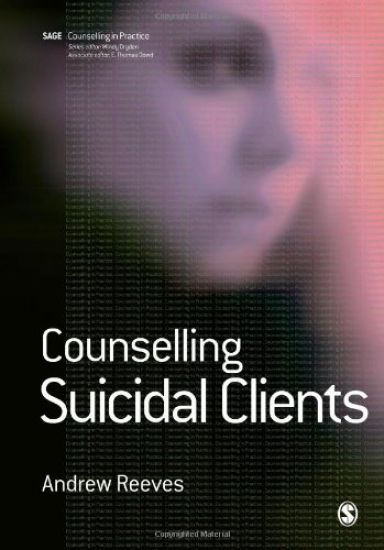
Counselling Suicidal Clients

Counselling Suicidal Clients

Andrew Reeves

SAGE Publications Inc
2010
sidottu
"I have worked in psychiatry as well as in private practice with suicidal people. I found it poignant and true when Reeves points out that people do not have to be mad to be suicidal and '…that assessing suicide potential fundamentally lies in engaging with the suicidal client at a deeper relational level'. So true. This thoroughly researched book is written with passion and compassion. It will be a valuable addition to the libraries of therapists and anyone else who works with suicidal people." - Therapy Today, July 2010 "A uniquely accessible, comprehensive and practical guide. Essential reading for counsellors and psychotherapists and all helping professionals who work with clients at risk of suicide." - Mick Cooper, Professor of Counselling, University of Strathclyde "A 'must read' for counsellors of all experience levels, offering sound practical strategies alongside thought-provoking case studies and discussion points. Reeves addresses this difficult topic with depth, breadth and integrity. Excellent." - Denise Meyer, developer and lead author of www.studentdepression.org "Andrew Reeves brings together his experience as a social worker, counsellor and academic to explore the essential elements in working with suicidal clients. His openness and integrity in writing about this complex topic creates a valuable resource for reflective practice." - Barbara Mitchels, Solicitor and Director of Watershed Counselling Service, Devon. Counselling Suicidal Clients addresses the important professional considerations when working with clients who are suicidal. The 'bigger picture', including legal and ethical considerations and organisational policy and procedures is explored, as is to how practitioners can work with the dynamics of suicide potential in the therapeutic process. The book is divided into six main parts: - The changing context of suicide - The prediction-prevention model, policy and ethics - The influence of the organisation - The client process - The practitioner process - The practice of counselling with suicidal clients. The book also includes chapters on the discourse of suicide, suicide and self-injury, and self-care for the counsellor. It is written for counsellors and psychotherapists, and for any professional who uses counselling skills when supporting suicidal people.
Counselling Suicidal Clients

Counselling Suicidal Clients

Andrew Reeves

SAGE Publications Inc
2010
nidottu
"I have worked in psychiatry as well as in private practice with suicidal people. I found it poignant and true when Reeves points out that people do not have to be mad to be suicidal and '…that assessing suicide potential fundamentally lies in engaging with the suicidal client at a deeper relational level'. So true. This thoroughly researched book is written with passion and compassion. It will be a valuable addition to the libraries of therapists and anyone else who works with suicidal people." - Therapy Today, July 2010 "A uniquely accessible, comprehensive and practical guide. Essential reading for counsellors and psychotherapists and all helping professionals who work with clients at risk of suicide." - Mick Cooper, Professor of Counselling, University of Strathclyde "A 'must read' for counsellors of all experience levels, offering sound practical strategies alongside thought-provoking case studies and discussion points. Reeves addresses this difficult topic with depth, breadth and integrity. Excellent." - Denise Meyer, developer and lead author of www.studentdepression.org "Andrew Reeves brings together his experience as a social worker, counsellor and academic to explore the essential elements in working with suicidal clients. His openness and integrity in writing about this complex topic creates a valuable resource for reflective practice." - Barbara Mitchels, Solicitor and Director of Watershed Counselling Service, Devon. Counselling Suicidal Clients addresses the important professional considerations when working with clients who are suicidal. The 'bigger picture', including legal and ethical considerations and organisational policy and procedures is explored, as is to how practitioners can work with the dynamics of suicide potential in the therapeutic process. The book is divided into six main parts: - The changing context of suicide - The prediction-prevention model, policy and ethics - The influence of the organisation - The client process - The practitioner process - The practice of counselling with suicidal clients. The book also includes chapters on the discourse of suicide, suicide and self-injury, and self-care for the counsellor. It is written for counsellors and psychotherapists, and for any professional who uses counselling skills when supporting suicidal people.

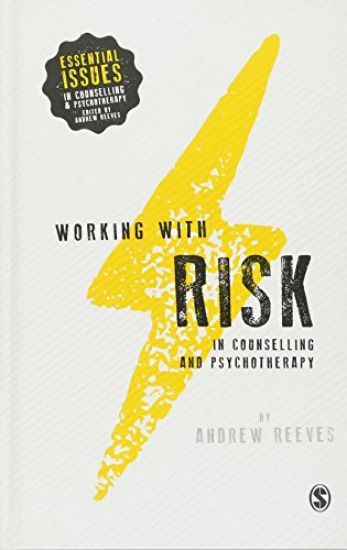
Working with Risk in Counselling and Psychotherapy

Working with Risk in Counselling and Psychotherapy

Andrew Reeves

SAGE Publications Ltd
2015
sidottu
The wide-ranging contexts in which counselling and psychotherapy is now practiced means clients present with a range of risks that therapists have to respond to. Risk is an ever-present issue for counsellors and psychotherapists and, in an increasingly litigious culture, the need for trainees to develop a sound understanding of how the right tools and the right knowledge can support their practice has never been greater. In this book Andrew Reeves takes trainees, newly qualified practitioners, and more experienced practitioners step-by-step through what is meant by risk, offering practical hints and tips and links to policy and research to inform good ethical practice along the way. This book tackles: • The definition of risk and how risk is linked to social, psychological and relational factors • Working with those who are at risk of suicide, self-injury, self-harm and/or are an endangerment to others • How therapists should respond to the risk in situations involving child protection, mental health crises, and in the therapeutic process itself • The positive side of risk-taking • How counsellors and psychotherapists can work with risk proactively and positively, informed by research. Filled with case studies, ethical dilemmas, reflective questions, discussion questions and further reading, this book offers counsellors and psychotherapists guidance on how they can work with risk proactively and positively. It is an essential resource for all services, organisations and individual practitioners.
Working with Risk in Counselling and Psychotherapy

Working with Risk in Counselling and Psychotherapy

Andrew Reeves

SAGE Publications Ltd
2015
nidottu
The wide-ranging contexts in which counselling and psychotherapy is now practiced means clients present with a range of risks that therapists have to respond to. Risk is an ever-present issue for counsellors and psychotherapists and, in an increasingly litigious culture, the need for trainees to develop a sound understanding of how the right tools and the right knowledge can support their practice has never been greater. In this book Andrew Reeves takes trainees, newly qualified practitioners, and more experienced practitioners step-by-step through what is meant by risk, offering practical hints and tips and links to policy and research to inform good ethical practice along the way. This book tackles: • The definition of risk and how risk is linked to social, psychological and relational factors • Working with those who are at risk of suicide, self-injury, self-harm and/or are an endangerment to others • How therapists should respond to the risk in situations involving child protection, mental health crises, and in the therapeutic process itself • The positive side of risk-taking • How counsellors and psychotherapists can work with risk proactively and positively, informed by research. Filled with case studies, ethical dilemmas, reflective questions, discussion questions and further reading, this book offers counsellors and psychotherapists guidance on how they can work with risk proactively and positively. It is an essential resource for all services, organisations and individual practitioners.
An Introduction to Counselling and Psychotherapy

An Introduction to Counselling and Psychotherapy

Andrew Reeves

SAGE PUBLICATIONS LTD
2022
nidottu
This latest edition introduces you to the fundamentals of counselling and psychotherapy, accompanied by fresh research, perspectives and case-studies - ensuring comprehensive and up-to-date coverage of the context, theories, skills and practice of counselling professions. This book also covers the latest developments in the world of counselling and psychotherapy, including: -Online counselling and psychotherapy -Social justice approaches and the political positioning of therapy -Updated content and reading lists addressing diversity, inclusivity and decolonisation. The Introduction is designed to support and expand your learning and development, with features such as discussion questions, prompts for reflection, case examples and further reading. Beyond the pages of the book, there is a complementary set of extensive online resources, including further case studies, journal articles and videos. From newly enrolled to starting your practice placement, this book is the perfect companion for your counselling training, and beyond.
An Introduction to Counselling and Psychotherapy

An Introduction to Counselling and Psychotherapy

Andrew Reeves

SAGE PUBLICATIONS LTD
2022
sidottu
This latest edition introduces you to the fundamentals of counselling and psychotherapy, accompanied by fresh research, perspectives and case-studies - ensuring comprehensive and up-to-date coverage of the context, theories, skills and practice of counselling professions. This book also covers the latest developments in the world of counselling and psychotherapy, including: -Online counselling and psychotherapy -Social justice approaches and the political positioning of therapy -Updated content and reading lists addressing diversity, inclusivity and decolonisation. The Introduction is designed to support and expand your learning and development, with features such as discussion questions, prompts for reflection, case examples and further reading. Beyond the pages of the book, there is a complementary set of extensive online resources, including further case studies, journal articles and videos. From newly enrolled to starting your practice placement, this book is the perfect companion for your counselling training, and beyond.
Living The Dream

Living The Dream

Andrew Reeves

Lulu.com
2020
pokkari
An autobiographical book about my life in horses and horse racing. Contains an A-Z on Equine Terminology. A chapter containing some interesting information about horses. Would be suitable for people wanting to start a career in horse or racehorses or people who have horses.
Skeletons: Part Two: The Bald Man

Skeletons: Part Two: The Bald Man

Andrew Reeves

Skeletons, LLC.
2020
nidottu
Ohanzeeeeee, the winged skeleton Phoebe howled until she woke James from his nightmare inside the Rosita hospital and scared the farmboy into hitchhiking across America to hunt down the sociopath known as the bald man. After he befriends a grieving Bob and Lauren on the road, the three are taken hostage by the Campground Killer and surrendered to Sister Angelica's all-female cult in San Francisco called the First Church of Radiance. Once the prisoners discover her Master's plan to resurrect the Medicine Man and his Black Mountain Army from Hell by sacrificing the brainwashed congregation, they must put their faith in Sheriff Dwyer and a ragtag group of Laredoans to rescue them before Phoebe exacts her revenge on the priestess' church. PART TWO: THE BALD MAN forces James to let go of his virgin soul, embrace his cursed new life and study the Fire in order to resurrect his friends and family from the horrifying aftermath of PART ONE: LAREDO.
Overrun: Dispatches from the Asian Carp Crisis
Intelligent investigative writing meets experiential journalism in this important look at one of North America's most voraciously invasive species Politicians, ecologists, and government wildlife officials are fighting a desperate rearguard action to halt the onward reach of Asian Carp, four troublesome fish now within a handful of miles from entering Lake Michigan. From aquaculture farms in Arkansas to the bayous of Louisiana; from marshlands in Indiana to labs in Minnesota; and from the Illinois River to the streets of Chicago where the last line of defense has been laid to keep Asian carp from reaching the Great Lakes, Overrun takes us on a firsthand journey into the heart of a crisis. Along the way, environmental journalist Andrew Reeves discovers that saving the Great Lakes is only half the challenge. The other is a radical scientific and political shift to rethink how we can bring back our degraded and ignored rivers and waterways and reconsider how we create equilibrium in a shrinking world. With writing that is both urgent and wildly entertaining, Andrew Reeves traces the carp's explosive spread throughout North America from an unknown import meant to tackle invasive water weeds to a continental scourge that bulldozes through everything in its path.
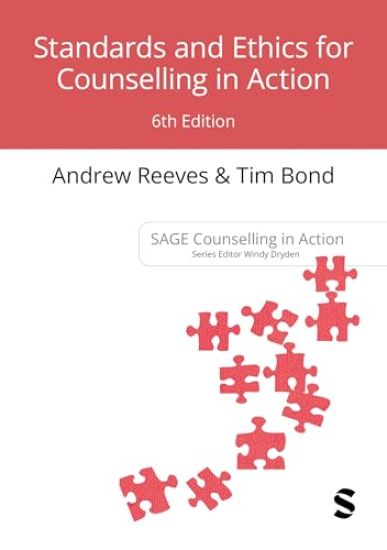
Standards Ethics for Counselling in Action

Standards Ethics for Counselling in Action

Andrew Reeves; Tim Bond

SAGE Publications Ltd
2021
sidottu
This is your essential guide to standards and ethics in the psychological therapies. The book introduces you to key ethical values and principles and discusses how to practice in accordance with these. An accompanying online resource website provides you with over 30 videos showing commonly arising ethical dilemmas, further reading including book chapters and journal articles, and links to ethical codes and frameworks in the UK and internationally.
Standards Ethics for Counselling in Action

Standards Ethics for Counselling in Action

Andrew Reeves; Tim Bond

SAGE Publications Ltd
2021
nidottu
This is your essential guide to standards and ethics in the psychological therapies. The book introduces you to key ethical values and principles and discusses how to practice in accordance with these. An accompanying online resource website provides you with over 30 videos showing commonly arising ethical dilemmas, further reading including book chapters and journal articles, and links to ethical codes and frameworks in the UK and internationally.
Standards and Ethics for Counselling in Action

Standards and Ethics for Counselling in Action

Andrew Reeves; Tim Bond

SAGE PUBLICATIONS LTD
2026
nidottu
This is your essential guide to standards and ethics in the counselling professions. The book introduces you to key ethical values and principles and discusses how to practice in accordance with these. An accompanying online resource website provides you with videos, book chapters and journal articles about ethical practice. Counselling in Action is a bestselling series of practical introductions designed for trainees and practitioners. Each book introduces a theoretical approach or practice issue and provides a guide to the process of counselling. Covering theory and practice, they are trusted companions for many courses in counselling and psychotherapy and other professions such as nursing, social work and teaching.
Standards and Ethics for Counselling in Action

Standards and Ethics for Counselling in Action

Andrew Reeves; Tim Bond

SAGE PUBLICATIONS LTD
2026
sidottu
This is your essential guide to standards and ethics in the counselling professions. The book introduces you to key ethical values and principles and discusses how to practice in accordance with these. An accompanying online resource website provides you with videos, book chapters and journal articles about ethical practice. Counselling in Action is a bestselling series of practical introductions designed for trainees and practitioners. Each book introduces a theoretical approach or practice issue and provides a guide to the process of counselling. Covering theory and practice, they are trusted companions for many courses in counselling and psychotherapy and other professions such as nursing, social work and teaching.
Navigating Relational Ethics in Day-to-Day Practice

Navigating Relational Ethics in Day-to-Day Practice

Lynne Gabriel; Andrew Reeves

TAYLOR FRANCIS LTD
2024
nidottu
The first in a new series on ethics in the counselling professions, Navigating Relational Ethics in Day-to-Day Practice contextualises the series and provides a practical ‘how to’ guide for bringing the theoretical concepts of ethics into practice. Lynne Gabriel and Andrew Reeves provide a compelling explanatory narrative on the importance of translating ethical concepts into meaningful pragmatic practice and practitioner tools. They set out key theories, concepts, and contemporary challenges in practice ethics, offering multiple lenses through which to make meaning of complex practice or risk scenarios and settings. Importantly, the book considers contemporary concepts associated with social justice including working in anti-oppressive ways. The chapters feature an array of engaging material, including a round table dialogue on working ethically in day-to-day practice, a ‘toolkit’ for working ethically across multiple contexts and presenting issues, and a rich collection of case examples from the authors’ lived experience.This text supports trainees and practitioners in taking ethical frameworks into their direct work with clients and in their wider role in practice.
Navigating Relational Ethics in Day-to-Day Practice

Navigating Relational Ethics in Day-to-Day Practice

Lynne Gabriel; Andrew Reeves

TAYLOR FRANCIS LTD
2024
sidottu
The first in a new series on ethics in the counselling professions, Navigating Relational Ethics in Day-to-Day Practice contextualises the series and provides a practical ‘how to’ guide for bringing the theoretical concepts of ethics into practice. Lynne Gabriel and Andrew Reeves provide a compelling explanatory narrative on the importance of translating ethical concepts into meaningful pragmatic practice and practitioner tools. They set out key theories, concepts, and contemporary challenges in practice ethics, offering multiple lenses through which to make meaning of complex practice or risk scenarios and settings. Importantly, the book considers contemporary concepts associated with social justice including working in anti-oppressive ways. The chapters feature an array of engaging material, including a round table dialogue on working ethically in day-to-day practice, a ‘toolkit’ for working ethically across multiple contexts and presenting issues, and a rich collection of case examples from the authors’ lived experience.This text supports trainees and practitioners in taking ethical frameworks into their direct work with clients and in their wider role in practice.
The Particularistic President

The Particularistic President

Douglas L. Kriner; Andrew Reeves

Cambridge University Press
2015
sidottu
As the holders of the only office elected by the entire nation, presidents have long claimed to be sole stewards of the interests of all Americans. Scholars have largely agreed, positing the president as an important counterbalance to the parochial impulses of members of Congress. This supposed fact is often invoked in arguments for concentrating greater power in the executive branch. Douglas L. Kriner and Andrew Reeves challenge this notion and, through an examination of a diverse range of policies from disaster declarations, to base closings, to the allocation of federal spending, show that presidents, like members of Congress, are particularistic. Presidents routinely pursue policies that allocate federal resources in a way that disproportionately benefits their more narrow partisan and electoral constituencies. Though presidents publicly don the mantle of a national representative, in reality they are particularistic politicians who prioritize the needs of certain constituents over others.
The Particularistic President

The Particularistic President

Douglas L. Kriner; Andrew Reeves

Cambridge University Press
2015
pokkari
As the holders of the only office elected by the entire nation, presidents have long claimed to be sole stewards of the interests of all Americans. Scholars have largely agreed, positing the president as an important counterbalance to the parochial impulses of members of Congress. This supposed fact is often invoked in arguments for concentrating greater power in the executive branch. Douglas L. Kriner and Andrew Reeves challenge this notion and, through an examination of a diverse range of policies from disaster declarations, to base closings, to the allocation of federal spending, show that presidents, like members of Congress, are particularistic. Presidents routinely pursue policies that allocate federal resources in a way that disproportionately benefits their more narrow partisan and electoral constituencies. Though presidents publicly don the mantle of a national representative, in reality they are particularistic politicians who prioritize the needs of certain constituents over others.