Kirjojen hintavertailu. Mukana 11 627 373 kirjaa ja 12 kauppaa.

Kirjahaku

Etsi kirjoja tekijän nimen, kirjan nimen tai ISBN:n perusteella.

55 kirjaa tekijältä Andrew Roberts

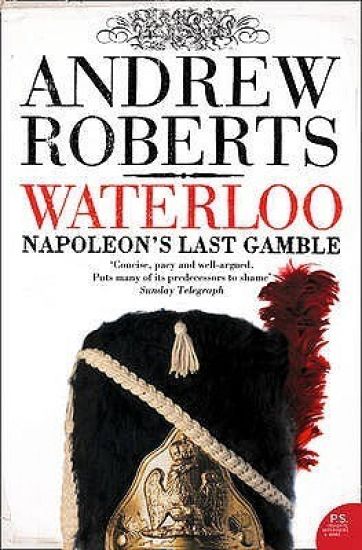
Waterloo

Waterloo

Andrew Roberts

HarperPerennial
2006
nidottu
An exciting retelling of one of the moments that shook the world – Waterloo, one of the truly decisive battles of history. In ‘Waterloo’, Roberts provides not only a fizzing account of one of the most significant forty-eight hour periods of all time, but also a startling interrogation into the methodology of history – is it possible to create an accurate picture from a single standpoint? What we can say for certain about the battle is that it ended forever one of the great personal epics. The career of Napoleon was brought to a shuddering halt on the evening of 18 June 1815. Interwoven in the clear-cut narrative are exciting revelations brought to light by recent research: accident rather than design led to the crucial cavalry debacle that lost the battle. Amongst the all-too-human explanation for the blunder that cost Napoleon his throne, Roberts sets the political, strategic and historical scene, and finally shows why Waterloo was such an important historical punctuation mark. The generation after Waterloo saw the birth of the modern era: ghastly as the carnage here was, henceforth the wars of the future were fought with infinitely more ghastly methods of trenches, machine-guns, directed starvation, concentration camps, and aerial bombardment. By the time of the Great War, chivalry was utterly dead. The honour of bright uniform and tangible spirit of élan met their final dance at Waterloo.
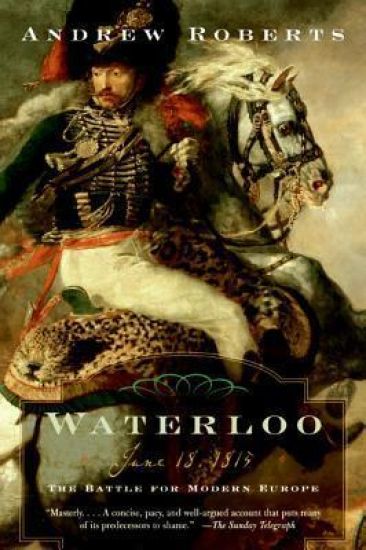
Waterloo: June 18, 1815: The Battle for Modern Europe
June 18, 1815, was one of the most momentous days in world history, marking the end of twenty-two years of French Revolutionary and Napoleonic Wars. On the bloody battlefield of Waterloo, the Emperor Napoleon and his hastily formed legions clashed with the Anglo-Allied armies led by the Duke of Wellington -- the only time the two greatest military strategists of their age faced each other in combat.With precision and elegance, Andrew Roberts sets the political, strategic, and historical scene, providing a breathtaking account of each successive stage of the battle while also examining new evidence that reveals exactly how Napoleon was defeated. Illuminating, authoritative, and engrossing, Waterloo is a masterful work of history.
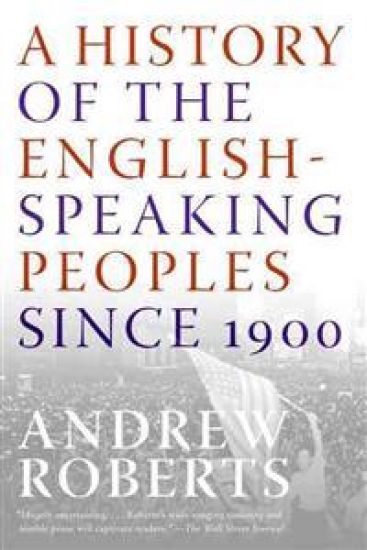
A History of the English-Speaking Peoples Since 1900
A magisterial history inspired by Winston Churchill's famous opus, A History of the English-Speaking Peoples Since 1900 is an engrossing account of the twentieth century, with a unique perspective on our turbulent times. In 1900, where Churchill ended the fourth volume of his History of the English-Speaking Peoples, the United States had not yet emerged onto the world scene as a great power. Yet the coming century was to belong to the English-speaking peoples, who successively and successfully fought the Kaiser's Germany, Axis aggression and Soviet Communism, and who are now struggling against Islamic fundamentalist terrorism. Andrew Roberts's History proves especially invaluable as the United States today looks to other parts of the English-speaking world as its best, closest and most dependable allies.
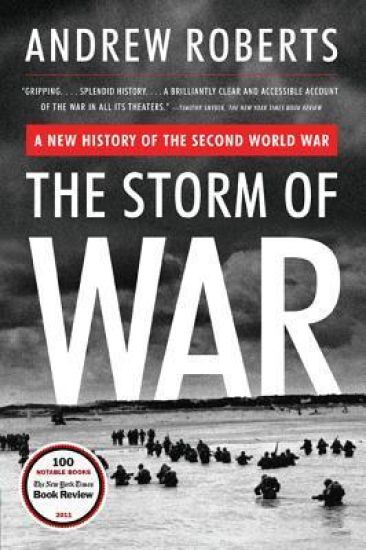
The Storm of War: A New History of the Second World War
"Gripping. . . . splendid history. A brilliantly clear and accessible account of the war in all its theaters. Roberts's prose is unerringly precise and strikingly vivid. It is hard to imagine a better-told military history of World War II." -New York Times Book ReviewAndrew Roberts's acclaimed new history has been hailed as the finest single-volume account of this epic conflict. From the western front to North Africa, from the Baltic to the Far East, he tells the story of the war--the grand strategy and the individual experience, the brutality and the heroism--as never before. Meticulously researched and masterfully written, The Storm of War illuminates the war's principal actors, revealing how their decisions shaped the course of the conflict. Along the way, Roberts presents tales of the many lesser-known individuals whose experiences form a panoply of the courage and self-sacrifice, as well as the depravity and cruelty, of the Second World War.
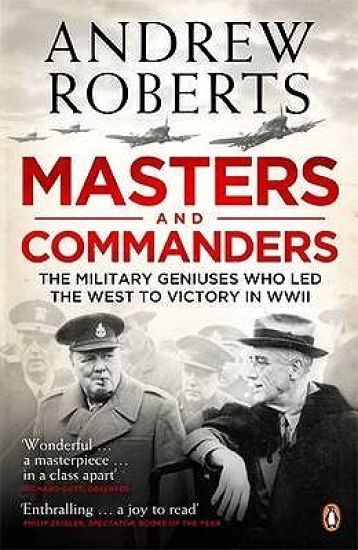
Masters and Commanders

Masters and Commanders

Andrew Roberts

Penguin Books Ltd
2009
pokkari
Andrew Roberts's Masters and Commanders: The Military Geniuses who led the West to Victory in WWII tells the story of how four great leaders fought each other over how best to fight Hitler. During the Second World War the master strategy of the West was shaped by four titanic figures: Winston Churchill and Franklin Roosevelt, and their respective military commanders - General Sir Alan Brooke and General George C. Marshall. Each man was tough-willed and strong minded. And each was certain he knew best how to achieve victory. Drawing on previously unpublished material, including for the first time verbatim reports of Churchill's War Cabinet meetings, Andrew Roberts's acclaimed history recreates with vivid immediacy the fiery debates and political maneuverings, the rebuffs and the charm, the explosive rows and dramatic reconciliations, as the masters and commanders of the Western Alliance fought each other over the best way to fight Adolf Hitler. 'History as it should be written; a gripping narrative' Michael Gove, Mail on Sunday Books of the Year 'Scintillating historical writing on the whole rich panorama of Britain and the US at war' Martin Gilbert, Evening Standard 'A compelling analysis of American and British military strategy during the war. He also tells a profoundly human story' Laurence Rees, Sunday Times 'A masterpiece' Christopher Silvester, Daily Express 'Britain's finest contemporary military historian' Economist Books of the Year Andrew Roberts is a biographer and historian of international renown whose previous books include Salisbury: Victorian Titan (1999), which won the Wolfson History Prize and the James Stern Silver Pen Award for Non-Fiction; Napoleon and Wellington (2001); Hitler and Churchill: Secrets of Leadership (2003), which coincided with four-part BBC2 history series, and A History of the English-Speaking Peoples Since 1900 (2005).
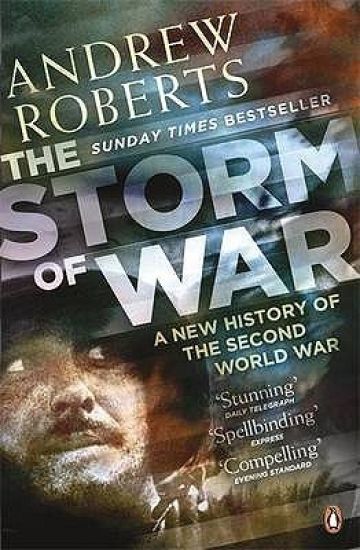
The Storm of War

The Storm of War

Andrew Roberts

Penguin Books Ltd
2010
pokkari
From the author of Masters and Commanders, Andrew Roberts' The Storm of War: A New History of the Second World War has been hailed as the finest single-volume account of this epic conflict. The Second World War lasted for 2,174 days and claimed the lives of over 50 million people. Why did it take the course that it did? Why did the Axis lose? And could they, with a different strategy, have won? Ranging from the Western front to North Africa, from the Baltic to the Far East, he brings the story of the war - and those who fought it - into focus as never before. 'One of the greatest historians of our time ... His masterpiece' Oliver Marre, Observer 'An undoubted triumph. This, simply, is the best one-volume history of the Second World War currently available' Laurence Rees 'Magnificent ... Stylish penmanship, gritty research and lucid reasoning, coupled with poignant and haunting detours into private lives ruined and shortened' Economist 'Moving, thought-provoking, enlightening' Roger Moorhouse, Independent 'An exceptional accomplishment ... the definitive single-volume history of the war ... Essential' Peter Watts, Time Out 'In what might be his best book yet, Roberts gives us the war as seen from the other side of the hill - the German Reich' Nigel Jones, Sunday Telegraph Andrew Roberts's Masters and Commanders was one of the most acclaimed, bestselling history books of 2008. His previous books include Salisbury: Victorian Titan (1999), which won the Wolfson History Prize and the James Stern Silver Pen Award for Non-Fiction, Hitler and Churchill: Secrets of Leadership (2003), which coincided with four-part BBC2 history series.
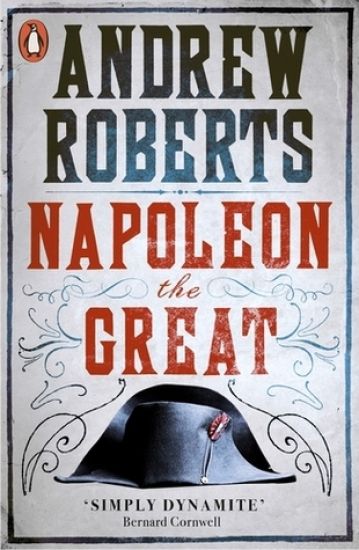
Napoleon the Great

Napoleon the Great

Andrew Roberts

Penguin Books Ltd.
2015
pokkari
Presents the biography of Napoleon who lived one of the extraordinary of all human lives. This book shows how after seizing power in a coup d'etat he ended the corruption and incompetence into which the Revolution had descended.
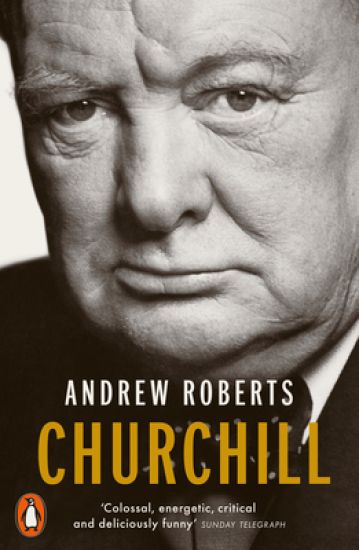
Churchill

Churchill

Andrew Roberts

Penguin Books Ltd.
2019
pokkari
THE INTERNATIONAL BESTSELLERA SUNDAY TIMES, THE TIMES, ECONOMIST, DAILY TELEGRAPH, EVENING STANDARD, OBSERVER BOOK OF THE YEAR'Undoubtedly the best single-volume life of Churchill ever written' Dominic Sandbrook, Sunday TimesA magnificently fresh and unexpected biography of Churchill, by one of Britain's most acclaimed historiansWinston Churchill towers over every other figure in twentieth-century British history. By the time of his death at the age of 90 in 1965, many thought him to be the greatest man in the world. There have been over a thousand previous biographies of Churchill. Andrew Roberts now draws on over forty new sources, including the private diaries of King George VI, used in no previous Churchill biography to depict him more intimately and persuasively than any of its predecessors. The book in no way conceals Churchill's faults and it allows the reader to appreciate his virtues and character in full: his titanic capacity for work (and drink), his ability see the big picture, his willingness to take risks and insistence on being where the action was, his good humour even in the most desperate circumstances, the breadth and strength of his friendships and his extraordinary propensity to burst into tears at unexpected moments. Above all, it shows us the wellsprings of his personality - his lifelong desire to please his father (even long after his father's death) but aristocratic disdain for the opinions of almost everyone else, his love of the British Empire, his sense of history and its connection to the present. During the Second World War, Churchill summoned a particular scientist to see him several times for technical advice. 'It was the same whenever we met', wrote the young man, 'I had a feeling of being recharged by a source of living power.' Harry Hopkins, President Roosevelt's emissary, wrote 'Wherever he was, there was a battlefront.' Field Marshal Sir Alan Brooke, Churchill's essential partner in strategy and most severe critic in private, wrote in his diary, 'I thank God I was given such an opportunity of working alongside such a man, and of having my eyes opened to the fact that occasionally such supermen exist on this earth.'
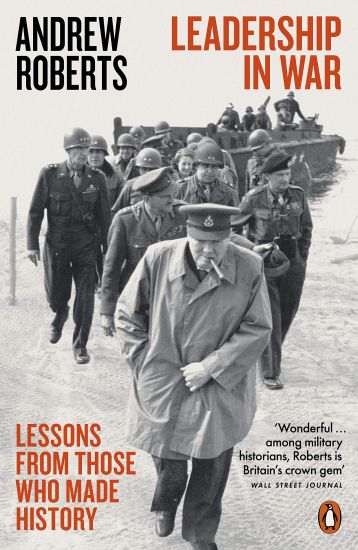
Leadership in War

Leadership in War

Andrew Roberts

Penguin Books Ltd
2020
pokkari
'Wonderful ... among military historians, Roberts is Britain's crown gem' Wall Street Journal Taking us from the French Revolution to the Cold War and the Falklands, celebrated historian Andrew Roberts presents us with a bracingly honest and insightful look at nine major figures in modern history: Napoleon Bonaparte, Horatio Nelson, Winston Churchill, Adolf Hitler, Joseph Stalin, George C. Marshall, Charles de Gaulle, Dwight D. Eisenhower and Margaret Thatcher.Each of these leaders fundamentally shaped the outcome of the war their nation was embroiled in. How were they alike, and in what ways did they differ? Was their war leadership unique, or did these leaders have something in common, traits and techniques that transcend time and place and can be applied to the fundamental nature of conflict?Meticulously researched and compellingly written, Leadership in War presents readers with fresh, complex portraits of leaders who approached war with different tactics and different weapons, but with the common goal of success in the face of battle. Both inspiring and cautionary, these portraits offer important lessons on leadership in times of struggle. With his trademark verve and incisive observation, Roberts reveals the qualities that doom even the most promising leaders to failure, and the qualities that lead to victory.
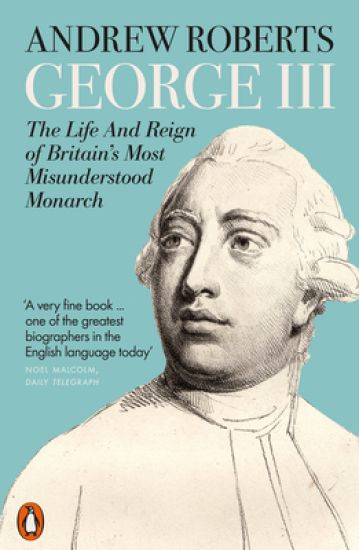
George III

George III

Andrew Roberts

PENGUIN BOOKS LTD
2023
pokkari
The Times Book of the Year*Winner of the Elizabeth Longford Prize for Historical Biography, 2022**Winner of the General Society of Colonial Wars' Distinguished Book Award, 2021**Winner of the History Reclaimed Book of the Year, 2022**Shortlisted for the Duff Cooper Prize, 2021*Andrew Roberts, one of Britain's premier historians, overturns the received wisdom on George IIIGeorge III, Britain's longest-reigning king, has gone down in history as 'the cruellest tyrant of this age' (Thomas Paine, eighteenth century), 'a sovereign who inflicted more profound and enduring injuries upon this country than any other modern English king' (W.E.H. Lecky, nineteenth century), 'one of England's most disastrous kings' (J.H. Plumb, twentieth century) and as the pompous monarch of the musical Hamilton (twenty-first century).Andrew Roberts's magnificent new biography takes entirely the opposite view. It portrays George as intelligent, benevolent, scrupulously devoted to the constitution of his country and (as head of government as well as head of state) navigating the turbulence of eighteenth-century politics with a strong sense of honour and duty. He was a devoted husband and family man, a great patron of the arts and sciences, keen to advance Britain's agricultural capacity ('Farmer George') and determined that her horizons should be global. He could be stubborn and self-righteous, but he was also brave, brushing aside numerous assassination attempts, galvanising his ministers and generals at moments of crisis and stoical in the face of his descent - five times during his life - into a horrifying loss of mind.The book gives a detailed, revisionist account of the American Revolutionary War, persuasively taking apart a significant proportion of the Declaration of Independence, which Roberts shows to be largely Jeffersonian propaganda. In a later war, he describes how George's support for William Pitt was crucial in the battle against Napoleon. And he makes a convincing, modern diagnosis of George's terrible malady, very different to the widely accepted medical view and to popular portrayals.Roberts writes, 'the people who knew George III best loved him the most', and that far from being a tyrant or incompetent, George III was one of our most admirable monarchs. The diarist Fanny Burney, who spent four years at his court and saw him often, wrote 'A noble sovereign this is, and when justice is done to him, he will be as such acknowledged'. In presenting this fresh view of Britain's most misunderstood monarch, George III shows one of Britain's premier historians at his sparkling best.
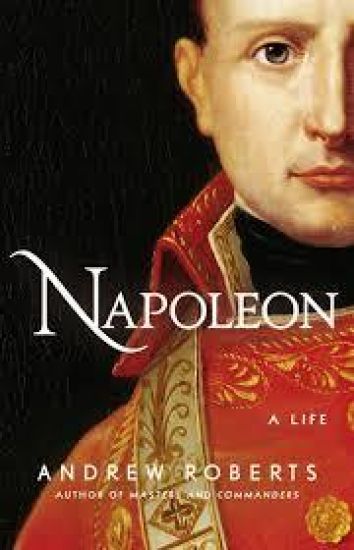
Napoleon: A Life

Napoleon: A Life

Andrew Roberts

PENGUIN BOOKS
2015
nidottu
The definitive biography of the great soldier-statesman by the acclaimed author of Churchill and The Last King of America--winner of the LA Times Book prize, finalist for the Plutarch prize, winner of the Fondation Napoleon prize and a New York Times bestseller "A thrilling tale of military and political genius... Roberts is an uncommonly gifted writer." --The Washington Post Austerlitz, Borodino, Waterloo: his battles are among the greatest in history, but Napoleon Bonaparte was far more than a military genius and astute leader of men. Like George Washington and his own hero Julius Caesar, he was one of the greatest soldier-statesmen of all times. Andrew Roberts's Napoleon is the first one-volume biography to take advantage of the recent publication of Napoleon's thirty-three thousand letters, which radically transform our understanding of his character and motivation. At last we see him as he was: protean multitasker, decisive, surprisingly willing to forgive his enemies and his errant wife Josephine. Like Churchill, he understood the strategic importance of telling his own story, and his memoirs, dictated from exile on St. Helena, became the single bestselling book of the nineteenth century. An award-winning historian, Roberts traveled to fifty-three of Napoleon's sixty battle sites, discovered crucial new documents in archives, and even made the long trip by boat to St. Helena. He is as acute in his understanding of politics as he is of military history. Here at last is a biography worthy of its subject: magisterial, insightful, beautifully written, by one of our foremost historians.
The Thinking Student's Guide to College

The Thinking Student's Guide to College

Andrew Roberts

University of Chicago Press
2010
sidottu
Each fall, thousands of eager freshmen descend on college and university campuses expecting the best education imaginable: inspiring classes taught by top-ranked professors, academic advisors who will guide them to a prestigious job or graduate school, and an environment where learning flourishes outside the classroom as much as it does in lecture halls. Unfortunately, most of these freshmen soon learn that academic life is not what they imagined. Classes are taught by overworked graduate students and adjuncts rather than seasoned faculty members, undergrads receive minimal attention from advisors or administrators, and potentially valuable campus resources remain outside their grasp. Andrew Roberts' "Thinking Student's Guide to College" helps students take charge of their university experience by providing a blueprint they can follow to achieve their educational goals - whether at public or private schools, large research universities, or small liberal arts colleges. An inside look penned by a professor at Northwestern University, this book offers concrete tips on choosing a college, selecting classes, deciding on a major, interacting with faculty, and applying to graduate school. Here, Roberts exposes the secrets of the ivory tower to reveal what motivates professors, where to find loopholes in university bureaucracy, and, most importantly, how to get a personalized education. Based on interviews with faculty and cutting-edge educational research, "The Thinking Student's Guide to College" is a necessary handbook for students striving to excel academically, creatively, and personally during their undergraduate years.
The Thinking Student's Guide to College

The Thinking Student's Guide to College

Andrew Roberts

University of Chicago Press
2010
nidottu
Each fall, thousands of eager freshmen descend on college and university campuses expecting the best education imaginable: inspiring classes taught by top-ranked professors, academic advisors who will guide them to a prestigious job or graduate school, and an environment where learning flourishes outside the classroom as much as it does in lecture halls. Unfortunately, most of these freshmen soon learn that academic life is not what they imagined. Glasses are taught by overworked graduate students and adjuncts rather than seasoned faculty members, undergrads receive minimal attention from advisors or administrators, and potentially valuable campus resources remain outside their grasp. Andrew Roberts' "Thinking Student's Guide to College" helps students take charge of their university experience by providing a blueprint they can follow to achieve their educational goals - whether at public or private schools, large research universities, or small liberal arts colleges. An inside look penned by a professor at Northwestern University, this book offers concrete tips on choosing a college, selecting classes, deciding on a major, interacting with faculty, and applying to graduate school. Here, Roberts exposes the secrets of the ivory tower to reveal what motivates professors, where to find loopholes in university bureaucracy, and, most importantly, how to get a personalized education. Based on interviews with faculty and cutting-edge educational research, "The Thinking Student's Guide to College" is a necessary handbook for students striving to excel academically, creatively, and personally during their undergraduate years.
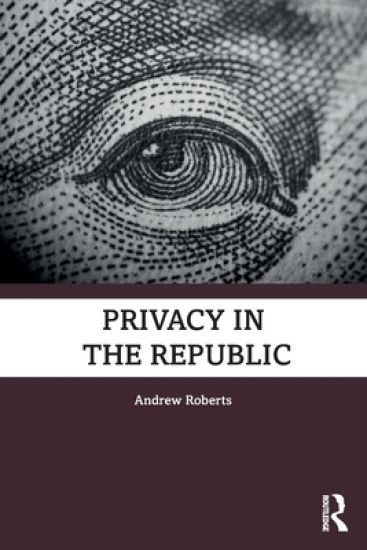
Privacy in the Republic

Privacy in the Republic

Andrew Roberts

TAYLOR FRANCIS LTD
2022
sidottu
This book rethinks the idea of privacy. It argues that a satisfactory account of privacy should not limit itself to identifying why privacy might be valuable. It also needs to attend to the further question of how it can be secured in those circumstances in which it proves to be valuable. Drawing on republican ideas about the relationship between freedom and self-government, the book asserts that privacy is valuable, because it enables us to lead non-dominated lives. It prevents others from acquiring power to interfere in our choices – to remove options that would otherwise be available to us, and to manipulate our decision-making. It further examines the means through which citizens might exercise effective control over decisions and actions that affect their privacy and proposes a democratic theory of privacy.With the emergence of the ‘surveillance state,’ this volume will be indispensable for scholars, students, and researchers in political theory, political philosophy, law, and human and civil rights. It will be of particular interest to policymakers, lawyers, and human rights activists.
Privacy in the Republic

Privacy in the Republic

Andrew Roberts

TAYLOR FRANCIS LTD
2022
nidottu
This book rethinks the idea of privacy. It argues that a satisfactory account of privacy should not limit itself to identifying why privacy might be valuable. It also needs to attend to the further question of how it can be secured in those circumstances in which it proves to be valuable. Drawing on republican ideas about the relationship between freedom and self-government, the book asserts that privacy is valuable, because it enables us to lead non-dominated lives. It prevents others from acquiring power to interfere in our choices – to remove options that would otherwise be available to us, and to manipulate our decision-making. It further examines the means through which citizens might exercise effective control over decisions and actions that affect their privacy and proposes a democratic theory of privacy.With the emergence of the ‘surveillance state,’ this volume will be indispensable for scholars, students, and researchers in political theory, political philosophy, law, and human and civil rights. It will be of particular interest to policymakers, lawyers, and human rights activists.
The Quality of Democracy in Eastern Europe

The Quality of Democracy in Eastern Europe

Andrew Roberts

Cambridge University Press
2009
sidottu
How does democracy work in the new democracies of Eastern Europe? Do the people actually rule as one would expect in a democracy or do the legacies of communism and the constraints of the transition weaken popular control? This book presents a framework for conceptualizing and measuring democratic quality and applies this framework to multiple countries and policy areas in the region. It defines democratic quality as the degree to which citizens are able to hold leaders accountable for their performance and keep policy close to their preferences. Its surprising conclusion, drawn from large-N statistical analyses and small-N case studies, is that citizens exercise considerable control over their rulers in Eastern European democracies. Despite facing difficult economic circumstances and an unfavorable inheritance from communism, these countries rapidly constructed relatively high-quality democracies.
Leadership in War: Essential Lessons from Those Who Made History
A comparison of nine leaders who led their nations through the greatest wars the world has ever seen and whose unique strengths--and weaknesses--shaped the course of human history, from the bestselling, award-winning author of Churchill, Napoleon, and The Last King of America "Has the enjoyable feel of a lively dinner table conversation with an opinionated guest." --The New York Times Book Review Taking us from the French Revolution to the Cold War, Andrew Roberts presents a bracingly honest and deeply insightful look at nine major figures in modern history: Napoleon Bonaparte, Horatio Nelson, Winston Churchill, Adolf Hitler, Joseph Stalin, George C. Marshall, Charles de Gaulle, Dwight D. Eisenhower, and Margaret Thatcher. Each of these leaders fundamentally shaped the outcome of the war in which their nation was embroiled. Is war leadership unique, or did these leaders have something in common, traits and techniques that transcend time and place and can be applied to the essential nature of conflict? Meticulously researched and compellingly written, Leadership in War presents readers with fresh, complex portraits of leaders who approached war with different tactics and weapons, but with the common goal of success in the face of battle. Both inspiring and cautionary, these portraits offer important lessons on leadership in times of struggle, unease, and discord. With his trademark verve and incisive observation, Roberts reveals the qualities that doom even the most promising leaders to failure, as well as the traits that lead to victory.
The Double Act

The Double Act

Andrew Roberts

The History Press Ltd
2018
nidottu
The double act has been at the heart of the British entertainment scene for over 150 years: from its start in the music halls, through radio shows such as Hancock’s Half Hour playing in virtually every household and on cinema and television, from Carry On films to Withnail and I. Explore the influence of comedy duos on their audience and how their performances evolved over time, the importance of the subtle art of the straight man next to the comic and discover some acts who might have passed you by. This book is a tribute to the comedians who have entertained the public for so long, dedicating their lives to adding a bit of laughter to the mundane everyday. The Double Act will appeal to all lovers of British comedy as it takes them through the golden moments of its history.
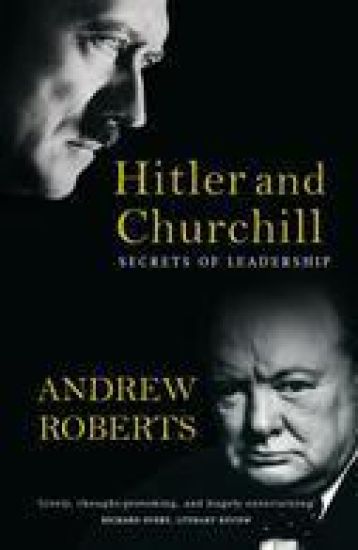
Hitler and Churchill

Hitler and Churchill

Andrew Roberts

Weidenfeld Nicolson
2010
pokkari
'His book is timely and a triumph. Roberts manages to convey all the reader needs to know about two men to whom battalions of biographies have been devoted' EVENING STANDARDAdolf Hitler and Winston Churchill were two totally opposite leaders - both in what they stood for and in the way in which they seemed to lead. Award-winning historian Andrew Roberts examines their different styles of leadership and draws parallels with rulers from other eras. He also looks at the way Hitler and Churchill estimated each other as leaders, and how it affected the outcome of the war. In a world that is as dependent on leadership as any earlier age, HITLER AND CHURCHILL asks searching questions about our need to be led. In doing so, Andrew Roberts forces us to re-examine the way that we look at those who take decisions for us.
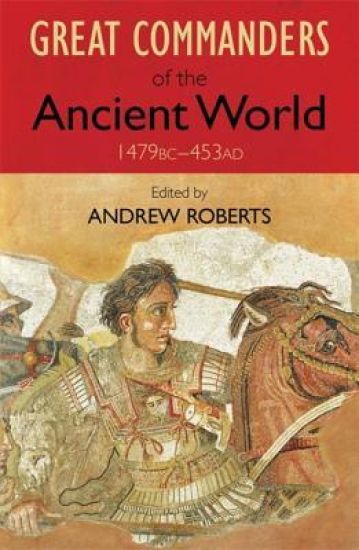
The Great Commanders of the Ancient World 1479BC - 453AD
Which was the most brilliant of Hannibal's three crushing defeats of Roman armies? What tactics did Julius Caesar employ to defeat Pompey at Pharsalus? How was Alexander the Great able to command sufficient loyalty from his troops to lead them across half of the Asian landmass in search of new territories to conquer? The answers to these and a myriad other fascinating questions can be found in Great Commanders of the Ancient World, a sumptuous chronological survey of the 50 greatest commanders of the ancient world. Compiled by an distinguished team of historians (including such names as Robin Lane Fox, Tom Holland and John Julius Norwich) working under the general editorship of Andrew Roberts, Great Commanders of the Ancient World is an authoritative and beautifully illustrated account of the lives and careers of the 25 greatest military commanders of the period, from Julius Caesar to Judas Maccabeus, from Sun Tzu to Scipio Africanus, and from Thucydides to Trajan. Every commander is profiled in a concise and informative 3000-word article which not only brings its subject vividly to life via a lively, fact-driven narrative, but also analyses and assesses his tactical and strategic gifts. As accessible and informative as it is rigorous and scholarly, Great Commanders of the Ancient World is the perfect introduction to its subject for the layperson - but also a stimulating and thought-provoking read for those with greater knowledge of military history. With its companion volumes, focusing on the great commanders of the medieval, early modern and modern eras, it forms an indispensable guide to the greatest generals the world has seen.