Kirjojen hintavertailu. Mukana 11 244 527 kirjaa ja 12 kauppaa.

Kirjahaku

Etsi kirjoja tekijän nimen, kirjan nimen tai ISBN:n perusteella.

41 kirjaa tekijältä Andrew Ross

Donald Ross and the Highland Clearances

Donald Ross and the Highland Clearances

Andrew Ross

AMBERLEY PUBLISHING
2023
sidottu
The Highland Clearances was a dark episode in Scottish history when many thousands of people were forced off lands that they and their kin had lived on for generations. Some boarded ships destined for the colonies of America and Australia, others ended up on small barren plots by the coast or in city slums. A few men were outspoken against the atrocities, and one of them was Donald Ross. Donald Ross was a Highlander, born in Sutherland in 1813. His father was the miller on the Skibo Castle Estate and Donald took over the mill when his father died. He and his family were subsequently evicted, fighting against their eviction in the Supreme Court but losing the case. Donald moved to Glasgow and within two years, as Agent for the Poor, helped over 1,500 people receive poor-relief payments, which were being withheld by local parish boards. In the 1850s Donald became the most outspoken critic of the Highland Clearances and wrote many detailed newspaper articles and pamphlets about mass evictions on Barra, Knoydart and Skye. His most famous publication was The Massacre of the Rosses, in which he graphically described the women of Strathcarron being brutally beaten by policemen for refusing to accept eviction notices. Donald supplied over 8,000 books and pamphlets for emigrants on the ill-fated Hercules. He also raised a lot of money to help poor people in the Hebrides, particularly during the infamous Potato Famine. However, Donald’s efforts were cut short by a scandal that saw him and his family emigrate to Nova Scotia. Donald’s inspirational story makes him an unsung hero of the poor.
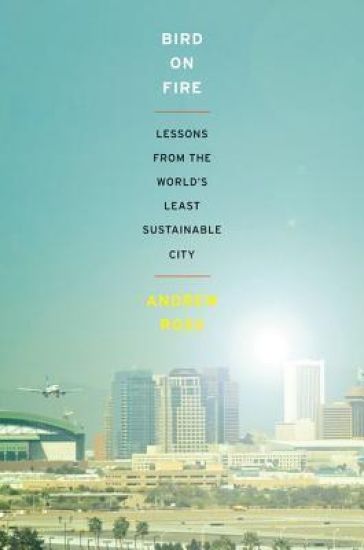
Bird on Fire

Bird on Fire

Andrew Ross

Oxford University Press Inc
2011
sidottu
Phoenix, Arizona is one of America's fastest growing metropolitan regions. It is also its least sustainable one, sprawling over a thousand square miles, with a population of four and a half million, minimal rainfall, scorching heat, and an insatiable appetite for unrestrained growth and unrestricted property rights. In Bird on Fire, eminent social and cultural analyst Andrew Ross focuses on the prospects for sustainability in Phoenix--a city in the bull's eye of global warming--and also the obstacles that stand in the way. Most authors writing on sustainable cities look at places like Portland, Seattle, and New York that have excellent public transit systems and relatively high density. But Ross contends that if we can't change the game in fast-growing, low-density cities like Phoenix, the whole movement has a major problem. Drawing on interviews with 200 influential residents--from state legislators, urban planners, developers, and green business advocates to civil rights champions, energy lobbyists, solar entrepreneurs, and community activists--Ross argues that if Phoenix is ever to become sustainable, it will occur more through political and social change than through technological fixes. Ross explains how Arizona's increasingly xenophobic immigration laws, science-denying legislature, and growth-at-all-costs business ethic have perpetuated social injustice and environmental degradation. But he also highlights the positive changes happening in Phoenix, in particular the Gila River Indian Community's successful struggle to win back its water rights, potentially shifting resources away from new housing developments to producing healthy local food for the people of the Phoenix Basin. Ross argues that this victory may serve as a new model for how green democracy can work, redressing the claims of those who have been aggrieved in a way that creates long-term benefits for all. Bird on Fire offers a compelling take on one of the pressing issues of our time--finding pathways to sustainability at a time when governments are dismally failing their responsibility to address climate change.
Bird on Fire

Bird on Fire

Andrew Ross

Oxford University Press Inc
2013
nidottu
Phoenix, Arizona is one of America's fastest growing metropolitan regions. It is also its least sustainable one, sprawling over a thousand square miles, with a population of four and a half million, minimal rainfall, scorching heat, and an insatiable appetite for unrestrained growth and unrestricted property rights. In Bird on Fire, eminent social and cultural analyst Andrew Ross focuses on the prospects for sustainability in Phoenix--a city in the bull's eye of global warming--and also the obstacles that stand in the way. Most authors writing on sustainable cities look at places like Portland, Seattle, and New York that have excellent public transit systems and relatively high density. But Ross contends that if we can't change the game in fast-growing, low-density cities like Phoenix, the whole movement has a major problem. Drawing on interviews with 200 influential residents--from state legislators, urban planners, developers, and green business advocates to civil rights champions, energy lobbyists, solar entrepreneurs, and community activists--Ross argues that if Phoenix is ever to become sustainable, it will occur more through political and social change than through technological fixes. Ross explains how Arizona's increasingly xenophobic immigration laws, science-denying legislature, and growth-at-all-costs business ethic have perpetuated social injustice and environmental degradation. But he also highlights the positive changes happening in Phoenix, in particular the Gila River Indian Community's successful struggle to win back its water rights, potentially shifting resources away from new housing developments to producing healthy local food for the people of the Phoenix Basin. Ross argues that this victory may serve as a new model for how green democracy can work, redressing the claims of those who have been aggrieved in a way that creates long-term benefits for all. Bird on Fire offers a compelling take on one of the pressing issues of our time--finding pathways to sustainability at a time when governments are dismally failing their responsibility to address climate change.
The Political Economy of Defense

The Political Economy of Defense

Andrew Ross

Praeger Publishers Inc
1991
sidottu
Beyond the traditional two-dimensional analyses of defense economics and defense politics lies a rapidly growing field of research: the political economy of defense. As the study of the interface between economics, politics, and defense proliferates, this collective volume sets out to identify the nature of political economy of defense inquiry, surpassing a narrower focus on the economic consequences of military spending. The starting point for this collaborative effort was a series of panel discussions, organized by Andrew L. Ross, in which most of the contributors to this volume participated. The majority of chapters were written expressly for this book and have not been previously published. These analytical and empirical investigations are intended to illustrate the broad, encompassing scope of political economy of defense research and contribute to the development of a research agenda. Andrew L. Ross has brought together a timely and significant array of inquiry into the impact of defense spending on world politics and global economics. This book will be of great interest to political scientists, defense specialists, and economists studying the military-industrial complex.
Real Love

Real Love

Andrew Ross

Routledge
1998
sidottu
In Real Love, Andrew Ross, one of our preeminent social critics, explores the vital connection between economic life and cultural expression. From the consequences of cyberspace for work and play to the uses and abuses of genetics in the O.J. trial, from world scarcity to world music, Ross interrogates the cultural forms through which economic forces take their daily toll upon our communities and environment. Examining the effects of debates about race, technology, ecology, and the arts on social and legal change, Ross focuses in particular on how demands for certain forms of cultural justice often go hand in hand with injustices of other sorts, and shows why cultural politics are a real and inescapable part of any argument for social change.
Real Love

Real Love

Andrew Ross

Routledge
1998
nidottu
In Real Love, Andrew Ross, one of our preeminent social critics, explores the vital connection between economic life and cultural expression. From the consequences of cyberspace for work and play to the uses and abuses of genetics in the O.J. trial, from world scarcity to world music, Ross interrogates the cultural forms through which economic forces take their daily toll upon our communities and environment. Examining the effects of debates about race, technology, ecology, and the arts on social and legal change, Ross focuses in particular on how demands for certain forms of cultural justice often go hand in hand with injustices of other sorts, and shows why cultural politics are a real and inescapable part of any argument for social change.
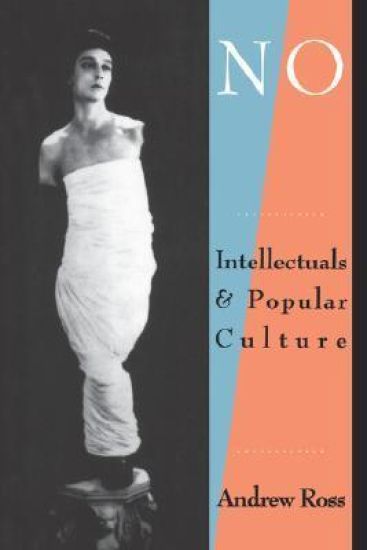
No Respect

No Respect

Andrew Ross

Routledge
1989
nidottu
The intellectual and the popular: Irving Howe and John Waters, Susan Sontag and Ethel Rosenberg, Dwight MacDonald and Bill Cosby, Amiri Baraka and Mick Jagger, Andrea Dworkin and Grace Jones, Andy Warhol and Lenny Bruce. All feature in Andrew Ross's lively history and critique of modern American culture. Andrew Ross examines how and why the cultural authority of modern intellectuals is bound up with the changing face of popular taste in America. He argues that the making of "taste" is hardly an aesthetic activity, but rather an exercise in cultural power, policing and carefully redefining social relations between classes.
Amber

Amber

Andrew Ross

The Natural History Museum
2010
nidottu
Amber is a remarkable substance that originates from the resin of trees that lived millions of years ago. Anything that became trapped in this sticky resin was fossilized and perfectly preserved. The insects and other inclusions found in amber today are providing scientists with unique insights into the history of life on Earth. In this new edition of "Amber", Andrew Ross provides an engaging overview of this prehistoric substance and its fossilized inclusions. The book explains how amber is formed, where it is found and how to distinguish genuine amber from fakes. It describes its many uses, both in art and science, and recounts the elusive search for DNA from fossilized insects. Detailed keys and stunning photographs, including previously unseen pieces of Burmese amber from the Museum's collections, guide the reader in the identification of species of insects and other amber inclusions. "Amber" is essential reading for all those with an interest in this natural time capsule.
Real Love

Real Love

Andrew Ross

New York University Press
1998
sidottu
In a world increasingly beset by ethnocultural conflicts, the pursuit of cultural rights has taken on new urgency. Claims for cultural justice affect economic distribution as much as they do address demands for recognition from marginalized groups. It is this vital connection between economic life and cultural expression that Andrew Ross, one of our preeminent social critics, explores in Real Love. From the consequences of cyberspace for work and play to the uses and abuses of genetics in the O.J. trial, from world scarcity to world music, Ross interrogates the cultural forms through which economic forces take their daily toll upon our labor, communities, and environment. In its relentless pursuit of cultural justice - an ideal comprised, in part, of doing justice to culture, pursuing justice through cultural means, and seeking justice for cultural claims - Real Love continues and expands the main concern of Ross's thought, namely the demonstration that, through rigorous research, the cultural critic can elucidate the complexity of everyday life.But even more than in his earlier work, Ross here examines the effects of debates about race, technology, ecology, and the arts on social and legal change. In particular, he focuses on how demands for certain forms of cultural justice often go hand in hand with injustices of other sorts and at other levels of social existence. Through close attention to the concrete details of daily life, strong argumentation, and a marvelous sense of the anecdotal, Ross shows why cultural politics are a real and inescapable part of any advocacy for social change.
Real Love

Real Love

Andrew Ross

New York University Press
1998
pokkari
In a world increasingly beset by ethnocultural conflicts, the pursuit of cultural rights has taken on new urgency. Claims for cultural justice affect economic distribution as much as they do address demands for recognition from marginalized groups. It is this vital connection between economic life and cultural expression that Andrew Ross, one of our preeminent social critics, explores in Real Love. From the consequences of cyberspace for work and play to the uses and abuses of genetics in the O.J. trial, from world scarcity to world music, Ross interrogates the cultural forms through which economic forces take their daily toll upon our labor, communities, and environment. In its relentless pursuit of cultural justice - an ideal comprised, in part, of doing justice to culture, pursuing justice through cultural means, and seeking justice for cultural claims - Real Love continues and expands the main concern of Ross's thought, namely the demonstration that, through rigorous research, the cultural critic can elucidate the complexity of everyday life.But even more than in his earlier work, Ross here examines the effects of debates about race, technology, ecology, and the arts on social and legal change. In particular, he focuses on how demands for certain forms of cultural justice often go hand in hand with injustices of other sorts and at other levels of social existence. Through close attention to the concrete details of daily life, strong argumentation, and a marvelous sense of the anecdotal, Ross shows why cultural politics are a real and inescapable part of any advocacy for social change.
Nice Work If You Can Get It

Nice Work If You Can Get It

Andrew Ross

New York University Press
2009
sidottu
2009 Choice Outstanding Academic Title A survey into an emerging pattern of labor instability and uneven global development Is job insecurity the new norm? With fewer and fewer people working in steady, long-term positions for one employer, has the dream of a secure job with full benefits and a decent salary become just that—a dream? In Nice Work If You Can Get It, Andrew Ross surveys the new topography of the global workplace and finds an emerging pattern of labor instability and uneven development on a massive scale. Combining detailed case studies with lucid analysis and graphic prose, he looks at what the new landscape of contingent employment means for workers across national, class, and racial lines—from the emerging "creative class" of high-wage professionals to the multitudes of temporary, migrant, or low-wage workers. Developing the idea of "precarious livelihoods" to describe this new world of work and life, Ross explores what it means in developed nations—comparing the creative industry policies of the United States, United Kingdom, and European Union, as well as developing countries—by examining the quickfire transformation of China's labor market. He also responds to the challenge of sustainability, assessing the promise of "green jobs" through restorative alliances between labor advocates and environmentalists. Ross argues that regardless of one's views on labor rights, globalization, and quality of life, this new precarious and "indefinite life,&" and the pitfalls and opportunities that accompany it is likely here to stay and must be addressed in a systematic way. A more equitable kind of knowledge society emerges in these pages—less skewed toward flexploitation and the speculative beneficiaries of intellectual property, and more in tune with ideals and practices that are fair, just, and renewable.
Nice Work If You Can Get It

Nice Work If You Can Get It

Andrew Ross

New York University Press
2010
pokkari
2009 Choice Outstanding Academic Title A survey into an emerging pattern of labor instability and uneven global development Is job insecurity the new norm? With fewer and fewer people working in steady, long-term positions for one employer, has the dream of a secure job with full benefits and a decent salary become just that—a dream? In Nice Work If You Can Get It, Andrew Ross surveys the new topography of the global workplace and finds an emerging pattern of labor instability and uneven development on a massive scale. Combining detailed case studies with lucid analysis and graphic prose, he looks at what the new landscape of contingent employment means for workers across national, class, and racial lines—from the emerging "creative class" of high-wage professionals to the multitudes of temporary, migrant, or low-wage workers. Developing the idea of "precarious livelihoods" to describe this new world of work and life, Ross explores what it means in developed nations—comparing the creative industry policies of the United States, United Kingdom, and European Union, as well as developing countries—by examining the quickfire transformation of China's labor market. He also responds to the challenge of sustainability, assessing the promise of "green jobs" through restorative alliances between labor advocates and environmentalists. Ross argues that regardless of one's views on labor rights, globalization, and quality of life, this new precarious and "indefinite life,&" and the pitfalls and opportunities that accompany it is likely here to stay and must be addressed in a systematic way. A more equitable kind of knowledge society emerges in these pages—less skewed toward flexploitation and the speculative beneficiaries of intellectual property, and more in tune with ideals and practices that are fair, just, and renewable.
Science Wars

Science Wars

Andrew Ross

Duke University Press
1996
pokkari
In the wake of the highly fractious Culture Wars, conservatives in science have launched a backlash against feminist, multiculturalist, and social critics in science studies. Paul Gross and Norman Levitt’s book Higher Superstition, presented as a wake-up call to scientists unaware of the dangers posed by the “science-bashers,” set the shrill tone of this reaction and led to the appearance of a growing number of scare stories about an “antiscience” movement in the op-ed sections of newspapers across the country. Unwilling to be political scapegoats for the decline in the public funding of science and the erosion of the public authority of scientists, many of these critics-natural scientists, sociologists, anthropologists, historians, and scholars in cultural studies and literary studies-have taken the opportunity to respond to the backlash in Science Wars.At a time when scientific knowledge is systematically whisked out of the domain of education and converted into private capital, the essays in this volume are sharply critical of the conservative defense of a value-free science. They suggest that in a world steeped in nuclear, biogenic, and chemical overdevelopment, those who are skeptical of technology are more than entitled to ask for evidence of rationality in those versions of scientific progress that respond only to the managerial needs of state, corporate, and military elites. Whether uncovering the gender-laden assumptions built into the Western scientific method, redefining the scientific claim to objectivity, showing the relationship between science’s empirical worldview and that of mercantile capitalism, or showing how the powerful language of science exercises its daily cultural authority in our society, the essays in Science Wars announce their own powerful message. Analyzing the antidemocratic tendencies within science and its institutions, they insist on a more accountable relationship between scientists and the communities and environments affected by their research.Revised and expanded from a recent issue of Social Text, Science Wars will provoke thought and controversy among scholars and general readers interested in science studies and current cultural politics. Contributors. Stanley Aronowitz, Sarah Franklin, Steve Fuller, Sandra Harding, Roger Hart, N. Katherine Hayles, Ruth Hubbard, Joel Kovel, Les Levidow, George Levine, Richard Levins, Richard C. Lewontin, Michael Lynch, Emily Martin, Dorothy Nelkin, Hilary Rose, Andrew Ross, Sharon Traweek, Langdon Winner
Science Wars

Science Wars

Andrew Ross

Duke University Press
1996
sidottu
In the wake of the highly fractious Culture Wars, conservatives in science have launched a backlash against feminist, multiculturalist, and social critics in science studies. Paul Gross and Norman Levitt’s book Higher Superstition, presented as a wake-up call to scientists unaware of the dangers posed by the “science-bashers,” set the shrill tone of this reaction and led to the appearance of a growing number of scare stories about an “antiscience” movement in the op-ed sections of newspapers across the country. Unwilling to be political scapegoats for the decline in the public funding of science and the erosion of the public authority of scientists, many of these critics-natural scientists, sociologists, anthropologists, historians, and scholars in cultural studies and literary studies-have taken the opportunity to respond to the backlash in Science Wars.At a time when scientific knowledge is systematically whisked out of the domain of education and converted into private capital, the essays in this volume are sharply critical of the conservative defense of a value-free science. They suggest that in a world steeped in nuclear, biogenic, and chemical overdevelopment, those who are skeptical of technology are more than entitled to ask for evidence of rationality in those versions of scientific progress that respond only to the managerial needs of state, corporate, and military elites. Whether uncovering the gender-laden assumptions built into the Western scientific method, redefining the scientific claim to objectivity, showing the relationship between science’s empirical worldview and that of mercantile capitalism, or showing how the powerful language of science exercises its daily cultural authority in our society, the essays in Science Wars announce their own powerful message. Analyzing the antidemocratic tendencies within science and its institutions, they insist on a more accountable relationship between scientists and the communities and environments affected by their research.Revised and expanded from a recent issue of Social Text, Science Wars will provoke thought and controversy among scholars and general readers interested in science studies and current cultural politics. Contributors. Stanley Aronowitz, Sarah Franklin, Steve Fuller, Sandra Harding, Roger Hart, N. Katherine Hayles, Ruth Hubbard, Joel Kovel, Les Levidow, George Levine, Richard Levins, Richard C. Lewontin, Michael Lynch, Emily Martin, Dorothy Nelkin, Hilary Rose, Andrew Ross, Sharon Traweek, Langdon Winner
Strange Weather

Strange Weather

Andrew Ross

Verso Books
1991
nidottu
Who speaks for science in a technologically dominated society? In his latest work of cultural criticism Andrew Ross contends that this question yields no simple or easy answer. In our present technoculture a wide variety of people, both inside and outside the scientific community, have become increasingly vocal in exercising their right to speak about, on behalf of, and often against, science and technology.Arguing that science can only ever be understood as a social artifact, Strange Weather is a manifesto which calls on cultural critics to abandon their technophobia and contribute to the debates which shape our future. Each chapter focuses on an idea, a practice or community that has established an influential presence in our culture: New Age, computer hacking, cyberpunk, futurology, and global warming.In a book brimming over with intelligence-both human and electronic-Ross examines the state of scientific countercultures in an age when the development of advanced information technologies coexists uneasily with ecological warnings about the perils of unchecked growth. Intended as a contribution to a "green" cultural criticism, Strange Weather is a provocative investigation of the ways in which science is shaping the popular imagination of today, and delimiting the possibilities of tomorrow.
The Chicago Gangster Theory of Life
Strange and scary days for an ecology movement that was conceived in fierce opposition to power. Fractured, as ever, by divisions and competing agendas, the movement must now confront the dangerous tendency of those in power to invoke nature's laws as a model for social well-being. Partly as a result of ecology's influence, biologism is back, and the spectres of social Darwinism and Malthusian ideas about natural scarcity have begun to reinforce, if not translate in, calls for a reduction in right and freedoms in our civil society.Andrew Ross's The Chicago Gangster Theory of Life questions the evangelical asceticism of much environmentalist thought, and calls for a renewal of the libertarian, post-scarcity tradition. Opening with a stunning essay on the ethnic and socio-economic bases of cultural nationalism in the Pacific Islands, he assesses the continuing historical appeal of ecological romanticism, long associated with Polynesian peoples, and central today to a tourist industry that is the new mode of Third World underdevelopment. Turning to home, he analyzes the 1933 bombing of New York's World Trade Center in the ecological context of urban development that has made the city a capital both of global finance and of new immigrant cultures. In a response to the bombing and environmental terrorism of the Gulf War, Ross goes on to explore the 'ecology of images' that characterized the media's role in that war's carnage and in the mounting collateral damage of the New World Order. A fourth chapter discusses the much-hyped men's movement as a response to debates among eco-feminists. The book concludes with a sweeping critiques of the new world view being ushered in by geneticists and the biotechnology industry, a philosophy of biological determinism that Ross describes as 'the Chicago gangster theory of life.'With his sharp eye for the crucial cultural phenomena of our times, Ross's wry take on the contradictions of green politics is tempered by his commitment to dispel the ecology movement's public image as an anti-libertarian politics that always 'says no', and preaches self-limitation rather than promising social fulfillment. He sees an ecological future of public affluence and not voluntary poverty, a world where nature is a participant in our social plans, and not an authority locking us into some incontrovertible fate.
No Respect

No Respect

Andrew Ross

Routledge
2016
sidottu
The intellectual and the popular: Irving Howe and John Waters, Susan Sontag and Ethel Rosenberg, Dwight MacDonald and Bill Cosby, Amiri Baraka and Mick Jagger, Andrea Dworkin and Grace Jones, Andy Warhol and Lenny Bruce. All feature in Andrew Ross's lively history and critique of modern American culture. Andrew Ross examines how and why the cultural authority of modern intellectuals is bound up with the changing face of popular taste in America. He argues that the making of "taste" is hardly an aesthetic activity, but rather an exercise in cultural power, policing and carefully redefining social relations between classes.
Sunbelt Blues: The Failure of American Housing
An eye-opening investigation of America's rural and suburban housing crisis, told through a searing portrait of precarious living in Disney World's backyard. Today, a minimum-wage earner can afford a one-bedroom apartment in only 145 out of 3,143 counties in America. One of the very worst places in the United States to look for affordable housing is Osceola County, Florida. Once the main approach to Disney World, where vacationers found lodging on their way to the Magic Kingdom, the fifteen-mile Route 192 corridor in Osceola has become a site of shocking contrasts. At one end, global investors snatch up foreclosed properties and park their capital in extravagant vacation homes for affluent visitors, eliminating the county's affordable housing in the process. At the other, underpaid tourist industry workers, displaced families, and disabled and elderly people subsisting on government checks cram themselves into dilapidated, roach-infested motels, or move into tent camps in the woods. Through visceral, frontline reporting from the motels and encampments dotting central Florida, renowned social analyst Andrew Ross exposes the overlooked housing crisis sweeping America's suburbs and rural areas, where residents suffer ongoing trauma, poverty, and nihilism. As millions of renters face down evictions and foreclosures in the midst of the COVID-19 recession, Andrew Ross reveals how ineffective government planning, property market speculation, and poverty wages have combined to create this catastrophe. Urgent and incisive, Sunbelt Blues offers original insight into what is quickly becoming a full-blown national emergency.