Kirjojen hintavertailu. Mukana 11 244 527 kirjaa ja 12 kauppaa.

Kirjahaku

Etsi kirjoja tekijän nimen, kirjan nimen tai ISBN:n perusteella.

20 kirjaa tekijältä Andrew Shanks

Anglicanism Reimagined

Anglicanism Reimagined

Andrew Shanks

SPCK Publishing
2010
pokkari
In Anglicanism Reimagined Andrew Shanks challenges all who are tempted to erect boundaries around their faith. Far more important than dogma and metaphysics, he argues, is the need to be open to all, and to engage with people who hold views at odds with our own. He shows how a commitment to this ideal can create fresh energy and new ways forward for the Church.
Against Innocence

Against Innocence

Andrew Shanks

SCM Press
2008
nidottu
Gillian Rose (1947–1995) was a highly original, enigmatic and pugnacious thinker, whose work draws together Continental philosophy, sociology, modern / post-modern Jewish and Christian reflection on ethics. She was also, famously, a convert to Christianity, baptised into the Church of England on her deathbed, from Judaism. She has been a major influence on many contemporary thinkers, not least on the thought of the Archbishop Rowan Williams. Her writings are teasingly poetic, often forbiddingly difficult, and yet at the same time vividly accessible, at any rate through her widely praised memoir, Love’s Work Here, a Church of England priest writes about Rose’s thought as it relates to the future of the Church she eventually joined. A significant philosopher of this century, they believe her thinking implicitly points towards a new form of Christian self-understanding. This captivatingly well written book is the first major study of Gillian Rose’s thought from a theological point of view. It aims to make the work of this highly complex thinker accessible to a wider readership.
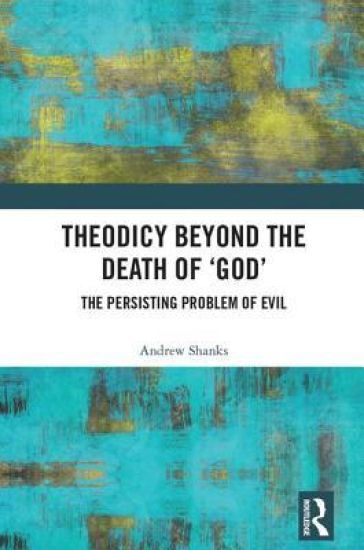
Theodicy Beyond the Death of 'God'

Theodicy Beyond the Death of 'God'

Andrew Shanks

Routledge
2019
nidottu
True theodicy is partly a theoretical corrective to evangelistic impatience: discounting the distortions arising from over-eager salesmanship. And partly it is a work of poetic intensification, dedicated to faith’s necessary struggle against resentment.This book contains a systematic survey of the classic theoretical-corrective theodicy tradition initiated, in the early Seventeenth Century, by Jakob Böhme. Two centuries later, Böhme’s lyrical thought is translated into rigorous philosophical terms by Schelling; and is, then, further, set in context by Hegel’s doctrine of providence at work in world history. The old ‘God’ of mere evangelistic impatience is, as Hegel sees things, ‘dead’. And so theodicy is liberated, to play its proper role: illustrated here with particular reference to the book of Job, the post-Holocaust poetry of Nelly Sachs, and the thought of Simone Weil.A boldly polemical study, this book is a bid to re-ignite debate on the whole topic of theodicy. As such, it will be of great interest to scholars in religious studies, theology and philosophy.
God and Modernity

God and Modernity

Andrew Shanks

Routledge
1999
sidottu
For the past four hundred years, theological debate has been dominated by a fundamental divide: between the liberals, with strong loyalties to the secularity of the secular state and university on the one hand, and the neo-orthodox, insisting on the absolute priority of a proper loyalty to the church community itself, on the other. God and Modernity strikes off in a fundamentally new directionAndrew Shanks boldly calls for a new and better way to do theology. Shanks argues that God is most present in a culture where public debate over ethical issues flourishes best. Social movements such as feminist movements, peace movements, and green movements have emerged to challenge both Church and State. These new movements are no longer confined to a particular confessional religious identity and are independent of state sponsorship. These social movements already made an individual impact on theology. What would a theology look like, systematically trying to reconcile older divisions in the theological debate with a new loyalty to such movements common ethos? Anyone wishing to gain a refreshing insight into a new way of understanding theology and politics will welcome this ground-breaking book.
God and Modernity

God and Modernity

Andrew Shanks

Routledge
1999
nidottu
For the past four hundred years, theological debate has been dominated by a fundamental divide: between the liberals, with strong loyalties to the secularity of the secular state and university on the one hand, and the neo-orthodox, insisting on the absolute priority of a proper loyalty to the church community itself, on the other. God and Modernity strikes off in a fundamentally new directionAndrew Shanks boldly calls for a new and better way to do theology. Shanks argues that God is most present in a culture where public debate over ethical issues flourishes best. Social movements such as feminist movements, peace movements, and green movements have emerged to challenge both Church and State. These new movements are no longer confined to a particular confessional religious identity and are independent of state sponsorship. These social movements already made an individual impact on theology. What would a theology look like, systematically trying to reconcile older divisions in the theological debate with a new loyalty to such movements common ethos? Anyone wishing to gain a refreshing insight into a new way of understanding theology and politics will welcome this ground-breaking book.
'What is Truth?'

'What is Truth?'

Andrew Shanks

Routledge
2001
sidottu
In a culture where institutional religion is in decline there is a pressing need for new theological strategies. Andrew Shanks argues for a fresh 'theological poetics', providing an eloquent first step towards meeting these needs and an alternative strategy for reconciling Christian theology with poetic truth.
'What is Truth?'

'What is Truth?'

Andrew Shanks

Routledge
2001
nidottu
In a culture where institutional religion is in decline there is a pressing need for new theological strategies. Andrew Shanks argues for a fresh 'theological poetics', providing an eloquent first step towards meeting these needs and an alternative strategy for reconciling Christian theology with poetic truth.
Hegel's Political Theology

Hegel's Political Theology

Andrew Shanks

Cambridge University Press
2008
pokkari
This study begins with an examination of Milan Kundera's concept of 'kitsch', which is defined and investigated in his novel The Unbearable Lightness of Being. The author here describes this concept as 'the cliché which bonds the crowd together - the means by which the thought control of the hierarchy or peer group is dressed up, internalised, and rendered seductive'. Dr Shanks relates kitsch and its dangers to the thought of Hegel, whom he regards as a religious reformer wrestling with the issue at the deepest level. What, he asks, is required to rescue the Christian gospel from its pervasive corruption, which takes the form either of ecclesiastical authoritarianism, or else a privatized, 'atomistic' spirituality? The author shows Hegel's answer to be twofold. It involves, on the one hand, a decisive theological re-evaluation of the secular political realm; and on the other, a philosophical clarification of the inner truth of the Incarnation - a strictly 'inclusive' christology. This book sets out to show the centrality of such a practical concern to Hegel's systematic theoretical enterprise as a whole.
Hegel's Political Theology

Hegel's Political Theology

Andrew Shanks

Cambridge University Press
1991
sidottu
This study begins with an examination of Milan Kundera's concept of 'kitsch', which is defined and investigated in his novel The Unbearable Lightness of Being. The author here describes this concept as 'the cliché which bonds the crowd together - the means by which the thought control of the hierarchy or peer group is dressed up, internalised, and rendered seductive'. Dr Shanks relates kitsch and its dangers to the thought of Hegel, whom he regards as a religious reformer wrestling with the issue at the deepest level. What, he asks, is required to rescue the Christian gospel from its pervasive corruption, which takes the form either of ecclesiastical authoritarianism, or else a privatized, 'atomistic' spirituality? The author shows Hegel's answer to be twofold. It involves, on the one hand, a decisive theological re-evaluation of the secular political realm; and on the other, a philosophical clarification of the inner truth of the Incarnation - a strictly 'inclusive' christology. This book sets out to show the centrality of such a practical concern to Hegel's systematic theoretical enterprise as a whole.
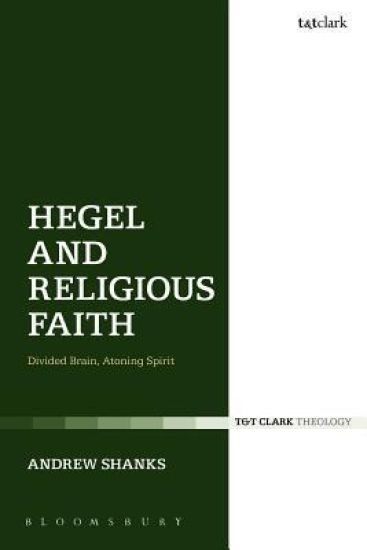
Hegel and Religious Faith

Hegel and Religious Faith

Andrew Shanks

T. T.Clark Ltd
2011
sidottu
Hegel is a thinker who haunts modern Christian theology. Although forever being refuted and rejected, he is also forever resurgent as an influence. Here Andrew Shanks diagnoses that rejection, very largely, as a defensive reaction against the sheer, troubling, prophetic open-mindedness of his thought. No doubt there is some justice to the charge that Hegel is religiously one-sided; in particular, as this criticism has been developed by Kierkegaard and, more recently, William Desmond. Against Desmond, however, Shanks argues that the critique itself is no less one-sided. The argument focuses especially on the dialectic of the Unhappy Consciousness in Hegel's Phenomenology of Spirit, seeking to open up its relationship to recent developments in neuropsychology. Key Hegelian terms are also retranslated, in a bid to minimise the off-putting awkwardness of Hegel's jargon. What is at issue here is, surely, the most explosive element in Hegel's thought as a whole. And this is discussed not just as an item of intellectual history, but, rather, very much as a still-living option.
Civil Society, Civil Religion

Civil Society, Civil Religion

Andrew Shanks

Blackwell Publishers
1995
sidottu
Civil Society, Civil Religion pioneers an essentially new genre of theology: a form of pure civil theology, on a systematic basis. It is an important and original book, in significant respects carrying forward the debate initiated by John Milbank's Theology and Social Theory, albeit in a very different way.
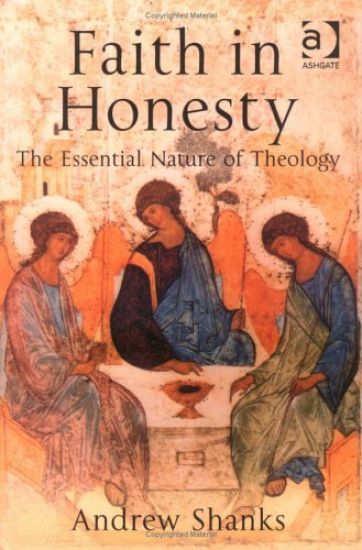
Faith in Honesty

Faith in Honesty

Andrew Shanks

Ashgate Publishing Limited
2005
sidottu
How, if at all, is religious faith 'true'? The starting point for this book is that traditional Christian theology overvalues the importance of 'correctness'. What really counts far more is 'Honesty'. Not just sincerity or frankness, but Honesty in the sense of a sheer openness to the Other. A set of skills, Andrew Shanks argues, which the church has very much still to learn. True faith in God is faith in Honesty. But theological Honesty has three faces. It stands equally opposed to banality, manipulation, the mere disowning of history. This book thus presents a whole new approach to the doctrine of the Trinity. A fresh stimulus to theological debate at academic, student and more popular levels.
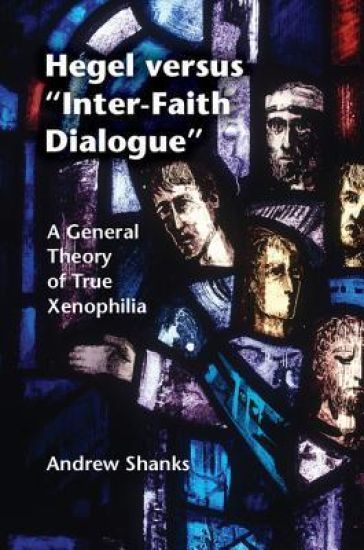
Hegel versus 'Inter-Faith Dialogue'

Hegel versus 'Inter-Faith Dialogue'

Andrew Shanks

Cambridge University Press
2015
sidottu
The term 'inter-faith' is a recent innovation in English that has gained significant traction in the discussion of religious diversity. This volume argues that the concept of faiths in the plural is deeply problematic for Christian theology and proposes a Hegelian alternative to the conventional bureaucratic notion of inter-faith dialogue. Hegel pioneered the systematic study of comparative religion. In line with Hegelian principle, Andrew Shanks identifies faith as an inflection of the will towards perfect truth-as-openness. In relation to other religious traditions, this must involve the practice of a maximum xenophilia, or love for the unfamiliar, understood as a core Christian virtue. Shanks's neo-Hegelian theory recognises the potential for God's work in all religious traditions, which may be seen as divine experiments with human nature. This timely book discusses a wide range of interreligious encounters and will be an essential resource for studies in comparative theology and philosophy of religion.
Theodicy Beyond the Death of 'God'

Theodicy Beyond the Death of 'God'

Andrew Shanks

Routledge
2018
sidottu
True theodicy is partly a theoretical corrective to evangelistic impatience: discounting the distortions arising from over-eager salesmanship. And partly it is a work of poetic intensification, dedicated to faith’s necessary struggle against resentment.This book contains a systematic survey of the classic theoretical-corrective theodicy tradition initiated, in the early Seventeenth Century, by Jakob Böhme. Two centuries later, Böhme’s lyrical thought is translated into rigorous philosophical terms by Schelling; and is, then, further, set in context by Hegel’s doctrine of providence at work in world history. The old ‘God’ of mere evangelistic impatience is, as Hegel sees things, ‘dead’. And so theodicy is liberated, to play its proper role: illustrated here with particular reference to the book of Job, the post-Holocaust poetry of Nelly Sachs, and the thought of Simone Weil.A boldly polemical study, this book is a bid to re-ignite debate on the whole topic of theodicy. As such, it will be of great interest to scholars in religious studies, theology and philosophy.
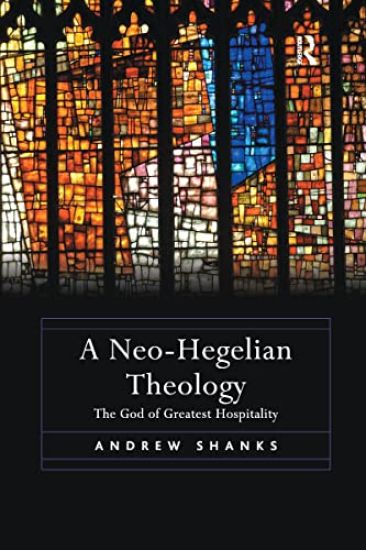
A Neo-Hegelian Theology

A Neo-Hegelian Theology

Andrew Shanks

Routledge
2016
nidottu
The thought of G.W.F. Hegel (1770-1831) haunts the world of theology. Constantly misunderstood, and often maliciously misrepresented, Hegel nevertheless will not go away. Perhaps no other thinker in Christian tradition has more radically sought to think through the requirements of perfect open-mindedness, identified as the very essence of the truly sacred. This book is not simply an interpretation of Hegel. Rather, it belongs to an attempt, so far as possible, to re-do for today something comparable to what Hegel did for his day. Divine revelation is on-going: never before has any generation been as well positioned as we are now, potentially to comprehend the deepest truth of the gospel. So Hegel argued, of his own day. And so this book also argues, of today. It is an attempt to indicate, in Trinitarian form, the most fundamentally significant ways in which that is the case. Thus, it opens towards a systematic understanding of the history of Christian truth, essentially as an ever-expanding medium for the authentic divine spirit of openness.
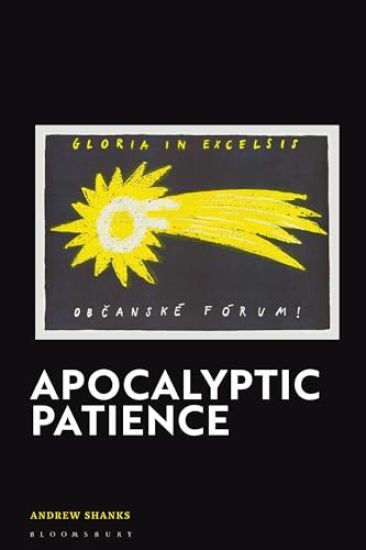
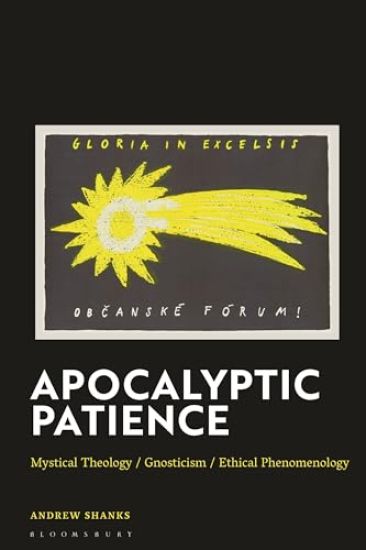
Apocalyptic Patience

Apocalyptic Patience

Andrew Shanks

BLOOMSBURY PUBLISHING PLC
2024
sidottu
Andrew Shanks brings together a grand narrative of theology and continental philosophy to argue that the 'solidarity of the shaken' is the kingdom of God in secular dress.Shanks engages with the philosophy of Jan Patocka; specifically, his Heretical Essays in the Philosophy of History, which culminate in the concept of the ‘solidarity of the shaken’. Such solidarity is quite simply that which empowers the most radically thoughtful openness to others, embattled against even the most repressive closure; a solidarity without any other essential qualification.Split into three distinct parts, Shanks begins by discussing Patocka’s philosophico-centric grand narrative, and drawing wider reference to the pre-philosophic origins of Abrahamic religious tradition. This is followed by an exploration of mystical theology, Christian and Islamic; of its decay into ‘mysticism’, and its influence on Christian and Jewish gnostic traditions. The final third presents a discussion on ethical phenomenology. Analysing the proponents of a ‘pathos of shakenness’ such as Kierkegaard, Levinas, Løgstrup, he juxtaposes 19th-century thinkers such as Arendt and Hegel with Heidegger and Strauss as he moves through the century, and eventually to the rise of secular public conscience movement.
Apocalyptic Patience

Apocalyptic Patience

Andrew Shanks

BLOOMSBURY PUBLISHING PLC
2026
nidottu
Andrew Shanks brings together a grand narrative of theology and continental philosophy to argue that the 'solidarity of the shaken' is the kingdom of God in secular dress.Shanks engages with the philosophy of Jan Patocka; specifically, his Heretical Essays in the Philosophy of History, which culminate in the concept of the ‘solidarity of the shaken’. Such solidarity is quite simply that which empowers the most radically thoughtful openness to others, embattled against even the most repressive closure; a solidarity without any other essential qualification.Split into three distinct parts, Shanks begins by discussing Patocka’s philosophico-centric grand narrative, and drawing wider reference to the pre-philosophic origins of Abrahamic religious tradition. This is followed by an exploration of mystical theology, Christian and Islamic; of its decay into ‘mysticism’, and its influence on Christian and Jewish gnostic traditions. The final third presents a discussion on ethical phenomenology. Analysing the proponents of a ‘pathos of shakenness’ such as Kierkegaard, Levinas, Løgstrup, he juxtaposes 19th-century thinkers such as Arendt and Hegel with Heidegger and Strauss as he moves through the century, and eventually to the rise of secular public conscience movement.
The Other Calling

The Other Calling

Andrew Shanks

Wiley-Blackwell (an imprint of John Wiley Sons Ltd)
2006
sidottu
What is the true calling of the intellectual? In this provocative new book, Andrew Shanks presents a distinctive fresh answer. The Other Calling is a systematic riposte both to the elitism of philosophy in the heritage of Plato, and to the typical individualism of Plato's philosophic opponents. Here, instead, intellectual integrity is identified with a form of priesthood. Asserts that intellectuals are critical to bringing together the common aspirations of a community Offers a strikingly original approach to the moral and political aspects of theology’s relationship with philosophy, exploring the perspectives of both disciplines Draws on the work and thought of Christians, Muslims, Hindus, Buddhists, Agnostics, and Atheists Argues for a new, religiously multicultural “priesthood of all thinkers”, considering how once, all intellectuals were as a matter of course also priests Published in the new and prestigious Illuminations series
A Neo-Hegelian Theology

A Neo-Hegelian Theology

Andrew Shanks

Routledge
2014
sidottu
The thought of G.W.F. Hegel (1770-1831) haunts the world of theology. Constantly misunderstood, and often maliciously misrepresented, Hegel nevertheless will not go away. Perhaps no other thinker in Christian tradition has more radically sought to think through the requirements of perfect open-mindedness, identified as the very essence of the truly sacred. This book is not simply an interpretation of Hegel. Rather, it belongs to an attempt, so far as possible, to re-do for today something comparable to what Hegel did for his day. Divine revelation is on-going: never before has any generation been as well positioned as we are now, potentially to comprehend the deepest truth of the gospel. So Hegel argued, of his own day. And so this book also argues, of today. It is an attempt to indicate, in Trinitarian form, the most fundamentally significant ways in which that is the case. Thus, it opens towards a systematic understanding of the history of Christian truth, essentially as an ever-expanding medium for the authentic divine spirit of openness.