Kirjojen hintavertailu. Mukana 11 244 527 kirjaa ja 12 kauppaa.

Kirjahaku

Etsi kirjoja tekijän nimen, kirjan nimen tai ISBN:n perusteella.

15 kirjaa tekijältä Andrew Sinclair

The Better Half

The Better Half

Andrew Sinclair

Praeger Publishers Inc
1981
sidottu
The changing role and status of women in America from colonial times to the present, and the American woman's unrelenting struggle for complete equality with men are the major themes of this work. The works of leading feminists, suffragists, abolitionists, unionists, and temperance workers are explored.
War Like a Wasp

War Like a Wasp

Andrew Sinclair

Faber Faber
2009
pokkari
'I would rather have been in London under siege between 1940 and 1945 than anywhere else,' John Lehmann said, 'except perhaps Troy in the time that Homer celebrated.'Paradoxically perhaps the 1940s was a decade of cultural efflorescence. Writing, painting, theatre, cinema and dancing all thrived: Henry Moore, Francis Bacon, T. S. Eliot, George Orwell and Laurence Olivier all produced some of their best work in this period.In this sweeping and important book, Andrew Sinclair recreates the world of the 1940s with its encounters and characters, its conflicts and its discoveries, its hopes and its disillusions. It was a world of pubs and clubs, where scarce drink could be found and the war forgot. It was the time of the short piece, the poem, the story and the sketch. Anyone who knew anyone in the loose coterie of Fitzrovia could have anything published. Everything printed was read by a nation avid for learning and waiting for action. War Like a Wasp recreates a feverish and democratic time using the words of the period. In his original and witty account of the decade, Andrew Sinclair has made sure nobody will ever think of the 1940s in the same way again.'Soho and the disease writers caught there, Sohoitis, are the main enthusiasm of War Like a Wasp. They make Sinclair's book a keen Remembrance of Times Pissed - Dylan Thomas brawling, brawling, getting the DTs, Dan Davin slugging or about to be slugged, the unsubsidised editor Tambimuttu (known to some as Tuttifrutti) cadging drinks and poems, louche painters clustered about Nina Hamnett's dying Parisian flame, huge Anna Wickham biting people in the head, all the rough traders, brief encounters and lost girls.' Valentine Cunningham, the Observer 'He has a talent for creating memorable phrases. He calls Dylan Thomas 'the poet with lips like Michelin tyres'. He describes the aftermath of a bombing raid in prose that is uncommonly vivid. He makes you see and smell the terrible damage.' Michael Sheldon, Washington Post
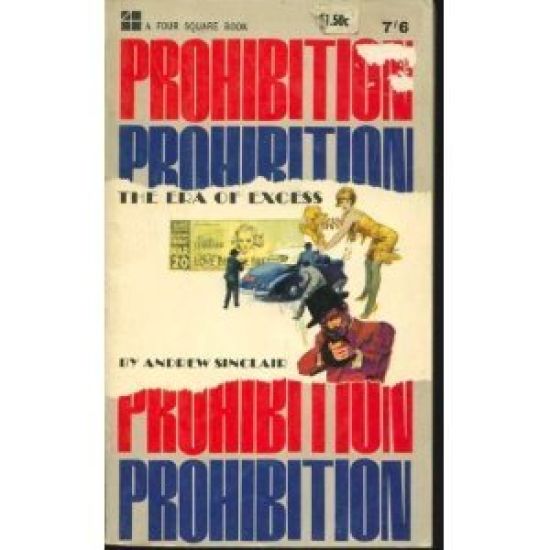
Prohibition

Prohibition

Andrew Sinclair

Faber Faber
2009
pokkari
The prohibition of liquor in the United States from 1920 to 1933 created the myth of the flapper and gangster. Andrew Sinclair's account was the first comprehensive study and it shows how this extraordinary experiment was the product of the age-old conflict of country against city, of the God-fearing farmer against the corrupt urban rich and the new immigrants with their imported religions and beer. Prohibition represented the last attempt of rural America to stem the tide of history that was transforming the country from an agricultural to an industrial nations. It stood for tradition and the old American way of life. Its defeat was tragedy as well as a comedy. The lessons of such an attempt at social control are relevant to all societies, old and new.'This is a definitive biography of an era; a social history, comprehensive, detailed, documented, and well written.' Arthur Weinberg, Chicago Tribune'Here is a work of real social history, at once scholarly and entertaining, thoughtful, penetrating and analytical.' John A. Garraty, The New Leader
My Friend Judas

My Friend Judas

Andrew Sinclair

Faber Faber
2009
pokkari
The scene is Cambridge in the early 1960s. Ben Birt, an intellectual Brando from a grammar school, sees the University through proud, bawdy and anarchic eyes. Classless but deeply class-conscious. Brought up on Shakespeare and the classics, much influenced by contemporary French and American, he talks a vivid new language. Ben, above all, is alive. He does: and does not apologize for what he does. He gives to life without giving in; and takes from life without being taken in. He ends up on his own, beginning to see Cambridge has more to offer than a three years' muckabout in a festering fen.'Very clever indeed . . . This portrait of la vie de boheme universitaire should raise squeals of outraged delight . . . all along the line from Belgravia to Budleigh Salterton.' Daily Telegraph
Che Guevara

Che Guevara

Andrew Sinclair

The History Press Ltd
2001
nidottu
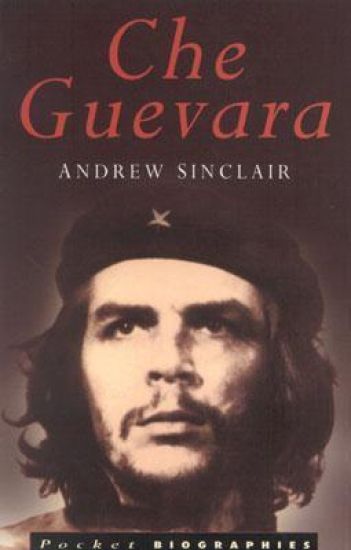
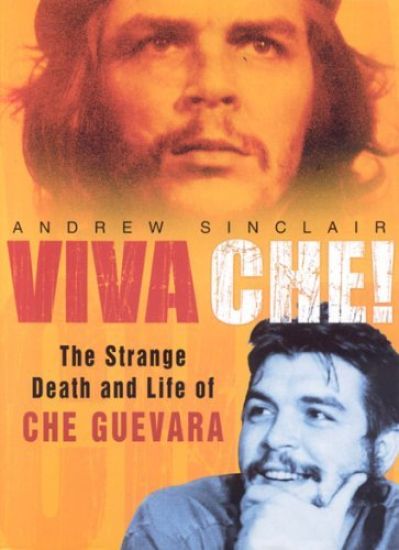
This concise biography unravels Che's life, from his birth in 1928, the child of free-thinking radical Argentinian aristocrats, his development as a revolutionary in Guatemala, the Congo and in Cuba with Fidel Castro, to his untimely execution in Bolivia. Andrew Sinclair provides the reasons for Che's status as the most admired revolutionary of his time, and his enduring popularity.
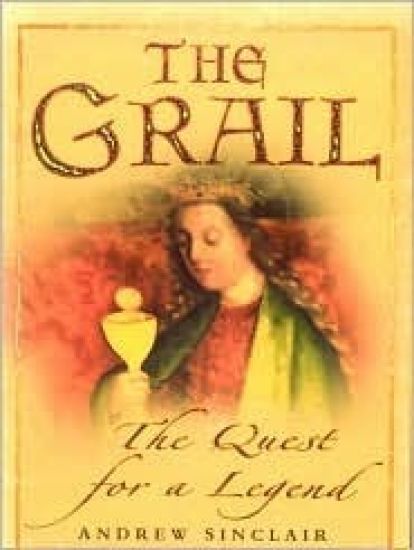
The Grail

The Grail

Andrew Sinclair

The History Press Ltd
2007
sidottu
In Christian tradition, the Grail is anything that has held the body and blood of Christ; usually the cup Jesus used at the Last Supper or the vessel used by Joseph of Arimathea to hold the blood shed by Jesus on the cross. From the medieval Grail romances of such poets as Wolfram von Eschenbach and the later Welsh legends of King Arthur to the energetic adventures of Indiana Jones and the recent researches of Dan Brown's Harvard symbologist Robert Langdon, the quest for the Grail has been a potent parable for the search for the ultimate truth. It has inspired a whole culture of chivalry, with knights and adventurers vying for its possession. The Grail: The Quest for a Legend draws on a wide variety of traditions and disciplines, using literary and artistic sources to explore the imaginative richness of the Grail. Andrew Sinclair's richly illustrated book digs deep into the legends to find the origins of our fascination with the Grail and explores the extraordinary legacy and geography of the quest, through Europe to the Near East and across the Atlantic.
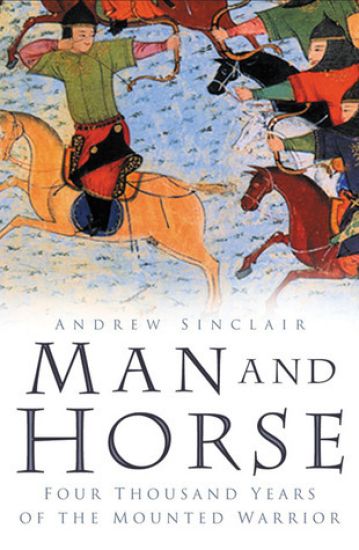
Man and Horse

Man and Horse

Andrew Sinclair

The History Press Ltd
2008
sidottu
Man and Horse is a magisterial history of the mounted warrior and the relationship with his steed. Andrew Sinclair takes as his inspiration Walter Prescott Webb’s seminal work, The Great Plains. The horse until very recently has been the decisive factor in determining military success. Great exponents of the art of equestrian warfare include, Alexander the Great, Hannibal, King Arthur, Saladin, the Knights of the Templar, the Reivers of the Scottish Borders, the Mongols, North American Indians, the Confederate forces during the American Civil War and the Boers. Sinclair also explores the uses of the horse by highwaymen and figures such as Ned Kelly. Andrew Sinclair brilliantly shows that the art of warfare from horseback with its culture of mobility has always been at conflict with the urban domesticated culture. This tension has created much of the great art and culture of humankind. This is a hugely ambitious and exhilarating book that cannot fail to enthral and stimulate.
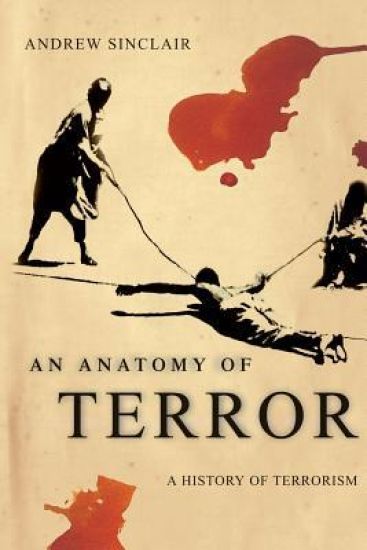
An Anatomy of Terror

An Anatomy of Terror

Andrew Sinclair

Pan Books
2013
pokkari
The political use of terror has always been with us, whether in the murderous seizing of power by the ancients, through the outlawed campaigns of guerrillas, or via the state sanctioned terror of war. From Homer to Al Qaeda, terrorism has flourished in one form or another, bloodily shaping our history. Andrew Sinclair’s unique book brilliantly explores the methods and thinking behind terrorism and shows how the nature of terror has not changed since the days of the Assassins and the Mongol hordes. Meticulously researched and beautifully written, An Anatomy of Terror dissects the uses of atrocity from the Roman destruction of Carthage to the suicide attacks on the World Trade Center. Bold, incisive and compelling, An Anatomy Of Terror is an essential history for our times.
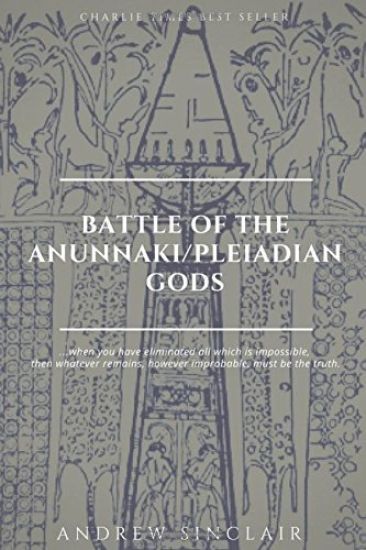
Battle of The Anunnaki/Pleiadian Gods

Battle of The Anunnaki/Pleiadian Gods

Andrew Sinclair

Independently Published
2018
pokkari
The Sumerian civilization is the oldest known human civilization on Earth. Their divine beings were known as the Anunnaki which in Sumerian signifies "Those Who from Heaven to Earth Came". It bloomed out overnight around 3800 BC in Mesopotamia the land between the two rivers Tigris and Euphrates, and arrived at a sudden end in 2024 BC when it was devastated by a dangerous radioactive cloud brought by easterly breezes from the Sinai peninsula, where as indicated by some ancient records an atomic war occurred. The gigantic dark scar on the Earth in the south-eastern part of the Sinai peninsula, and the darkened stones that hint at being in a flash softened by extraordinary heat. There is more proof, Higher than typical levels of radioactivity have been found in the Dead Sea, the site of Sodom and Gomorrah have been nuked at the same time. What's more, And in the land of Sumer itself a current report has discovered that around the season of the obliteration of Sumer, there was a sudden environmental change there, the nature of which is predictable with an atomic aftermath. The date recommended by the examination is the same 2024 BC given by Sitchin. The Sumerian human advancement vanished around 2000 BC, similarly as all of a sudden as it showed up. Unmistakably its fall was extremely disastrous a number of Sumerian writings have been discovered bewailing the demolition and destruction of different Sumerian urban areas. All these grievance writings accuse the annihilation on the utilization of a few "Weapons of Terror" and some incredible savage cloud. The detailed descriptions of their effects leave no doubt that the Weapons of Terror were nuclear weapons. It is likewise the narrative of Sodom and Gomorrah. Incorporated into this book is proof of an ancient war that took place in the past, this book is unlike any you have read previously.