
Kirjahaku
Etsi kirjoja tekijän nimen, kirjan nimen tai ISBN:n perusteella.
102 kirjaa tekijältä Andrew Smith

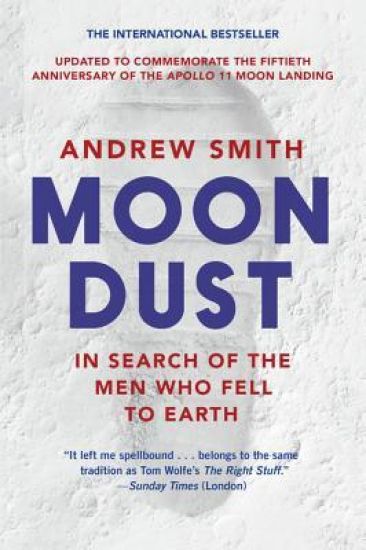
In time for the 50th anniversary of the Apollo 11 moon landing comes this edition of journalist Andrew Smith's Moondust, now updated with a new Afterword, that tells the fascinating story of twelve astronauts who ventured to space, and his interviews with nine of the surviving men.The Apollo lunar missions of the 1960s and 1970s have been called the last optimistic acts of the twentieth century. Twelve astronauts made this greatest of all journeys and were indelibly marked by it, for better or for worse. Journalist Andrew Smith tracks down the nine surviving members of this elite group to find their answers to the question "Where do you go after you've been to the Moon?"A thrilling blend of history, reportage, and memoir, Moondust rekindles the hopeful excitement of an incandescent hour in America's past when anything seemed possible as it captures the bittersweet heroism of those who risked everything to hurl themselves out of the known world--and who were never again quite able to accept its familiar bounds.
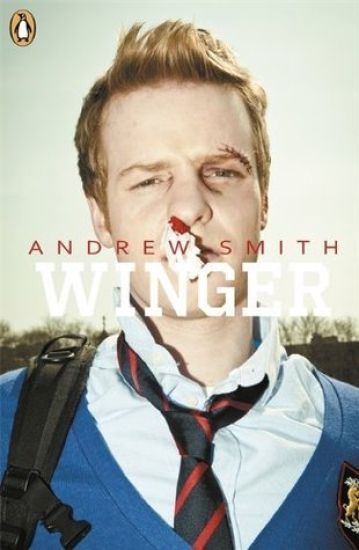
Ryan Dean West is a fourteen-year-old boy at a boarding school for rich kids. He's living in Opportunity Hall, the dorm for troublemakers, and rooming with the biggest bully on the rugby team. And he's madly in love with his best friend Annie, who thinks of him as a little boy.With the help of his sense of humour, rugby buddies, and his penchant for doodling comics, Ryan Dean manages to survive life's complications and even find some happiness along the way. But when the unthinkable happens, he has to figure out how to hold on to what's important, even when it feels like everything has fallen apart.Filled with hand-drawn illustrations and told in a pitch-perfect voice, this realistic depiction of a teen's experience strikes an exceptional balance of hilarious and heartbreaking.- Publishers Weekly Best Books of 2013- Amazon's Top 20 YA Books of 2013- Publishers Weekly Top 10 Summer Reads of 2013- ALA/YALSA nominee for "Best Fiction for Young Adults 2014"- 2014 Rainbow List NomineeAndrew Smith knew ever since his days as editor of his high school newspaper that he wanted to be a writer. After graduating college, he experimented with journalistic careers - writing for newspapers and radio stations - but found it wasn't the kind of writing he'd dreamed about doing.Andrew Smith has always wanted to be a writer. After graduating college, he wrote for newspapers and radio stations, but found it wasn't the kind of writing he'd dreamed about doing. Born with an impulse to travel, Smith, the son of an immigrant, bounced around the world and from job to job, before settling down in Southern California. There, he got his first 'real job', as a teacher in an alternative educational program for at-risk teens, married, and moved to a rural mountain location where he lives with his wife, two children, two horses, three dogs, three cats and one irritable lizard named Leo.
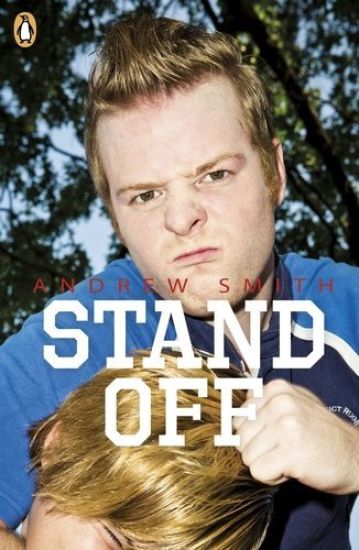
Senior year is supposed to be easy, but for Ryan Dean West, there are no guarantees.Ryan Dean finds himself as the rugby team's new captain and stand-off - the position once played by his lost friend, Joey. Plus, somehow he's inherited as his roommate Sam Abernathy, a twelve-year-old cooking whiz with extreme claustrophobia and a serious crush on Annie Altman, Ryan Dean's girlfriend.And Ryan Dean has his own problems, too - he's haunted by things from his past that he can't escape, fear of losing Annie, and the fact that sometimes the uncontrollable force of friendship moves under its own power.Andrew Smith knew ever since his days as editor of his high school newspaper that he wanted to be a writer. After graduating college, he experimented with journalistic careers - writing for newspapers and radio stations - but found it wasn't the kind of writing he'd dreamed about doing.

A 2015 Michael L. Printz Honor BookWinner of the 2014 Boston Globe-Horn Book Award for Fiction "Raunchy, bizarre, smart and compelling." --Rolling Stone "Grasshopper Jungle is simultaneously creepy and hilarious. Reminds me of Kurt Vonnegut's in "Slaughterhouse Five," in the best sense." --New York Times Book Review In the small town of Ealing, Iowa, Austin and his best friend, Robby, have accidentally unleashed an unstoppable army. An army of horny, hungry, six-foot-tall praying mantises that only want to do two things. This is the truth. This is history. It's the end of the world. And nobody knows anything about it. You know what I mean.Funny, intense, complex, and brave, Grasshopper Jungle brilliantly weaves together everything from testicle-dissolving genetically modified corn to the struggles of recession-era, small-town America in this groundbreaking coming-of-age stunner.
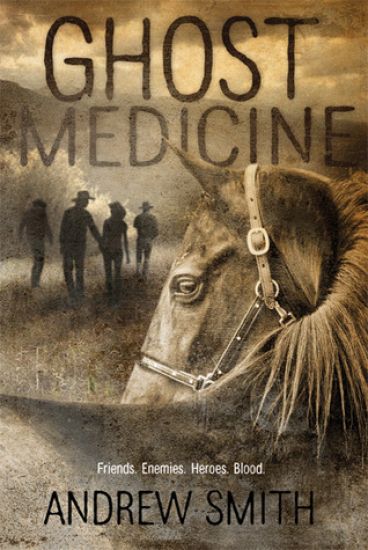
The summer before Troy Stotts turns seventeen, his mother dies. Communicating with his father mostly by notes, Troy spends his time with his friends: Tom Buller, brash and fearless; Gabe Benavidez, smart enough to know he'll never take over the family ranch; and Gabe's sister, Luz, who Troy has loved since they were children. They want this to be the summer of "ghost medicine," when time seems to stop, and they can hide from the past and the future, and all the ghosts that come with them. Troy and his friends don't want trouble, but as the summer fills with dangerous and fateful encounters, can even the most powerful ghost medicine keep them hidden and safe?
Philosophy in Late Antiquity provides an essential new introduction to the key ideas of the Neoplatonists, which affected approaches to Plato as late as the nineteenth century. Andrew Smith shows how they influenced Christian thought and his approach not only allows us to appreciate these philosophical ideas in their own right, but it also gives us significant insights into the mentality of the age which produced them.
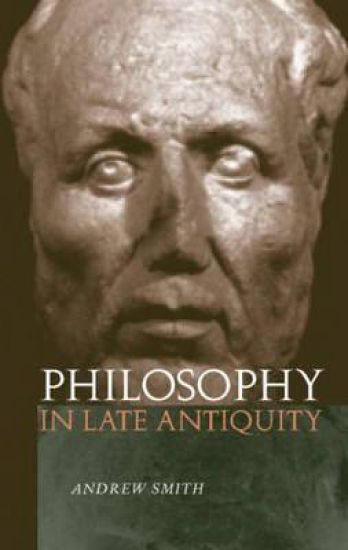
Philosophy in Late Antiquity provides an essential new introduction to the key ideas of the Neoplatonists, which affected approaches to Plato as late as the nineteenth century. Andrew Smith shows how they influenced Christian thought and his approach not only allows us to appreciate these philosophical ideas in their own right, but it also gives us significant insights into the mentality of the age which produced them.
In recent years, major sporting and cultural events such as the Olympic Games have emerged as significant elements of public policy, particularly in efforts to achieve urban regeneration. As well as opportunities arising from new venues, these events are viewed as a way of stimulating investment, gaining civic engagement and publicizing progress to assist the urban regeneration process more generally. However, the pursuit of regeneration involving events is a practice that is poorly understood, controversial and risky. Events and Urban Regeneration is the first book dedicated to the use of events in regeneration. It explores the relationship between events and regeneration by analyzing a range of cities and a range of sporting and cultural events projects. It considers various theoretical perspectives to provide insight into why major events are important to contemporary cites. It examines the different ways that events can assist regeneration, as well as problems and issues associated with this unconventional form of public policy. It identifies key issues faced by those tasked with using events to assist regeneration and suggests how practices could be improved in the future. The book adopts a multi-disciplinary perspective, drawing together ideas from the geography, urban planning and tourism literatures, as well as from the emerging events and regeneration fields. It illustrates arguments with a range of international case studies placed within and at the end of chapters to show positive outcomes that have been achieved and examples of high profile failures. This timely book is essential reading for students and practitioners who are interested in events, urban planning, urban geography and tourism.
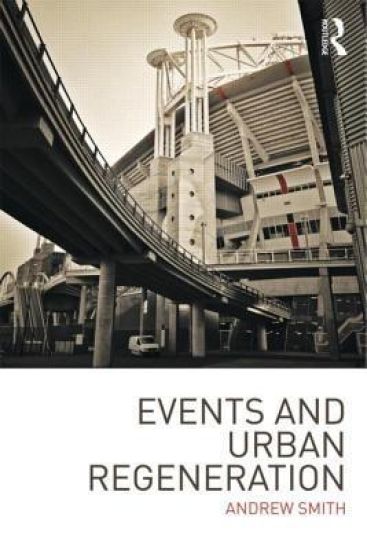
In recent years, major sporting and cultural events such as the Olympic Games have emerged as significant elements of public policy, particularly in efforts to achieve urban regeneration. As well as opportunities arising from new venues, these events are viewed as a way of stimulating investment, gaining civic engagement and publicizing progress to assist the urban regeneration process more generally. However, the pursuit of regeneration involving events is a practice that is poorly understood, controversial and risky. Events and Urban Regeneration is the first book dedicated to the use of events in regeneration. It explores the relationship between events and regeneration by analyzing a range of cities and a range of sporting and cultural events projects. It considers various theoretical perspectives to provide insight into why major events are important to contemporary cites. It examines the different ways that events can assist regeneration, as well as problems and issues associated with this unconventional form of public policy. It identifies key issues faced by those tasked with using events to assist regeneration and suggests how practices could be improved in the future. The book adopts a multi-disciplinary perspective, drawing together ideas from the geography, urban planning and tourism literatures, as well as from the emerging events and regeneration fields. It illustrates arguments with a range of international case studies placed within and at the end of chapters to show positive outcomes that have been achieved and examples of high profile failures. This timely book is essential reading for students and practitioners who are interested in events, urban planning, urban geography and tourism.
Victorian demons provides the first extensive exploration of largely middle-class masculinities in crisis at the fin de siècle. It analyses how ostensibly controlling models of masculinity became demonised in a variety of literary and medical contexts, revealing the period to be much more ideologically complex than has hitherto been understood, and makes a significant contribution to Gothic scholarship.Andrew Smith demonstrates how a Gothic language of monstrosity, drawn from narratives such as 'The Strange Case of Dr Jekyll and Mr Hyde' and 'Dracula', increasingly influenced a range of medical and cultural contexts, destabilising these apparently dominant masculine scripts. He provides a coherent analysis of a range of examples relating to masculinity drawn from literary, medical, legal and sociological contexts, including Joseph Merrick ('The Elephant Man'), the Whitechapel murders of 1888, Sherlock Holmes's London, the writings and trials of Oscar Wilde, theories of degeneration and medical textbooks on syphilis.
The ghost story 1840-1920: A cultural history examines the British ghost story within the political contexts of the long nineteenth century. By relating the ghost story to economic, national, colonial and gendered contexts, it provides a critical re-evaluation of the period.The conjuring of a political discourse of spectrality during the nineteenth century enables a culturally sensitive reconsideration of the work of writers including Dickens, Collins, Charlotte Riddell, Vernon Lee, May Sinclair, Kipling, Le Fanu, Henry James and M.R. James. Additionally, a chapter on the interpretation of spirit messages reveals how issues relating to textual analysis were implicated within a language of the spectral. This book is the first full-length study of the British ghost story in over 30 years and it will be of interest to academics, graduate students and advanced undergraduates working on the Gothic, literary studies, historical studies, critical theory and cultural studies.
Gothic death 1740-1914 explores the representations of death and dying in Gothic narratives published between the mid-eighteenth century and the beginning of the First World War. The book investigates how eighteenth century Graveyard Poetry and the tradition of the elegy produced a version of death that underpinned ideas about empathy and models of textual composition. Later accounts of melancholy, as in the work of Ann Radcliffe and Mary Shelley, emphasise the literary construction of death. The shift from writing death to interpreting the signs of death is explored in relation to the work of Poe, Emily Brontë and George Eliot. A chapter on Dickens examines the significance of graves and capital punishment during the period. A chapter on Haggard, Stoker and Wilde explores conjunctions between love and death and a final chapter on Machen and Stoker explores how scientific ideas of the period help to contextualise a specifically fin de siècle model of death.This book will be of interest to academics and students working on literature on the Gothic and more generally on the literary culture of the period.
This is the new edition of bestselling introductory text outlining the history and ways of reading Gothic literature. This revised edition includes a new chapter on Contemporary Gothic which explores the Gothic of the early twentieth century and looks at new critical developments. It features an updated Bibliography of critical sources and a revised Chronology. The book opens with a Chronology and an Introduction to the principal texts and key critical terms, followed by five chapters: The Gothic Heyday 1760-1820; Gothic 1820-1865; Gothic Proximities 1865-1900; Twentieth Century; and Contemporary Gothic. The discussion examines how the Gothic has developed in different national contexts and in different forms, including novels, novellas, poems, films, radio and television. Each chapter concludes with a close reading of a specific text - Frankenstein, Jane Eyre, Dracula, The Silence of the Lambs and The Historian - to illustrate ways in which contextual discussion informs critical analysis. The book ends with a Conclusion outlining possible future developments within scholarship on the Gothic.
British Businessmen and Canadian Confederation
Andrew Smith
McGill-Queen's University Press
2008
sidottu
The role played by British financiers in Canadian Confederation.