Kirjojen hintavertailu. Mukana 11 244 527 kirjaa ja 12 kauppaa.

Kirjahaku

Etsi kirjoja tekijän nimen, kirjan nimen tai ISBN:n perusteella.

12 kirjaa tekijältä Andrew Spicer

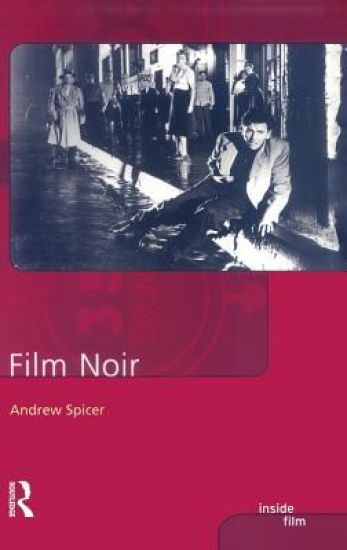
Film Noir

Film Noir

Andrew Spicer

Routledge
2002
nidottu
Film Noir is an overview of an often celebrated, but also contested, body of films. It discusses film noir as a cultural phenomenon whose history is more extensive and diverse than American black and white crime thrillers of the forties. An extended Background Chapter situates film noir within its cultural context, describing its origin in German Expressionism, French Poetic Realism and in developments within American genres, the gangster/crime thriller, horror and the Gothic romance and its possible relationship to changes in American society. Five chapters are devoted to ‘classic’ film noir (1940-59): chapters explore its contexts of production and reception, its visual style, and its narrative patterns and themeschapters on character types and star performances elucidate noir’s complex construction of gender with its weak, ambivalent males and predatory femmes fatales and also provide a detailed analysis of three noir auteurs, - Anthony Mann, Robert Siodmak and Fritz Lang Three chapters investigate ‘neo-noir’ and British film noir: chapters trace the complex evolution of ‘neo-noir’ in American cinema, from the modernist critiques of Night Moves and Taxi Driver, to the postmodern hybridity of contemporary noir including Seven, Pulp Fiction and Memento the final chapter surveys the development of British film noir, a significant and virtually unknown cinema, stretching from the thirties to Mike Hodges’ Croupier Films discussed include both little known examples and seminal works such as Double Indemnity, Scarlet Street, Kiss Me Deadly and Touch of Evil. A final section provides a guide to further reading, an extensive bibliography and a list of over 500 films referred to in the text. Lucidly written, Film Noir is an accessible, informative and stimulating introduction that will have a broad appeal to undergraduates, cinéastes, film teachers and researchers.
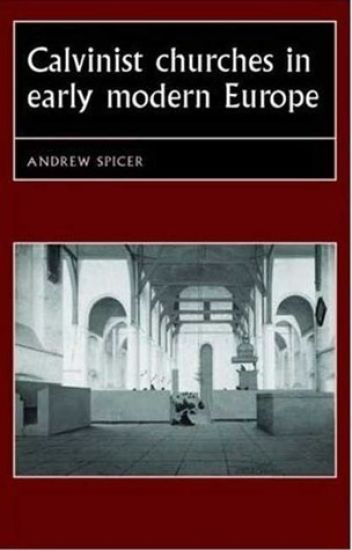
Calvinist Churches in Early Modern Europe

Calvinist Churches in Early Modern Europe

Andrew Spicer

Manchester University Press
2007
sidottu
For ordinary people, the impact of the Reformation would have centred around local parish churches, rather than the theological debates of the Reformers. Focusing on the Calvinists, this volume explores how the architecture, appearance and arrangement of places of worship were transformed by new theology and religious practice. Based on original research and site visits, this book charts the impact of the Reformed faith across Europe, concentrating in particular on France, the Netherlands and Scotland. While in some areas a Calvinist Reformation led to the adaptation of existing buildings, elsewhere it resulted in the construction of new places of worship to innovative new designs. Reformed places of worship also reflected local considerations, vested interests and civic aspirations, often employing the latest styles and forms of decoration, and here provide a lens through which to examine not only the impact of the Reformation at a local level but also the character of the different religious settlements across Europe during the late sixteenth and seventeenth centuries.
Calvinist Churches in Early Modern Europe

Calvinist Churches in Early Modern Europe

Andrew Spicer

Manchester University Press
2016
nidottu
For ordinary people, the impact of the Reformation would have centred around local parish churches, rather than the theological debates of the Reformers. Focusing on the Calvinists, this volume explores how the architecture, appearance and arrangement of places of worship were transformed by new theology and religious practice. Based on original research and site visits, this book charts the impact of the Reformed faith across Europe, concentrating in particular on France, the Netherlands and Scotland. While in some areas a Calvinist Reformation led to the adaptation of existing buildings, elsewhere it resulted in the construction of new places of worship to innovative new designs. Reformed places of worship also reflected local considerations, vested interests and civic aspirations, often employing the latest styles and forms of decoration, and here provide a lens through which to examine not only the impact of the Reformation at a local level but also the character of the different religious settlements across Europe during the late sixteenth and seventeenth centuries.
Sydney Box

Sydney Box

Andrew Spicer

Manchester University Press
2006
sidottu
This is an authoritative account of the career of Sydney Box, one of British cinema’s most successful and significant producers. Concentrating on the period 1940-65, it highlights the crucial but often misunderstood role that the producer plays in the film making process and, using largely unpublished material, affords an exceptional insight into the workings of the film industryBox’s career was exceptionally varied and this study analyses the work of his company Verity Films which wartime produced over 100 short propaganda films during the Second World War, as well as Box’s work as a feature film producer and as managing director of Gainsborough Pictures (1946-49). It encompasses the difficulties he experienced as an independent producer in the 1950s and the formation of Sydney Box Associates, his role in early television history, and his imaginative if unsuccessful bids for British Lion and London Weekday Television in the early sixties.This study will be essential reading for scholars and students interested in British cinema and television history, but its focus on the frequently misrepresented or misunderstood role of the producer will make it valuable for students of film generally.
Sydney Box

Sydney Box

Andrew Spicer

Manchester University Press
2011
nidottu
This is an authoritative account of the career of Sydney Box, one of British cinema’s most successful and significant producers. Concentrating on the period 1940-65, it highlights the crucial but often misunderstood role that the producer plays in the film making process and, using largely unpublished material, affords an exceptional insight into the workings of the film industry.Box’s career was exceptionally varied and this study analyses the work of his company Verity Films, which produced over 100 short propaganda films during the Second World War, as well as Box’s work as a feature film producer and as managing director of Gainsborough Pictures (1944­-49). It encompasses the difficulties he experienced as an independent producer in the 1950s and the formation of Sydney Box Associates, his role in early television history, and his imaginative if unsuccessful bids for British Lion and London Weekday Television in the early 1960s.This study will be essential reading for scholars and students interested in British cinema and television history, but its focus on the frequently misrepresented or misunderstood role of the producer will make it valuable for students of film generally.
Historical Dictionary of Film Noir

Historical Dictionary of Film Noir

Andrew Spicer

Scarecrow Press
2010
sidottu
Film noir—literally "black cinema"—is the label customarily given to a group of black and white American films, mostly crime thrillers, made between 1940 and 1959. Today there is considerable dispute about what are the shared features that classify a noir film, and therefore which films should be included in this category. These problems are partly caused because film noir is a retrospective label that was not used in the 1940s or 1950s by the film industry as a production category and therefore its existence and features cannot be established through reference to trade documents. The Historical Dictionary of Film Noir is a comprehensive guide that ranges from 1940 to present day neo-noir. It consists of a chronology, an introductory essay, a bibliography, a filmography, and over 400 cross-referenced dictionary entries on every aspect of film noir and neo-noir, including key films, personnel (actors, cinematographers, composers, directors, producers, set designers, and writers), themes, issues, influences, visual style, cycles of films (e.g. amnesiac noirs), the representation of the city and gender, other forms (comics/graphic novels, television, and videogames), and noir's presence in world cinema. It is an essential reference work for all those interested in this important cultural phenomenon.
Transactions of the Royal Historical Society: Volume 31

Transactions of the Royal Historical Society: Volume 31

Andrew Spicer

Cambridge University Press
2022
sidottu
Transactions of the Royal Historical Society is an annual collection of articles based on papers given to the Society by distinguished invited speakers and winners of RHS prizes. Volume 31 of the Sixth Series includes the following articles: 'Material Turns in British History: IV. Empire in India, Cancel Cultures and the Country House,' 'Responding to Violence: Liturgy, Authority and Sacred Places, c. 900–c. 1150,' 'Baroque around the Clock: Daniello Bartoli SJ (1608–1685) and the Uses of Global History,' 'What Happens when a Written Constitution is Printed? A History across Boundaries,' 'An Ottoman Arab Man of Letters and the Meanings of Empire, c. 1860,' and 'Revisiting RHS's 'Race, Ethnicity & Equality in UK History: A Report and Resource for Change.''
Film Noir

Film Noir

Andrew Spicer

Routledge
2016
sidottu
Film Noir is an overview of an often celebrated, but also contested, body of films. It discusses film noir as a cultural phenomenon whose history is more extensive and diverse than American black and white crime thrillers of the forties. An extended Background Chapter situates film noir within its cultural context, describing its origin in German Expressionism, French Poetic Realism and in developments within American genres, the gangster/crime thriller, horror and the Gothic romance and its possible relationship to changes in American society. Five chapters are devoted to ‘classic’ film noir (1940-59): chapters explore its contexts of production and reception, its visual style, and its narrative patterns and themeschapters on character types and star performances elucidate noir’s complex construction of gender with its weak, ambivalent males and predatory femmes fatales and also provide a detailed analysis of three noir auteurs, - Anthony Mann, Robert Siodmak and Fritz LangThree chapters investigate ‘neo-noir’ and British film noir: chapters trace the complex evolution of ‘neo-noir’ in American cinema, from the modernist critiques of Night Moves and Taxi Driver, to the postmodern hybridity of contemporary noir including Seven, Pulp Fiction and Memento the final chapter surveys the development of British film noir, a significant and virtually unknown cinema, stretching from the thirties to Mike Hodges’ Croupier Films discussed include both little known examples and seminal works such as Double Indemnity, Scarlet Street, Kiss Me Deadly and Touch of Evil. A final section provides a guide to further reading, an extensive bibliography and a list of over 500 films referred to in the text. Lucidly written, Film Noir is an accessible, informative and stimulating introduction that will have a broad appeal to undergraduates, cinéastes, film teachers and researchers.
Sean Connery

Sean Connery

Andrew Spicer

MANCHESTER UNIVERSITY PRESS
2022
sidottu
Sean Connery was one of cinema’s most iconic stars. Born to a working-class family in Edinburgh, he held jobs as a milkman and an artist’s model before making the move into acting. The role of James Bond earned him global fame, but threatened to eclipse his identity as an actor.This book offers a new perspective on Connery’s career. It pays special attention to his star status, while arguing that he was a risk-taking actor who fashioned an impressive body of work. Beginning with Connery’s early appearances on stage and television, including well-received performances in Shakespeare and Tolstoy, the book goes on to explore the Bond phenomenon and Connery’s long struggle to reinvent himself. An Oscar-winning performance in The Untouchables marked the beginning of a second period of stardom, during which Connery successfully developed the character of the father-mentor. Ten years after his retirement from acting, he was still rated as the most popular British star among American audiences.Exploring how Connery’s performances combine to form an all-encompassing screen legend, the book also considers how the actor embodied national identity, both on screen and through his public role as an activist campaigning for Scottish independence.
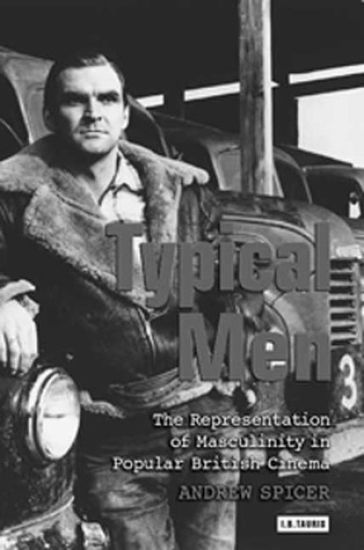
Typical Men

Typical Men

Andrew Spicer

I.B. Tauris
2001
sidottu
Typical Men is the first history of masculinity in film from the Second World War to the 1990s. It explores in detail the changing nature of the dominant male cultural types: the debonair gentleman, the Byronic hero, the Angry Young Man, the delinquent, the maladjusted veteran, villains and comic fools. Typical Men gives detailed readings of key films including In Which We Serve, They Made Me a Fugitive, Saturday Night and Sunday Morning and From Russia With Love and investigates the performances of important male stars such as James Mason, Kenneth More, Sean Connery and Michael Caine to produce a fresh interpretation of male roles. The book brings the story up-to-date by describing the recent evolution of British films.
War, Revolt and Sacred Space: Cambrai and the Southern Netherlands, 1566-C.1621
Churches and sacred spaces were devastated by warfare and confessional violence in the southern Netherlands during the late sixteenth century. This monograph explores how these churches were rebuilt, the material culture of worship repaired or replaced, and their sanctity restored. Work began in the immediate aftermath of the iconoclasm and rebellion of 1566-67 and continued into the early seventeenth century. How this was achieved and the multiple agents involved is analysed across the Francophone dioceses of the ecclesiastical province of Cambrai. This restoration coincided with the reassertion and revitalisation of Catholic devotion embodied in the Tridentine decrees. Drawing on extensive archival research, as well as buildings, church furnishings and religious art, this monograph provides an alternative perspective on political upheaval and Catholic renewal in the southern Netherlands under Philip II of Spain and the Archdukes Albert and Isabella.