Kirjahaku
Etsi kirjoja tekijän nimen, kirjan nimen tai ISBN:n perusteella.
8 kirjaa tekijältä Andrew Steinmann
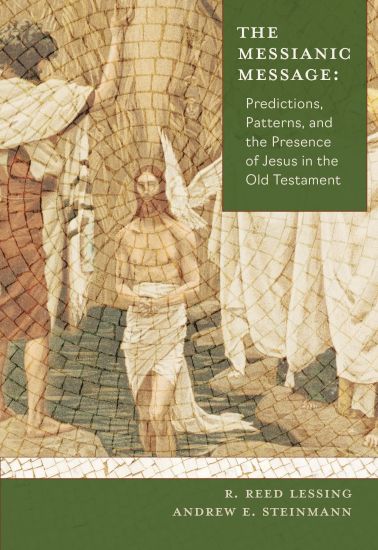
This comprehensive book reveals and tracks prophecies of the Messiah throughout the Old Testament, connecting the ways that Jesus Christ fulfilled those prophecies in the New Testament.People typically associate Jesus and look for Him in the New Testament. However, we do see instances of Jesus throughout the Old Testament. In The Messianic Message R. Reed Lessing and Andrew E. Steinmann go through each book of the Old Testament and explain each prediction, pattern, and presence of Jesus.This book intended for lay people, helps readers understand Jesus' role and how these instances were beginning to lay the groundwork for His birth and ministry in the New Testament. Study the Old Testament through a Christ-centered lens in The Messianic Message and continue building your faith foundation and strengthening your relationship with the Messiah.
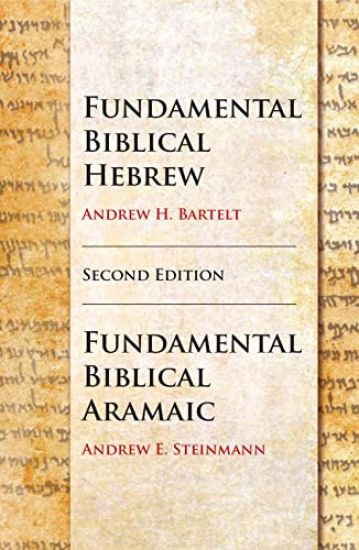
Fundamental Biblical Hebrew and Aramaic, Second Edition
Andrew Steinmann
Concordia Publishing House
2023
sidottu
Fundamental Biblical Hebrew and Aramaic, Second Edition is a textbook and Biblical study resource for university and seminary students, pastors, and Bible scholars that provides a clear and concise introduction to the study of biblical Hebrew, the primary language of the Old Testament, and Aramaic, the language that Christ spoke in His daily interactions.Each chapter presents vocabulary, morphology, and syntax in a logical progression. Additional resources include translation and reading exercises, paradigm charts, and glossaries.This second edition clarifies and expands explanations and exercises, and expands the presentation of the Hebrew stems.The fundamental biblical Hebrew is organized in a manner that facilitates learning and serves as an easy-to-use reference tool, including vocabulary, morphology, and syntax. While it serves as a basic Hebrew textbook and grammar for the purpose of theological study, it is useful for college, university, and seminary courses, as well as a desk reference for pastors engaged in the study of the Bible in its original language.The Hebrew section also includes translation and reading exercises, a full set of verb paradigm charts (regular and irregular), and a Hebrew-to-English glossary.The fundamental biblical Aramaic section follows the Hebrew text. While it is not designed to introduce other Aramaic dialects, such as Old Aramaic, Jewish Palestinian Aramaic, Palmyrene, or Nabatean, it is written so that the advanced student who wishes to pursue further study by exploring ancient Aramaic dialects may do so. To that end, from time to time, reference is made to the historical developments in ancient Aramaic. This grammar concentrates on biblical Aramaic, primarily emphasizing the grammatical features the student needs to understand in order to read. Its structure allows the student to finish the grammar and to progress on to reading the actual Biblical texts in a typical semester. All the exercises, with the exception of the beginning ones, are drawn from the Bible, exposing the student to actual biblical Aramaic while learning the grammar.
Daniel confesses of the Lord, "he reveals deep and hidden things; he knows what is in the darkness, and the light dwells with him." (2:22) This is good council for any serious interpretation of the Scriptures. Through His clear Word, God reveals truths about himself not gnostic riddles for the faithful to solve. In this commentary, Steinmann identifies themes of God as the powerful protector of his people, of the uselessness of idols and false gods, and of the integrity of faith. Against those who would make unwarranted mystic interpretations of the visions in Daniel, Steinmann takes a measured exegetical approach, firmly committed to the principle that obscure passages of Scripture can be faithfully interpreted by clearer passages and attention to the original languagesFeaturesOverview of the Law and Gospel in DanielArguments for a traditional date and authorship for DanielAnalysis of the interlocked chiastic structure of Daniel as a synthesis of visionary and narrative genresAn overview and rebuttal of dispensational and premillennial interpretations of Daniels visions.Additional EssaysThe Messiah in Daniel: An OverviewDaniel's View of the ExileThe Lutheran Confessions on the Anti-Christ in DanielAbout the seriesThe Concordia Commentary Series: A Theological Exposition of Sacred Scripture is written to enable pastors and teachers of the Word to proclaim the Gospel with greater insight, clarity, and faithfulness to the divine intent of the Biblical text.The series will cover all the canonical books of the Old and New Testament, with an original translation and meticulous grammatical analysis of the Hebrew, Aramaic, or Greek of each text. The foremost interpretive lens centers on the unified proclamation of the person and work of Christ across every Scriptural book.The Commentary fully affirms the divine inspiration, inerrancy, and authority of Scripture; Each passage bears witness to the confession that God has reconciled the world to Himself through the incarnation, ministry, death, resurrection, and ascension of Christ His Son.Authors expose the rich treasury of language, imagery, and thematic content of the Scripture, while supplementing their work with additional research in archaeology, history, and extrabiblical literature. Throughout, God's Word emanates from authors careful attention and inculcates the ongoing life of the Church in Word, Sacrament, and daily confession.