Kirjojen hintavertailu. Mukana 11 244 527 kirjaa ja 12 kauppaa.

Kirjahaku

Etsi kirjoja tekijän nimen, kirjan nimen tai ISBN:n perusteella.

6 kirjaa tekijältä Andrew Tate

Douglas Coupland

Douglas Coupland

Andrew Tate

Manchester University Press
2007
sidottu
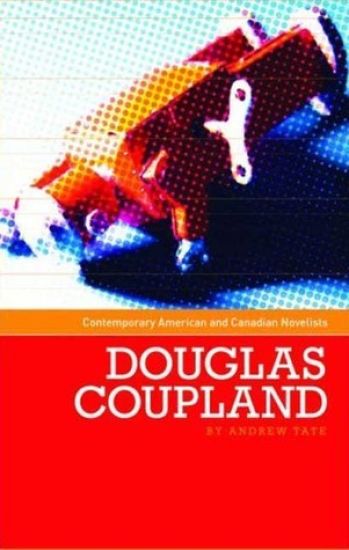
This book is the first full-length study of Douglas Coupland, one of the twenty-first century’s most innovative and influential novelists. The study explores the prolific first decade and a half of Coupland’s career, from Generation X: Tales for an Accelerated Culture (1991) to JPod (2006), a period in which he published ten novels and four significant volumes of non-fiction. Emerging in the last decade of the twentieth century - amidst the absurd contradictions of instantaneous global communication and acute poverty - Coupland’s novels, short stories, essays and visual art have intervened in specifically contemporary debates regarding authenticity, artifice and art. This book explores Coupland’s response, in ground-breaking novels such as Microserfs, Girlfriend in a Coma and Miss Wyoming, to some of the most pressing issues of our times. Designed for students, researchers and general readers alike, the study is structured around thematically focused chapters that consider Coupland’s engagement with narrative, consumer culture, space, religion and ideas of the future.
Douglas Coupland

Douglas Coupland

Andrew Tate

Manchester University Press
2007
nidottu
This book is the first full-length study of Douglas Coupland, one of the twenty-first century’s most innovative and influential novelists. The study explores the prolific first decade and a half of Coupland’s career, from Generation X: Tales for an Accelerated Culture (1991) to JPod (2006), a period in which he published ten novels and four significant volumes of non-fiction. Emerging in the last decade of the twentieth century - amidst the absurd contradictions of instantaneous global communication and acute poverty - Coupland’s novels, short stories, essays and visual art have intervened in specifically contemporary debates regarding authenticity, artifice and art. This book explores Coupland’s response, in ground-breaking novels such as Microserfs, Girlfriend in a Coma and Miss Wyoming, to some of the most pressing issues of our times. Designed for students, researchers and general readers alike, the study is structured around thematically focused chapters that consider Coupland’s engagement with narrative, consumer culture, space, religion and ideas of the future.
Contemporary Fiction and Christianity

Contemporary Fiction and Christianity

Andrew Tate

Continuum International Publishing Group Ltd.
2007
sidottu
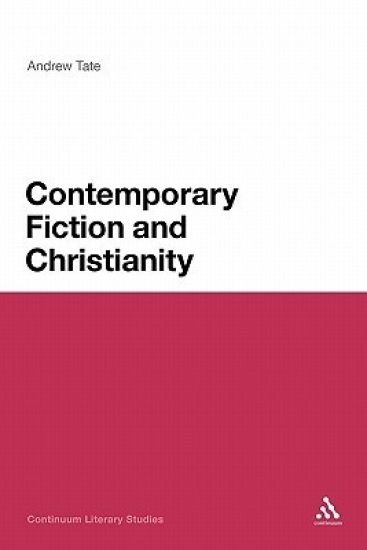
How does contemporary fiction engage with the claims and ideas of Christian theology? Can 'secular fictions' accommodate transcendent experiences or encounters with the divine? Does belief continue to influence the shape of fiction in any meaningful way? This study argues against the idea that the 'postmodern condition' of late twentieth and early twenty-first century culture has undermined the close and creative association between religious practice and literature. It suggests that the novel, as a major narrative genre of contemporary western culture, has become an increasingly vital, dynamic and problematic space for engaging with the sacred.Tate examines the work of more than a dozen contemporary Anglo-American novelists, including John Updike, Douglas Coupland, John Irving, Michele Roberts, Don DeLillo and Jim Crace. He shows how the 'sacred turn' in western culture is manifested within the novel from the 1980s to the present, paying particular attention to representations of such theological ideas as the miraculous, the heretical, the apocalyptic and the messianic.
Contemporary Fiction and Christianity

Contemporary Fiction and Christianity

Andrew Tate

Continuum Publishing Corporation
2010
nidottu
This book provides a detailed exploration of the spiritual and religious contexts and subtexts of contemporary fiction. How does contemporary fiction engage with the claims and ideas of Christian theology? Can 'secular fictions' accommodate transcendent experiences or encounters with the divine? Does belief continue to influence the shape of fiction in any meaningful way? This study argues against the idea that the 'postmodern condition' of late twentieth and early twenty-first century culture has undermined the close and creative association between religious practice and literature. It suggests that the novel, as a major narrative genre of contemporary western culture, has become an increasingly vital, dynamic and problematic space for engaging with the sacred. Tate examines the work of more than a dozen contemporary Anglo-American novelists, including John Updike, Douglas Coupland, John Irving, Michele Roberts, Don DeLillo and Jim Crace. He shows how the 'sacred turn' in western culture is manifested within the novel from the 1980s to the present, paying particular attention to representations of such theological ideas as the miraculous, the heretical, the apocalyptic and the messianic.
Apocalyptic Fiction

Apocalyptic Fiction

Andrew Tate

Bloomsbury Academic
2017
nidottu
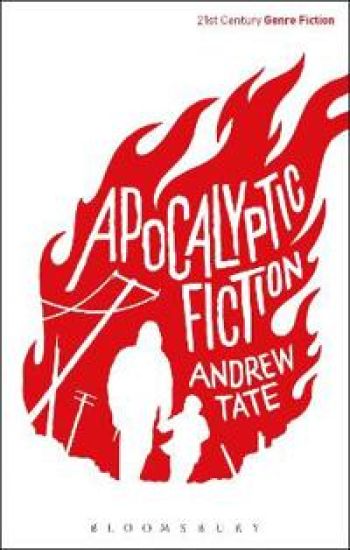
Visions of post-apocalyptic worlds have proved to be irresistible for many 21st-century writers, from literary novelists to fantasy and young adult writers. Exploring a wide range of texts, from the works of Margaret Atwood, Cormac McCarthy, Tom Perrotta and Emily St. John Mandel to young adult novels such as Suzanne Collins’s The Hunger Games series, this is the first critical introduction to contemporary apocalyptic fiction. Exploring the cultural and political contexts of these writings and their echoes in popular media, Apocalyptic Fiction also examines how contemporary apocalyptic texts looks back to earlier writings by the likes of Mary Shelley, H.G. Wells and J.G. Ballard. Apocalyptic Fiction includes an annotated guide to secondary readings, making this an essential guide for students of contemporary fiction at all levels.
Apocalyptic Fiction

Apocalyptic Fiction

Andrew Tate

Bloomsbury Academic
2017
sidottu
Visions of post-apocalyptic worlds have proved to be irresistible for many 21st-century writers, from literary novelists to fantasy and young adult writers. Exploring a wide range of texts, from the works of Margaret Atwood, Cormac McCarthy, Tom Perrotta and Emily St. John Mandel to young adult novels such as Suzanne Collins’s The Hunger Games series, this is the first critical introduction to contemporary apocalyptic fiction. Exploring the cultural and political contexts of these writings and their echoes in popular media, Apocalyptic Fiction also examines how contemporary apocalyptic texts looks back to earlier writings by the likes of Mary Shelley, H.G. Wells and J.G. Ballard. Apocalyptic Fiction includes an annotated guide to secondary readings, making this an essential guide for students of contemporary fiction at all levels.