Kirjojen hintavertailu. Mukana 11 417 157 kirjaa ja 12 kauppaa.

Kirjahaku

Etsi kirjoja tekijän nimen, kirjan nimen tai ISBN:n perusteella.

5 kirjaa tekijältä Andrew Wallace-Hadrill

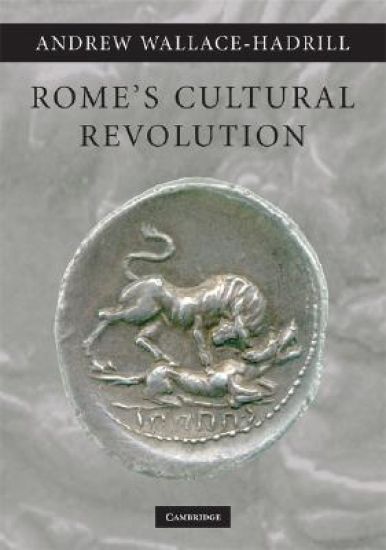
Rome's Cultural Revolution

Rome's Cultural Revolution

Andrew Wallace-Hadrill

Cambridge University Press
2008
pokkari
The period of Rome's imperial expansion, the late Republic and early Empire, saw transformations of its society, culture and identity. Drawing equally on archaeological and literary evidence, this book offers an original and provocative interpretation of these changes. Moving from recent debates about colonialism and cultural identity, both in the Roman world and more broadly, and challenging the traditional picture of 'Romanization' and 'Hellenization', it offers instead a model of overlapping cultural identities in dialogue with one another. It attributes a central role to cultural change in the process of redefinition of Roman identity, represented politically by the crisis of the Republican system and the establishment of the new Augustan order. Whether or not it is right to see these changes as 'revolutionary', they involve a profound transformation of Roman life and identity, one that lies at the heart of understanding the nature of the Roman Empire.
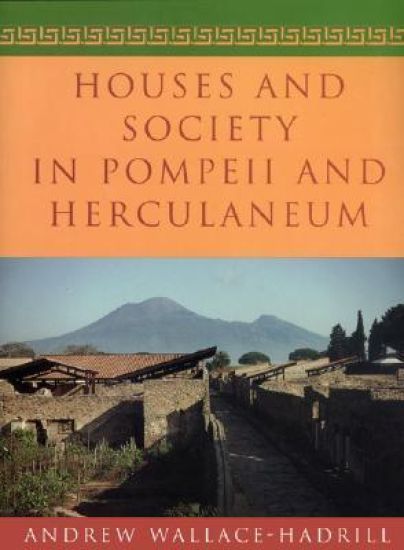
Houses and Society in Pompeii and Herculaneum

Houses and Society in Pompeii and Herculaneum

Andrew Wallace-Hadrill

Princeton University Press
1996
pokkari
Few sources reveal the life of the ancient Romans as vividly as do the houses preserved by the eruption of Vesuvius. Wealthy Romans lavished resources on shaping their surroundings to impress their crowds of visitors. The fashions they set were taken up and imitated by ordinary citizens. In this illustrated book, Andrew Wallace-Hadrill explores the rich potential of the houses of Pompeii and Herculaneum to offer new insights into Roman social life. Exposing misconceptions derived from contemporary culture, he shows the close interconnection of spheres we take as discrete: public and private, family and outsiders, work and leisure. Combining archaeological evidence with Roman texts and comparative material from other cultures, Wallace-Hadrill raises a range of new questions. How did the organization of space and the use of decoration help to structure social encounters between owner and visitor, man and woman, master and slave? What sort of "households" did the inhabitants of the Roman house form? How did the world of work relate to that of entertainment and leisure? How widely did the luxuries of the rich spread among the houses of craftsmen and shopkeepers? Through analysis of the remains of over two hundred houses, Wallace-Hadrill reveals the remarkably dynamic social environment of early imperial Italy, and the vital part that houses came to play in defining what it meant "to live as a Roman."
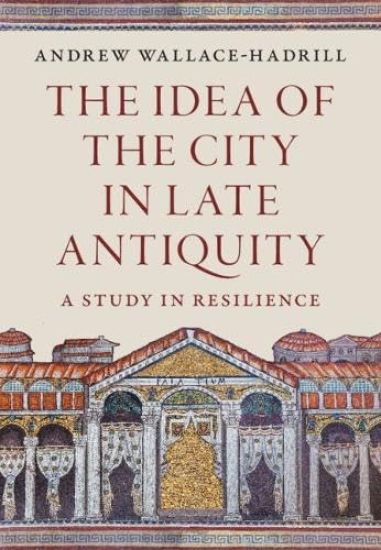
The Idea of the City in Late Antiquity

The Idea of the City in Late Antiquity

Andrew Wallace-Hadrill

Cambridge University Press
2025
sidottu
The city was one of the central and defining features of the world of the Greek and Roman Mediterranean. Challenging the idea that the ancient city 'declined and fell', Andrew Wallace-Hadrill argues that memories of the past enabled cities to adapt and remain relevant in the changing post-Roman world. In the new kingdoms in Italy, France and Spain cities remained a key part of the structure of control, while to contemporary authors, such as Cassiodorus in Ostrogothic Italy, Gregory of Tours in Merovingian Gaul, and Isidore in Visigothic Spain, they remained as crucial as in antiquity. The archaeological evidence of New Cities founded in this period, from Constantinople to Reccopolis in Spain, also shows the deep influence of past models. This timely and exhilarating book reveals the adaptability of cities and the endurance of the Greek and Roman world.
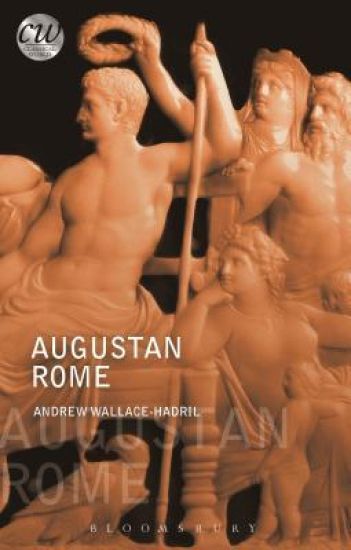
Augustan Rome

Augustan Rome

Andrew Wallace-Hadrill

Bloomsbury Academic
2018
nidottu
Written by Andrew Wallace-Hadrill, one of the world's foremost scholars on Roman social and cultural history, this introduction to Rome in the Age of Augustus provides a fascinating insight into the social and physical contexts of Augustan politics and poetry, exploring in detail the impact of the new regime of government on society. Taking an interpretative approach, the ideas and environment manipulated by Augustus are explored, along with reactions to that manipulation. Emphasizing the role and impact of art and architecture of the time, and on Roman attitudes and values, Augustan Rome explains how the victory of Octavian at Actium transformed Rome and Roman life.The second edition features a new introductory section on literary figures under Augustus, a final chapter on the reception of Augustus in later periods, updated references to recent scholarship, new figures and an expanded list of further reading.This thought-provoking yet concise volume sets political changes in the context of their impact on Roman values, on the imaginative world of poetry, on the visual world of art, and on the fabric of the city of Rome.
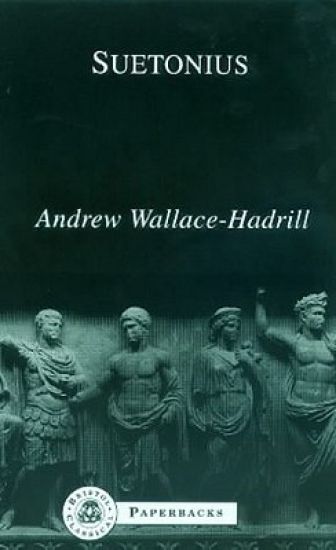
Suetonius

Suetonius

Andrew Wallace-Hadrill

Bristol Classical Press
1998
nidottu
Seutonius, a Roman historian, was the author of "The Lives of the Caesars". This biography sets the historian's career and his method of dealing with his subject matter in the context of Roman society in the early Empire, and draws a picture of the coherence of Suetonius's life, appointments, scholarship and literary activities. Seutonius is presented as a man of learning, rather than as a failed narrative historian. This portrait takes account of recent evidence concerning his life and seeks to clarify the character of "The Lives of the Caesars" as a description of emperors and Roman imperial society by a scholarly biographer who himself was in the service of a scholarly Caesar - the Emperor Hadrian.