Kirjojen hintavertailu. Mukana 11 342 296 kirjaa ja 12 kauppaa.

Kirjahaku

Etsi kirjoja tekijän nimen, kirjan nimen tai ISBN:n perusteella.

50 kirjaa tekijältä Andrew Williams

EU Human Rights Policies

EU Human Rights Policies

Andrew Williams

Oxford University Press
2004
sidottu
Despite recent constitutional arrangements, human rights remain an ambiguous and complex subject in the European Union. Human rights issues may have become increasingly relevant to the life of the EU over the past thirty years but there has been an institutional reluctance to mould a unified human rights policy worthy of the name. Nevertheless, the EU's practices have not been constructed randomly: they have evolved within discrete policy realms along coherent narrative lines. From the arguably mythical basis that the EU was founded upon a general principle of respect for human rights; policies and practices have developed along two distinct paths. Internally, within the EU, human rights are contingent. Scrutiny is erratic and even casual, and enforcement is left to the courts and independent agencies. Externally, in the EU's interactions with non-members, however, the story is very different: human rights are broad in concept. Collective notions of rights are accepted and promoted. Scrutiny can be intrusive and effective, and systems of enforcement, increasingly severe in scope and strength, have been applied. This bifurcation has direct implications for the EU's constitutional structure and its future human rights activities. It suggests that, through human rights language, conditions for conflict rather than integration have arisen, and that a system of double standards has been instituted. Williams therefore argues that the EU's claims to a credible human rights policy are suspect. This book examines the nature and scope of the bifurcation and explains its origins and development. In doing so it questions orthodox interpretations and provides a radical new reading of the EU's human rights law and practice. At its heart, the book claims that without a fundamental reappraisal of the basis upon which the EU responds to human rights, it will remain plagued by this ironical condition.

EU Human Rights Policies

EU Human Rights Policies

Andrew Williams

Oxford University Press
2005
nidottu
Despite recent constitutional arrangements, human rights remain an ambiguous and complex subject in the European Union. Human rights issues may have become increasingly relevant to the life of the EU over the past thirty years but there has been an institutional reluctance to mould a unified human rights policy worthy of the name. Nevertheless, the EU's practices have not been constructed randomly: they have evolved within discrete policy realms along coherent narrative lines. From the arguably mythical basis that the EU was founded upon a general principle of respect for human rights; policies and practices have developed along two distinct paths. Internally, within the EU, human rights are contingent. Scrutiny is erratic and even casual, and enforcement is left to the courts and independent agencies. Externally, in the EU's interactions with non-members, however, the story is very different: human rights are broad in concept. Collective notions of rights are accepted and promoted. Scrutiny can be intrusive and effective, and systems of enforcement, increasingly severe in scope and strength, have been applied. This bifurcation has direct implications for the EU's constitutional structure and its future human rights activities. It suggests that, through human rights language, conditions for conflict rather than integration have arisen, and that a system of double standards has been instituted. Williams therefore argues that the EU's claims to a credible human rights policy are suspect. This book examines the nature and scope of the bifurcation and explains its origins and development. In doing so it questions orthodox interpretations and provides a radical new reading of the EU's human rights law and practice. At its heart, the book claims that without a fundamental reappraisal of the basis upon which the EU responds to human rights, it will remain plagued by this ironical condition.
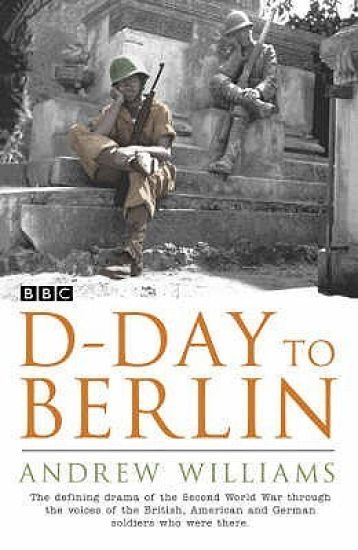
D-Day To Berlin

D-Day To Berlin

Andrew Williams

Hodder Paperback
2005
pokkari
Nightfall, 6 June 1944. D-Day is over and the Allies have carved a tenuous foothold in 'Fortress Europe'. The future of Europe hangs in the balance as Hitler's formidable SS Panzer troops threaten to drive them back into the sea. D-Day to Berlin is the remarkable story of the Allied struggle for survival - the battle from the beaches of Normandy to the heart of Hitler's Reich and ultimate victory just eleven months later. The campaign to free Europe from Nazi oppression through the collective operations from D-Day to Berlin mark one of the greatest ever military offensives. The Allies overcame initial setbacks to inflict a devastating defeat on Hitler's crack divisions in France - a victory that was threatened just months later in the bitter winter fighting of the Battle of the Bulge. The final crossing of the Rhine and the advance into Germany changed the course of European history forever. In D-Day to Berlin we meet men and women from both sides - British, American and German soldiers - whose bravery and endurance made the final push through Europe the defining drama of the Second World War.
Domestic Building Surveys

Domestic Building Surveys

Andrew Williams

Spon Press
1993
nidottu
This is a practical guide showing how to undertake a domestic building survey. The text describes the practical aspects of surveying with a full description of the author's own experience, at the same time drawing out the important principles involved.
The Ethos of Europe

The Ethos of Europe

Andrew Williams

Cambridge University Press
2010
sidottu
Can the EU become a 'just' institution? Andrew Williams considers this highly charged political and moral question by examining the role of five salient values said to be influential in the governance and law of the Union: peace, the rule of law, respect for human rights, democracy, and liberty. He assesses each of these as elements of an apparent 'institutional ethos' and philosophy of EU law and finds that justice as a governing ideal has failed to be taken seriously in the EU. To remedy this condition, he proposes a new set of principles upon which justice might be brought more to the fore in the Union's governance. By focusing on the realisation of human rights as a core institutional value, Williams argues that the EU can better define its moral limits so as to evolve as a more just project.
The Ethos of Europe

The Ethos of Europe

Andrew Williams

Cambridge University Press
2010
pokkari
Can the EU become a 'just' institution? Andrew Williams considers this highly charged political and moral question by examining the role of five salient values said to be influential in the governance and law of the Union: peace, the rule of law, respect for human rights, democracy, and liberty. He assesses each of these as elements of an apparent 'institutional ethos' and philosophy of EU law and finds that justice as a governing ideal has failed to be taken seriously in the EU. To remedy this condition, he proposes a new set of principles upon which justice might be brought more to the fore in the Union's governance. By focusing on the realisation of human rights as a core institutional value, Williams argues that the EU can better define its moral limits so as to evolve as a more just project.
Survive and Thrive

Survive and Thrive

Andrew Williams

Agility Consulting Group
2019
pokkari
Are you experiencing rapid change and greater complexity both professionally and personally?Do you want to increase your agility and adaptability?Agility is more than just the corporate buzzword of the moment - it's a way of life. It's what ensures our survival in nature, and it's the key to survival in business.Thoroughly researched and based on a wealth of experience, Survive and Thrive is filled with practical advice, simple guidelines, actionable tips, and real-world examples to help you develop your agility and thrive in an increasingly complex world.
Failed Imagination?

Failed Imagination?

Andrew Williams

Manchester University Press
2007
nidottu
The main purpose of this book is to explain how (mainly) American, but also British and other Western, policy makers have planned and largely managed to create an international order in their own image, the so-called ‘New World Order’. It shows how this seismic shift in international relations has developed through the major global wars of the twentieth and twenty-first centuries. It uses a wide variety of historical archival material to give the background to the current and historical American obsession with creating the world order, one that both reflects the American national interest but also can be said to have established the major security, economic, organisational and normative pillars of our epoch. In addition it provides excellent background reading for the current debate about American foreign policy and the origins of ‘neo-conservatism’ in international relations. This edition updates a very successful first edition of the title, with additional material to take into account changes in the global order since 2001 and the beginning of the ‘War on Terror’.
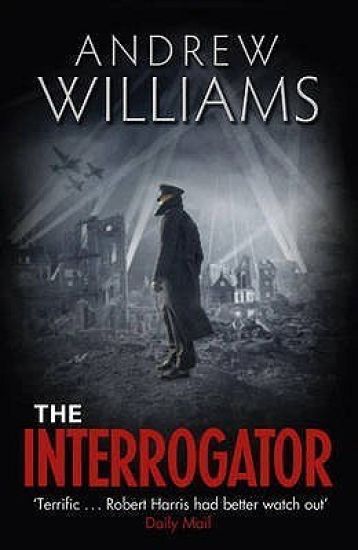
The Interrogator

The Interrogator

Andrew Williams

Hodder Paperback
2009
pokkari
Shortlisted for the CWA/Ian Fleming Award, The Interrogator is a masterful spy story set in the darkest days of the Second World War. The Enigma Code has been broken - but what if German High Command can read our naval signals, too? For all readers of John le Carre and Robert Harris - 'Terrific... Robert Harris had better watch out' Daily Mail. Spring, 1941. The armies of the Reich are masters of Europe. Britain stands alone, dependent on her battered navy for survival, while Hitler's submarines - his 'grey wolves' - prey on the Atlantic convoys that are the country's only lifeline.Lieutenant Douglas Lindsay is amongst just a handful of men picked up when his ship is torpedoed. Unable to free himself from the memories of that night at sea, he becomes an interrogator with naval intelligence, questioning captured U-Boat crews. He is convinced the Germans have broken British naval codes, but he's a lone voice, a damaged outsider, and his superiors begin to wonder - can he really be trusted when so much is at stake?As the Blitz reduces Britain's cities to rubble and losses at sea mount, Lindsay becomes increasingly isolated and desperate. No one will believe him, not even his lover, Mary Henderson, who works at the very heart of the intelligence establishment. Lindsay decides to risk all in one last throw of the dice, setting a trap for his prize captive - and nemisis - U-Boat Commander Jürgen Mohr, the man who sent his ship to its doom.
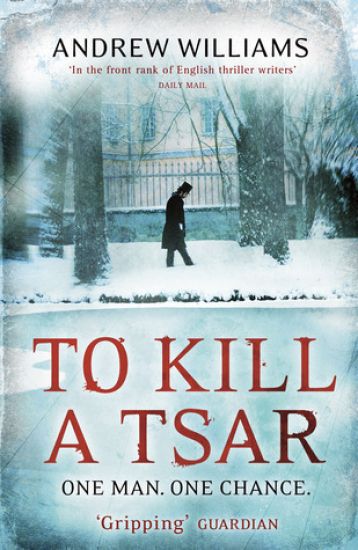
To Kill a Tsar

To Kill a Tsar

Andrew Williams

Hodder Paperback
2011
pokkari
This tense, gripping novel set in 19C St Petersburg amid desperate revolutionaries bent on the overthrow of the Tsar 'confirms Andrew William's place in the front ranks of English thriller writers' (Daily Mail). Shortlisted for the CWA Ellis Peters and the Walter Scott Awards, To Kill a Tsar will appeal to readers of John le Carre, Robert Harris and Alan Furst.St Petersburg, 1879. A shot rings out in Palace Square. Cossack guards tackle the would-be assassin to the ground. In the mêlée no one notices a striking dark haired young woman in a heavy coat slip away from the scene. Russia is alive with revolutionaries. While Tsar Alexander II remains a virtual prisoner in his own palaces, his ruthless secret police will stop at nothing to unmask those who plot his assassination and the overthrow of the Imperial regime. For Dr Frederick Hadfield, whose medical practice is dependent on the Anglo-Russian gentry, these are dangerous times. Drawn into a desperate cat-and-mouse game of undercover assignations, plot and counter-plot, he risks all in a perilous double life.From glittering ballrooms to the cruel cells of the House of Preliminary Detention, from the grandeur of the British Embassy to the underground presses of the young revolutionaries, To Kill a Tsar is a gripping thriller set in a world of brutal contrasts in which treachery is everywhere and nothing is what it seems.
Portable Music and Its Functions

Portable Music and Its Functions

Andrew Williams

Peter Lang Publishing Inc
2006
nidottu
Using iPods or portable CD players, millions of people take their music with them every day to modify their daily experiences. Encased in headphones, they listen to music for entertainment, but also use it, among other things, as a buffer between themselves and the world outside, and to manage their moods. What is it about music that makes it useful in different ways to so many people? Have people always used music in these ways, or only since the technology of the Walkman and then the mp3 player made music portable? In this wide-ranging exploration of how and why we use portable music, Andrew Williams sheds new light on the role music plays in our everyday lives. Portable Music and Its Functions will be of use to students and scholars of sociology and cultural studies as well as of musicology.
Concerted Organic and Bio-Organic Mechanisms
The concept of concerted mechanisms was formulated nearly 90 years ago and virtually all general organic chemistry texts mention it. Until now, however, no monograph has addressed the concept explicitly. Over the last two decades, substantial advancements made in the development of precise methods for elucidating concerted mechanisms have heightened the need for a comprehensive text on the subject. Concerted Organic and Bio-organic Mechanisms gathers the salient materials related to this emerging field into a single text. It sets forth the precise definition of concertedness-along with working sub-definitions-and describes rigorous experimental tools chemists can use to diagnose the existence or absence of concerted mechanisms. Advances in our understanding of concerted mechanisms lead to further questions. Concerted Organic and Bio-organic Mechanisms provides the background and the tools researchers need to consider these important questions and further advance the frontiers of reactions, synthesis, and catalysis.
Free Energy Relationships in Organic and Bio-Organic Chemistry

Free Energy Relationships in Organic and Bio-Organic Chemistry

Andrew Williams

Royal Society of Chemistry
2003
nidottu
Introducing the application of free energy correlations to elucidating the mechanisms of organic and bio-organic reactions, this book provides a new and illuminating way of approaching a potentially complex topic. The idea of how free energy correlations derive from polar substituent change is introduced, and common pitfalls encountered in the application of free energy relationships are described, along with the use of these anomalies in mechanistic studies. The concept of effective charge is described in detail, with examples of its application. Throughout, worked answers are provided for the problems posed. Databases of parameters, an extensive bibliography and comprehensive lists of further reading are also included. The text provides an invaluable source of information to senior undergraduates, postgraduates and to industrial researchers with an interest in mechanistic studies. It is the first such book in more than thirty years.
Domestic Building Surveys

Domestic Building Surveys

Andrew Williams

Routledge
2017
sidottu
This is a practical guide showing how to undertake a domestic building survey. The text describes the practical aspects of surveying with a full description of the author's own experience, at the same time drawing out the important principles involved.
History of Digital Games

History of Digital Games

Andrew Williams

Routledge
2017
nidottu
The growth of videogame design programs in higher education and explosion of amateur game development has created a need for a deeper understanding of game history that addresses not only "when," but "how" and "why." Andrew Williams takes the first step in creating a comprehensive survey on the history of digital games as commercial products and artistic forms in a textbook appropriate for university instruction. History of Digital Games adopts a unique approach and scope that traces the interrelated concepts of game design, art and design of input devices from the beginnings of coin-operated amusement in the late 1800s to the independent games of unconventional creators in the present. Rooted in the concept of videogames as designed objects, Williams investigates the sources that inspired specific game developers as well as establishing the historical, cultural, economic and technological contexts that helped shape larger design trends.Key FeaturesFull-color images and game screenshotsFocuses primarily on three interrelated digital game elements: visual design, gameplay design and the design of input devicesThis book is able to discuss design trends common to arcade games, home console games and computer games while also respecting the distinctions of each game contextIncludes discussion of game hardware as it relates to how it affects game designLinks to online resources featuring games discussed in the text, video tutorial and other interactive resources will be included.
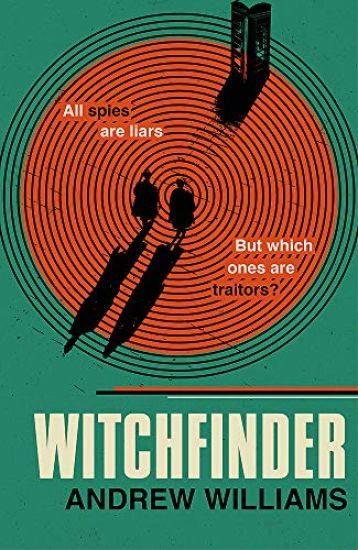
Witchfinder

Witchfinder

Andrew Williams

Hodder Stoughton
2019
sidottu
'Rich, densely plotted... If le Carré needs a successor, Williams has all the equipment for the role.' Times Literary Supplement Books of the Year'The most authentic spy novel ever written [...] an utterly fascinating account of a very dangerous time in British history when elements of the Secret State were out of control' Edward Wilson'Gripped me, not just because of its crisp writing but because of its skilful blending of history and imagination... A clever cautionary tale' The TabletLondon 1963. The Beatles, Carnaby Street, mini skirts. But the new mood hasn't reached the drab and fearful corridors of MI5 and MI6. Many agents joined the secret service to fight the Nazis. Now they are locked in a Cold War against the Russians.And some of them are traitors.The service has been shaken to its core by the high-profile defections of Cambridge-educated spies Burgess, MacLean and now Philby. Appalled at such flagrant breaches of British security, the Americans are demanding a rigorous review.Harry Vaughan is brought back from Vienna to be part of it. The Chief asks him to join two investigators - Arthur Martin and Peter Wright - who are determined to clean out the stables, and the first target of their suspicions is the Deputy Director General of MI5, Graham Mitchell.Harry slips back into a relationship with an old flame, Elsa, and joins the hunt - somewhat reluctantly. He is sceptical of the case against Mitchell and wary of the messianic fervour of the two spycatchers. But the further the investigation goes - and the deeper his commitment to Elsa becomes - the greater the sense of paranoia and distrust that spreads through the 'wilderness of mirrors' that is the secret service.The only certainty is that no one is above suspicion.Including Harry Vaughan.***'Every bit as cynical in tone as Mick Herron's Slough House mob' Irish Times'If a good spy novel needs anything, it's uncertainty, a hall of mirrors; and Witchfinder delivers it in spades. Great stuff' Dominick Donald, author of Breathe'One of Britain's most accomplished thriller writers' Daily Mail'Williams is an accomplished thriller writer and this may be his best book yet. London in the 1960s, its smoky pubs, damp streets and crackle of sexual liberation is so well portrayed that reading Witchfinder is almost like time travel. Williams blends fact and fiction to make a captivating read.' Financial Times