Kirjojen hintavertailu. Mukana 12 016 292 kirjaa ja 12 kauppaa.

Kirjahaku

Etsi kirjoja tekijän nimen, kirjan nimen tai ISBN:n perusteella.

4 kirjaa tekijältä Andy Croll

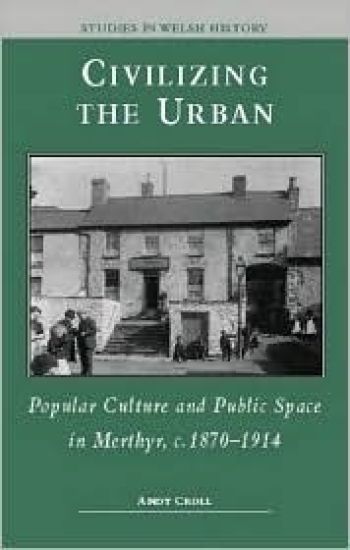
Civilizing the Urban

Civilizing the Urban

Andy Croll

University of Wales Press
2000
sidottu
Early industrial Merthyr is synonymous with the darker side of the British urban experience. This work considers the efforts of dedicated civic "boosters" to civilize the town's public spaces and its inhabitants and shows how this vision of Merthyr depended on the taming of popular culture.
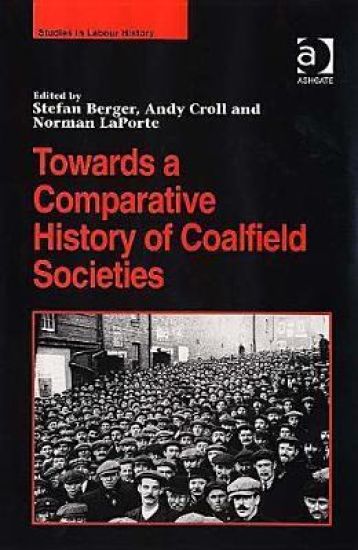
Towards a Comparative History of Coalfield Societies

Towards a Comparative History of Coalfield Societies

Andy Croll

Ashgate Publishing Limited
2005
sidottu
Few areas of labour history have received as much attention as the coal industry, with miners often finding themselves at the centre of studies on working-class political and industrial history. Yet whilst much has been written about the struggles of miners and their unions in particular countries, their national confrontations and political organization, much less work has been done on the regional communities and how they related both to the national and international picture. The central theme of this volume is to transcend such over-arching national models and to focus instead on local coal mining societies which can then be compared and contrasted to similar communities elsewhere. In so doing the book is able to tackle a number of familiar labour history themes in a more nuanced way, exploring issues of political activism and class relationships from the perspectives of gender, ethnicity, race and specific localized cultural traditions. As the chapters in this volume illustrate, such an approach can offer rich and often surprising conclusions, in many cases challenging the accepted notion of miners as the vanguard of militant working-class political activism. Adopting a regional approach that compares coalfield communities from five continents, this volume reflects coalfield experiences on a truly global scale. By looking at what made communities unique as well as what they shared in common, a much fuller understanding of the workplace, neighbourhood, family, identity and political organization is possible. Underlining the strong connections between politics, community and identity, this work emphasizes the challenges and opportunities available to labour historians, pushing forward the boundaries of the discipline in new and exciting ways.
Towards a Comparative History of Coalfield Societies
Few areas of labour history have received as much attention as the coal industry, with miners often finding themselves at the centre of studies on working-class political and industrial history. Yet whilst much has been written about the struggles of miners and their unions in particular countries, their national confrontations and political organization, much less work has been done on the regional communities and how they related both to the national and international picture. The central theme of this volume is to transcend such over-arching national models and to focus instead on local coal mining societies which can then be compared and contrasted to similar communities elsewhere. In so doing the book is able to tackle a number of familiar labour history themes in a more nuanced way, exploring issues of political activism and class relationships from the perspectives of gender, ethnicity, race and specific localized cultural traditions. As the chapters in this volume illustrate, such an approach can offer rich and often surprising conclusions, in many cases challenging the accepted notion of miners as the vanguard of militant working-class political activism. Adopting a regional approach that compares coalfield communities from five continents, this volume reflects coalfield experiences on a truly global scale. By looking at what made communities unique as well as what they shared in common, a much fuller understanding of the workplace, neighbourhood, family, identity and political organization is possible. Underlining the strong connections between politics, community and identity, this work emphasizes the challenges and opportunities available to labour historians, pushing forward the boundaries of the discipline in new and exciting ways.
Barry Island

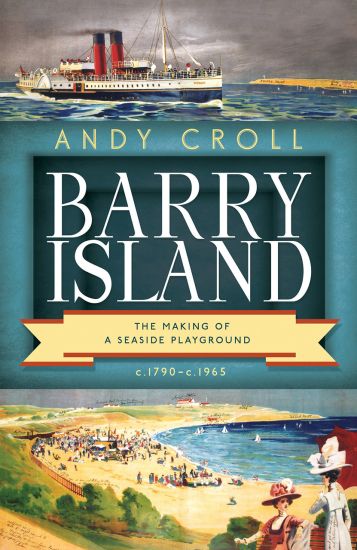
Barry Island

Andy Croll

University of Wales Press
2020
nidottu
Barry Island was one of the most cherished leisure spaces in twentieth-century south Wales, a playground of generations of working-class day-trippers. This book considers its rise as a seaside resort and reveals a history that is much more complex, lengthy and important than has previously been recognised. As conventionally told, the story of the island as tourist resort begins in the 1890s, when the railway arrived in Barry - in fact, it was functioning as a watering hole by the 1790s - yet decades of tourism produced no sweeping changes. Barry remained a district of 'bathing villages' and hamlets, not a developed urban resort. As such, its history challenges us to rethink the category of 'seaside resort' and forces us re-evaluate Wales's contribution to British coastal tourism in the 'long nineteenth century'. It also underlines the importance of visitor agency. Powerful landowners shaped much of the island's development but, ultimately, it was the working-class visitors who turned it into south Wales's most beloved tripper resort.