Kirjojen hintavertailu. Mukana 11 244 527 kirjaa ja 12 kauppaa.

Kirjahaku

Etsi kirjoja tekijän nimen, kirjan nimen tai ISBN:n perusteella.

3 kirjaa tekijältä Andy Oppel

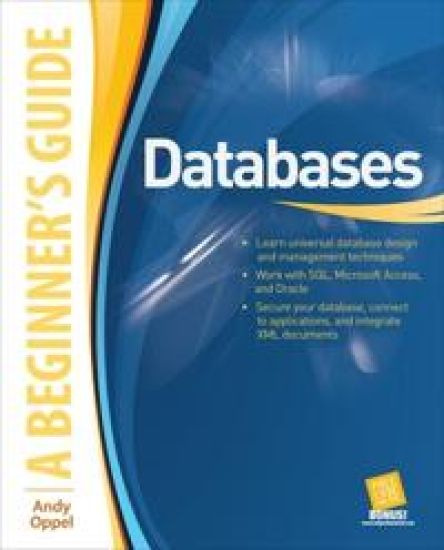
Databases A Beginner's Guide

Databases A Beginner's Guide

Andy Oppel

McGraw-Hill Professional
2009
nidottu
Publisher's Note: Products purchased from Third Party sellers are not guaranteed by the publisher for quality, authenticity, or access to any online entitlements included with the product.Essential Database Skills--Made Easy!Learn standard database design and management techniques applicable to any type of database. Featuring clear examples using both Microsoft Access and Oracle, Databases: A Beginner's Guide begins by showing you how to use Structured Query Language (SQL) to create and access database objects. Then, you'll discover how to implement logical design using normalization, transform the logical design into a physical database, and handle data and process modeling. You'll also get details on database security, online analytical processing (OLAP), connecting databases to applications, and integrating XML and object content into databases. Designed for Easy LearningKey Skills & Concepts--Chapter-opening lists of specific skills covered in the chapter Ask the Expert--Q&A sections filled with bonus information and helpful tips Try This--Hands-on exercises that show you how to apply your skillsNotes--Extra information related to the topic being coveredSelf Tests--Chapter-ending quizzes to test your knowledge
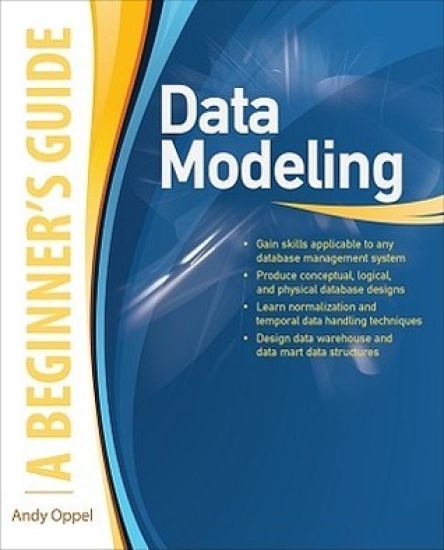
Data Modeling, A Beginner's Guide

Data Modeling, A Beginner's Guide

Andy Oppel

McGraw-Hill Professional
2010
nidottu
Publisher's Note: Products purchased from Third Party sellers are not guaranteed by the publisher for quality, authenticity, or access to any online entitlements included with the product.Essential Skills--Made Easy!Learn how to create data models that allow complex data to be analyzed, manipulated, extracted, and reported upon accurately. Data Modeling: A Beginner's Guide teaches you techniques for gathering business requirements and using them to produce conceptual, logical, and physical database designs. You'll get details on Unified Modeling Language (UML), normalization, incorporating business rules, handling temporal data, and analytical database design. The methods presented in this fast-paced tutorial are applicable to any database management system, regardless of vendor.Designed for Easy LearningKey Skills & Concepts--Chapter-opening lists of specific skills covered in the chapterAsk the expert--Q&A sections filled with bonus information and helpful tipsTry This--Hands-on exercises that show you how to apply your skillsNotes--Extra information related to the topic being coveredSelf Tests--Chapter-ending quizzes to test your knowledgeAndy Oppel has taught database technology for the University of California Extension for more than 25 years. He is the author of Databases Demystified, SQL Demystified, and Databases: A Beginner's Guide, and the co-author of SQL: A Beginner's Guide, Third Edition, and SQL: The Complete Reference, Third Edition.
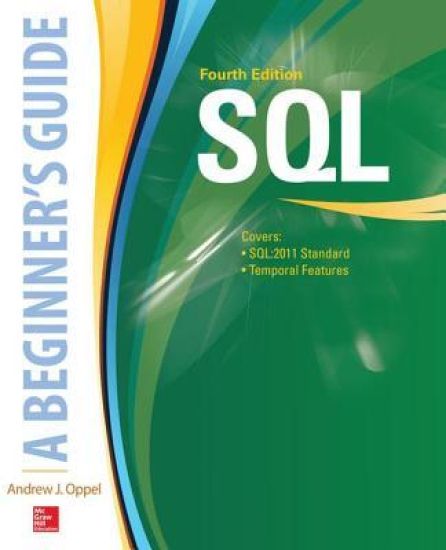
SQL: A Beginner's Guide, Fourth Edition

SQL: A Beginner's Guide, Fourth Edition

Andy Oppel

McGraw-Hill Professional
2015
nidottu
Publisher's Note: Products purchased from Third Party sellers are not guaranteed by the publisher for quality, authenticity, or access to any online entitlements included with the product.Essential SQL Skills Made EasyFully revised to cover the latest software versions, this easy-to-follow guide will get you started programming in SQL right away. Discover how to create database tables, access and modify data, work with triggers and transactions, build effective queries, and handle management and administrative functions. SQL: A Beginner's Guide, Fourth Edition offers clear instruction on each topic and is loaded with step-by-step examples. This practical book includes coverage of database security, SQL/XML, and new temporal data features.Designed for Easy Learning: • Key Skills & Concepts—Lists of specific skills covered in the chapter • Ask the Expert—Q&A sections filled with bonus information and helpful tips • Try This—Hands-on exercises that show how to apply your skills• Notes—Extra information related to the topic being covered• Tips—Helpful reminders or alternate ways of doing things • Cautions—Errors and pitfalls to avoid• Self-Tests—Chapter-ending quizzes to test your knowledge• Annotated Syntax—Example code with commentary that describes the programming techniques being illustrated