Kirjojen hintavertailu. Mukana 11 717 486 kirjaa ja 12 kauppaa.

Kirjahaku

Etsi kirjoja tekijän nimen, kirjan nimen tai ISBN:n perusteella.

3 kirjaa tekijältä Angela Woollacott

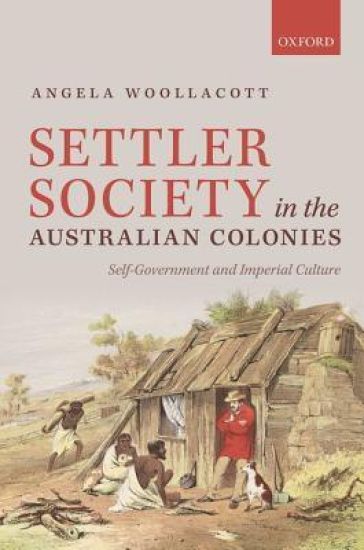
Settler Society in the Australian Colonies

Settler Society in the Australian Colonies

Angela Woollacott

Oxford University Press
2015
sidottu
The 1820s to the 1860s were a foundational period in Australian history, arguably at least as important as Federation. Industrialization was transforming Britain, but the southern colonies were pre-industrial, with economies driven by pastoralism, agriculture, mining, whaling and sealing, commerce, and the construction trades. Convict transportation provided the labour on which the first settlements depended before it was brought to a staggered end, first in New South Wales in 1840 and last in Western Australia in 1868. The numbers of free settlers rose dramatically, surging from the 1820s and again during the 1850s gold rushes. The convict system increasingly included assignment to private masters and mistresses, thus offering settlers the inducement of unpaid labourers as well as the availability of land on a scale that both defied and excited the British imagination. By the 1830s schemes for new kinds of colonies, based on Edward Gibbon Wakefield's systematic colonization, gained attention and support. The pivotal development of the 1840s-1850s, and the political events which form the backbone of this story were the Australian colonies' gradual attainment of representative and then responsible government. Through political struggle and negotiation, in which Australians looked to Canada for their model of political progress, settlers slowly became self-governing. But these political developments were linked to the frontier violence that shaped settlers' lives and became accepted as part of respectable manhood. With narratives of individual lives, Settler Society shows that women's exclusion from political citizenship was vigorously debated, and that settlers were well aware of their place in an empire based on racial hierarchies and threatened by revolts. Angela Woollacott particularly focuses on settlers' dependence in these decades on intertwined categories of unfree labour, including poorly-compensated Aborigines and indentured Indian and Chinese labourers, alongside convicts.
Gender and Empire

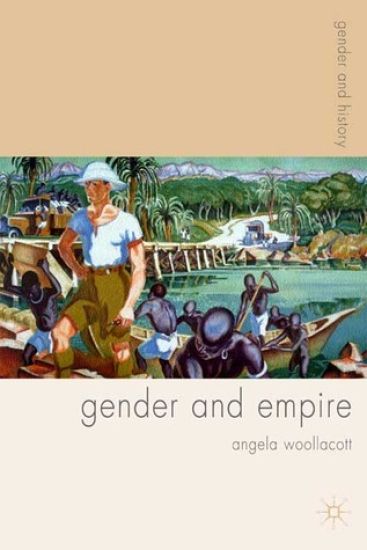
Gender and Empire

Angela Woollacott

Red Globe Press
2006
nidottu
One of the first single-authored books to survey the role of sex and gender in the 'new imperial history', Gender and Empire covers the whole British Empire, demonstrating connections and comparisons between the white-settler colonies, and the colonies of exploitation and rule. Through key topics and episodes across a broad range of British Empire history, Angela Woollacott examines how gender ideologies and practices affected women and men, and structured imperial politics and culture. Woollacott integrates twenty years of scholarship, providing fresh insights and interpretation using feminist and postcolonial approaches.Fiction and other vivid primary sources present the voices of historical subjects, enlivening discussions of central topics and debates in imperial and colonial history. The circulation of imperial culture and colonial subjects along with conceptions of gender and race reveals the integrated nature of British colonialism from the eighteenth to the twentieth centuries. Authoritative and approachable, this is essential reading for students of world history, imperial history and gender relations.
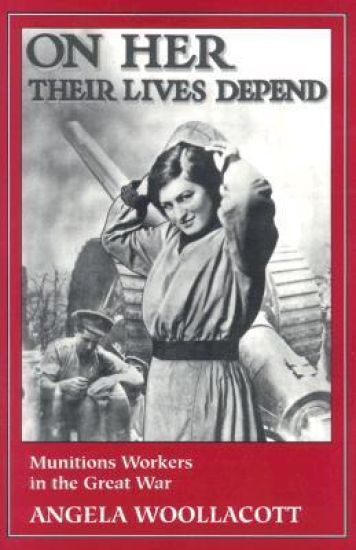
On Her Their Lives Depend

On Her Their Lives Depend

Angela Woollacott

University of California Press
1994
pokkari
In this evocative book, Angela Woollacott analyzes oral histories, workers' writings, newspapers, official reports, and factory song lyrics to present an intimate view of women munitions workers in Britain during World War I. Munitions work offered working-class women--for the first time--independence, a reliable income, even an improved standard of living. But male employers and trade unionists brought them face-to-face with their subordination as women within their own class, while experiences with middle-class women co-workers and police reminded them of their status as working class. Woollacott sees the woman munitions worker as a powerful symbol of modernity who challenged the gender order through her patriotic work and challenged class differences through her increased spending power, mobility, and changing social behavior.