Kirjojen hintavertailu. Mukana 11 717 486 kirjaa ja 12 kauppaa.

Kirjahaku

Etsi kirjoja tekijän nimen, kirjan nimen tai ISBN:n perusteella.

119 kirjaa tekijältä Angus Konstam

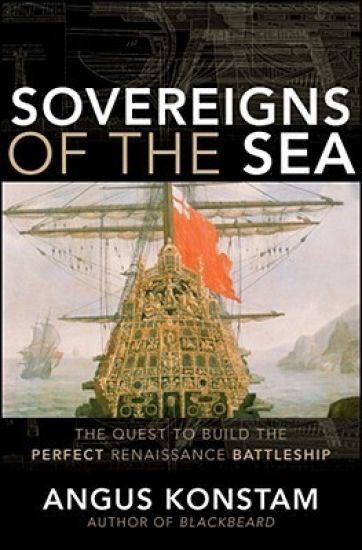
Sovereigns of the Sea

Sovereigns of the Sea

Angus Konstam

John Wiley Sons Ltd
2008
sidottu
Savor the story of the ultimate warship in Sovereigns of the Sea: The Quest to Build the Perfect Renaissance Battleship, which chronicles the history of Sovereign of the Seas, an immensely powerful floating fortress. You will enjoy this gripping tale of an arms race that created and ruined empires, changed the map of the world, and led Europe out of the Renaissance and into the Modern age. Understand how the Sovereign of the Seas became the model for a whole new generation of warships that would dominate naval warfare until the advent of steam power.
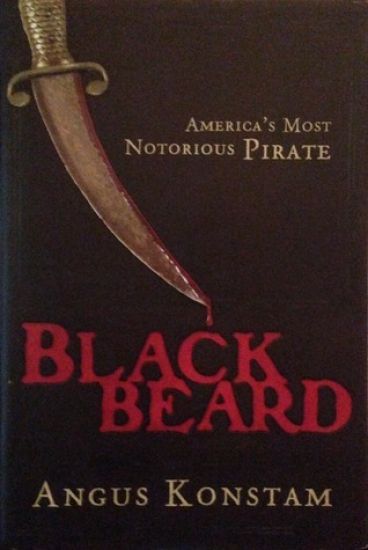
Blackbeard

Blackbeard

Angus Konstam

John Wiley Sons Ltd
2007
nidottu
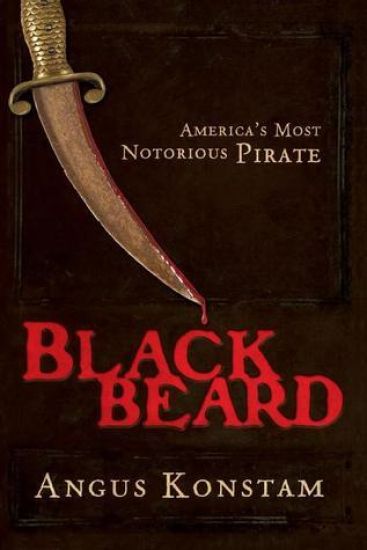
A thorough, exciting examination of 18th-century pirate life, with wonderful details.--Publishers Weekly ""Interesting and exciting . . . a thoroughly enjoyable chronicle of an interesting life and interesting era.""--Booklist The definitive biography of history'smost fearsome and famous pirate Of all the colorful cutthroats who scoured the seas in search of plunder during the Golden Age of Piracy in the early eighteenth century, none was more ferocious or notorious than Blackbeard. As unforgettable as his savage career was, much of Blackbeard's life has been shrouded in mystery--until now. Drawing on vivid descriptions of Blackbeard's attacks from his rare surviving victims, pirate expert Angus Konstam traces Blackbeard's career from its beginnings to his final defeat in a tremendous sea battle near his base at Ocracoke Island. Presenting dramatic accounts of the pirate's very effective tactics and his reputation for cruelty, Konstam offers a fascinating examination of the life and business of piracy and the lure of this brutal and bloody trade.
Blackbeard

Blackbeard

Angus Konstam

John Wiley Sons Inc
2006
sidottu
A thorough, exciting examination of 18th-century pirate life, with wonderful details.--Publishers Weekly ""Interesting and exciting . . . a thoroughly enjoyable chronicle of an interesting life and interesting era.""--Booklist The definitive biography of history'smost fearsome and famous pirate Of all the colorful cutthroats who scoured the seas in search of plunder during the Golden Age of Piracy in the early eighteenth century, none was more ferocious or notorious than Blackbeard. As unforgettable as his savage career was, much of Blackbeard's life has been shrouded in mystery--until now. Drawing on vivid descriptions of Blackbeard's attacks from his rare surviving victims, pirate expert Angus Konstam traces Blackbeard's career from its beginnings to his final defeat in a tremendous sea battle near his base at Ocracoke Island. Presenting dramatic accounts of the pirate's very effective tactics and his reputation for cruelty, Konstam offers a fascinating examination of the life and business of piracy and the lure of this brutal and bloody trade.
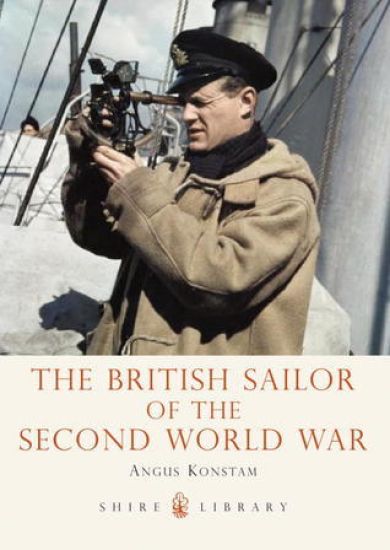
The British Sailor of the Second World War

The British Sailor of the Second World War

Angus Konstam

Shire Publications
2013
nidottu
This book tells the dramatic story of how the Royal Navy transformed ordinary citizens into first-rate sailors and navy personnel during the Second World War. It covers how they were recruited and trained and how they endured life at sea in hostile waters, protecting convoys in the Mediterranean, hunting submarines in the Atlantic, and standing up to relentless air attacks in the Pacific. Told through vivid first-hand accounts of life onboard, it reveals what it was like to be a sailor navigating, patrolling, and fighting in the largest theatre of the war – the vast oceans.
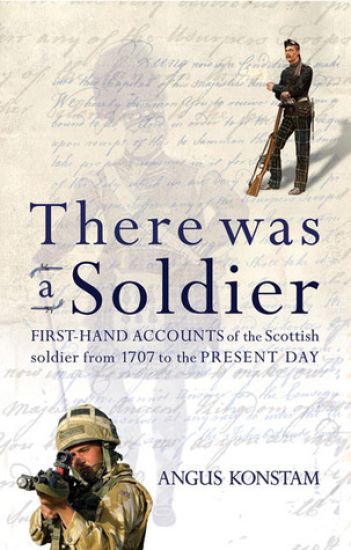
There Was a Soldier

There Was a Soldier

Angus Konstam

Hachette Books Scotland
2010
pokkari
For hundreds of years, the Scottish soldier has been recording his experiences. From the War of the Spanish Succession until the deployment of regiments in Iraq, Scottish soldiers have written home with tales of their exploits, or had details of their experiences published in newspapers, regimental histories and books. The result is a wealth of primary information, telling the story of the Scottish soldiers who fought in Europe, America, Africa, India and the Far East. Included in the collection are letters, lyrics of songs and poems composed by the soldiers themselves, highland anecdotes, extracts from official reports, and even typescripts of interviews. This is the gritty, real-life story of the Scottish soldier, told in his own words.
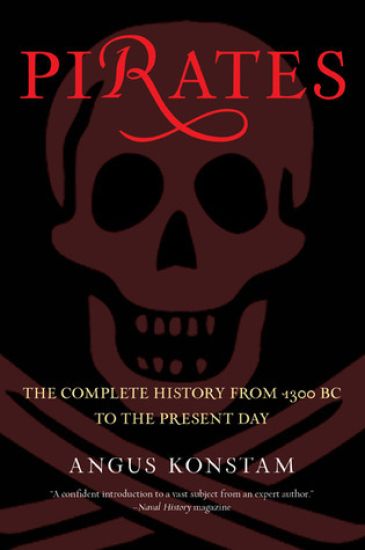
Pirates: The Complete History from 1300 BC to the Present Day
Angus Konstam setssail through the brutal history of piracy, separating myth from legend and fact from fiction. Pirates takes us into the depths of the pirate's dark world, examining the many colorful characters from Cretans and Vikings to French corsairs and the British rogues of the golden age of piracy, such as Blackbeard and Captain Kidd and even two women pirates, Mary Read and Ann Bonny, who became pregnant to avoid execution. A blood-soaked, riveting account, itprovides a complete history of the fearsome threat on the high seas from the marauders in the pages of antiquity to the Somali pirates in the headlines of today.
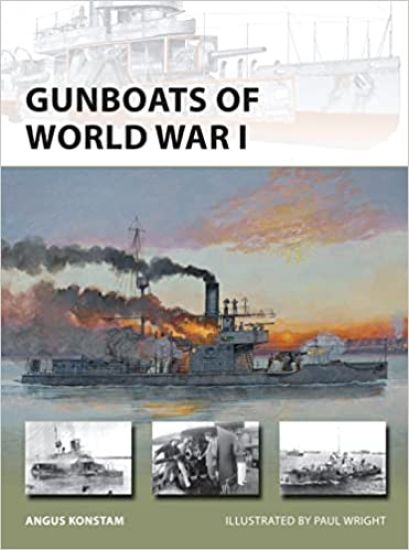
Gunboats of World War I

Gunboats of World War I

Angus Konstam

Osprey Publishing
2015
nidottu
Naval action in World War I conjures up images of enormous dreadnoughts slugging it out in vast oceans. Yet the truth is that more sailors were killed serving on gunboats and monitors operating far from the naval epicentre of the war than were ever killed at Jutland. Gunboat engagements during this war were bloody and hard fought, if small in scale. Austrian gunboats on the Danube fired the first shots of the war, whilst German, British and Belgian gunboats fought one of the strangest, most intriguing naval campaigns in history in far-flung Lake Tanganyika. From the Mediterranean to the Black Sea, from the Balkans to Mesopotamia, gunboats played an influential part in the story of World War I. This detailed technical guide to the gunboats of all the major navies of the war means that, for the first time, the story can be told.
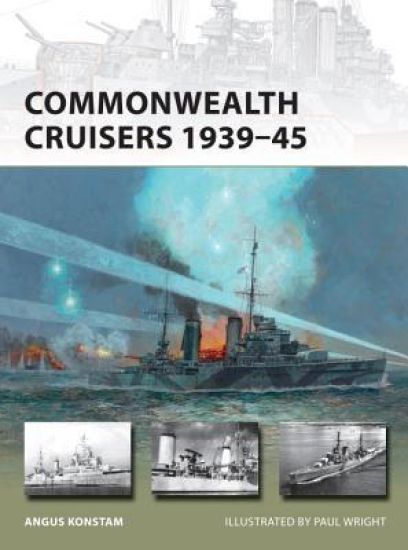
Commonwealth Cruisers 1939–45

Commonwealth Cruisers 1939–45

Angus Konstam

Osprey Publishing
2015
nidottu
In the early 20th century Britain’s largest colonies established their own small naval presence, and their ships fought alongside the Royal Navy during World War I. These fleets were expanded during the inter-war years, and in 1939 the Royal Australian Navy, the Royal Canadian Navy and the Royal New Zealand Navy willingly joined the fight on behalf of the British Commonwealth. For the most part these small navies consisted of a few cruisers and destroyers, designed to protect territorial waters and local sea lanes. However, these warships and their crews soon found themselves involved in a global war, and consequently were called upon to fight wherever they were needed, against the Germans, the Italians and the Japanese. This book tells the story of these small cruiser forces, and the men who served the Allied cause so well during the long and brutal war at sea.
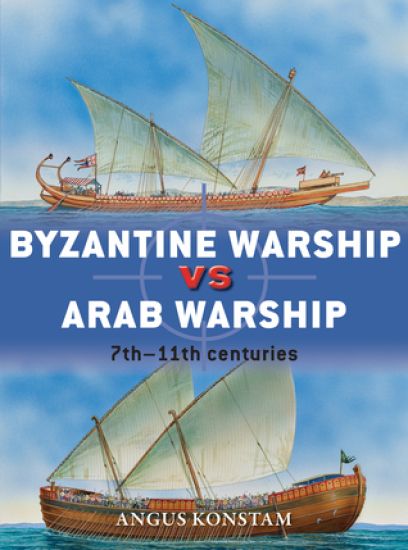
Byzantine Warship vs Arab Warship

Byzantine Warship vs Arab Warship

Angus Konstam

Osprey Publishing
2015
nidottu
Employing rigorous analysis and lively narrative alongside specially commissioned artwork, this study casts new light on the rivalry between two vessels of war in the Mediterranean.For four hundred years the Byzantine Empire’s naval forces vied with the warships of the Islamic world for mastery of the Mediterranean. At the heart of this confrontation were the fighting vessels of the two powers, the Byzantine dromon and the Arabic shalandi, both oared warships. In those four centuries of warfare between two major maritime powers, both the Byzantines and the Arabs left us records of their doctrine and tactics, as well as of how their ships were built.Featuring full-colour artwork and rigorous analysis from an authority on naval warfare, this enthralling book offers a glimpse of the long-lost world of war at sea in the age of Byzantium.
Ship Spotter’s Guide

Ship Spotter’s Guide

Angus Konstam

Osprey Publishing
2014
nidottu
A compact guide to 40 of the most iconic ships that have shaped warfare from the Ancient world to today.Since the days of the Ancient Greeks, naval ships of all sizes have revolutionized warfare. From the Viking longship, pirate ships and super dreadnoughts to today’s nuclear submarines and aircraft carriers, naval warfare has proved to be an essential component of military forces across the world.The Ship Spotter’s Guide provides essential information on 40 iconic ships, using detailed profile artwork to illustrate and aid recognition, as well as specification boxes to provide all the technical details.
U-47 in Scapa Flow

U-47 in Scapa Flow

Angus Konstam

Osprey Publishing
2015
nidottu
At the outset of World War II, Scapa Flow was supposed to be the safe home base of the British Navy – nothing could penetrate the defences of this bastion. So how, in the dead of night, was Gunther Prien's U-47 able to slip through the line of protective warships to sink the mighty Royal Oak? This book provides the answer with an account of one of the most daring naval raids in history. Drawing on the latest underwater archaeological research, this study explains how Prien and his crew navigated the North Sea and Kirk Sound to land a devastating blow to the British. It reveals the level of disrepair that Scapa Flow had fallen into, and delves into the conspiracy theories surrounding the event, including an alleged cover-up by the then First Sea Lord, Winston Churchill.
Taranto 1940

Taranto 1940

Angus Konstam

Osprey Publishing
2015
nidottu
The Royal Navy’s attack on Taranto in 1940 heralded a new age of warfare.It was the decisive moment in a struggle for dominance of the Mediterranean that had gone on for months, as the British and Italian navies both looked to secure maritime supply routes for their colonies. With the enormous demands of a global war beginning to tell, the British capital ships were simply too thinly spread for a large fleet action against Taranto, where the bulk of the Italian fleet lay menacingly. How was the Royal Navy to eliminate the threat of the Regia Marina? This is the story of one of World War II’s most devastating raids, recounting how a handful of obsolete Fairey Swordfish biplanes swooped in and destroyed an Italian battleship and badly damaged two more.With expert analysis, detailed colour illustrations and a gripping narrative, this book explains the origins of the attack, its planning and execution, and what happened in the aftermath.
Nile River Gunboats 1882–1918

Nile River Gunboats 1882–1918

Angus Konstam

Osprey Publishing
2016
nidottu
For more than 30 years the Nile river gunboat was an indispensable tool of empire, policing the great river and acting as floating symbols of British imperial power. They participated in every significant colonial campaign in the region, from the British invasion of Egypt in 1882 to the Battle of Omdurman in 1898, when Britain finally won control of the Sudan. After that, the gunboats helped maintain British control over both Egypt and the Sudan, and played a key role in safeguarding British interests around the headwaters of the Nile – a region hotly contested by several European powers. Featuring specially commissioned artwork, this comprehensive volume offers a detailed analysis of the Nile river gunboats' entire career, from policing British colonial interests along the great river to defending Egypt against the Ottoman Turks in World War I.
British Commando 1940–45

British Commando 1940–45

Angus Konstam

Osprey Publishing
2016
nidottu
With Hitler's army rampaging across Europe, Winston Churchill ordered the creation of a special fighting force – the Commandos. These valiant men were volunteers drawn from the ranks of the British Army, formed into a Special Service Brigade and put through a rigorous but highly effective training programme. Over the course of World War II they would see action in every major theatre of operation and are credited with numerous feats of gallantry during the D-Day landings. Although many units were disbanded after the war, the Royal Marine Commandos have maintained the standards of this elite fighting formation to the present day.Angus Konstam explores the history of the Commandos during their formative years, providing detailed descriptions of their training, weapons and equipment. Battle reports are accompanied by specially commissioned Osprey artwork and historical photographs, offering readers an in-depth analysis of some of the most famous fighting units in the British Army's history.
The Barbary Pirates 15th-17th Centuries

The Barbary Pirates 15th-17th Centuries

Angus Konstam

Osprey Publishing
2016
nidottu
For the best part of three centuries the 'corsairs' or pirates from the 'Barbary' coasts of North Africa dominated the Western and Central Mediterranean.They made forays far into the Atlantic, preying on the shipping and coastal settlements across Christian Europe, ranging from Greece to West Africa and the British Isles. In the absence of organized European navies they seldom faced serious opposition, and the scope of their raiding was remarkable. As well as piracy and slave-raiding they fought as privateers, sharing their spoils with the rulers of the port-cities that provided them with ships, men, and a ready market.This book examines their development and their style of fighting, chronicles their achievements and failures, and illustrates their appearance and that of their ships, explaining why they were so feared and effective.
British Destroyers 1939–45

British Destroyers 1939–45

Angus Konstam

Osprey Publishing
2017
nidottu
The Royal Navy entered World War II with a large but eclectic fleet of destroyers. Some of these were veterans of World War I, fit only for escort duties. Most though, had been built during the inter-war period, and were regarded as both reliable and versatile. Danger though lurked across the seas as new destroyers being built in Germany, Italy and Japan were larger and better armoured. So, until the new, larger Tribal-class destroyers could enter service, these vessels would have to hold the line. Used mainly to hunt submarines, protect convoys from aerial attack, and take out other destroyers, these ships served across the globe during the war. This fully illustrated study is the first in a two-part series on the real workhorses of the wartime Royal Navy, focusing on how these ageing ships took on the formidable navies of the Axis powers.
River Plate 1939

River Plate 1939

Angus Konstam

Osprey Publishing
2016
nidottu
Fully illustrated throughout, this engaging study of the first major naval action of World War II appeals to both military and naval historians alike.Days before the outbreak of World War II a handful of German commerce raiders put out to sea to prey on Allied merchantmen. Amongst them was the Panzerschiff ('armoured ship') Graf Spee, a formidable warship that boasted the firepower of a battleship but the size, speed and range of a cruiser.When World War II commenced, under the command of Captain Langsdorff the Graf Spee began a hunting spree across the South Atlantic and the Indian Ocean that eventual took her to the River Plate in search of her next victim – an Allied convoy. Instead she found three Royal Navy cruisers under the command of Commodore Harwood, eager to put an end to the 'pocket battleship' that had been terrorizing Allied merchant ships.Featuring full colour artwork, archive photographs and meticulous research, this comprehensive volume explores the thrilling story behind the Battle of the River Plate, an engagement that unquestionably demonstrated the effectiveness of British seapower and diplomacy on an international stage.
British Destroyers 1939–45

British Destroyers 1939–45

Angus Konstam

Osprey Publishing
2017
nidottu
As the possibility of war loomed in the 1930s, the British Admiralty looked to update their fleet of destroyers to compete with the new ships being built by Germany and Japan, resulting in the commissioning of the powerful Tribal-class. These were followed by the designing of the first of several slightly smaller ships, which carried fewer guns than the Tribals, but were armed with a greatly enlarged suite of torpedoes. The first of these, the 'J/K/M class' was followed by a number of wartime variants, with slight changes to their weaponry to suit different wartime roles.Designed to combat enemy surface warships, aircraft and U-boats, the British built these destroyers to face off against anything the enemy could throw at them. Using a collection of contemporary photographs and beautiful colour artwork, this is a fascinating new study of the ships that formed the backbone of the Royal Navy during World War II.
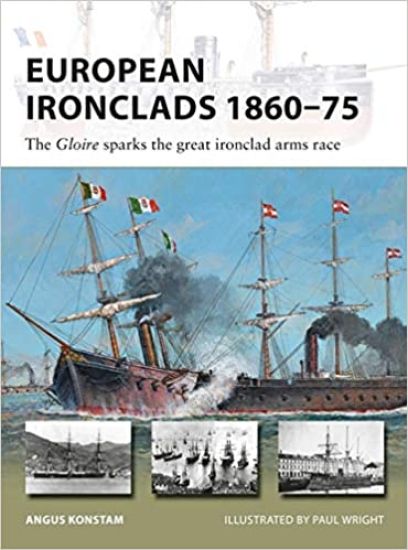
European Ironclads 1860–75

European Ironclads 1860–75

Angus Konstam

Osprey Publishing
2019
nidottu
From Spain to Russia, and from Ottoman Turkey to Bismarck’s Prussia, this book explores 15 years that transformed European naval warfare.When the Gloire slid down the Toulon slipway in 1859, it changed sea power forever. With this ship, the world’s first oceangoing ironclad, France had a warship that could sink any other, and which was proof against the guns of any wooden ship afloat. Instantly, an arms race began between the great navies of Europe – first to build their own ironclads, and then to surpass each other’s technology and designs.As both armour and gun technology rapidly improved, naval architects found new ways to mount and protect guns. The ram briefly came back into fashion, and Italian and Austro-Hungarian fleets fought the ironclad era’s great battle at Lissa. By the end of this revolutionary period, the modern battleship was becoming recognizable, and new naval powers were emerging to dominate Europe’s waters.
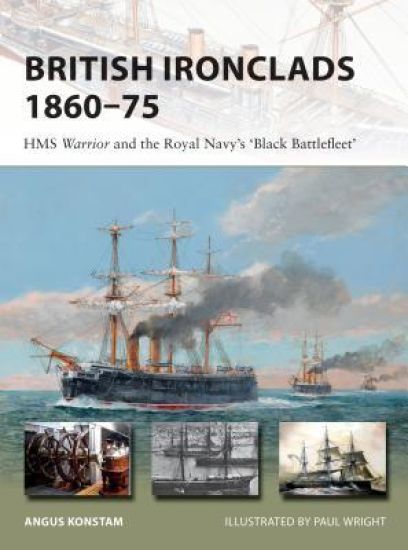
British Ironclads 1860–75

British Ironclads 1860–75

Angus Konstam

Osprey Publishing
2018
nidottu
In November 1859, the French warship La Gloire was launched. She was the world's first seagoing ironclad - a warship built from wood, but whose hull was clad in a protective layer of iron plate. Britain, not to be outdone, launched her own ironclad the following year - HMS Warrior - which, when she entered service, became the most powerful warship in the world. Just like the Dreadnought half a century later, this ship changed the nature of naval warfare forever, and sparked a frantic arms race. The elegant but powerful Warrior embodied the technological advances of the early Victorian era, and the spirit of this new age of steam, iron and firepower. Fully illustrated with detailed cutaway artwork, this book covers the British ironclad from its inception and emergence in 1860, to 1875, a watershed year, which saw the building of a new generation of recognisably modern turreted battleships.