Kirjojen hintavertailu. Mukana 12 016 292 kirjaa ja 12 kauppaa.

Kirjahaku

Etsi kirjoja tekijän nimen, kirjan nimen tai ISBN:n perusteella.

3 kirjaa tekijältä Angus Mitchell

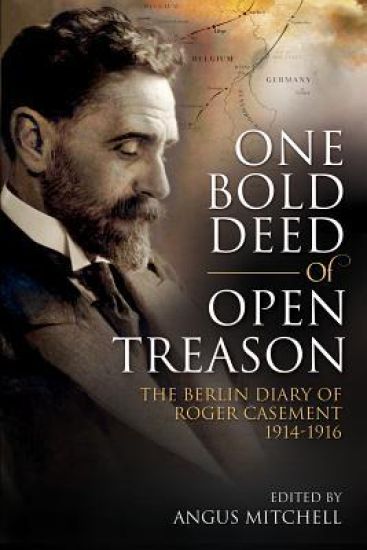
One Bold Deed of Open Treason

One Bold Deed of Open Treason

Angus Mitchell

Merrion Press
2016
sidottu
One Bold Deed of Open Treason describes the astonishing journey by Roger Casement to Germany in 1914, via USA and Norway, to secure support from the German government for the Irish Volunteer's military plan against the British, and to recruit an "Irish Brigade" from the 2,000 Irish prisoners-of-war taken in the early months of the war. Through his vivid and gripping diary entries - that read like a spy novel and reveal the motives behind his pivotal role in the Easter Rising - his mission to seek arms and ammunition from Germany was to be the deciding factor in the outcome of the Irish insurrection. Casement's story is an essential component in understanding the European context of the Rising and the reference to 'our gallant allies in Europe' within the Proclamation of the Republic. A prolific diarist, Casement recorded his daily movements and efforts to complete his mission and ultimately return to Ireland with enough guns and ammunition for the planned Rising; but in a terrible irony, his diary was to seal his fate following his capture on the sands of Banna Strand in North Kerry in April 1916, on board the Aud Norge with a cargo of rifles, machine guns and ammunition. With an expert editorial hand, Angus Mitchell provides clear context to Casement's diaries, also revealing his gruelling visit to the Western Front, the shocking interplay between the Easter Rising and the international theatre of the First World War, and the grand, self-destructive conclusion of an unremitting life.
Roger Casement

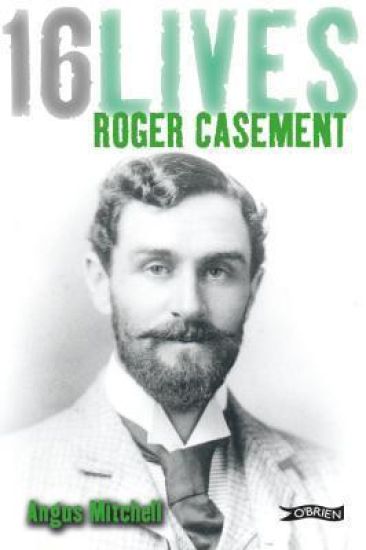
Roger Casement

Angus Mitchell

O'Brien Press Ltd
2013
pokkari
A fascinating examination of the extraordinary life of Roger Casement, executed as part of the 1916 rising, fighting the empire that had previously knighted him. Roger Casement was a British consul for two decades. However, his investigation into atrocities in the Congo led Casement to anti-Imperialist views. Ultimately, this led him to side with the Irish Republican movement, leading up to the 1916 rising. Arrested by the British for gun trafficking, he was incarcerated in the Tower of London and then placed in the dock at the Royal Courts of Justice in an internationally-publicised state trial for high treason. He was hanged in Pentonville prison on the 3 August—two years to the day after Britain’s declaration of war in 1914.
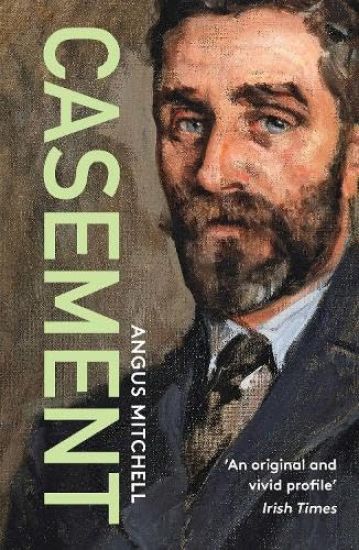
Casement

Casement

Angus Mitchell

Haus Publishing
2026
pokkari
At the time of his execution for treason in 1916, few were aware who Roger Casement was or what he represented. Since then, he has been lauded for his investigations into Belgian brutality in the Congo Free State and human rights abuses in the Peruvian rubber industry, but much else about him has remained obscured behind speculation about his sexuality and secret Irish revolutionary activity while in service of the British Empire. As such, his place in history has been ill-defined and multifarious: his involvement in the waging of war followed by the delicate negotiation of peace; his republicanism perceived variously as an eccentric enthusiasm and as a threat to the British Empire; his contemporary legacy overshadowed by the ‘Black Diaries’ of disputed legitimacy, detailing alleged liaisons with young men. In Casement, Angus Mitchell illuminates a life shrouded in mystery, which operated in the conflicting spheres of British foreign diplomacy and Irish revolutionary activity. Considering Casement’s rebellious nature, Mitchell asks if it was motivated as much by his ‘incorrigible’ Irishness as by his exposure of the appalling crimes against humanity that he witnessed in Africa and South America. Most significantly, Casement demonstrates that his legacy cannot be ascribed to just one cause, whether as a critic of global colonialism or as a founding father of the modern Irish nation-state; Casement’s true commitment was to a universal understanding based on humanity, tolerance, and justice.