

Kirjahaku
Etsi kirjoja tekijän nimen, kirjan nimen tai ISBN:n perusteella.
15 kirjaa tekijältä Anil Gupta
Human Caspases and Neuronal Apoptosis in Neurodegenerative Diseases
Anil Gupta
Academic Press Inc
2021
nidottu
Human Caspases and Neuronal Apoptosis in Neurodegenerative Diseases elucidates elaborately the role of caspase enzymes implicated in the initiation of molecular events leading to neuronal apoptosis in the neurodegenerative disease. The book starts with introduction to neuropathology, neurogenetics, and epidemiology of neurodegenerative disease and illustrates the involvement of human caspases, neuronal apoptosis, apoptotic pathways, genetic polymorphisms, and several other factors and underlying mechanisms in the pathology of Alzheimer’s disease, Parkinson’s disease, and Huntington’s disease. An important focus in all chapters is the intricate mechanisms and interplay that occur during or leading to neuron death in neurodegenerative diseases, along with disease pathobiology.

Understanding Insulin and Insulin Resistance
Anil Gupta
Elsevier Science Publishing Co Inc
2021
nidottu
Understanding Insulin and Insulin Resistance is written in a simple and clear language illustrated with diagrams that show the complex interplay of various factors in the initiation of insulin resistance. The design is systematic and meticulous, portraying topics in a flow from simple to complex. This resource is intended for a broad audience spanning across biochemistry, medicine, dentistry, academia, physicians, and research scholars. It extends the approach to biochemistry, physiology, metabolism of insulin along with the coverage of pathophysiology of insulin resistance, its effects on the body tissues, and its analysis on insulin resistance syndrome.
This volume reprints eight of Anil Gupta's essays, some with additional material. The essays bring a refreshing new perspective to central issues in philosophical logic, philosophy of language, and epistemology. Gupta argues that logical interdependence is legitimate, and that it provides a key to understanding a variety of topics of interest to philosophers--including truth, rationality, and experience. The essays are highly accessible and provide a good introduction to ideas Gupta has been developing over the last three decades.
Anil Gupta asks one of the key questions in philosophy: what is the contribution of experience of knowledge? Gupta develops an account of experience that allows it to inform knowledge while respecting two constraints - the contribution of experience to knowledge must be both rational and substantial. He says that these constraints cannot be met if we make the assumption that experience only aquaints us with partial truth about the world. Instead he uses tools from philosophical logic, specifically the logic of interdependent concepts, to show that a natural account of experience is available using the interdependence of views and perceptual judgements. In essence he argues for a reformed empiricism that embraces experience as conditional.
This book offers a novel account of the relationship of experience to knowledge. The account builds on the intuitive idea that our ordinary perceptual judgments are not autonomous, that an interdependence obtains between our view of the world and our perceptual judgments. Anil Gupta shows in this important study that this interdependence is the key to a satisfactory account of experience. He uses tools from logic and the philosophy of language to argue that his account of experience makes available an attractive and feasible empiricism.
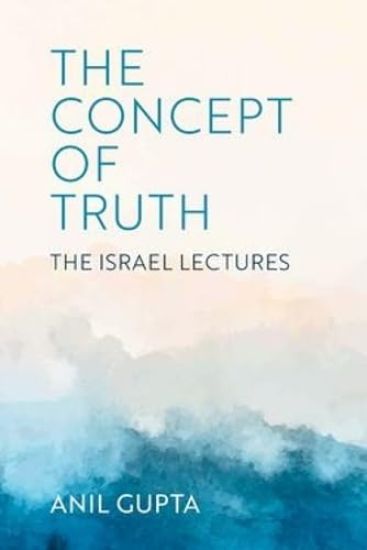
Anil Gupta here offers a systematic account of the concept of truth, with a particular focus on the role this concept plays in metaphysics. He examines functions the concept serves in everyday thinking and mounts, on their basis, an argument for a particular logic of truth. This logic enables, he argues, a new and powerful critique of deflationism--of the idea that the concept of truth is fit to serve only a logical role. The logic shows that deflationist claims about the contents of truth-attributions have only limited validity, and consequently, the accounts deflationists provide of truth are untenable. His book goes on to offer novel accounts of "appearance" and "phenomenon" and uses them, in conjunction with the newly improved understanding of the concept of truth, to clarify the metaphysical quest to understand reality. Gupta argues that the metaphysical inquiry into the nature of reality can equally well be described as an inquiry into the nature of truth. It is a distinctive merit of his book that Gupta brings together three streams of thinking about truth, streams that often run parallel to one another: the logical, the linguistic, and the metaphysical streams. He shows that ideas in the linguistic stream help overcome impasse in the logic of truth, and gains made in the latter help overcome stubborn misconceptions about the meaning and function of "'true". These gains, in turn, help correct metaphysical claims about the nature of truth, and indeed they help illuminate the metaphysical enterprise itself.
Ingestion of food is a physiological process among heterotrophic organisms to obtain nutrients for survival. The consumption of soil, clay and chalk by humans is labeled as geophagia. Ancient resources and modern references deliver valuable information concerning geophagia and pica in humans. This book takes a consistent, interdisciplinary approach for reviewing this aberrant behavior, crafting its etiology, charting its health effects and identifying the universal traits among the affected population. It puts forward a brief conceptual framework to achieve universality in its definition, history, epidemiology and multiple hypotheses thus help in adopting measures to control this habit. Key Features: 1. Systematic and meticulous flow of information on geophagia. 2. Guides general practioners, physicians, pediatricians to curb this practice in their patients. 3. A unique and concise treatise covering descriptive and research based work over a crucial health issue of worldwide prevalence.
Biochemical parameters represent better, precise, and objective tools toward the assessment of the nutritional status of children in comparison to anthropometric, clinical, and dietary methods. They constitute laboratory tests to estimate the concentration of circulating nutrients in body fluids. Biochemical parameters are suggestive of acute or subclinical conditions when other methods of nutritional assessment fail to interpret the condition. These parameters exhibit substantial variability in their reproducibility. Moreover, these parameters are novel tools in the hands of clinicians for screening of the nutritional status of children.Key Features Covers the latest biochemical parameters for nutritional assessment Updated content is useful for clinicians, nutritionists, and general practitioners A unique and concise treatise covering descriptive and research-based work on a crucial health issue of worldwide prevalenceAbout the AuthorAnil Gupta, PhD, is the Dean of Research at Desh Bhagat University and Professor and Head, Department of Physiology and Biochemistry at Desh Bhagat Dental College and Hospital, Mandi Gobindgarh, Punjab, India.
Biochemical Parameters and the Nutritional Status of Children
Anil Gupta
TAYLOR FRANCIS LTD
2022
nidottu
Biochemical parameters represent better, precise, and objective tools toward the assessment of the nutritional status of children in comparison to anthropometric, clinical, and dietary methods. They constitute laboratory tests to estimate the concentration of circulating nutrients in body fluids. Biochemical parameters are suggestive of acute or subclinical conditions when other methods of nutritional assessment fail to interpret the condition. These parameters exhibit substantial variability in their reproducibility. Moreover, these parameters are novel tools in the hands of clinicians for screening of the nutritional status of children.Key Features Covers the latest biochemical parameters for nutritional assessment Updated content is useful for clinicians, nutritionists, and general practitioners A unique and concise treatise covering descriptive and research-based work on a crucial health issue of worldwide prevalenceAbout the AuthorAnil Gupta, PhD, is the Dean of Research at Desh Bhagat University and Professor and Head, Department of Physiology and Biochemistry at Desh Bhagat Dental College and Hospital, Mandi Gobindgarh, Punjab, India.
A distinguished philosopher offers a novel account of experience and reason, and develops our understanding of conscious experience and its relationship to thought: a new reformed empiricism.The role of experience in cognition is a central and ancient philosophical concern. How, theorists ask, can our private experiences guide us to knowledge of a mind-independent reality? Exploring topics in logic, philosophy of mind, and epistemology, Conscious Experience proposes a new answer to this age-old question, explaining how conscious experience contributes to the rationality and content of empirical beliefs.According to Anil Gupta, this contribution cannot be determined independently of an agent’s conceptual scheme and prior beliefs, but that doesn’t mean it is entirely mind-dependent. While the rational contribution of an experience is not propositional—it does not, for example, provide direct knowledge of the world—it does authorize certain transitions from prior views to new views. In short, the rational contribution of an experience yields a rule for revising views. Gupta shows that this account provides theoretical freedom: it allows the observer to radically reconceive the world in light of empirical findings. Simultaneously, it grants empirical reason significant power to constrain, forcing particular conceptions of self and world on the rational inquirer. These seemingly contrary virtues are reconciled through novel treatments of presentation, appearances, and ostensive definitions.Collectively, Gupta’s arguments support an original theory: reformed empiricism. He abandons the idea that experience is a source of knowledge and justification. He also abandons the idea that concepts are derived from experience. But reformed empiricism preserves empiricism’s central insight: experience is the supreme epistemic authority. In the resolution of factual disagreements, experience trumps all.
Ingestion of food is a physiological process among heterotrophic organisms to obtain nutrients for survival. The consumption of soil, clay and chalk by humans is labeled as geophagia. Ancient resources and modern references deliver valuable information concerning geophagia and pica in humans. This book takes a consistent, interdisciplinary approach for reviewing this aberrant behavior, crafting its etiology, charting its health effects and identifying the universal traits among the affected population. It puts forward a brief conceptual framework to achieve universality in its definition, history, epidemiology and multiple hypotheses thus help in adopting measures to control this habit.Key Features:1. Systematic and meticulous flow of information on geophagia.2. Guides general practioners, physicians, pediatricians to curb this practice in their patients. 3. A unique and concise treatise covering descriptive and research based work over a crucial health issue of worldwide prevalence.
The book highlights intricate predisposing factors for pathogenesis of nutritional anemia. It delivers valuable information related to this public health hazard influencing the nutritional health of preschool children. The book is valuable for readers in diverse fields to gain insight of the concept of nutritional anemia in preschool children. Additionally, book furnishes clinical and laboratory methods in a comparative way to assess nutritional anemia. Impact of the disorder on health of preschool children has been covered in a simple language. The book mentions need for interventional strategies for the management of nutritional anemia. Infants, preschool children and women during pregnancy and lactation are highly susceptible to dietary deficiency of iron, folic acid and cyanocobalamin leading to comparatively, higher predisposition to development of nutritional anemia. The condition has myriad of ill effects on nutritional health of preschool children.

This book combines fundamental concepts of biochemistry and the dental sciences to provide an authentic, coherent and comprehensive text for dental students. It describes in simple language the intricate pathophysiology of biomolecules in health and in diseases of dental and oral tissues. This book also describes the evolution of biochemistry in a chronological order, provides information about the fundamental chemical structure, classification and biological significance of biomolecules, vitamins and hormones, enriched with flow charts and diagrams for easy understanding and quick reference. It includes chapters on nucleic acids, nutrition and serum enzymes and organ function tests, and offers an innovative approach to familiarize dental students with the biochemical composition of enamel, dentine, cementum and saliva, explaining the biochemical basis of dental caries, periodontal diseases, role of fluorides in caries prophylaxis, fluoride toxicity, and the role of amino acids as anti-hypersensitive agents.
The book highlights intricate predisposing factors for pathogenesis of nutritional anemia. It delivers valuable information related to this public health hazard influencing the nutritional health of preschool children. The book is valuable for readers in diverse fields to gain insight of the concept of nutritional anemia in preschool children. Additionally, book furnishes clinical and laboratory methods in a comparative way to assess nutritional anemia. Impact of the disorder on health of preschool children has been covered in a simple language. The book mentions need for interventional strategies for the management of nutritional anemia. Infants, preschool children and women during pregnancy and lactation are highly susceptible to dietary deficiency of iron, folic acid and cyanocobalamin leading to comparatively, higher predisposition to development of nutritional anemia. The condition has myriad of ill effects on nutritional health of preschool children.