Kirjojen hintavertailu. Mukana 11 244 527 kirjaa ja 12 kauppaa.

Kirjahaku

Etsi kirjoja tekijän nimen, kirjan nimen tai ISBN:n perusteella.

9 kirjaa tekijältä Ann Hartle

What Happened to Civility

What Happened to Civility

Ann Hartle

UNIVERSITY OF NOTRE DAME PRESS
2022
sidottu
What is civility, and why has it disappeared? Ann Hartle analyzes the origins of the modern project and the Essays of Michel de Montaigne to discuss why civility is failing in our own time. In this bold book, Ann Hartle, one of the most important interpreters of sixteenth-century French philosopher Michel de Montaigne, explores the modern notion of civility—the social bond that makes it possible for individuals to live in peace in the political and social structures of the Western world—and asks, why has it disappeared? Concerned with the deepening cultural divisions in our postmodern, post-Christian world, she traces their roots back to the Reformation and Montaigne's Essays. Montaigne's philosophical project of drawing on ancient philosophy and Christianity to create a new social bond to reform the mores of his culture is perhaps the first act of self-conscious civility. After tracing Montaigne's thought, Hartle returns to our modern society and argues that this framing of civility is a human, philosophical invention and that civility fails precisely because it is a human, philosophical invention. She concludes with a defense of the central importance of sacred tradition for civility and the need to protect and maintain that social bond by supporting nonpoliticized, nonideological, free institutions, including and especially universities and churches. What Happened to Civility is written for readers concerned about the deterioration of civility in our public life and the defense of freedom of religion. The book will also interest philosophers who seek a deeper understanding of modernity and its meaning, political scientists interested in the meaning of liberalism and the causes of its failure, and scholars working on Montaigne's Essays.
What Happened to Civility

What Happened to Civility

Ann Hartle

UNIVERSITY OF NOTRE DAME PRESS
2022
nidottu
What is civility, and why has it disappeared? Ann Hartle analyzes the origins of the modern project and the Essays of Michel de Montaigne to discuss why civility is failing in our own time. In this bold book, Ann Hartle, one of the most important interpreters of sixteenth-century French philosopher Michel de Montaigne, explores the modern notion of civility—the social bond that makes it possible for individuals to live in peace in the political and social structures of the Western world—and asks, why has it disappeared? Concerned with the deepening cultural divisions in our postmodern, post-Christian world, she traces their roots back to the Reformation and Montaigne's Essays. Montaigne's philosophical project of drawing on ancient philosophy and Christianity to create a new social bond to reform the mores of his culture is perhaps the first act of self-conscious civility. After tracing Montaigne's thought, Hartle returns to our modern society and argues that this framing of civility is a human, philosophical invention and that civility fails precisely because it is a human, philosophical invention. She concludes with a defense of the central importance of sacred tradition for civility and the need to protect and maintain that social bond by supporting nonpoliticized, nonideological, free institutions, including and especially universities and churches. What Happened to Civility is written for readers concerned about the deterioration of civility in our public life and the defense of freedom of religion. The book will also interest philosophers who seek a deeper understanding of modernity and its meaning, political scientists interested in the meaning of liberalism and the causes of its failure, and scholars working on Montaigne's Essays.
Michel de Montaigne

Michel de Montaigne

Ann Hartle

Cambridge University Press
2007
pokkari
Michel de Montaigne, the inventor of the essay, has always been acknowledged as a great literary figure but has never been thought of as a philosophical original. This book treats Montaigne as a serious thinker in his own right, taking as its point of departure Montaigne's description of himself as 'an unpremeditated and accidental philosopher'. Whereas previous commentators have treated Montaigne's Essays as embodying a scepticism harking back to classical sources, Ann Hartle offers an account that reveals Montaigne's thought to be dialectical, transforming sceptical doubt into wonder at the most familiar aspects of life. This major reassessment of a much admired but also much underestimated thinker will interest a wide range of historians of philosophy as well as scholars in comparative literature, French studies and the history of ideas.
Michel de Montaigne

Michel de Montaigne

Ann Hartle

Cambridge University Press
2003
sidottu
Michel de Montaigne, the inventor of the essay, has always been acknowledged as a great literary figure but has never been thought of as a philosophical original. This book treats Montaigne as a serious thinker in his own right, taking as its point of departure Montaigne's description of himself as 'an unpremeditated and accidental philosopher'. Whereas previous commentators have treated Montaigne's Essays as embodying a scepticism harking back to classical sources, Ann Hartle offers an account that reveals Montaigne's thought to be dialectical, transforming sceptical doubt into wonder at the most familiar aspects of life. This major reassessment of a much admired but also much underestimated thinker will interest a wide range of historians of philosophy as well as scholars in comparative literature, French studies and the history of ideas.
Montaigne and the Origins of Modern Philosophy

Montaigne and the Origins of Modern Philosophy

Ann Hartle

Northwestern University Press
2013
nidottu
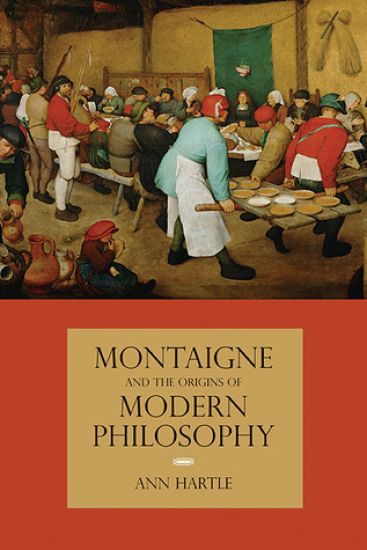
Montaigne’s Essays are rightfully studied as giving birth to the literary form of that name. Ann Hartle’sMontaigne and the Origins of Modern Philosophy argues that the essay is actually the perfect expression of Montaigne as what he called ""a new figure: an unpremeditated and accidental philosopher."" Unpremeditated philosophy is philosophy made sociable—brought down from the heavens to the street, where it might be engaged in by a wider audience. In the same philosophical act, Montaigne both transforms philosophy and invents ""society,"" a distinctly modern form of association. Through this transformation, a new, modern character emerges: the individual, who is neither master nor slave and who possesses the new virtues of integrity and generosity. In Montaigne’s radically new philosophical project, Hartle finds intimations of both modern epistemology and modern political philosophy.
Flannery O'Connor and Blaise Pascal

Flannery O'Connor and Blaise Pascal

Ann Hartle

THE CATHOLIC UNIVERSITY OF AMERICA PRESS
2025
nidottu
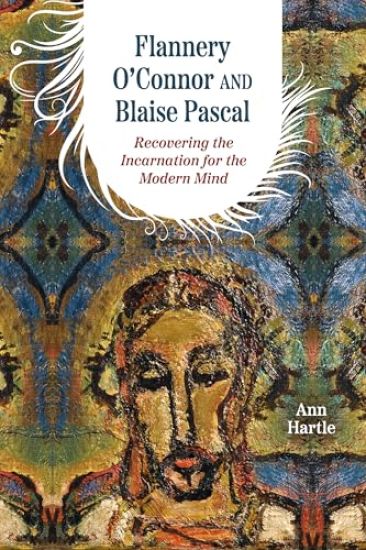
Flannery O'Connor is a guide for the Catholic who seeks to gain a deeper understanding of what it means to live the life of faith in the modern world. O'Connor describes herself as a Catholic burdened by the modern consciousness which the psychologist Carl Gustav Jung views as "unhistorical, solitary, and guilty." Ann Hartle understands O'Connor's fiction as her confrontation with this specifically modern form of consciousness. The seventeenth-century philosopher Blaise Pascal helps us to experience the meaning of O'Connor's fiction because Pascal confronted that same consciousness in its origins in Montaigne's philosophy. O'Connor recognizes in Pascal a truly Catholic modern philosopher who speaks to the experience of the searching mind of modern man.Flannery O'Connor and Blaise Pascal approaches O'Connor's fiction from a philosophical perspective rather than the perspective of a literary critic. The goal of this volume is to deepen the experience of the meaning of her stories insofar as they are addressed to a specifically modern audience burdened with the form of consciousness that is highly skeptical of the historical reality of the Christian mystery.Hartle's argument is that modern consciousness rests on the "spiritualization" of the Incarnation. Both Montaigne and Jung abstract a purely human meaning from the historical embodied reality of the Incarnation and place that meaning in the service of modern man's attempt at self-creation and self-redemption. O'Connor presents us with an especially vivid picture of Jung's truly modern individual in Hazel Motes, Hulga Hopewell, George Rayber, and The Misfit. In her comic art, O'Connor brings out the possibility of grace against the background of the pervasive psychological attitude toward human conduct. She shows us how the modern distortions of the human personality can be addressed in a specifically Catholic way, that is, through the meaning of the Catholic sacramental view of life and the Catholic principle of mutual interdependence.
Self-Knowledge in the Age of Theory

Self-Knowledge in the Age of Theory

Ann Hartle

Rowman Littlefield
1996
sidottu
The philosophical ideal of self-knowledge has been all but forgotten in what Walker Percy calls 'the age of theory.' Hartle attempts to recover that ancient philosophical task and to articulate what that ideal could mean in the context of our historical situation. She considers and rejects claims that we can attain self-knowledge through theory, anti-theory, or narrative and she defends philosophy as a humanistic, rather than scientific, endeavor. Self-Knowledge in the Age of Theory will be of great interest not only to philosophers but to scholars of literature and other humanities.
Montaigne and the Origins of Modern Philosophy

Montaigne and the Origins of Modern Philosophy

Ann Hartle

Northwestern University Press
2013
sidottu
Montaigne’s Essays are rightfully studied as giving birth to the literary form of that name. Ann Hartle’sMontaigne and the Origins of Modern Philosophy argues that the essay is actually the perfect expression of Montaigne as what he called ""a new figure: an unpremeditated and accidental philosopher."" Unpremeditated philosophy is philosophy made sociable—brought down from the heavens to the street, where it might be engaged in by a wider audience. In the same philosophical act, Montaigne both transforms philosophy and invents ""society,"" a distinctly modern form of association. Through this transformation, a new, modern character emerges: the individual, who is neither master nor slave and who possesses the new virtues of integrity and generosity. In Montaigne’s radically new philosophical project, Hartle finds intimations of both modern epistemology and modern political philosophy.
Death and the Disinterested Spectator

Death and the Disinterested Spectator

Ann Hartle

State University of New York Press
1986
pokkari
Death and the Disinterested Spectator examines the nature of philosophy in light of philosophy's claim to be a preparation for death. Does philosophy have any real power, or is it merely idle talk? The background against which this question is explored is a re-interpretation of Plato's Phaedo, Augustine's Confessions, and Descartes' Discourse on Method.