Kirjojen hintavertailu. Mukana 11 244 527 kirjaa ja 12 kauppaa.

Kirjahaku

Etsi kirjoja tekijän nimen, kirjan nimen tai ISBN:n perusteella.

19 kirjaa tekijältä Anna Clark

The Struggle for the Breeches

The Struggle for the Breeches

Anna Clark

University of California Press
1997
pokkari
Linking the personal and the political, Anna Clark depicts the making of the working class in Britain as a 'struggle for the breeches.' The late eighteenth and early nineteenth centuries witnessed significant changes in notions of masculinity and femininity, the sexual division of labor, and sexual mores, changes that were intimately intertwined with class politics. By integrating gender into the analysis of class formation, Clark transforms the traditional narrative of working-class history. Going beyond the sterile debate about whether economics or language determines class consciousness, Clark integrates working people's experience with an analysis of radical rhetoric. Focusing on Lancashire, Glasgow, and London, she contrasts the experience of artisans and textile workers, demonstrating how each created distinctively gendered communities and political strategies. Workers faced a 'sexual crisis,' Clark claims, as men and women competed for jobs and struggled over love and power in the family. While some radicals espoused respectability, others might be homophobes, wife-beaters, and tyrants at home; a radical's love of liberty could be coupled with lust for the life of a libertine. Clark shows that in trying to create a working class these radicals closed off the movement to women, instead adopting a conservative rhetoric of domesticity and narrowing their notion of the working class.
Teaching the Nation

Teaching the Nation

Anna Clark

MELBOURNE UNIVERSITY PRESS
2006
nidottu
The 'History Wars' have come to dominate discussion of Australian history in recent years, playing out over various national sites of celebration and commemoration. Anna Clark examines the place of school history in these disputes over the past, and suggests their partisan historical divide is complicated in the schools arena, where debate has been increasingly contested over 'our children', the nation's future.
Private Lives, Public Histories

Private Lives, Public Histories

Anna Clark

Melbourne University Press
2016
nidottu
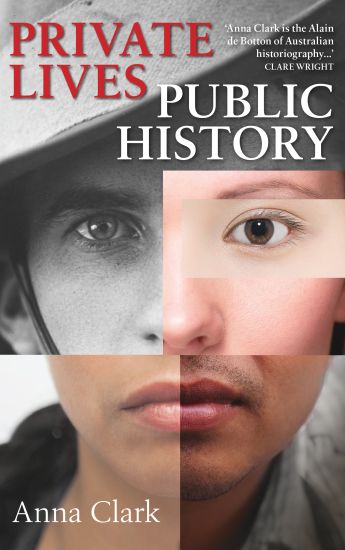
The past is consumed on a grand scale: popularised by television programs, enjoyed by reading groups, walking groups, historical societies and heritage tours, and supported by unprecedented digital access to archival records. Yet our history has also become the subject of heated political contest and debate. In Private Lives, Public History, historian Anna Clark explores how our personal pasts intersect with broader historical questions and debates. Drawing on interviews with Australians from five communities around the country, she uncovers how we think about the past in the context of our local and intimate stories, and the role history plays in our lives.
The Knowledge Solution: Australian History

The Knowledge Solution: Australian History

Anna Clark

MELBOURNE UNIVERSITY PRESS
2019
nidottu
Does history provide us with cautionary tales or does it highlight the contested nature of our understanding of the past? Colonisation, nationalism, racism. Fighting on foreign shores, violence on our own country. Workers' rights, land booms, cultural wars. What can we learn from these reoccurring events across the recent history of this nation?In The Knowledge Solution: Australian History, the country's most compelling writers and historians give insight into the challenging and diverse perspectives of Australia's past, and illuminate how we may better step into the future. Contributors include: David Unaipon; Michael Cannon; Stuart Macintyre; Rebe Taylor; Mark McKenna; Rebecca Perkins; Marcia Langton; Peter Sutton; Jo Wainer; James Curran; Stuart Ward; Ellen Warn; Michele Grossman; John Rickard; Peter Spearritt; Helen MacDonald; Janet McCalman; Mark Davis; Richard Evans; Edward Duyker; Ray Parkin; Geoffrey Blainey; Peter Cochrane; Raffaello Carboni; Bain Attwood; Manning Clark.
Scandal

Scandal

Anna Clark

Princeton University Press
2006
pokkari
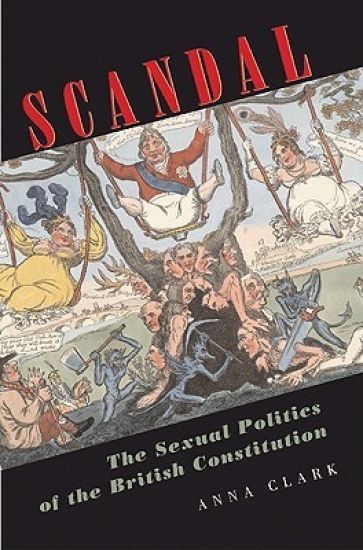
Are sex scandals simply trivial distractions from serious issues or can they help democratize politics? In 1820, George IV's "royal gambols" with his mistresses endangered the Old Oak of the constitution. When he tried to divorce Queen Caroline for adultery, the resulting scandal enabled activists to overcome state censorship and revitalize reform. Looking at six major British scandals between 1763 and 1820, this book demonstrates that scandals brought people into politics because they evoked familiar stories of sex and betrayal. In vibrant prose woven with vivid character sketches and illustrations, Anna Clark explains that activists used these stories to illustrate constitutional issues concerning the Crown, Parliament, and public opinion. Clark argues that sex scandals grew out of the tension between aristocratic patronage and efficiency in government. For instance, in 1809 Mary Ann Clarke testified that she took bribes to persuade her royal lover, the army's commander-in-chief, to promote officers, buy government offices, and sway votes. Could women overcome scandals to participate in politics? This book also explains the real reason why the glamorous Georgiana, Duchess of Devonshire, became so controversial for campaigning in a 1784 election. Sex scandal also discredited Mary Wollstonecraft, one of the first feminists, after her death. Why do some scandals change politics while others fizzle? Edmund Burke tried to stir up scandal about the British empire in India, but his lurid, sexual language led many to think he was insane. A unique blend of the history of sexuality and women's history with political and constitutional history, Scandal opens a revealing new window onto some of the greatest sex scandals of the past. In doing so, it allows us to more fully appreciate the sometimes shocking ways democracy has become what it is today.
Desire

Desire

Anna Clark

CRC Press Inc
2019
sidottu
A sweeping survey of sexuality in Europe from the Greeks to the present, Desire: A History of European Sexuality follows changing attitudes to two major concepts of sexual desire – desire as dangerous, polluting, and disorderly, and desire as creative, transcendent, even revolutionary – through the major turning points of European history.Chronological in structure, and wide ranging in scope, Desire addresses such topics as sex in ancient Judaism, Christianity, and Islam, sexual contact and culture clash in Spain and colonial Mesoamerica, new attitudes toward sexuality in the seventeenth and eighteenth centuries, and sex in Bolshevik Russia and Nazi Germany. The book introduces the concept of "twilight moments" to describe activities seen as shameful or dishonorable, but which were tolerated when concealed by shadows, and integrates the history of heterosexuality with same-sex desire, as well as exploring the emotions of love and lust as well as the politics of sex and personal experiences. This new edition has been updated to include a new chapter on sex and imperialism and expanded discussions of Islam and trans issues. Drawing on a rich array of sources, including poetry, novels, pornography, and film, as well as court records, autobiographies, and personal letters, and written in a lively, engaging style, Desire remains an essential resource for scholars and students of the history of European sexuality, as well as women’s and gender history, social and cultural history and LGBTQ history.
Desire

Desire

Anna Clark

CRC Press Inc
2019
nidottu
A sweeping survey of sexuality in Europe from the Greeks to the present, Desire: A History of European Sexuality follows changing attitudes to two major concepts of sexual desire – desire as dangerous, polluting, and disorderly, and desire as creative, transcendent, even revolutionary – through the major turning points of European history.Chronological in structure, and wide ranging in scope, Desire addresses such topics as sex in ancient Judaism, Christianity, and Islam, sexual contact and culture clash in Spain and colonial Mesoamerica, new attitudes toward sexuality in the seventeenth and eighteenth centuries, and sex in Bolshevik Russia and Nazi Germany. The book introduces the concept of "twilight moments" to describe activities seen as shameful or dishonorable, but which were tolerated when concealed by shadows, and integrates the history of heterosexuality with same-sex desire, as well as exploring the emotions of love and lust as well as the politics of sex and personal experiences. This new edition has been updated to include a new chapter on sex and imperialism and expanded discussions of Islam and trans issues. Drawing on a rich array of sources, including poetry, novels, pornography, and film, as well as court records, autobiographies, and personal letters, and written in a lively, engaging style, Desire remains an essential resource for scholars and students of the history of European sexuality, as well as women’s and gender history, social and cultural history and LGBTQ history.
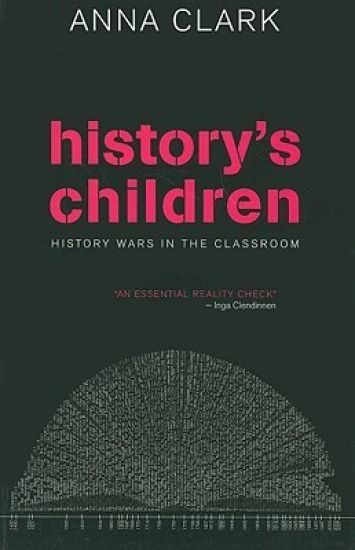
History's Children

History's Children

Anna Clark

UNSW Press
2008
nidottu
What is it about Australian history? Students dismiss the subject for being boring while politicians and concerned parents fret over their lack of historical knowledge. Teachers struggle to get their kids interested in Australia's past while history wars rage in the media all around them. For a subject that's widely dismissed for not exciting much emotion in the classroom, Australian history doesn't suffer from anything of the kind when it comes to anxious public debate over its status in schools. The classroom has become the battleground of the 'history wars', yet no-one ever asks the children what they think about Australian history and what they like - or don't about learning it.Through interviews with around 250 Australian students from a wide variety of schools, Anna Clark asks how teachers and students teach and learn Australian history. This book is a lively and often surprising read that throws all kinds of challenges to students, teachers and indeed, politicians.The author is an exciting and prominent young historian who also co-authored the multi-award winning ""The History Wars"". It is written in a lively, engaging and often funny style. It taps into heated national debates on education and the History Wars, but takes a fresh new perspective by talking to the children and teachers. This innovative book allows children to engage in a meaningful dialogue with teachers and others in the field of youth education. This title will be supported by a full media campaign.
The Poisoned City: Flint's Water and the American Urban Tragedy
Winner of The Hillman Prize for Book Journalism - 2019 When the people of Flint, Michigan, turned on their faucets in April 2014, the water pouring out was poisoned with lead and other toxins.Through a series of disastrous decisions, the state government had switched the city's water supply to a source that corroded Flint's aging lead pipes. Complaints about the foul-smelling water were dismissed: the residents of Flint, mostly poor and African American, were not seen as credible, even in matters of their own lives. It took eighteen months of activism by city residents and a band of dogged outsiders to force the state to admit that the water was poisonous. By that time, twelve people had died and Flint's children had suffered irreparable harm. The long battle for accountability and a humane response to this man-made disaster has only just begun. In the first full account of this American tragedy, Anna Clark's The Poisoned City recounts the gripping story of Flint's poisoned water through the people who caused it, suffered from it, and exposed it. It is a chronicle of one town, but could also be about any American city, all made precarious by the neglect of infrastructure and the erosion of democratic decision making. Places like Flint are set up to fail--and for the people who live and work in them, the consequences can be fatal.
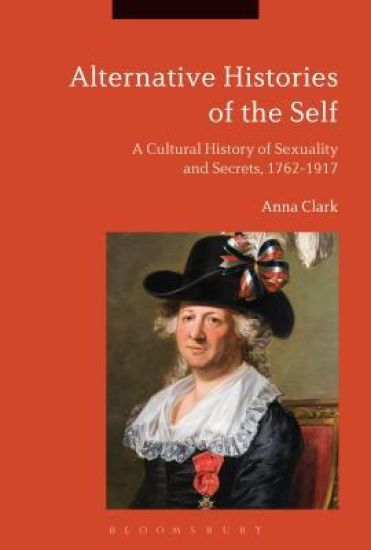
Alternative Histories of the Self

Alternative Histories of the Self

Anna Clark

Bloomsbury Academic
2017
sidottu
This open access book investigates how people re-imagined the idea of the unique self in the period from 1762 to 1917. Some used the notion of the unique self to justify their gender and sexual transgression, but others rejected the notion of the unique self and instead demanded the sacrifice of the self for the good of society. The substantial introductory chapter places these themes in the cultural context of the long nineteenth century, but the book as a whole represents an alternative method for studying the self. Instead of focusing on the thoughts of great thinkers, this book explores how five unusual individuals twisted conventional ideas of the self as they interpreted their own lives. These subjects include: * The Chevalièr/e d’Eon, a renegade diplomat who was outed as a woman * Anne Lister, who wrote coded diaries about her attraction to women * Richard Johnson, who secretly criticized the empire that he served * James Hinton, a Victorian doctor who publicly advocated philanthropy and privately supported polygamy * Edith Ellis, a socialist lesbian who celebrated the ‘abnormal’ These five case studies are skilfully used to explore how the notion of the unique individual was used to make sense of sexual or gender non-conformity. Yet this queer reading will go beyond same-sex desire to analyse the issue of secrets and privacy; for instance, what stigma did men who practiced or advocated unconventional relationships with women incur? Finally, Clark ties these unusual lives to the wider questions of ethics and social justice: did those who questioned sexual conventions challenge political traditions as well? This is a highly innovative study that will be of interest to intellectual historians of modern Britain and Europe, as well as historians of gender and sexuality.The ebook editions of this book are available open access under a CC BY-NC-ND 4.0 licence on bloomsburycollections.com. Open access was funded by Knowledge Unlatched.
Alternative Histories of the Self

Alternative Histories of the Self

Anna Clark

Bloomsbury Academic
2019
nidottu
This open access book investigates how people re-imagined the idea of the unique self in the period from 1762 to 1917. Some used the notion of the unique self to justify their gender and sexual transgression, but others rejected the notion of the unique self and instead demanded the sacrifice of the self for the good of society. The substantial introductory chapter places these themes in the cultural context of the long nineteenth century, but the book as a whole represents an alternative method for studying the self. Instead of focusing on the thoughts of great thinkers, this book explores how five unusual individuals twisted conventional ideas of the self as they interpreted their own lives. These subjects include: * The Chevalièr/e d’Eon, a renegade diplomat who was outed as a woman * Anne Lister, who wrote coded diaries about her attraction to women * Richard Johnson, who secretly criticized the empire that he served * James Hinton, a Victorian doctor who publicly advocated philanthropy and privately supported polygamy * Edith Ellis, a socialist lesbian who celebrated the ‘abnormal’ These five case studies are skilfully used to explore how the notion of the unique individual was used to make sense of sexual or gender non-conformity. Yet this queer reading will go beyond same-sex desire to analyse the issue of secrets and privacy; for instance, what stigma did men who practiced or advocated unconventional relationships with women incur? Finally, Clark ties these unusual lives to the wider questions of ethics and social justice: did those who questioned sexual conventions challenge political traditions as well? This is a highly innovative study that will be of interest to intellectual historians of modern Britain and Europe, as well as historians of gender and sexuality.The ebook editions of this book are available open access under a CC BY-NC-ND 4.0 licence on bloomsburycollections.com. Open access was funded by Knowledge Unlatched.
Tears of a Dragon

Tears of a Dragon

Anna Clark

iUniverse
2020
pokkari
In a world marked by an ancient, never-ending war, two boys live very different lives. Good-hearted Oren Raevin, with his mother dead and his father missing, is an outcast in his village. In contrast, Syris Ulzary is the pride of his people, although his heart is corrupted. As tensions rise in their homes, a talking bear named Ral appears to each one and spirits them away. Where the bear plans to lead them, however, is far more dangerous than they could have anticipated. Monsters, demons, and magical entities all block the way on the frightful path to their goal-to find the Goddess of Origin, the creator of the universe, before Tora, the God of Rage, breaks free of his prison and destroys everything. As Ral struggles to keep Oren and Syris alive, the secrets surrounding them threaten to pull their fragile bond apart. Events reveal both the lies and truths that have defined the boys' lives, and they find themselves questioning their own realities. If this unlikely trio of heroes isn't strong enough to withstand the danger, the journey could end them. In this fantasy novel, two boys join forces with a talking bear in an attempt to save their world from destruction at the hands of the God of Rage.
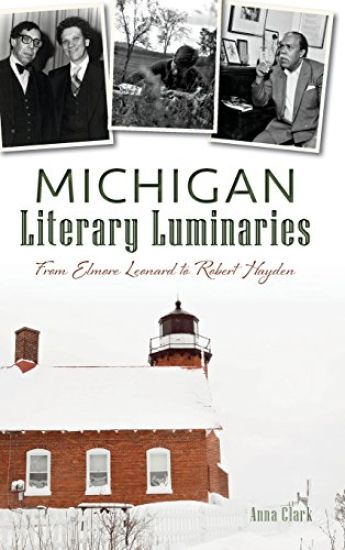
Michigan Literary Luminaries: From Elmore Leonard to Robert Hayden
From Ernest Hemingway's rural adventures to the gritty fiction of Joyce Carol Oates, the landscape of the "Third Coast" has inspired generations of the nation's greatest storytellers. Michigan Literary Luminaries shines a spotlight on this rich heritage of the Great Lakes State. Discover how Saginaw greenhouses shaped the life of Pulitzer Prize-winning writer Theodore Roethke. Compare the common traits of Detroit crime writers like Elmore Leonard and Donald Goines. Learn how Dudley Randall revolutionized American literature by doing for poets what Motown Records did for musicians. Join author Anna Clark as she unveils Michigan's extraordinary written culture with a mixture of history, literary criticism and original reporting.
The History of Suffrage, 1760-1867

The History of Suffrage, 1760-1867

Anna Clark

Pickering Chatto (Publishers) Ltd
1999
muu
This six-volume collection brings together key documents on women’s suffrage from Britain and the Empire in the century between 1767 and 1867. With a particular focus on voting rights and political representation, the collection includes excerpts of works from renowned writers such as Edmund Burke and John Stuart Mill, as well as rare and insightful texts from less prominent authors. This collection provides a valuable reference to students of various disciplines, including British and imperial history, gender studies, literature, politics, and the history of feminism.
The Poisoned City: Flint's Water and the American Urban Tragedy
Winner of The Hillman Prize for Book Journalism - 2019 When the people of Flint, Michigan, turned on their faucets in April 2014, the water pouring out was poisoned with lead and other toxins. Through a series of disastrous decisions, the state government had switched the city's water supply to a source that corroded Flint's aging lead pipes. Complaints about the foul-smelling water were dismissed: the residents of Flint, mostly poor and African American, were not seen as credible, even in matters of their own lives. It took eighteen months of activism by city residents and a band of dogged outsiders to force the state to admit that the water was poisonous. By that time, twelve people had died and Flint's children had suffered irreparable harm. The long battle for accountability and a humane response to this man-made disaster has only just begun. In the first full account of this American tragedy, Anna Clark's The Poisoned City recounts the gripping story of Flint's poisoned water through the people who caused it, suffered from it, and exposed it. It is a chronicle of one town, but could also be about any American city, all made precarious by the neglect of infrastructure and the erosion of democratic decision making. Places like Flint are set up to fail--and for the people who live and work in them, the consequences can be fatal.
Desire

Desire

Anna Clark

TAYLOR FRANCIS LTD
2026
sidottu
A sweeping survey of sexuality in Europe from the Greeks to the present, Desire: A History of European Sexuality follows changing attitudes to two major concepts of sexual desire – desire as dangerous, polluting, and disorderly, and desire as creative, transcendent, even revolutionary – through the major turning points of European history. Chronological in structure, and wide ranging in scope, Desire addresses such topics as sex in ancient Judaism, Christianity, and Islam, sexual contact and culture clash in Spain and colonial Mesoamerica, new attitudes toward sexuality in the seventeenth and eighteenth centuries, and sex in Bolshevik Russia and Nazi Germany. The book introduces the concept of "twilight moments" to describe activities seen as shameful or dishonorable, but which were tolerated when concealed by shadows, and integrates the history of heterosexuality with same-sex desire, as well as exploring the emotions of love and lust as well as the politics of sex and personal experiences. This new edition has been updated to include more on trans issues and sexual histories in the context of the recent multiplication of sexual and gender identities. It also brings in more on materialism, embodiment, and the history of emotion. In addition to the new chapter on imperialism from the second edition, the third edition now includes an additional chapter on early medieval Christianity and Islam, concentrating on the tensions between mysticism and regulation. The book concludes with a new chapter that explores how activists from the 1970s onward linked sexual pleasure to bodily care, particularly in the contexts of abortion, AIDS, and gender-affirming trans healthcare. Drawing on a rich array of sources, including poetry, novels, pornography, and film, as well as court records, autobiographies, and personal letters, and written in a lively, engaging style, Desire remains an essential resource for scholars and students of the history of European sexuality, as well as women’s and gender history, social and cultural history and LGBTQ history.
Desire

Desire

Anna Clark

TAYLOR FRANCIS LTD
2026
nidottu
A sweeping survey of sexuality in Europe from the Greeks to the present, Desire: A History of European Sexuality follows changing attitudes to two major concepts of sexual desire – desire as dangerous, polluting, and disorderly, and desire as creative, transcendent, even revolutionary – through the major turning points of European history. Chronological in structure, and wide ranging in scope, Desire addresses such topics as sex in ancient Judaism, Christianity, and Islam, sexual contact and culture clash in Spain and colonial Mesoamerica, new attitudes toward sexuality in the seventeenth and eighteenth centuries, and sex in Bolshevik Russia and Nazi Germany. The book introduces the concept of "twilight moments" to describe activities seen as shameful or dishonorable, but which were tolerated when concealed by shadows, and integrates the history of heterosexuality with same-sex desire, as well as exploring the emotions of love and lust as well as the politics of sex and personal experiences. This new edition has been updated to include more on trans issues and sexual histories in the context of the recent multiplication of sexual and gender identities. It also brings in more on materialism, embodiment, and the history of emotion. In addition to the new chapter on imperialism from the second edition, the third edition now includes an additional chapter on early medieval Christianity and Islam, concentrating on the tensions between mysticism and regulation. The book concludes with a new chapter that explores how activists from the 1970s onward linked sexual pleasure to bodily care, particularly in the contexts of abortion, AIDS, and gender-affirming trans healthcare. Drawing on a rich array of sources, including poetry, novels, pornography, and film, as well as court records, autobiographies, and personal letters, and written in a lively, engaging style, Desire remains an essential resource for scholars and students of the history of European sexuality, as well as women’s and gender history, social and cultural history and LGBTQ history.