
Kirjojen hintavertailu. Mukana 11 717 486 kirjaa ja 12 kauppaa.

Kirjahaku

Etsi kirjoja tekijän nimen, kirjan nimen tai ISBN:n perusteella.

3 kirjaa tekijältä Anna Lora-Wainwright

Fighting for Breath

Fighting for Breath

Anna Lora-Wainwright

University of Hawai'i Press
2013
sidottu
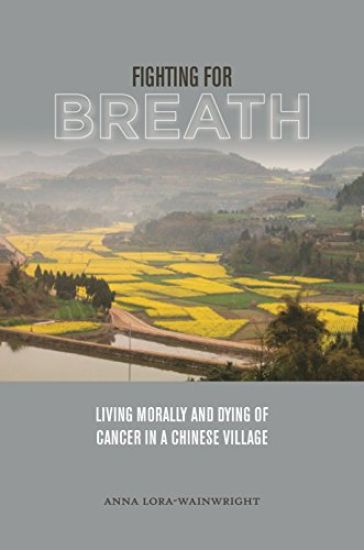
Numerous reports of “cancer villages” have appeared in the past decade in both Chinese and Western media, highlighting the downside of China’s economic development. Less generally known is how people experience and understand cancer in areas where there is no agreement on its cause. Who or what do they blame? How do they cope with its onset? Fighting for Breath is the first ethnography to offer a bottom-up account of how rural families strive to make sense of cancer and care for sufferers. It addresses crucial areas of concern such as health, development, morality, and social change in an effort to understand what is at stake in the contemporary Chinese countryside.Encounters with cancer are instances in which social and moral fault lines may become visible. Anna Lora-Wainwright combines powerful narratives and critical engagement with an array of scholarly debates in sociocultural and medical anthropology and in the anthropology of China. The result is a moving exploration of the social inequities endemic to post-1949 China and the enduring rural-urban divide that continues to challenge social justice in the People’s Republic. In-depth case studies present villagers’ “fight for breath” as both a physical and social struggle to reclaim a moral life, ensure family and neighborly support, and critique the state for its uneven welfare provision. Lora-Wainwright depicts their suffering as lived experience, but also as embedded in domestic economies and in the commodification of care that has placed the burden on families and individuals. Fighting for Breath will be of interest to students, teachers, and researchers in Chinese studies, sociocultural and medical anthropology, human geography, development studies, and the social study of medicine.
Fighting for Breath

Fighting for Breath

Anna Lora-Wainwright

University of Hawai'i Press
2016
nidottu
Numerous reports of “cancer villages” have appeared in the past decade in both Chinese and Western media, highlighting the downside of China’s economic development. Less generally known is how people experience and understand cancer in areas where there is no agreement on its cause. Who or what do they blame? How do they cope with its onset? Fighting for Breath is the first ethnography to offer a bottom-up account of how rural families strive to make sense of cancer and care for sufferers. It addresses crucial areas of concern such as health, development, morality, and social change in an effort to understand what is at stake in the contemporary Chinese countryside.Encounters with cancer are instances in which social and moral fault lines may become visible. Anna Lora-Wainwright combines powerful narratives and critical engagement with an array of scholarly debates in sociocultural and medical anthropology and in the anthropology of China. The result is a moving exploration of the social inequities endemic to post-1949 China and the enduring rural-urban divide that continues to challenge social justice in the People’s Republic. In-depth case studies present villagers’ “fight for breath” as both a physical and social struggle to reclaim a moral life, ensure family and neighborly support, and critique the state for its uneven welfare provision. Lora-Wainwright depicts their suffering as lived experience, but also as embedded in domestic economies and in the commodification of care that has placed the burden on families and individuals. Fighting for Breath will be of interest to students, teachers, and researchers in Chinese studies, sociocultural and medical anthropology, human geography, development studies, and the social study of medicine.
Resigned Activism, revised edition

Resigned Activism, revised edition

Anna Lora-Wainwright

MIT Press
2021
pokkari
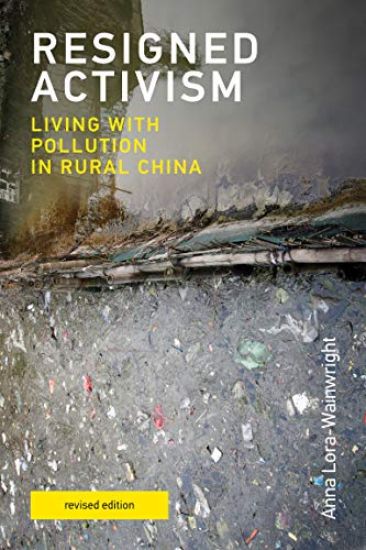
Residents of rapidly industrializing rural areas in China live with pollution every day. Villagers drink obviously tainted water and breathe visibly dirty air, afflicted by a variety of ailments-from arthritis to nosebleeds-that they ascribe to the effects of industrial pollution. In Resigned Activism, Anna Lora-Wainwright explores the daily grind of living with pollution in rural China and the varying forms of activism that develop in response. This revised edition offers expanded acknowledgment of the contributions of Lora-Wainwright's collaborators in China.Lora-Wainwright finds that claims of health or environmental damage are politically sensitive, and that efforts to seek redress are frustrated by limited access to scientific evidence, growing socioeconomic inequalities, and complex local realities. Villagers, feeling powerless, often come to accept pollution as part of the environment; their activism is tempered by their resignation. Drawing on fieldwork done with teams of collaborators, Lora-Wainwright offers three case studies of "resigned activism" in rural China, examining the experiences of villagers who live with the effects of phosphorous mining and fertilizer production, lead and zinc mining, and electronic waste processing. The book also includes extended summaries of the in-depth research carried out by Ajiang Chen and his team in some of China's "cancer villages," village-sized clusters of high cancer incidence. These cases make clear the staggering human costs of development and the deeply uneven distribution of costs and benefits that underlie China's economic power.