
Kirjahaku
Etsi kirjoja tekijän nimen, kirjan nimen tai ISBN:n perusteella.
15 kirjaa tekijältä Anna Wierzbicka
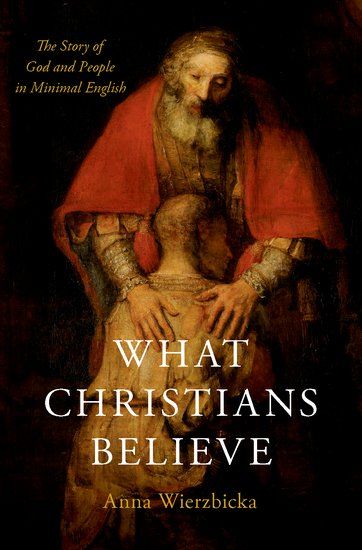
Many people today, both Christians and non-Christians, are confused about or unaware of the essentials of Christian faith. In this book, Anna Wierzbicka takes a radically new approach to the task of communicating "what Christians believe" to the widest possible audience. The Story of God and People, the heart of the book, sets out the core tenets of Christian faith in narrative form using simple language that is accessible to anyone, even those with no familiarity with Christianity or Christian vocabulary. The Story is not only simple but also universal: though written in English, it is not phrased in full English -- English as we know it today, shaped by history, culture, and tradition -- but in "Minimal English". Minimal English contains only those 400 or so English words that can be translated into any other language; essentially, it corresponds to the shared core of all languages. In the introduction to the book, Wierzbicka explains Minimal English and minimal languages in general, and in The Story of God and People that follows, she demonstrates the effectiveness of Minimal English as a tool for global understanding. At the same time, the use of Minimal English allows her not only to retell the Christian story in a strikingly new way, but also to rethink its meaning, bringing into relief its internal cohesion, logic and beauty.

In this highly interdisciplinary work, linguist Anna Wierzbicka casts new light on the words of Jesus by taking her well-known semantic theory of "universal human concepts"- concepts which are intuitively understandable and self-explanatory across languages-and bringing it to bear on Jesus' parables and the Sermon on the Mount. Her approach results in strikingly novel interpretations of the Gospels. Written in dialogue with other biblical commentators, What Did Jesus Mean? is scholarly, rigorous, and yet accessible.

In this highly interdisciplinary work, linguist Anna Wierzbicka casts new light on the words of Jesus by taking her well-known semantic theory of "universal human concepts"- concepts which are intuitively understandable and self-explanatory across languages-and bringing it to bear on Jesus' parables and the Sermon on the Mount. Her approach results in strikingly novel interpretations of the Gospels. Written in dialogue with other biblical commentators, What Did Jesus Mean? is scholarly, rigorous, and yet accessible.
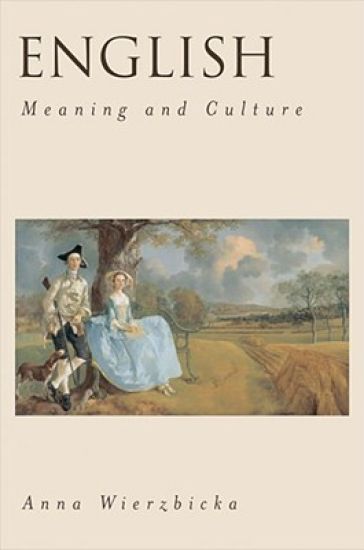
It is widely accepted that English is the first truly global language and lingua franca. Its dominance has even led to its use and adaptation by local communities for their own purposes and needs. One might see English in this context as being simply a neutral, universal vehicle for the expression of local thoughts and ideas. In fact, English words and phrases have embedded in them a wealth of cultural baggage that is invisible to most native speakers. Anna Wierzbicka, a distinguished linguist known for her theories of semantics, has written the first book that connects the English language with what she terms "Anglo" culture. Wierzbicka points out that language and culture are not just interconnected, but inseparable. This is evident to non-speakers trying to learn puzzling English expressions. She uses original research to investigate the "universe of meaning" within the English language (both grammar and vocabulary) and places it in historical and geographical perspective. For example, she looks at the history of the terms "right" and "wrong" and how with the influence of the Reformation "right" came to mean "correct." She examines the ideas of "fairness" and "reasonableness" and shows that, far from being cultural universals, they are in fact unique creations of modern English. This engrossing and fascinating work of scholarship should appeal not only to linguists and others concerned with language and culture, but the large group of scholars studying English and English as a second language.
This book is based on two ideas: first, that any language-English no less than any other-represents a universe of meaning, shaped by the history and experience of the men and women who have created it, and second, that in any language certain culture-specific words act as linchpins for whole networks of meanings, and that penetrating the meanings of those key words can therefore open our eyes to an entire cultural universe. In this book Anna Wierzbicka demonstrates that three uniquely English words-evidence, experience, and sense-are exactly such linchpins. Using a rigorous plain language approach to meaning analysis, she unpackages the dense cultural meanings of these key words, disentangles their multiple meanings, and traces their origins back to the tradition of British empiricism. In so doing she reveals much about cultural attitudes embedded not only in British and American English, but other global varieties of English. An interdisciplinary work, Experience, Evidence, and Sense is accessible to both scholars and students in linguistics and English, as well as historians of ideas, sociologists, anthropologists, literary scholars, and scholars of communication.
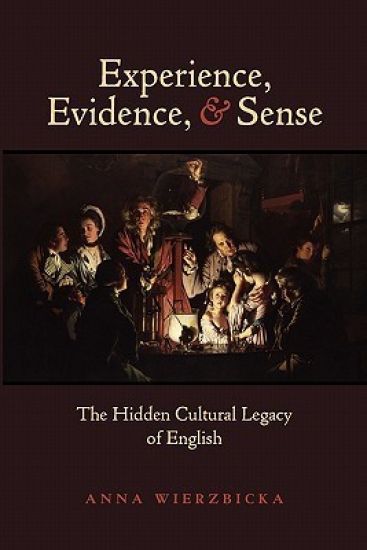
This book is based on two ideas: first, that any language-English no less than any other-represents a universe of meaning, shaped by the history and experience of the men and women who have created it, and second, that in any language certain culture-specific words act as linchpins for whole networks of meanings, and that penetrating the meanings of those key words can therefore open our eyes to an entire cultural universe. In this book Anna Wierzbicka demonstrates that three uniquely English words-evidence, experience, and sense-are exactly such linchpins. Using a rigorous plain language approach to meaning analysis, she unpackages the dense cultural meanings of these key words, disentangles their multiple meanings, and traces their origins back to the tradition of British empiricism. In so doing she reveals much about cultural attitudes embedded not only in British and American English, but other global varieties of English. An interdisciplinary work, Experience, Evidence, and Sense is accessible to both scholars and students in linguistics and English, as well as historians of ideas, sociologists, anthropologists, literary scholars, and scholars of communication.

Imprisoned in English argues that in the present English-dominated world, social sciences and the humanities are locked in a conceptual framework grounded in English and that most scholars in these fields are not aware of the need to break away from this framework to reach a more universal, culture-independent perspective on things human. Indeed they are typically not aware that any problem exists, and resistant to its being pointed out. The book engages with current debates across a range of disciplines, including philosophy, anthropology, sociology, evolutionary science, psychology, and cognitive science, as well as linguistics. The topics include values, emotions, social cognition, intercultural communication, endangered languages, human universals vs. human diversity, the evolution of consciousness, etc. It is a book dedicated to one central idea: the blind spot in contemporary social sciences and the prevailing global discourse on values, the human condition, human relations, and so on, which results from the "invisibility " of English as an increasingly globalized way of thinking and talking.
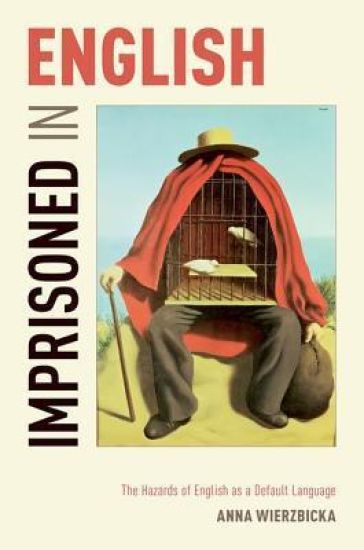
Imprisoned in English argues that in the present English-dominated world, social sciences and the humanities are locked in a conceptual framework grounded in English and that most scholars in these fields are not aware of the need to break away from this framework to reach a more universal, culture-independent perspective on things human. Indeed they are typically not aware that any problem exists, and resistant to its being pointed out. The book engages with current debates across a range of disciplines, including philosophy, anthropology, sociology, evolutionary science, psychology, and cognitive science, as well as linguistics. The topics include values, emotions, social cognition, intercultural communication, endangered languages, human universals vs. human diversity, the evolution of consciousness, etc. It is a book dedicated to one central idea: the blind spot in contemporary social sciences and the prevailing global discourse on values, the human condition, human relations, and so on, which results from the "invisibility " of English as an increasingly globalized way of thinking and talking.
In this fascinating book, Anna Wierzbicka brings psychological, anthropological and linguistic insights to bear on our understanding of the way emotions are expressed and experienced in different cultures, languages, and culturally-shaped social relations. The expression of emotion in the face, body and modes of speech are all explored and Wierzbicka shows how the bodily expression of emotion varies across cultures and challenges traditional approaches to the study of facial expressions. As well as offering a perspective on human emotions based on the analysis of language and ways of talking about emotion, this intriguing and controversial book attempts to identify universals of human emotion by analysing empirical evidence from different languages and cultures. This book will be invaluable to academics and students of emotion across the social sciences.
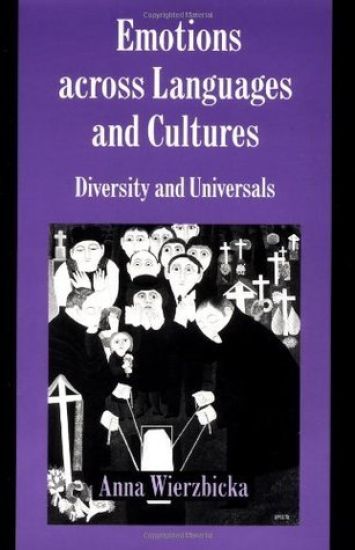
In this ground-breaking new book, Anna Wierzbicka brings psychological, anthropological and linguistic insights to bear on our understanding of the way emotions are expressed and experienced in different cultures, languages, and culturally-shaped social relations. The expression of emotion in the face, body and modes of speech are all explored and Wierzbicka shows how the bodily expression of emotion varies across cultures and challenges traditional approaches to the study of facial expressions. As well as offering a new perspective on human emotions based on the analysis of language and ways of talking about emotion, this fascinating and controversial book attempts to identify universals of human emotion by analysing empirical evidence from different languages and cultures. This book will be invaluable to academics and students of emotion across the social sciences.
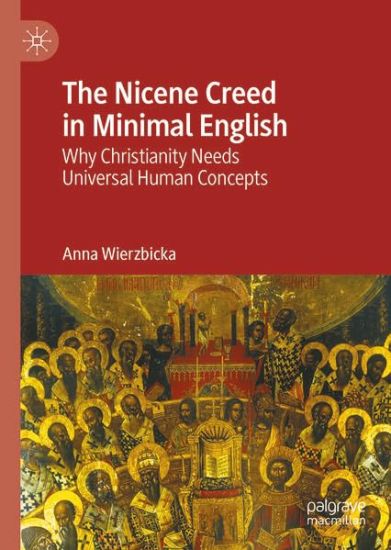
The Nicene Creed in Minimal English
Anna Wierzbicka
Springer International Publishing AG
2025
sidottu
This book offers an unpacked version of the Nicene Creed, which is the defining statement of belief of mainstream Christianity, and a milestone in human history. The book seeks to clarify this compressed text through the common conceptual language of all people: “Basic Human”. Given the unique power of this language to articulate the tenets of the Creed with clarity and precision, this book will have a wide readership among all people interested in Christianity, as well as among scholars interested in the scope of human understanding and communication. More than that, at a time of “post-Christian spiritual disintegration”, when many are seeking for the threads of meaning to hold things together (as discussed for example by authors like Tom Holland and Ayaan Hirsi Ali), the vision of the Nicene Creed - “the world’s one unchanging Creed” – can offer a new reference point and be a beacon of hope.
No detailed description available for "Cross-Cultural Pragmatics".
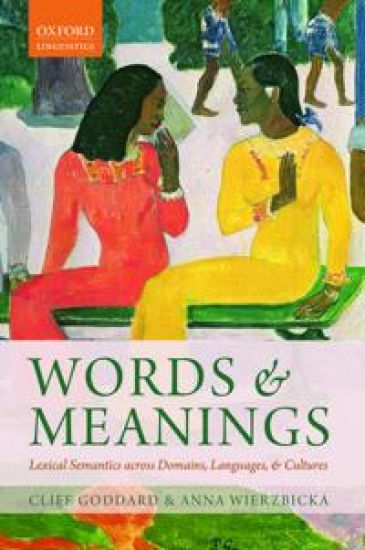
In a series of cross-cultural investigations of word meaning, Cliff Goddard and Anna Wierzbicka examine key expressions from different domains of the lexicon - concrete, abstract, physical, sensory, emotional, and social. They focus on complex and culturally important words in a range of languages that includes English, Russian, Polish, French, Warlpiri, and Malay. Some are basic like men, women, and children or abstract nouns like trauma and violence; others describe qualities such as hot, hard, and rough, emotions like happiness and sadness, or feelings like pain. They ground their discussions in real examples from different cultures and draw on work ranging from Leibniz, Locke, and Bentham, to popular works such as autobiographies and memoirs, and the Dalai Lama on happiness. The book opens with a review of the neglected status of lexical semantics in linguistics. The authors consider a range of analytical issues including lexical polysemy, semantic change, the relationship between lexical and grammatical semantics, and the concepts of semantic molecules and templates. Their fascinating book is for everyone interested in the relations between meaning, culture, ideas, and words.
In a series of cross-cultural investigations of word meaning, Cliff Goddard and Anna Wierzbicka examine key expressions from different domains of the lexicon - concrete, abstract, physical, sensory, emotional, and social. They focus on complex and culturally important words in a range of languages that includes English, Russian, Polish, French, Warlpiri and Malay. Some are basic like men, women, and children or abstract nouns like trauma and violence; others describe qualities such as hot, hard, and rough, emotions like happiness and sadness, or feelings like pain. This fascinating book is for everyone interested in the relations between meaning, culture, ideas, and words. They ground their discussions in real examples from different cultures and draw on work ranging from Leibniz, Locke, and Bentham, to popular works such as autobiographies and memoirs, and the Dalai Lama on happiness. The book opens with a review of the neglected status of lexical semantics in linguistics. The authors consider a range of analytical issues including lexical polysemy, semantic change, the relationship between lexical and grammatical semantics, and the concepts of semantic molecules and templates. Their fascinating book is for everyone interested in the relations between meaning, culture, ideas, and words.