

Kirjahaku
Etsi kirjoja tekijän nimen, kirjan nimen tai ISBN:n perusteella.
17 kirjaa tekijältä Annalee Newitz
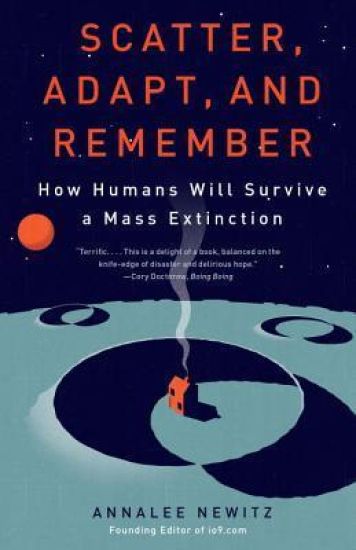
In its 4.5 billion-year history, life on Earth has been almost erased at least half a dozen times: shattered by asteroid impacts, entombed in ice, smothered by methane, and torn apart by unfathomably powerful megavolcanoes. And we know that another global disaster is eventually headed our way. Can we survive it? How? As a species, "Homo sapiens" is at a crossroads. Study of our planet's turbulent past suggests that we are overdue for a catastrophic disaster, whether caused by nature or by human interference.It's a frightening prospect, as each of the Earth's past major disasters--from meteor strikes to bombardment by cosmic radiation--resulted in a mass extinction, where more than 75 percent of the planet's species died out. But in "Scatter, Adapt, and Remember," Annalee Newitz, science journalist and editor of the science Web site io9.com explains that although global disaster is all but inevitable, our chances of long-term species survival are better than ever. Life on Earth has come close to annihilation--humans have, more than once, narrowly avoided extinction just during the last million years--but every single time a few creatures survived, evolving to adapt to the harshest of conditions. This brilliantly speculative work of popular science focuses on humanity's long history of dodging the bullet, as well as on new threats that we may face in years to come. Most important, it explores how scientific breakthroughs today will help us avoid disasters tomorrow. From simulating tsunamis to studying central Turkey's ancient underground cities; from cultivating cyanobacteria for "living cities" to designing space elevators to make space colonies cost-effective; from using math to stop pandemics to studying the remarkable survival strategies of gray whales, scientists and researchers the world over are discovering the keys to long-term resilience and learning how humans can choose life over death. Newitz's remarkable and fascinating journey through the science of mass extinctions is a powerful argument about human ingenuity and our ability to change. In a world populated by doomsday preppers and media commentators obsessively forecasting our demise, "Scatter, Adapt, and Remember" is a compelling voice of hope. It leads us away from apocalyptic thinking into a future where we live to build a better world--on this planet and perhaps on others. Readers of this book will be equipped scientifically, intellectually, and emotionally to face whatever the future holds.
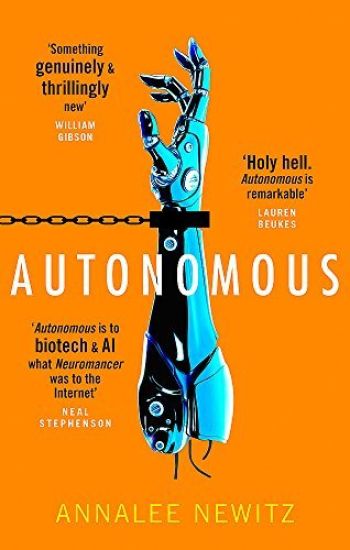
A wildly inventive science fiction debut from the co-founder of io9 - 'Something genuinely and thrillingly new' William Gibson
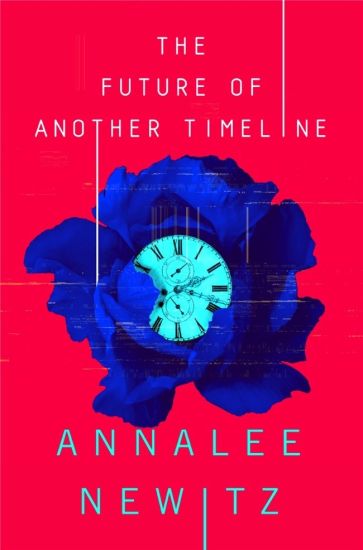
The Future of Another Timeline is stunning new stand-alone science fiction novel from Annalee Newitz, a founding editor of io9 and Lambda LGBTQ Award-winning author of Autonomous.
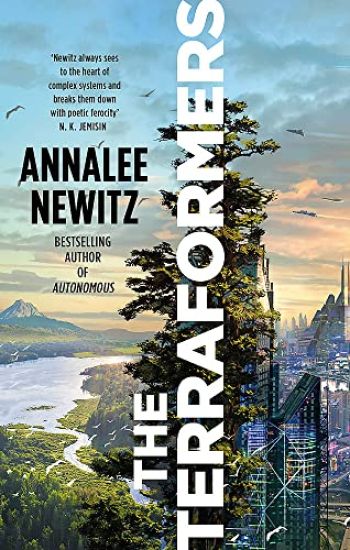
From science fiction visionary Annalee Newitz comes The Terraformers, a sweeping, uplifting, and illuminating exploration of the future.Destry's life is dedicated to terraforming Sask-E. As part of the Environmental Rescue Team, she cares for the planet and its burgeoning eco-systems as her parents and their parents did before her.But the bright, clean future they're building comes under threat when Destry discovers a city full of people that shouldn't exist, hidden inside a massive volcano.As she uncovers more about their past, Destry begins to question the mission she's devoted her life to, and must make a choice that will reverberate through Sask-E's future for generations to come.A science fiction epic for our times and a love letter to our future, The Terraformers will take you on a journey spanning thousands of years and exploring the triumphs, strife, and hope that find us wherever we make our home.'The Terraformers is so engaging, you could almost miss the pyrotechnic worldbuilding and bone-deep intelligence. Newitz continues doing some of the best work in the field' James S. A. Corey'A complete reimagining of the great galactic story of terraformers. Startling fun!' Kim Stanley Robinson'Newitz always sees to the heart of complex systems and breaks them down with poetic ferocity' N. K. JemisinAlso by Annalee NewitzAutonomousThe Future of Another Timeline
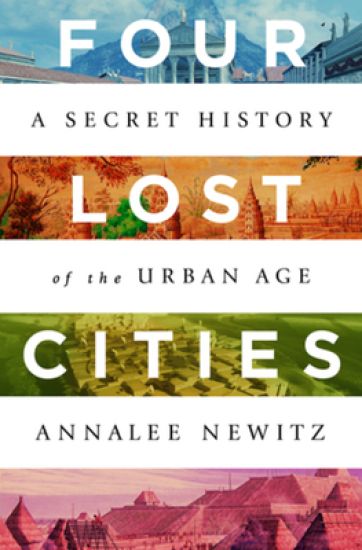
In Four Lost Cities, acclaimed science journalist Annalee Newitz takes readers on an entertaining and mind-bending adventure into the deep history of urban life. Investigating across the centuries and around the world, Newitz explores the rise and fall of four ancient cities, each the centre of a sophisticated civilisation: the Neolithic site of Çatalhöyük in Central Turkey, the Roman town of Pompeii on Italy’s southern coast, the medieval megacity of Angkor in Cambodia and the indigenous American metropolis Cahokia, which stood beside the Mississippi River where East St. Louis is today. Newitz travels to all four sites and investigates the cutting-edge research in archaeology, revealing the mix of environmental changes and political turmoil that doomed these ancient settlements. Tracing the early development of urban planning, Newitz also introduces us to the often-anonymous workers—slaves, women, immigrants and manual labourers—who built these cities and created monuments that lasted millennia. Four Lost Cities is a journey into the forgotten past but, foreseeing a future in which the majority of people on Earth will be living in cities. It may also reveal something of our own fate.
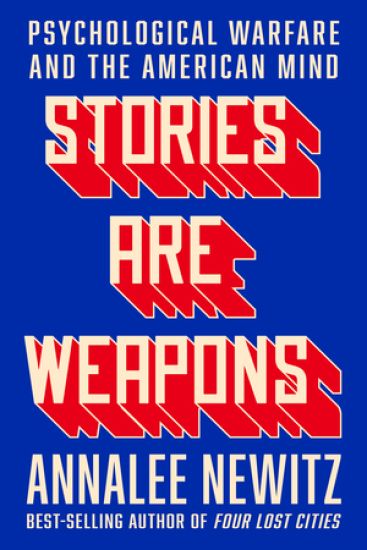
In Stories Are Weapons, best-selling author Annalee Newitz traces the way disinformation, propaganda and violent threats—the essential tool kit for psychological warfare—have evolved from military weapons deployed against foreign adversaries into tools in domestic culture wars. Newitz delves into America’s deep-rooted history with psychological operations, beginning with Benjamin Franklin’s Revolutionary War–era fake newspaper and reaching its apotheosis with misinformation during twenty-first-century elections. The nation’s secret weapon has long been coercive storytelling, fashioned by operatives who drew on their experiences in the ad industry and as science fiction writers. Now, through a weapons-transfer programme long unacknowledged, it has found its way into the hands of culture warriors, in conflicts from school board fights over LGBT students to campaigns against feminist viewpoints. Stories Are Weapons delivers a powerful counter-narrative, as Newitz highlights the process of psychological disarmament, speaking with Indigenous archivists preserving their histories in new ways, activist storytellers and technology experts transforming social media.
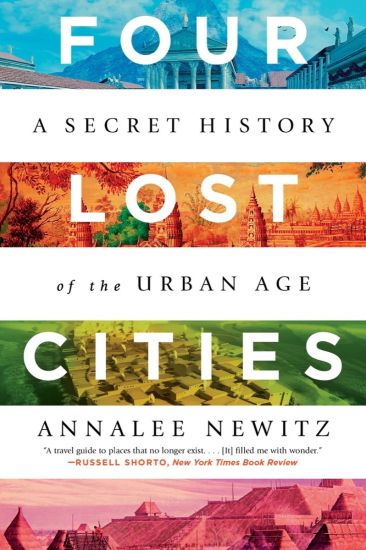
In Four Lost Cities, acclaimed science journalist Annalee Newitz takes readers on an entertaining and mind-bending adventure into the deep history of urban life. Investigating across the centuries and around the world, Newitz explores the rise and fall of four ancient cities, each the centre of a sophisticated civilisation: the Neolithic site of Çatalhöyük in Central Turkey, the Roman town of Pompeii on Italy’s southern coast, the medieval megacity of Angkor in Cambodia and the indigenous American metropolis Cahokia, which stood beside the Mississippi River where East St. Louis is today. Newitz travels to all four sites and investigates the cutting-edge research in archaeology, revealing the mix of environmental changes and political turmoil that doomed these ancient settlements. Tracing the early development of urban planning, Newitz also introduces us to the often-anonymous workers—slaves, women, immigrants and manual labourers—who built these cities and created monuments that lasted millennia. Four Lost Cities is a journey into the forgotten past but, foreseeing a future in which the majority of people on Earth will be living in cities. It may also reveal something of our own fate.

Autonomous is the highly anticipated debut from science journalist and founder of the science and sci-fi blog io9 Annalee Newitz, a novel that explores humanity's technology and culture in a future where everything--and everyone--is a product. Earth, 2144. Jack is an anti-patent scientist turned drug pirate, traversing the world in a submarine as a pharmaceutical Robin Hood, fabricating cheap scrips for poor people who can't otherwise afford them. But her latest drug hack has left a trail of lethal overdoses as people become addicted to their work, doing repetitive tasks until they become unsafe or insane. Hot on her trail, an unlikely pair: Eliasz, a brooding military agent, and his robotic partner, Paladin. As they race to stop information about the sinister origins of Jack's drug from getting out, they begin to form an uncommonly close bond that neither of them fully understand. And underlying it all is one fundamental question: Is freedom possible in a culture where everything, even people, can be owned? "Autonomous is to biotech and AI what Neuromancer was to the Internet."--Neal Stephenson "Something genuinely and thrillingly new in the naturalistic, subjective, paradoxically humanistic but non-anthropomorphic depiction of bot-POV--and all in the service of vivid, solid storytelling."--William Gibson
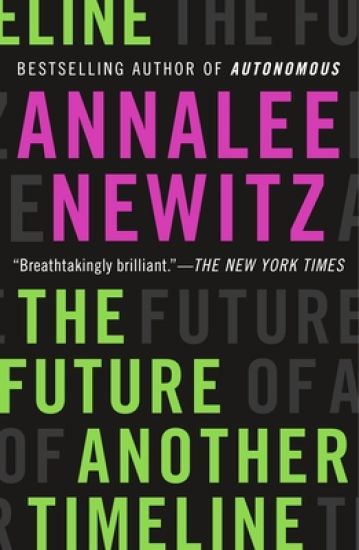
"A revolution is happening in speculative fiction, and Annalee Newitz is leading the vanguard."--Wil Wheaton From Annalee Newitz, founding editor of io9, comes a story of time travel, murder, and the lengths we'll go to protect the ones we love.1992: After a confrontation at a riot grrl concert, seventeen-year-old Beth finds herself in a car with her friend's abusive boyfriend dead in the backseat, agreeing to help her friends hide the body. This murder sets Beth and her friends on a path of escalating violence and vengeance as they realize many other young women in the world need protecting too. 2022: Determined to use time travel to create a safer future, Tess has dedicated her life to visiting key moments in history and fighting for change. But rewriting the timeline isn't as simple as editing one person or event. And just when Tess believes she's found a way to make an edit that actually sticks, she encounters a group of dangerous travelers bent on stopping her at any cost. Tess and Beth's lives intertwine as war breaks out across the timeline--a war that threatens to destroy time travel and leave only a small group of elites with the power to shape the past, present, and future. Against the vast and intricate forces of history and humanity, is it possible for a single person's actions to echo throughout the timeline? Praise for The Future of Another Timeline: "An intelligent, gut-wrenching glimpse of how tiny actions, both courageous and venal, can have large consequences. Smart and profound on every level."--Publishers Weekly (starred review) "You close the book reeling with questions about your own life and your part in changing the future."--Amy Acker, actress (Angel and Person of Interest)

In Pretend We’re Dead, Annalee Newitz argues that the slimy zombies and gore-soaked murderers who have stormed through American film and literature over the past century embody the violent contradictions of capitalism. Ravaged by overwork, alienated by corporate conformity, and mutilated by the unfettered lust for profit, fictional monsters act out the problems with an economic system that seems designed to eat people whole.Newitz looks at representations of serial killers, mad doctors, the undead, cyborgs, and unfortunates mutated by their involvement with the mass media industry. Whether considering the serial killer who turns murder into a kind of labor by mass producing dead bodies, or the hack writers and bloodthirsty actresses trapped inside Hollywood’s profit-mad storytelling machine, she reveals that each creature has its own tale to tell about how a freewheeling market economy turns human beings into monstrosities. Newitz tracks the monsters spawned by capitalism through b movies, Hollywood blockbusters, pulp fiction, and American literary classics, looking at their manifestations in works such as Norman Mailer’s “true life novel” The Executioner’s Song; the short stories of Isaac Asimov and H. P. Lovecraft; the cyberpunk novels of William Gibson and Marge Piercy; true-crime books about the serial killers Ted Bundy and Jeffrey Dahmer; and movies including Modern Times (1936), Donovan’s Brain (1953), Night of the Living Dead (1968), RoboCop (1987), The Silence of the Lambs (1991), and Artificial Intelligence: AI (2001). Newitz shows that as literature and film tell it, the story of American capitalism since the late nineteenth century is a tale of body-mangling, soul-crushing horror.
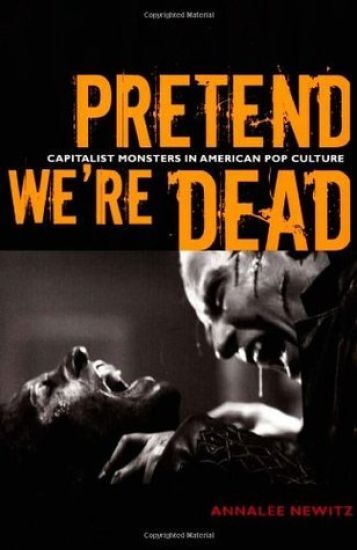
In Pretend We’re Dead, Annalee Newitz argues that the slimy zombies and gore-soaked murderers who have stormed through American film and literature over the past century embody the violent contradictions of capitalism. Ravaged by overwork, alienated by corporate conformity, and mutilated by the unfettered lust for profit, fictional monsters act out the problems with an economic system that seems designed to eat people whole.Newitz looks at representations of serial killers, mad doctors, the undead, cyborgs, and unfortunates mutated by their involvement with the mass media industry. Whether considering the serial killer who turns murder into a kind of labor by mass producing dead bodies, or the hack writers and bloodthirsty actresses trapped inside Hollywood’s profit-mad storytelling machine, she reveals that each creature has its own tale to tell about how a freewheeling market economy turns human beings into monstrosities. Newitz tracks the monsters spawned by capitalism through b movies, Hollywood blockbusters, pulp fiction, and American literary classics, looking at their manifestations in works such as Norman Mailer’s “true life novel” The Executioner’s Song; the short stories of Isaac Asimov and H. P. Lovecraft; the cyberpunk novels of William Gibson and Marge Piercy; true-crime books about the serial killers Ted Bundy and Jeffrey Dahmer; and movies including Modern Times (1936), Donovan’s Brain (1953), Night of the Living Dead (1968), RoboCop (1987), The Silence of the Lambs (1991), and Artificial Intelligence: AI (2001). Newitz shows that as literature and film tell it, the story of American capitalism since the late nineteenth century is a tale of body-mangling, soul-crushing horror.
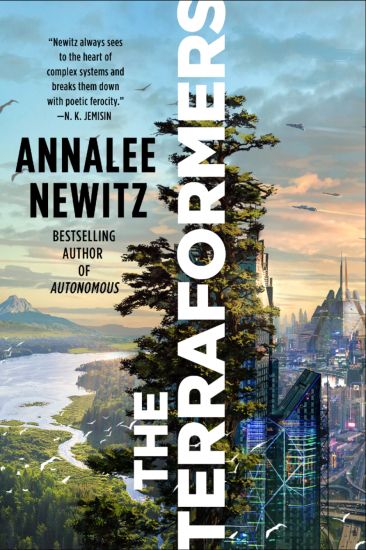
Destry's life is dedicated to terraforming Sask-E. As part of the Environmental Rescue Team, she cares for the planet and its burgeoning eco-systems as her parents and their parents did before her. But the bright, clean future they're building comes under threat when Destry discovers a city full of people that shouldn't exist, hidden inside a massive volcano. As she uncovers more about their past, Destry begins to question the mission she's devoted her life to and must make a choice that will reverberate through Sask-E's future for generations to come.
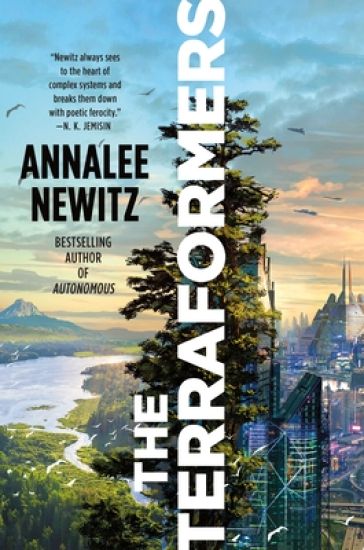
From science fiction visionary Annalee Newitz comes The Terraformers, a sweeping, uplifting, and illuminating exploration of the future. Destry's life is dedicated to terraforming Sask-E. As part of the Environmental Rescue Team, she cares for the planet and its burgeoning eco-systems as her parents and their parents did before her. But the bright, clean future they're building comes under threat when Destry discovers a city full of people that shouldn't exist, hidden inside a massive volcano. As she uncovers more about their past, Destry begins to question the mission she's devoted her life to, and must make a choice that will reverberate through Sask-E's future for generations to come. A science fiction epic for our times and a love letter to our future, The Terraformers will take you on a journey spanning thousands of years and exploring the triumphs, strife, and hope that find us wherever we make our home. "Brilliantly thoughtful, prescient, and gripping."--Martha Wells, author of The Murderbot Diaries Also by Annalee NewitzAutonomousThe Future of Another Timeline
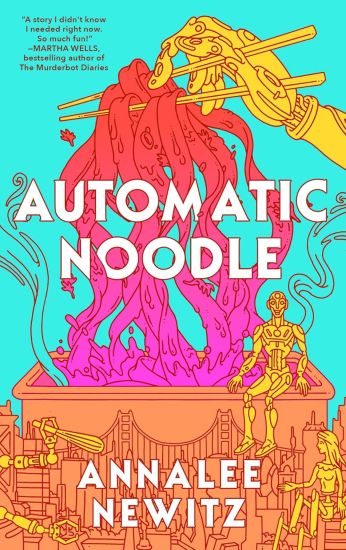
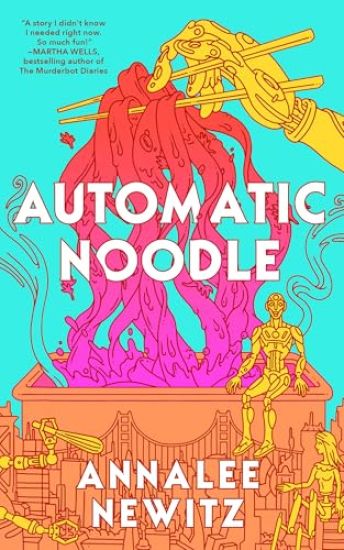
A cozy near-future novella about a crew of leftover robots opening their very own noodle shop, from acclaimed sci-fi author Annalee Newitz.You don’t have to eat food to know the way to a city’s heart is through its stomach. So when a group of deactivated robots come back online in an abandoned ghost kitchen, they decide to make their own way doing what they know: making food—the tastiest hand-pulled noodles around—for the humans of San Francisco, who are recovering from a devastating war.But when their robot-run business starts causing a stir, a targeted wave of one-star reviews threatens to boil over into a crisis. To keep their doors open, they’ll have to call on their customers, their community, and each other—and find a way to survive and thrive in a world that wasn’t built for them.
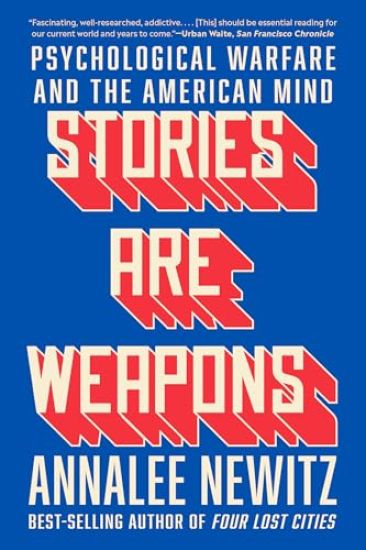
In Stories Are Weapons, Annalee Newitz traces the way disinformation, propaganda and violent threats—the essential tool kit for psychological warfare—have evolved from military weapons deployed against foreign adversaries into tools in culture wars. Newitz delves into America’s deep-rooted history with psychological operations, beginning with Benjamin Franklin’s Revolutionary War–era fake newspaper and nineteenth-century wars on Indigenous nations, and reaching its apotheosis with the Cold War and twenty-first-century influence campaigns online. America’s secret weapon has long been coercive storytelling. And there’s a reason for that: operatives who shaped modern psychological warfare drew on their experiences as science fiction writers and in the advertising industry. Now, through a weapons-transfer programme long unacknowledged, psyops have found their way into the hands of culture warriors, transforming democratic debates into toxic wars over American identity. Newitz zeroes in on conflicts over race and intelligence, school board fights over LGBT students and campaigns against feminist viewpoints, revealing how, in each case, specific groups of Americans are singled out and treated as enemies of the state. Crucially, Newitz delivers a powerful counter-narrative, speaking with the researchers and activists who are outlining a pathway to achieving psychological disarmament and cultural peace. Incisive and essential, Stories are Weapons reveals how our minds have been turned into blood-soaked battlegrounds—and how we can put down our weapons to build something better.