Kirjojen hintavertailu. Mukana 12 016 292 kirjaa ja 12 kauppaa.

Kirjahaku

Etsi kirjoja tekijän nimen, kirjan nimen tai ISBN:n perusteella.

49 kirjaa tekijältä Anne Applebaum

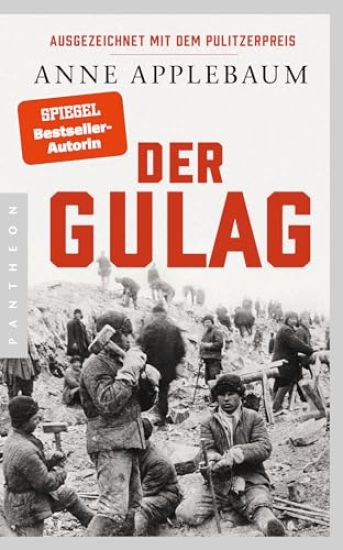
Gulag

Gulag

Anne Applebaum

Penguin Books Ltd
2004
pokkari
This landmark book uncovers for the first time in detail one of the greatest horrors of the twentieth century: the vast system of Soviet camps that were responsible for the deaths of countless millions.Gulag is the only major history in any language to draw together the mass of memoirs and writings on the Soviet camps that have been published in Russia and the West. Using these, as well as her own original research in NKVD archives and interviews with survivors, Anne Applebaum has written a fully documented history of the camp system: from its origins under the tsars, to its colossal expansion under Stalin's reign of terror, its zenith in the late 1940s and eventual collapse in the era of glasnost. It is a gigantic feat of investigation, synthesis and moral reckoning.
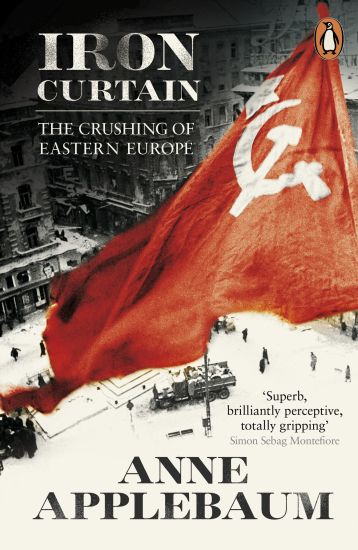
Iron Curtain

Iron Curtain

Anne Applebaum

Penguin Books Ltd
2013
pokkari
Chosen 16 times as a 'Book of the Year' - the top non-fiction pick of 2012'The best work of modern history I have ever read' A. N. Wilson, Financial TimesAt the end of the Second World War, the Soviet Union unexpectedly found itself in control of a huge swathe of territory in Eastern Europe. Stalin and his secret police set out to convert a dozen radically different countries to a completely new political and moral system: Communism. Anne Applebaum's landmark history of this brutal time shows how societies were ruthlessly eviscerated by Communist regimes, how opposition was destroyed and what life was like for ordinary people who had to choose whether to fight, to flee or to collaborate.A haunting reminder of how fragile freedom can be, Iron Curtain is an exceptional work of historical and moral reckoning.ANNE APPLEBAUM is a historian and journalist, a regular columnist for the Washington Post and Slate, and the author of several books, including Gulag: A History, which won the 2004 Pulitzer Prize for non-fiction. She is the Director of Political Studies at the Legatum Institute in London, and she divides her time between Britain and Poland, where her husband, Radek Sikorski, serves as Foreign Minister.'The outstanding book of the year ... a masterpiece' Oliver Kamm, The Times, Books of the Year'Exceptionally important, wise, perceptive, remarkably objective' Antony Beevor 'Explains in a manner worthy of Arthur Koestler what totalitarianism really means ... it is a window into a world of lies and evil that we can hardly imagine' Edward Lucas, Standpoint'At last the story can be told ... a magisterial history' Orlando Figes, Mail on Sunday
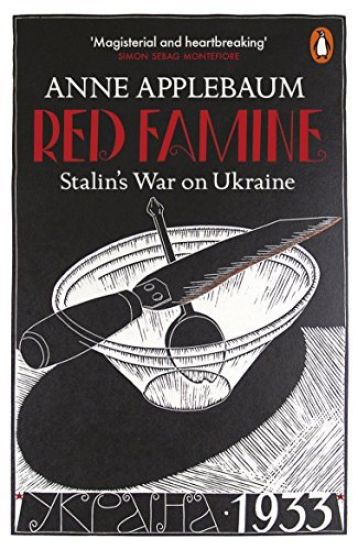
Red Famine

Red Famine

Anne Applebaum

Penguin
2018
pokkari
The momentous new book from the Pulitzer Prize-winning author of Gulag and Iron Curtain. In 1932-33, nearly four million Ukrainians died of starvation, having been deliberately deprived of food. It is one of the most devastating episodes in the history of the twentieth century. With unprecedented authority and detail, Red Famine investigates how this happened, who was responsible, and what the consequences were. It is the fullest account yet published of these terrible events.The book draws on a mass of archival material and first-hand testimony only available since the end of the Soviet Union, as well as the work of Ukrainian scholars all over the world. It includes accounts of the famine by those who survived it, describing what human beings can do when driven mad by hunger. It shows how the Soviet state ruthlessly used propaganda to turn neighbours against each other in order to expunge supposedly 'anti-revolutionary' elements. It also records the actions of extraordinary individuals who did all they could to relieve the suffering.The famine was rapidly followed by an attack on Ukraine's cultural and political leadership - and then by a denial that it had ever happened at all. Census reports were falsified and memory suppressed. Some western journalists shamelessly swallowed the Soviet line; others bravely rejected it, and were undermined and harassed. The Soviet authorities were determined not only that Ukraine should abandon its national aspirations, but that the country's true history should be buried along with its millions of victims. Red Famine, a triumph of scholarship and human sympathy, is a milestone in the recovery of those memories and that history. At a moment of crisis between Russia and Ukraine, it also shows how far the present is shaped by the past.
Between East and West

Between East and West

Anne Applebaum

Penguin Books Ltd
2015
pokkari
A vivid and human glimpse into Europe's borderlands as they emerged from Soviet rule - back in print after nearly 20 years'In this superb book, in which one senses the spirit of Franz Kafka and Bruno Schulz, the dramatic world of the Eastern borderlands comes to life' Ryszard KapuscinskiAs Europe's borderlands emerged from Soviet rule, Anne Applebaum travelled from the Baltic to the Black Sea, through Lithuania, Belarus, Ukraine and the Carpathian mountains. Rich in vivid characters and stories of tragedy and survival, Between East and West illuminates the soul of a place, and the secret history of its people. 'A beautifully written and thought-provoking account of a journey along Europe's forgotten edge' Timothy Garton Ash'A vivid and penetrating assessment of the lands between the Baltic and the Black Sea in all their drama and desolation . . . a wise and useful book' Robert Conquest'Combines the excitement of a well-written and adventurous travelogue with sophisticated reportage' Norman Davies'You will be totally absorbed' Norman StoneAnne Applebaum is a historian and journalist, a regular columnist for the Washington Post and Slate, and the author of several books, including Gulag: A History, which won the 2004 Pulitzer Prize for non-fiction, and Iron Curtain, which in 2013 won the Duke of Westminster Medal for Military Literature and the Cundill Prize in Historical Literature. She is the Director of Political Studies at the Legatum Institute in London, and she divides her time between Britain and Poland, where her husband, Radek Sikorski, serves as Foreign Minister.
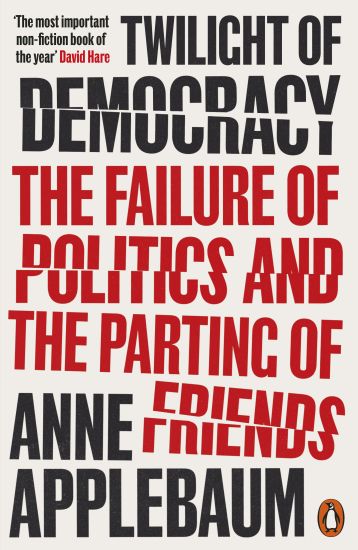
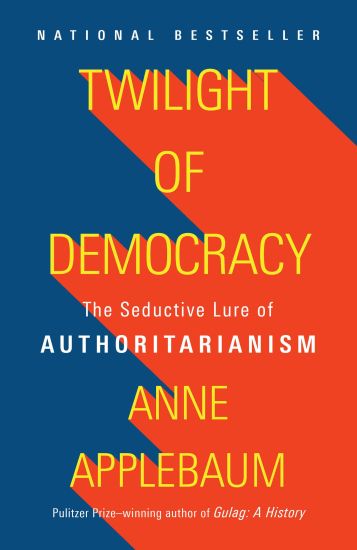
Twilight of Democracy

Twilight of Democracy

Anne Applebaum

PENGUIN BOOKS LTD
2021
pokkari
A FINANCIAL TIMES, ECONOMIST AND NEW STATESMAN BOOK OF THE YEAR 2020 'The most important non-fiction book of the year' David Hare In the years just before and after the fall of the Berlin Wall, people from across the political spectrum in Europe and America celebrated a great achievement, felt a common purpose and, very often, forged personal friendships. Yet over the following decades the euphoria evaporated, the common purpose and centre ground gradually disappeared, extremism rose once more and eventually - as this book compellingly relates - the relationships soured too. Anne Applebaum traces this history in an unfamiliar way, looking at the trajectories of individuals caught up in the public events of the last three decades. When politics becomes polarized, which side do you back? If you are a journalist, an intellectual, a civic leader, how do you deal with the re-emergence of authoritarian or nationalist ideas in your country? When your leaders appropriate history, or pedal conspiracies, or eviscerate the media and the judiciary, do you go along with it?Twilight of Democracy is an essay that combines the personal and the political in an original way and brings a fresh understanding to the dynamics of public life in Europe and America, both now and in the recent past.
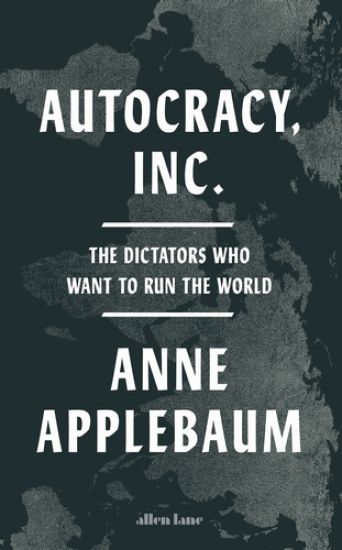
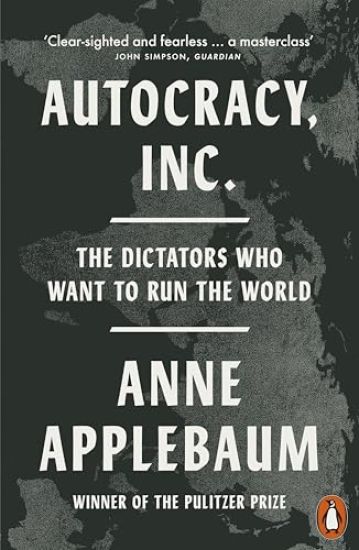
Autocracy, Inc

Autocracy, Inc

Anne Applebaum

PENGUIN BOOKS LTD
2024
sidottu
**A Sunday Times Bestseller****An Economist Best Book of the Year**The celebrated historian and journalist uncovers the networks trying to destroy the democratic worldAll of us have in our minds a cartoon image of what an autocratic state looks like, with a bad man at the top. But in the 21st century, that cartoon bears little resemblance to reality. Nowadays, autocracies are run not by one bad guy, but by sophisticated networks composed of kleptocratic financial structures, security services and professional propagandists. The members of these networks are connected not only within a given country, but among many countries. The corrupt, state-controlled companies in one dictatorship do business with corrupt, state-controlled companies in another. The police in one country can arm, equip, and train the police in another. The propagandists share resources—the troll farms that promote one dictator’s propaganda can also be used to promote the propaganda of another—and themes, pounding home the same messages about the weakness of democracy and the evil of America.Unlike military or political alliances from other times and places, this group doesn’t operate like a bloc, but rather like an agglomeration of companies: Autocracy, Inc. Their relations are not based on values, but are rather transactional, which is why they operate so easily across ideological, geographical, and cultural lines. In truth, they are in full agreement about only one thing: Their dislike of us, the inhabitants of the democratic world, and their desire to see both our political systems and our values undermine.That shared understanding of the world—where it comes from, why it lasts, how it works, how the democratic world has unwittingly helped to consolidate it, and how we can help bring it down—is the subject of this book.
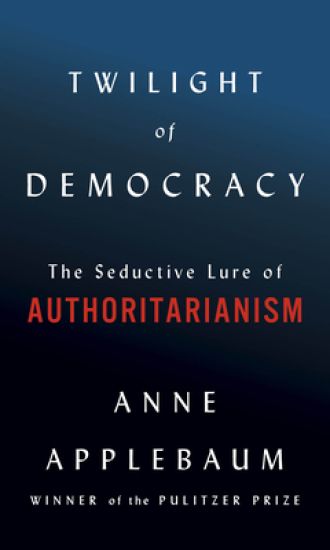
Twilight of Democracy: The Seductive Lure of Authoritarianism
NATIONAL BESTSELLER - "How did our democracy go wrong? This extraordinary document ... is Applebaum's answer." --Timothy Snyder, author of On Tyranny The Pulitzer Prize-winning historian explains, with electrifying clarity, why elites in democracies around the world are turning toward nationalism and authoritarianism. From the United States and Britain to continental Europe and beyond, liberal democracy is under siege, while authoritarianism is on the rise. In Twilight of Democracy, Anne Applebaum, an award-winning historian of Soviet atrocities who was one of the first American journalists to raise an alarm about antidemocratic trends in the West, explains the lure of nationalism and autocracy. In this captivating essay, she contends that political systems with radically simple beliefs are inherently appealing, especially when they benefit the loyal to the exclusion of everyone else. Elegantly written and urgently argued, Twilight of Democracy is a brilliant dissection of a world-shaking shift and a stirring glimpse of the road back to democratic values.
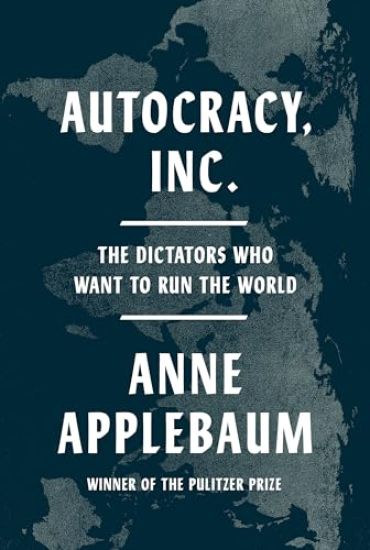
Autocracy, Inc.: The Dictators Who Want to Run the World
NEW YORK TIMES BESTSELLER - From the Pulitzer-prize winning author, an alarming account of how autocracies work together to undermine the democratic world, and how we should organize to defeat them A BEST BOOK OF THE YEAR: Economist, Financial Times, Foreign Affairs, The Times "A masterful guide to the new age of authoritarianism... clear-sighted and fearless."--John Simpson, The Guardian "Especially timely."--The Washington Post We think we know what an autocratic state looks like: There is an all-powerful leader at the top. He controls the police. The police threaten the people with violence. There are evil collaborators, and maybe some brave dissidents. But in the 21st century, that bears little resemblance to reality. Nowadays, autocracies are underpinned not by one dictator, but by sophisticated networks composed of kleptocratic financial structures, surveillance technologies, and professional propagandists, all of which operate across multiple regimes, from China to Russia to Iran. Corrupt companies in one country do business with corrupt companies in another. The police in one country can arm and train the police in another, and propagandists share resources and themes, pounding home the same messages about the weakness of democracy and the evil of America. International condemnation and economic sanctions cannot move the autocrats. Even popular opposition movements, from Venezuela to Hong Kong to Moscow, don't stand a chance. The members of Autocracy, Inc, aren't linked by a unifying ideology, like communism, but rather a common desire for power, wealth, and impunity. In this urgent treatise, which evokes George Kennan's essay calling for "containment" of the Soviet Union, Anne Applebaum calls for the democracies to fundamentally reorient their policies to fight a new kind of threat.
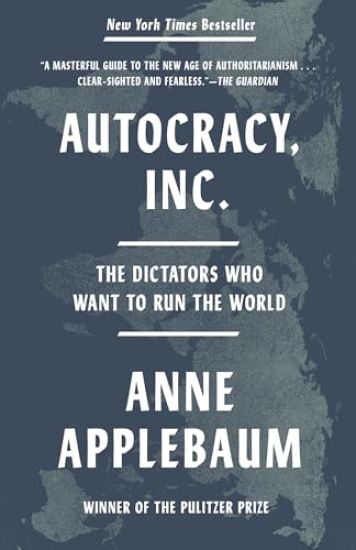
Autocracy, Inc.: The Dictators Who Want to Run the World
NEW YORK TIMES BESTSELLER - WITH A NEW PREFACE - From the Pulitzer-prize winning author, an alarming account of how autocracies work together to undermine the democratic world, and how we should organize to defeat them "A masterful guide to the new age of authoritarianism... clear-sighted and fearless."--John Simpson, The Guardian "Especially timely."--The Washington Post We think we know what an autocratic state looks like: There is an all-powerful leader at the top. He controls the police. The police threaten the people with violence. There are evil collaborators, and maybe some brave dissidents. But in the 21st century, there is so much more to it. Nowadays, autocracies work together, from China to Russia to Iran. Corrupt companies and kleptocrats in one country do business with corrupt companies and kleptocrats in another. The police in one country can arm and train the police in another, diplomats band together to bend international rules, and propagandists share resources and themes, pounding home the same messages about the weakness of democracy and the evil of America. Disapproval and sanctions cannot move the autocrats. Even popular opposition movements, from Venezuela to Hong Kong to Moscow, don't stand a chance. The members of Autocracy, Inc, aren't linked by a unifying ideology, like communism, that can be defeated, but by a common desire for power, wealth, and impunity. In this urgent treatise, Anne Applebaum calls for the democracies to fight a new kind of threat. A new preface to the paperback edition highlights the increased relevance of these dangerous dynamics in light of the return of Donald Trump to the American presidency.
Red Famine: Stalin's War on Ukraine
NEW YORK TIMES BESTSELLER - A revelatory history of one of Stalin's greatest crimes, the consequences of which still resonate today, as Russia has placed Ukrainian independence in its sights once more--from the author of the Pulitzer Prize-winning Gulag and the National Book Award finalist Iron Curtain. "With searing clarity, Red Famine demonstrates the horrific consequences of a campaign to eradicate 'backwardness' when undertaken by a regime in a state of war with its own people." --The Economist In 1929 Stalin launched his policy of agricultural collectivization--in effect a second Russian revolution--which forced millions of peasants off their land and onto collective farms. The result was a catastrophic famine, the most lethal in European history. At least five million people died between 1931 and 1933 in the USSR. But instead of sending relief the Soviet state made use of the catastrophe to rid itself of a political problem. In Red Famine, Anne Applebaum argues that more than three million of those dead were Ukrainians who perished not because they were accidental victims of a bad policy but because the state deliberately set out to kill them. Devastating and definitive, Red Famine captures the horror of ordinary people struggling to survive extraordinary evil. Applebaum's compulsively readable narrative recalls one of the worst crimes of the twentieth century, and shows how it may foreshadow a new threat to the political order in the twenty-first.
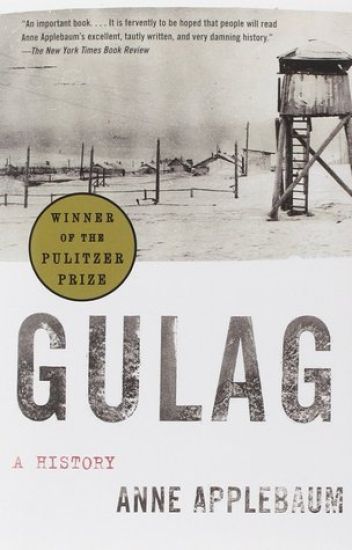
Gulag: A History

Gulag: A History

Anne Applebaum

VINTAGE
2004
nidottu
The Gulag—the vast array of Soviet concentration camps—was a system of repression and punishment whose rationalized evil and institutionalized inhumanity were rivaled only by the Holocaust. The Gulag entered the world’s historical consciousness in 1972, with the publication of Alexander Solzhenitsyn’s epic oral history of the Soviet camps, The Gulag Archipelago. Since the collapse of the Soviet Union, dozens of memoirs and new studies covering aspects of that system have been published in Russia and the West. Using these new resources as well as her own original historical research, Anne Applebaum has now undertaken, for the first time, a fully documented history of the Soviet camp system, from its origins in the Russian Revolution to its collapse in the era of glasnost. It is an epic feat of investigation and moral reckoning that places the Gulag where it belongs: at the center of our understanding of the troubled history of the twentieth century. Anne Applebaum first lays out the chronological history of the camps and the logic behind their creation, enlargement, and maintenance. The Gulag was first put in place in 1918 after the Russian Revolution. In 1929, Stalin personally decided to expand the camp system, both to use forced labor to accelerate Soviet industrialization and to exploit the natural resources of the country’s barely habitable far northern regions. By the end of the 1930s, labor camps could be found in all twelve of the Soviet Union’s time zones. The system continued to expand throughout the war years, reaching its height only in the early 1950s. From 1929 until the death of Stalin in 1953, some 18 million people passed through this massive system. Of these 18 million, it is estimated that 4.5 million never returned. But the Gulag was not just an economic institution. It also became, over time, a country within a country, almost a separate civilization, with its own laws, customs, literature, folklore, slang, and morality. Topic by topic, Anne Applebaum also examines how life was lived within this shadow country: how prisoners worked, how they ate, where they lived, how they died, how they survived. She examines their guards and their jailers, the horrors of transportation in empty cattle cars, the strange nature of Soviet arrests and trials, the impact of World War II, the relations between different national and religious groups, and the escapes, as well as the extraordinary rebellions that took place in the 1950s. She concludes by examining the disturbing question why the Gulag has remained relatively obscure, in the historical memory of both the former Soviet Union and the West.
Iron Curtain: The Crushing of Eastern Europe, 1944-1956
National Book Award Finalist TIME Magazine's #1 Nonfiction Book of 2012A New York Times Notable BookA Washington Post Top Ten Book of 2012Best Nonfiction of 2012: The Wall Street Journal, The Plain Dealer In the much-anticipated follow-up to her Pulitzer Prize-winning Gulag, acclaimed journalist Anne Applebaum delivers a groundbreaking history of how Communism took over Eastern Europe after World War II and transformed in frightening fashion the individuals who came under its sway. Iron Curtain describes how, spurred by Stalin and his secret police, the Communist regimes of Eastern Europe were created and what daily life was like once they were complete. Drawing on newly opened East European archives, interviews, and personal accounts translated for the first time, Applebaum portrays in chilling detail the dilemmas faced by millions of individuals trying to adjust to a way of life that challenged their every belief and took away everything they had accumulated. As a result the Soviet Bloc became a lost civilization, one whose cruelty, paranoia, bizarre morality, and strange aesthetics Applebaum captures in these electrifying pages.
Autocracy, Inc

Autocracy, Inc

Anne Applebaum

PENGUIN BOOKS LTD
2025
pokkari
**A Sunday Times Bestseller****An Economist Best Book of the Year**The celebrated historian and journalist uncovers the networks trying to destroy the democratic worldAll of us have in our minds a cartoon image of what an autocratic state looks like, with a bad man at the top. But in the 21st century, that cartoon bears little resemblance to reality. Nowadays, autocracies are run not by one bad guy, but by sophisticated networks composed of kleptocratic financial structures, security services and professional propagandists. The members of these networks are connected not only within a given country, but among many countries. The corrupt, state-controlled companies in one dictatorship do business with corrupt, state-controlled companies in another. The police in one country can arm, equip, and train the police in another. The propagandists share resources—the troll farms that promote one dictator’s propaganda can also be used to promote the propaganda of another—and themes, pounding home the same messages about the weakness of democracy and the evil of America.Unlike military or political alliances from other times and places, this group doesn’t operate like a bloc, but rather like an agglomeration of companies: Autocracy, Inc. Their relations are not based on values, but are rather transactional, which is why they operate so easily across ideological, geographical, and cultural lines. In truth, they are in full agreement about only one thing: Their dislike of us, the inhabitants of the democratic world, and their desire to see both our political systems and our values undermine.That shared understanding of the world—where it comes from, why it lasts, how it works, how the democratic world has unwittingly helped to consolidate it, and how we can help bring it down—is the subject of this book.
Twilight of Democracy: The Seductive Lure of Authoritarianism
NATIONAL BESTSELLER - "How did our democracy go wrong? This extraordinary document ... is Applebaum's answer." --Timothy Snyder, author of On Tyranny The Pulitzer Prize-winning historian explains, with electrifying clarity, why elites in democracies around the world are turning toward nationalism and authoritarianism. From the United States and Britain to continental Europe and beyond, liberal democracy is under siege, while authoritarianism is on the rise. In Twilight of Democracy, Anne Applebaum, an award-winning historian of Soviet atrocities who was one of the first American journalists to raise an alarm about antidemocratic trends in the West, explains the lure of nationalism and autocracy. In this captivating essay, she contends that political systems with radically simple beliefs are inherently appealing, especially when they benefit the loyal to the exclusion of everyone else. Elegantly written and urgently argued, Twilight of Democracy is a brilliant dissection of a world-shaking shift and a stirring glimpse of the road back to democratic values.