Kirjojen hintavertailu. Mukana 11 478 264 kirjaa ja 12 kauppaa.

Kirjahaku

Etsi kirjoja tekijän nimen, kirjan nimen tai ISBN:n perusteella.

6 kirjaa tekijältä Anne B. Rodrick

The History of Great Britain

The History of Great Britain

Anne B. Rodrick

Greenwood Press
2004
sidottu
The very idea of Britain has changed with the gain and loss of empire, the assimilation and devolution of various portions of the country, and the introduction and then dismantling of a welfare state that was nothing short of revolutionary in the wake of World War II. This volume provides an introduction to the history and culture of a nation that just a century ago was the world's leading imperial power and today is striving to reestablish its place as an international leader. The fortunes of that nation are outlined, describing its development from the days of Roman rule through the most recent events of Tony Blair's prime ministership. Rodrick introduces many important issues in Great Britain's history and also provides the reader with an overview of contemporary British society, from the intricacies of parliamentary politics to the cultural significance of church and crown. Includes a biographical section highlighting famous figures in British history, a timeline of important historical events, and a short bibliographical essay with suggestions for further reading. Focusing on the political and social developments of the 19th and 20th centuries, Rodrick discusses the evolving relationship between monarch and parliament, the dismantling of Britain's empire and the challenges the nation now faces, Britian's contentious relations with the rest of Europe, and the differences between English and British. This volume places modern Britain within the contemporary context of a post-imperial world, addressing the issues of post-colonialism and nationalism in a readable and brief format.
Self-Help and Civic Culture

Self-Help and Civic Culture

Anne B. Rodrick

CRC Press Inc
2019
sidottu
First published in 2004. The nineteenth century witnessed a flowering of the culture of self-improvement that was reflected in a plethora of institutes, societies and journals that sprang up across Britain with the goal of spreading knowledge and learning to a wide spectrum of society. The prophets of self-improvement believed that not only was self-improvement a laudable goal in its own right, but more importantly, it would contribute towards a general improvement in society. In an age in which direct participation in the political processes was restricted to a minority, education and self-improvement could act as an alternative force by creating a sophisticated and knowledgeable population. In other words, self-improvement was also seen as a way of creating active and responsible citizens. Focusing on the city of Birmingham, and drawing on both local and national sources, Self Help and Civic Culture explores the changing nature of self improvement and citizenship in Victorian Britain. By approaching the concept of citizenship from a new perspective, provincial identity and its relationship to wider ideas of 'Englishness' and 'Britishness', a distinct ideal of citizenship is elucidated that adds further nuance to current scholarship. By drawing together various issues of citizenship, self-improvement, class and political power, this work brings a new perspective to the on-going attempts to determine who could claim the full rights, duties, privileges and responsibilities of the larger social body, thus illuminating the relationship between culture and power in nineteenth century England.
Self-Help and Civic Culture

Self-Help and Civic Culture

Anne B. Rodrick

TAYLOR FRANCIS LTD
2020
nidottu
First published in 2004. The nineteenth century witnessed a flowering of the culture of self-improvement that was reflected in a plethora of institutes, societies and journals that sprang up across Britain with the goal of spreading knowledge and learning to a wide spectrum of society. The prophets of self-improvement believed that not only was self-improvement a laudable goal in its own right, but more importantly, it would contribute towards a general improvement in society. In an age in which direct participation in the political processes was restricted to a minority, education and self-improvement could act as an alternative force by creating a sophisticated and knowledgeable population. In other words, self-improvement was also seen as a way of creating active and responsible citizens. Focusing on the city of Birmingham, and drawing on both local and national sources, Self Help and Civic Culture explores the changing nature of self improvement and citizenship in Victorian Britain. By approaching the concept of citizenship from a new perspective, provincial identity and its relationship to wider ideas of 'Englishness' and 'Britishness', a distinct ideal of citizenship is elucidated that adds further nuance to current scholarship. By drawing together various issues of citizenship, self-improvement, class and political power, this work brings a new perspective to the on-going attempts to determine who could claim the full rights, duties, privileges and responsibilities of the larger social body, thus illuminating the relationship between culture and power in nineteenth century England.
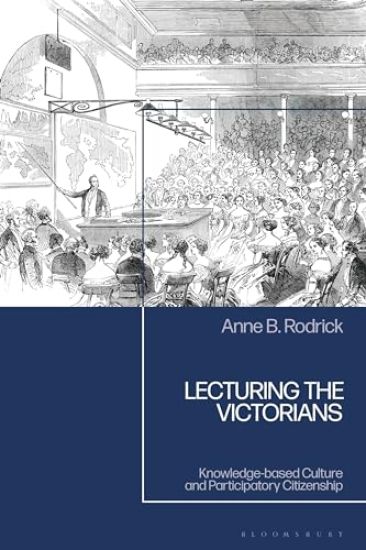
Lecturing the Victorians

Lecturing the Victorians

Anne B. Rodrick

BLOOMSBURY PUBLISHING PLC
2024
sidottu
“We are a much-lectured people,” wrote Robert Spence Watson in 1897. Beginning at mid-century, cities and towns across England used the popular lecture for purposes ranging from serious education to effervescent entertainment and from regional pride to imperial belonging. Over time, the popular lecture became the quintessential embodiment of Victorian knowledge-based culture, which itself ranged from the production of new knowledge in the most elite of learned societies to the consumption of established knowledge in middle-class clubs and the hundreds of humble mechanics’ institutions initially founded to provide scientific instruction to workers.What did the “average” Victorian talk and think about? How did the knowledge-based culture of lecture and debate enable men and women to demonstrate both civic engagement and cultural competence? How does this knowledge-based culture and its changing expression give us ways to look at Victorian citizenship long before the extension of the franchise? With engaging and accessible prose Anne Rodrick draws from a variety of primary sources to provide fascinating answers to these pertinent questions. Based on the analysis of several thousand lectures and debates delivered over more than 50 years, this book digs deeply into what those individuals below the most elite levels thought, heard, debated, and claimed as a badge of cultural competence. By the turn of the 20th century, the popular lecture was competing for attention with new institutions of leisure and of higher education, and the discourse surrounding its place in contemporary England helps illuminate important debates over access to and deployment of knowledge and culture.
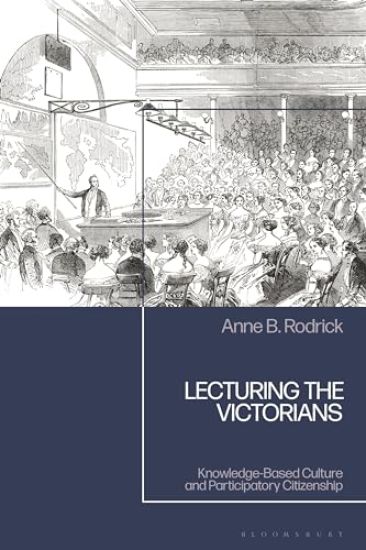
Lecturing the Victorians

Lecturing the Victorians

Anne B. Rodrick

BLOOMSBURY PUBLISHING PLC
2026
nidottu
“We are a much-lectured people,” wrote Robert Spence Watson in 1897. Beginning at mid-century, cities and towns across England used the popular lecture for purposes ranging from serious education to effervescent entertainment and from regional pride to imperial belonging. Over time, the popular lecture became the quintessential embodiment of Victorian knowledge-based culture, which itself ranged from the production of new knowledge in the most elite of learned societies to the consumption of established knowledge in middle-class clubs and the hundreds of humble mechanics’ institutions initially founded to provide scientific instruction to workers.What did the “average” Victorian talk and think about? How did the knowledge-based culture of lecture and debate enable men and women to demonstrate both civic engagement and cultural competence? How does this knowledge-based culture and its changing expression give us ways to look at Victorian citizenship long before the extension of the franchise? With engaging and accessible prose Anne Rodrick draws from a variety of primary sources to provide fascinating answers to these pertinent questions. Based on the analysis of several thousand lectures and debates delivered over more than 50 years, this book digs deeply into what those individuals below the most elite levels thought, heard, debated, and claimed as a badge of cultural competence. By the turn of the 20th century, the popular lecture was competing for attention with new institutions of leisure and of higher education, and the discourse surrounding its place in contemporary England helps illuminate important debates over access to and deployment of knowledge and culture.
The History of Great Britain

The History of Great Britain

Anne B. Rodrick

Greenwood Publishing Group Inc
2018
sidottu
This addition to The Greenwood Histories of the Modern Nations provides an updated, clear, and concise history of Great Britain that will be of value to undergraduates and to a general readershipThis updated and expanded volume serves as an introduction to the history of Great Britain, from prehistory to the present. Guiding the reader through complex developments in politics, economics, culture, and empire, this book helps readers to understand how the four kingdoms of England, Wales, Scotland, and Ireland have come together and split apart over centuries of change. Chronologically arranged chapters will help readers to better understand British history as it includes pre-Roman Britain, Britain's Tudors, the Reformation, and World Wars I and II, in addition to current events such as Brexit and others for which Theresa May has been prime minister. A timeline, a glossary, and an appendix of significant individuals in the history of Great Britain help to round out the text. The strong narrative line allows readers to understand the ways in which Great Britain has both responded to and guided global changes in economics and class, gender and race, and the politics of expansionism and nativism.